Nvidia unveils Rubin platform and physical AI models, igniting Wall Street optimism for future


13 Sources
[1]
Jensen Huang CES keynote ignites analyst optimism on Nvidia's future
The 2026 Consumer Electronics Show, the world's largest annual tech trade show held every January in Las Vegas, this week hosted a keynote address by Nvidia CEO Jensen Huang, who took the stage Monday to announce new artificial intelligence products. Wall Street was keen to hear the Huang's
[2]
NVIDIA Rubin Platform, Open Models, Autonomous Driving: NVIDIA Presents Blueprint for the Future at CES
NVIDIA founder and CEO Jensen Huang opened CES in Las Vegas with Rubin -- NVIDIA's first extreme-codesigned AI platform -- plus open models for healthcare, robotics and autonomy, and a Mercedes-Benz CLA showcasing AI-defined driving. NVIDIA founder and CEO Jensen Huang took the stage at the
[3]
CES 2026: 3 major takeaways from Nvidia Live
It's hard to say whether Nvidia has ever truly been subtle with its announcements. At last year's CES, CEO and founder Jensen Huang stunned the industry with the debut of the GeForce RTX 50 series alongside Nvidia Cosmos, its ambitious world-model initiative. This year's show was more restrained on
[4]
"The entire stack is being changed" - Nvidia CEO Jensen Huang looks ahead to the next generation of AI
"Physical AI" and Vera Rubin is coming, so be prepared, Jensen Huang says Nvidia CEO Jensen Huang has declared a new age of AI in 2026 as the demands from across the world continue to grow. Speaking on stage at CES 2026 in his opening keynote, Huang hailed the work done by his company in recent
[5]

"ChatGPT moment for physical AI": Nvidia CEO presents new AI models and chips
Why it matters: The strategy underscores where the next wave of AI and computing is headed, given Nvidia's dominance in the chip market. Driving the news: "The ChatGPT moment for physical AI is here -- when machines begin to understand, reason and act in the real world," Huang said in a statement.
[6]

Everything Nvidia's Jensen Huang announced at CES 2026
Nvidia is in Las Vegas sounding a little bit like an infrastructure ministry: Here are the chips, here are the racks, here's the networking, here's the software -- and by the way, those robots and cars you keep hearing about are supposed to run on all of it. The through-line in this year's
[7]

CES 2026 - AMD's Lisa Su does the yottaflop math, while NVIDIA Jensen Huang puts robotaxis on a collision course with Elon Musk
It was a case of 'chips with everything' as the new AI kingmakers took to center stage at the CES 2026 jamboree over the past 48 hours as NVIDIA's Jensen Huang found himself having to share the spotlight with his AMD counterpart, Lisa Su. First up was Su who declared that the world is set to enter
[8]

AI gets physical: Nvidia's self-driving platform captures consumer world's attention at CES - SiliconANGLE
AI gets physical: Nvidia's self-driving platform captures consumer world's attention at CES Last January, Nvidia Corp. Chief Executive Jensen Huang walked onto the keynote stage at the CES trade show in Las Vegas and declared that robotics had reached an inflection point and artificial
[9]

Jensen Huang Shakes Vegas With Nvidia's Physical A.I. Vision at CES
At a packed CES keynote, Nvidia's CEO outlined a future where A.I. understands and operates in the physical world. Nvidia CEO Jensen Huang is the biggest celebrity in Las Vegas this week. His CES keynote at the Fontainebleau Resort proved harder to get into than any sold-out Vegas shows.
[10]

CES 2026: All you need to know about Nvidia's major announcements - The Economic Times
Nvidia unveiled Alpamayo at CES 2026, an open-source AI model that adds reasoning to autonomous vehicles and robotics. The technology will debut with Mercedes-Benz from early 2026. Nvidia also launched the new Vera Rubin chip. Nvidia is also open-sourcing models, simulation tools and large driving
[11]
Nvidia stock slips after CES 2026 as company introduces humanoid robots and self-driving AI
At CES 2026, Nvidia revealed new humanoid robots and self-driving AI technology. The company showed AI models to teach robots and help autonomous cars handle unusual situations. Investors watched closely, and Nvidia stock fell slightly after-hours. Competitors like Intel, AMD, and Samsung are also
[12]

Is this truly Physical AI's ChatGPT moment?
If Nvidia CEO Jensen Huang has his way, all cars and trucks on planet Earth will not only be autonomous but also be able to explain their actions. The company's Alpamayo family of open AI models, described by Huang at CES 2026 as a potential "ChatGPT moment for physical AI" is meant to signal a
[13]

NVIDIA at CES 2026: When AI learned to finally touch physical reality
Physical AI moves from demos to real-world deployment says NVIDIA For a few years, and definitely since the ChatGPT moment at the end of 2022, the AI world has been largely obsessed with tuning up intelligence. Bigger models with more parameters trying to perform better on industry benchmarks
Share
Copy Link
Jensen Huang opened CES 2026 with major announcements including the Rubin platform—a six-chip AI supercomputer now in full production—and Alpamayo, an open reasoning model for autonomous vehicles. Wall Street analysts responded with bullish forecasts, citing potential for significant revenue growth as Nvidia expands beyond data centers into physical AI applications like robotaxis and robotics.
Jensen Huang CES Keynote Reveals Next-Generation AI Platform
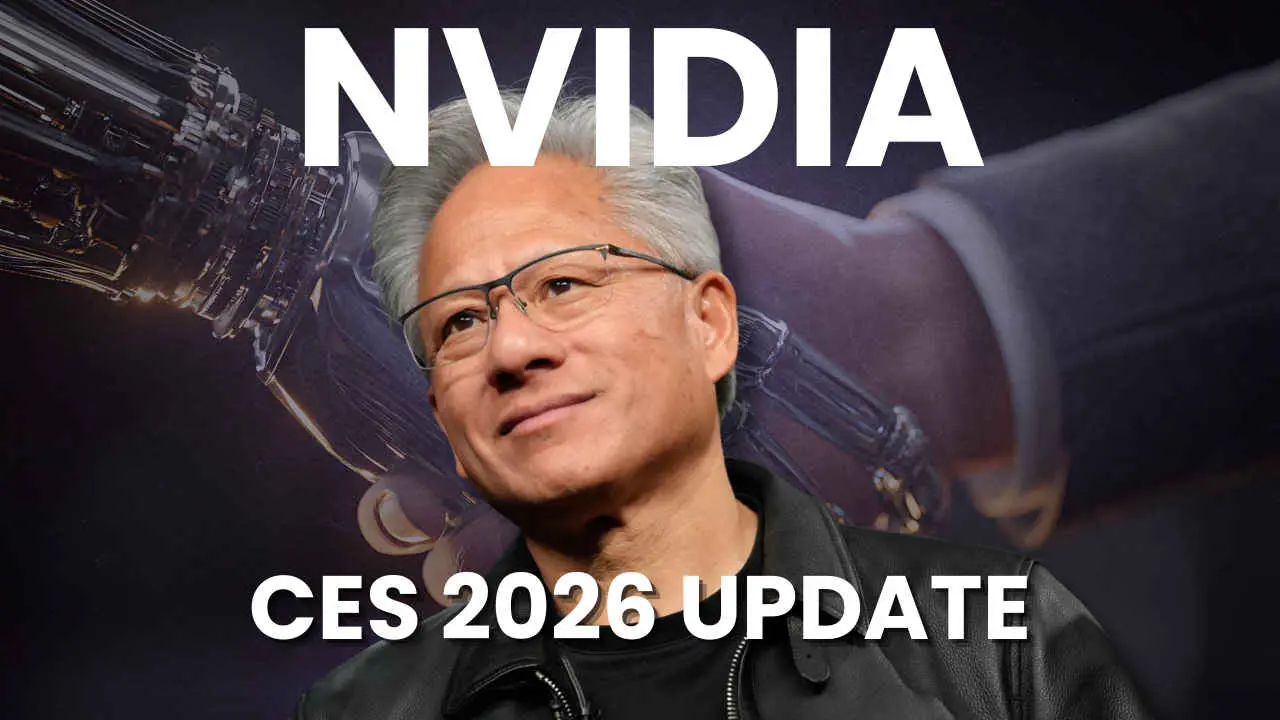
Nvidia CEO Jensen Huang took the stage at CES 2026 in Las Vegas to unveil the company's most ambitious AI infrastructure yet, declaring that computing has been "fundamentally reshaped as a result of accelerated computing, as a result of artificial intelligence"
2
. The keynote centered on the Rubin platform, Nvidia's first extreme-codesigned, six-chip AI platform now in full production, alongside Alpamayo, an open reasoning model family designed specifically for autonomous vehicle development1
.
Source: Digit
The announcement comes as Nvidia shares have been rangebound, rising less than 2% over three months, making Wall Street particularly keen to assess future chip demand and market sentiment
1
. Huang emphasized that some $10 trillion of computing infrastructure from the last decade is now being modernized to accommodate this new paradigm2
.Rubin Platform Delivers Six Co-Designed Chips for AI Supercomputer Performance
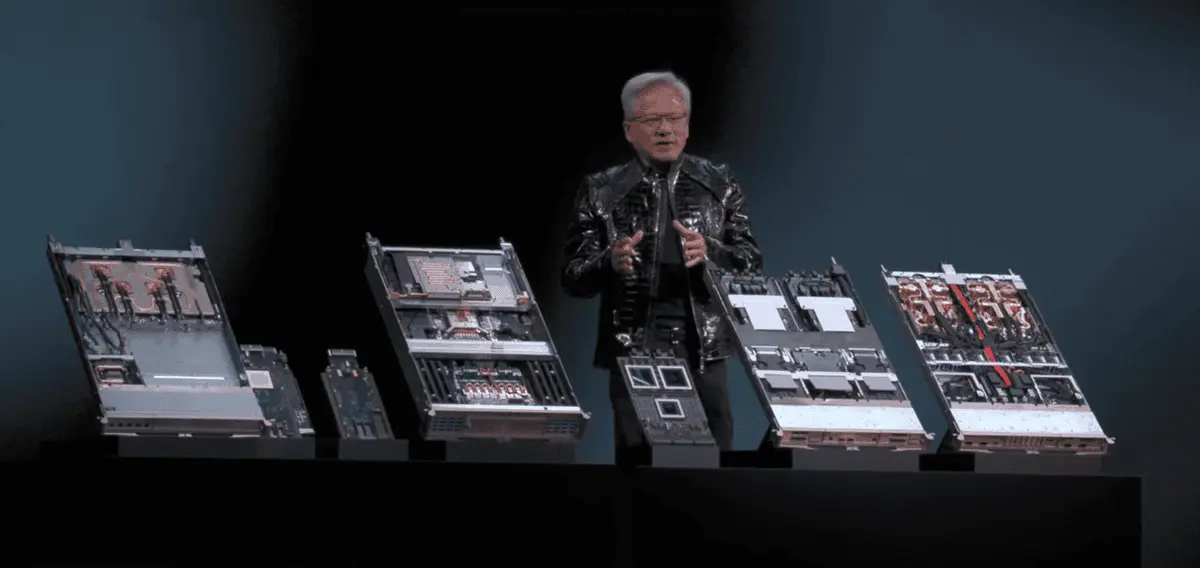
The Rubin platform represents a significant architectural shift, moving beyond single-chip design to an integrated ecosystem of six distinct components working as one AI supercomputer
1
. Built from the data center outward, the platform includes Rubin GPUs with 50 petaflops of NVFP4 inference, Vera CPUs engineered for data movement and agentic processing, NVLink 6 scale-up networking, Spectrum-X Ethernet Photonics scale-out networking, ConnectX-9 SuperNICs, and BlueField-4 DPUs2
.
Source: TechRadar
Huang explained that extreme codesign—designing all components together—is essential because scaling AI to gigascale requires tightly integrated innovation across chips, trays, racks, networking, storage and software to eliminate bottlenecks and dramatically reduce costs
2
. The platform promises to deliver AI tokens at one-tenth the cost while providing 3.5x performance improvements on peak workloads1
. Nvidia also introduced AI-native storage with its Inference Context Memory Storage Platform, which boosts long-context inference with 5x higher tokens per second, 5x better performance per TCO dollar, and 5x better power efficiency2
.Physical AI and Autonomous Vehicles Take Center Stage
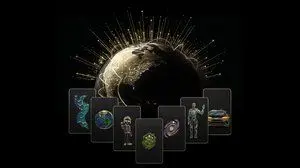
The biggest theme of the keynote was "physical AI," Nvidia's term for AI systems that don't just generate content but actually act in the real world
3
. Huang described this as "the ChatGPT moment for physical AI"—when machines begin to understand, reason and act in the real world5
. These models are trained in virtual environments using synthetic data through platforms like Cosmos, then deployed into physical machines once they've learned how the world works3
.
Source: Quartz
Alpamayo emerged as the centerpiece of Nvidia's autonomous driving strategy. Huang called it "the world's first thinking, reasoning autonomous vehicle AI," trained end-to-end from camera input to actuation output
5
. The company demonstrated the technology through a Mercedes-Benz CLA showcasing AI-defined driving, with footage of the vehicle navigating San Francisco streets, avoiding pedestrians and taking turns5
. Nvidia confirmed it is working with robotaxi operators to deploy its AI chips and Drive AV software stack as soon as 2027, with plans to test its own robotaxi service with a partner1
3
.Huang has previously stated that robotics, including self-driving cars, is Nvidia's second most important growth category after AI
1
. "There's no question in my mind now that this is going to be one of the largest robotics industries," Huang said, expressing his vision that "someday every single car, every single truck will be autonomous"5
.Open AI Models Span Six Critical Domains
Nvidia emphasized its role as a frontier AI builder, with open AI models trained on its own supercomputers now powering breakthroughs across multiple industries
2
. Noting that 80% of startups are building on open models, Huang highlighted that "every single six months, a new model is emerging, and these models are getting smarter and smarter"2
.The portfolio spans six domains: Clara for healthcare, Earth-2 for climate science, Nemotron for reasoning and multimodal AI, Cosmos for robotics and simulation, GR00T for embodied intelligence, and Alpamayo for autonomous driving
2
4
. "These models are open to the world," Huang said, underscoring Nvidia's strategy to enable every company, industry, and country to participate in the AI revolution2
. The company also demonstrated personal AI agents running locally on the DGX Spark desktop supercomputer, embodied through a Reachy Mini robot using Hugging Face models2
.Related Stories

Wall Street Analysts Project 33% Upside Potential
Several Wall Street banks—including JPMorgan, Wells Fargo, and Piper Sandler—left the keynote with positive takeaways on Rubin's unique design and anticipated faster adoption than Nvidia's previous Blackwell and Hopper generation of chips
1
. Analysts stayed bullish on Nvidia after the presentation, with their consensus price target suggesting about 33% potential upside over the next year, according to LSEG1
.JPMorgan analyst Harlan Sur notably said in a Tuesday report that Nvidia's development of physical AI products "could potentially drive the next leg of revenue growth" for the company
1
. Wells Fargo analyst Aaron Rakers highlighted the design of Rubin as a key differentiator, especially as rival chipmakers continue to gain market share, noting that "Mr. Huang believes it will be difficult for ASICs to keep up with NVIDIA systems building one chip at a time"1
.Of the 65 analysts covering Nvidia, 23 rate it a strong buy and 36 a buy, with only five hold ratings and just one underperform rating
1
. Morgan Stanley analyst Joseph Moore noted that Rubin "should be positively received given competitive noise exiting 2025 around broader TPU traction," while UBS analyst Timothy Arcuri maintained estimates but saw "an upward bias to C2026 and C2027 numbers with faster cycle times and Rubin ramp"1
.Strategic Shift From Gaming to Enterprise AI Dominance
The absence of any new GeForce consumer GPU announcements at CES 2026 underscored Nvidia's strategic pivot
3
. Instead, Huang spent the keynote focused on data center infrastructure, enterprise partnerships, and physical AI applications. The company cited integrations with leading enterprises including Palantir, ServiceNow, Snowflake, CodeRabbit, CrowdStrike, NetApp, and Semantec2
.Nvidia has now become the first company ever to surpass a $5 trillion valuation, and the company's ambitions now span factories, autonomous vehicles, robotics, and nearly any domain that can be trained, tested, or perfected in simulation
3
. Huang declared that "every 10 to 15 years, the computer industry resets—a new shift happens," noting that this time there are two simultaneous platform shifts: AI applications and the move from CPU to GPU-based software development4
. "The entire stack is being changed," he added, emphasizing that "every single layer of that five-layer cake of AI is being reinvented"4
.References
Summarized by

Navi
[3]
[4]
Related Stories
Nvidia unveils powerful Vera Rubin chip as Jensen Huang maps ambitious AI future at CES
06 Jan 2026•Technology

Nvidia launches Alpamayo open AI models to bring human-like reasoning to autonomous vehicles
06 Jan 2026•Technology

Nvidia CEO Jensen Huang Unveils "Agentic AI" Vision at CES 2025, Predicting Multi-Trillion Dollar Industry Shift
07 Jan 2025•Technology

Recent Highlights



Recent Highlights
Today's Top Stories






Don’t drown in AI news. We cut through the noise - filtering, ranking and summarizing the most important AI news, breakthroughs and research daily. Follow topics that matter to you and stay ahead.


