NVIDIA Opens Vera Rubin Architecture to Open Compute Project, Tackling AI Factory Scaling Bottlenecks


3 Sources
[1]
OCP Global Summit: Amid Ecosystem Adoption, NVIDIA Opens Vera Rubin Architecture to Help Scale AI Factories Worldwide
Cisco, Google, Meta, Microsoft and Visionbay are joining many making advances with Vera Rubin. As AI factories grow from megawatts to gigawatts, building them takes more than advanced computing. Open standards are helping the industry scale AI infrastructure faster, more efficiently and more
[2]
Nvidia tackles AI factory scaling bottlenecks with open rack designs and networking advances
Nvidia tackles AI factory scaling bottlenecks with open rack designs and networking advances Nvidia Corp. today announced new partnerships and contributions to the open-source community at the Open Compute Project Global Summit in San Jose, aimed at laying the foundation for the future of agentic
[3]
NVIDIA Hands Its Vera Rubin Rack Designs To OCP, Stripping Compute Trays Of Every Cable, Hose, And Fan
NVIDIA has announced that it is contributing its Vera Rubin platform to OCP, driving the advancement of AI factories. NVIDIA's OCP Announcement Sees Opening Up of The Vera Rubin Platform To More Partners NVIDIA has made a lot of updates to its VR200 "Vera Rubin" platform versus the GB300 "Grace
Share
Copy Link
NVIDIA contributed its Vera Rubin rack and compute tray designs to the Open Compute Project at OCP Global Summit, providing system builders with open blueprints for next-generation AI factories. The company partnered with Meta, Google, and Cisco on networking advances while introducing liquid-cooled, fanless designs that eliminate cables and hoses to accelerate manufacturing and deployment.
NVIDIA Addresses AI Factory Scaling Through Open Standards
NVIDIA announced at the OCP Global Summit in San Jose that it's contributing key Vera Rubin rack and compute tray designs to the Open Compute Project through its NVIDIA MGX architecture
1
2
. The move gives system builders common blueprints for developing next-generation AI factory infrastructure as the industry faces manufacturing and deployment bottlenecks. "The real bottleneck for the industry right now is how fast the world can manufacture and deploy AI factories," said AI Infrastructure Solutions Lead Joe DeLaere2
. Ian Buck, vice president of hyperscale and high-performance computing at NVIDIA, discussed how open infrastructure combined with NVIDIA's extreme codesign is accelerating deployment while improving power efficiency and tokens-per-watt performance1
.Vera Rubin Architecture Advances With MGX 1.2 Specification
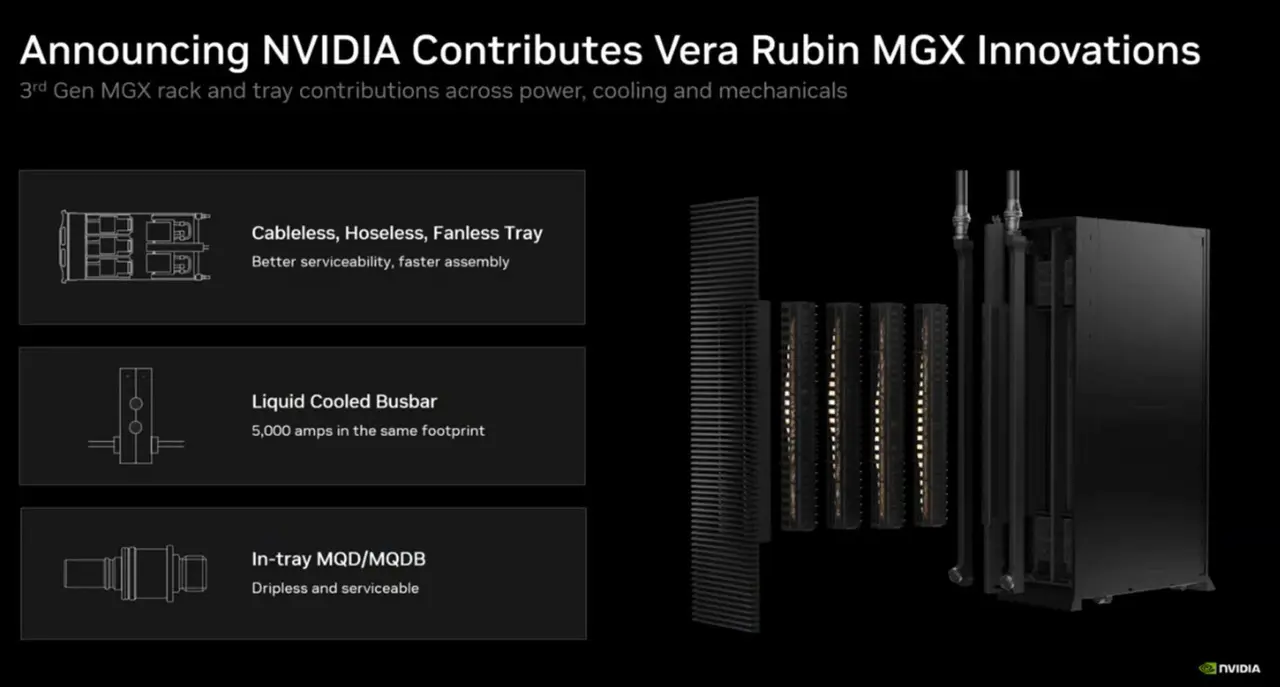
Source: Wccftech
The updated MGX 1.2 specification extends the NVIDIA MGX architecture for AI factories with rack-scale blind-mate liquid cooling, interoperable rack-scale interconnect infrastructure, and a liquid-cooled 5,000A busbar designed for higher-power AI systems
1
. The Vera Rubin rack designs feature compute trays stripped of cables, hoses, and fans—everything is liquid-cooled and modular, reducing tray assembly times from hours to minutes and speeding up overall rack build times3
. Combined with open liquid-cooling technologies such as MQD (MGX Quick Disconnect) and MQDB (blind mating), the effort helps turn proven AI factory designs into industry standards that others can adopt and manufacture1
3
. The architecture supports rack deployments up to 250kW while simplifying serviceability and infrastructure reuse1
.Vera CPU Rack Design Targets Agentic AI Era
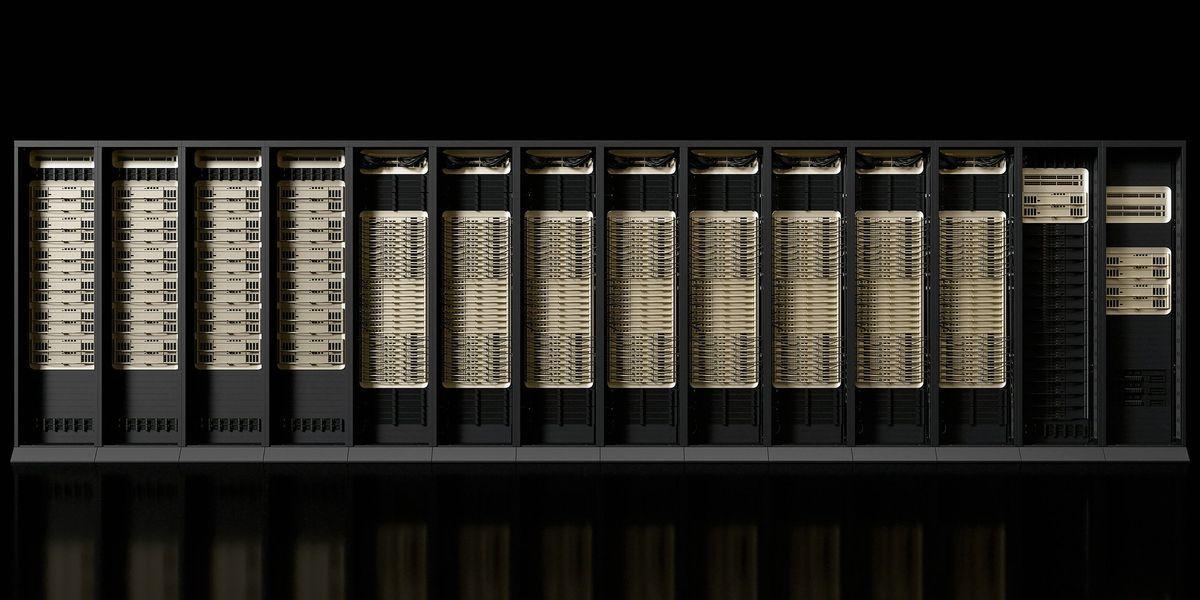
The Vera CPU rack design specification extends the NVIDIA MGX open architecture beyond accelerated computing to support the growing agentic AI era
1
. While Vera Rubin NVL72 serves as the foundation for large-scale training and inference, the Vera CPU rack is designed for tool calling, orchestration, and sandboxed execution—helping AI agents interact with applications, data, and services in real time1
. "Between model calls, agents need to do orchestration. They need to execute code. They need to process data, run evaluations," DeLaera explained2
. NVIDIA claims its Vera CPU delivers around 2x the performance of its previous Grace GPU generation on several workload benchmarks, with Meta measuring 2x performance for Hyperscale Cloud using DCPerf and the Texas Advanced Computing Center seeing a 2x uplift on HPC GoldenSuite3
.Related Stories
Strategic Partnerships With Meta, Google, and Cisco Drive Networking Advances
Source: SiliconANGLE
Meta is adopting NVIDIA Spectrum-6 Ethernet switches for its next-generation AI factory network, which will connect directly to Vera Rubin deployments
2
3
. Spectrum-6 is NVIDIA's 102.4 terabit-per-second Ethernet switching chip designed to handle massive traffic in fabric networks2
. With multi-plane networks, when a component fails, the SuperNIC detects it in hardware and reroutes traffic in less than 3 milliseconds—30 times faster than software-based alternatives3
. NVIDIA is adding support for Google's Falcon Transport to its Spectrum-X Ethernet networking ecosystem, beginning with future ConnectX-10 SuperNICs and extending to BlueField DPUs1
2
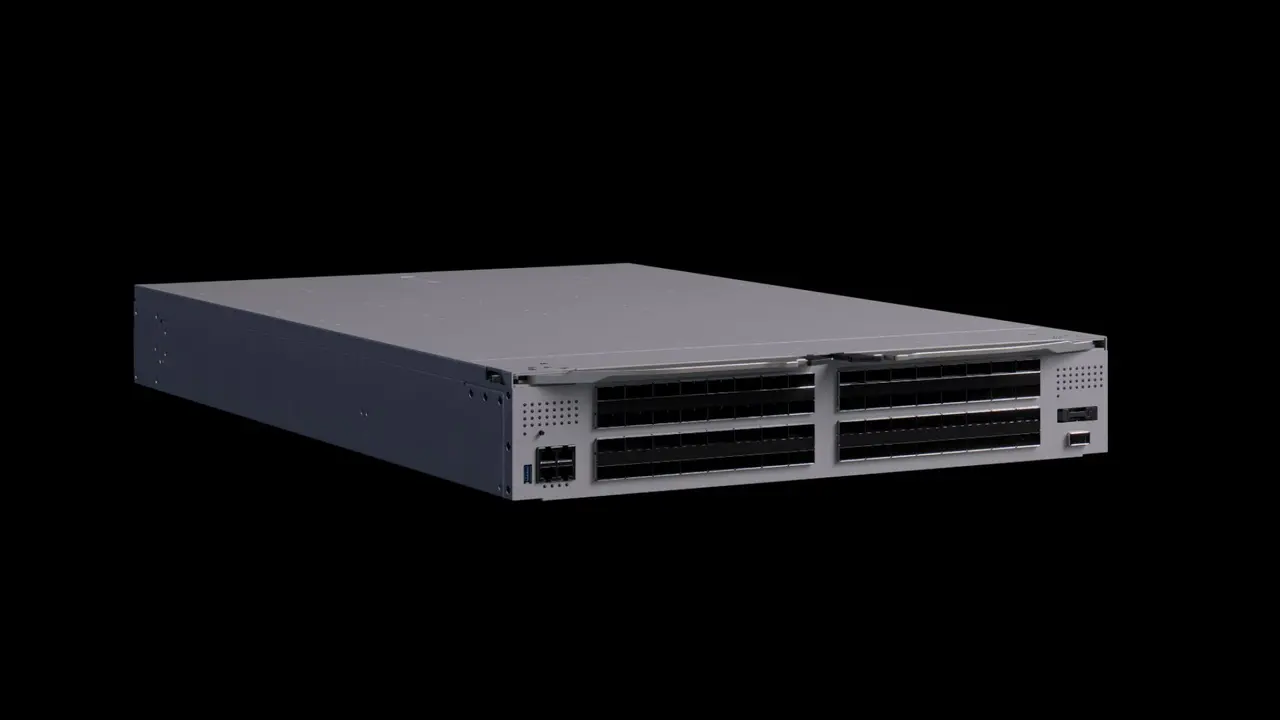
. NVIDIA and Cisco jointly announced the Ultra-Dense Small Form Factor Pluggable (USFP) standard, the industry's first module for 400Gb/s-based networking fabrics1
2
. The USFP design offers four times the bandwidth density of the existing 200G OSFP form factor with a 1.3x improvement in power efficiency2
.Open Source Software Components Expand DSX AI Factory Platform
Source: NVIDIA
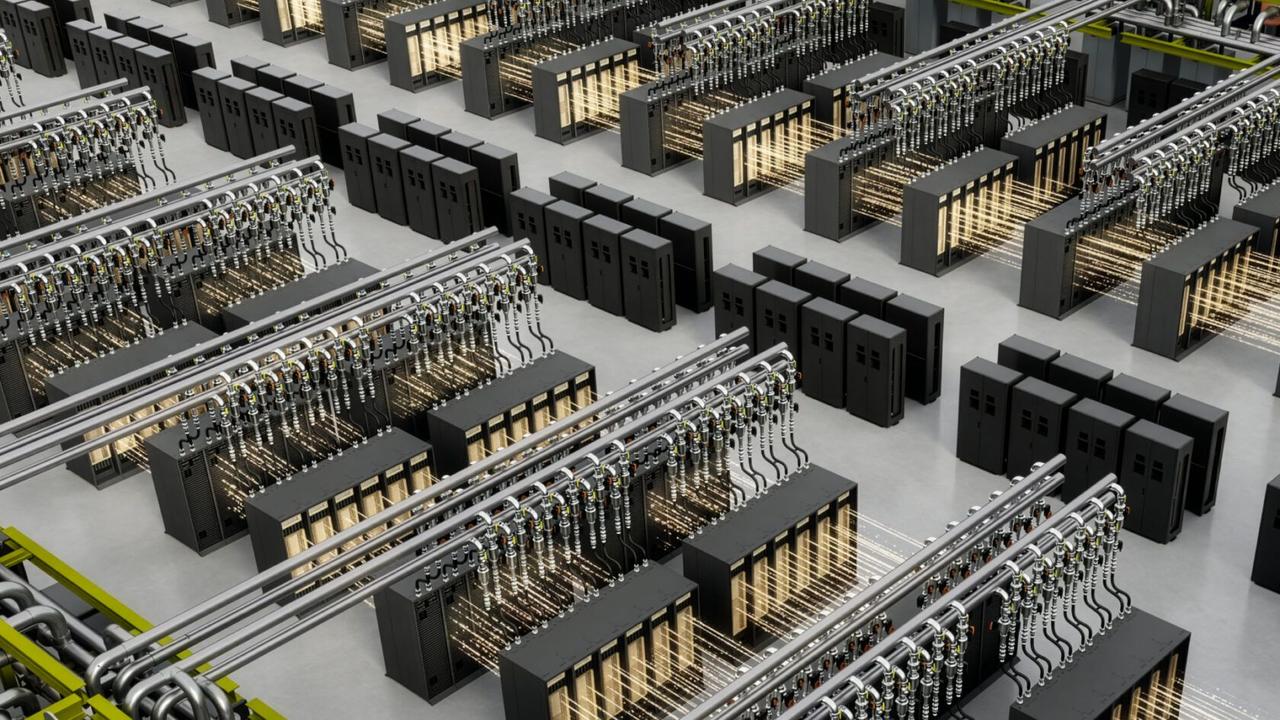
NVIDIA expanded its DSX OS with open source components for configuring networks, validating clusters, managing racks, and provisioning bare metal
1
. The DSX AI factory platform applies extreme codesign to unify computing, networking, power, cooling, facilities, and software—helping AI factories operate as a single optimized system that maximizes AI output within available infrastructure constraints1
. At the center of this unified system is DSX OS, the open operating layer that turns the DSX architecture into coordinated, repeatable operations at scale1
. Visionbay unveiled plans for K-1, a next-generation AI factory platform designed around an 800 VDC architecture built with future Vera Rubin deployments in mind3
. The project combines NVIDIA's 800 VDC reference architecture with power and thermal technologies from Vertiv to create a scalable foundation for high-density AI infrastructure, addressing the challenge of rising rack power densities as AI workloads expand3
.References
Summarized by

Navi
[2]
Related Stories
NVIDIA Unveils Vision for Next-Gen 'AI Factories' with Vera Rubin and Kyber Architectures
13 Oct 2025•Technology

NVIDIA Contributes Blackwell Platform Design to Open Compute Project, Advancing AI Infrastructure
16 Oct 2024•Technology

Cisco and NVIDIA Expand AI Factory with Rack-Scale Computing to Meet Surging AI Data Center Demand
25 Aug 2026•Technology

Recent Highlights
1
Microsoft and Nvidia Launch Surface Laptop Ultra: A $2,599 AI-Ready PC With RTX Spark Chip
Technology

2
Meta Muse AI Agent Surges to 6.6M Downloads Despite Privacy and Security Controversies
Technology

3
Scientists Build AI Model That Reconstructs Images From Brain Scans in Record Time
Science and Research
Recent Highlights
Today's Top Stories











Don’t drown in AI news. We cut through the noise - filtering, ranking and summarizing the most important AI news, breakthroughs and research daily. Follow topics that matter to you and stay ahead.


