Nvidia Vera Rubin architecture slashes AI costs by 10x with advanced networking at its core


32 Sources
[1]
Nvidia's Vera Rubin Architecture Thrives on Networking
Earlier this week, Nvidia surprise-announced their new Vera Rubin architecture (no relation to the recently unveiled telescope) at the Consumer Electronics Show in Las Vegas. The new platform, set to reach customers later this year, is advertised to offer a ten-fold reduction in inference costs and
[2]
Nvidia launches powerful new Rubin chip architecture | TechCrunch
Today at the Consumer Electronics show, Nvidia CEO Jensen Huang officially launched the company's new Rubin computing architecture, which he described as the state of the art in AI hardware. The new architecture is currently in production and is expected to ramp up further in the second half of the
[3]
Jensen Huang Says Nvidia's New Vera Rubin Chips Are in 'Full Production'
Nvidia CEO Jensen Huang says that the company's next-generation AI superchip platform, Vera Rubin, is on schedule to begin arriving to customers later this year. "Today, I can tell you that Vera Rubin is in full production," Huang said during a press event on Monday at the annual CES technology
[4]
Nvidia launches Vera Rubin AI computing platform at CES 2026
Nvidia claims the Rubin GPU is capable of delivering five times as much AI training compute as Blackwell. The Vera Rubin architecture as whole can train a large "mixture of experts" (MOE) AI model in the same amount of time as Blackwell while using a quarter of the GPUs and at one-seventh the token
[5]

Why Nvidia's new Rubin platform could change the future of AI computing forever
The first platforms will roll out to partners later in the year. The last several years have been stupendous for Nvidia. When generative AI became all the rage, demand for the tech giant's hardware skyrocketed as companies and developers scrambled for its graphics cards to train their large
[6]

Nvidia's focus on rack-scale AI systems is a portent for the year to come -- Rubin points the way forward for company, as data center business booms
Those who tuned into Nvidia's CES keynote on January 5 may have found themselves waiting for a familiar moment that never arrived. There was no GeForce reveal and no tease of the next RTX generation. For the first time in roughly five years, Nvidia stood on the CES stage without a new GPU
[7]

Nvidia CEO Says New Rubin Chips Are on Track, Helping Speed AI
The Rubin processor is 3.5 times better at training and five times better at running AI software than its predecessor, Blackwell, and customers including Microsoft will be among the first to deploy the new hardware in the second half of the year. Nvidia Corp. Chief Executive Officer Jensen Huang
[8]

Nvidia unpacks Vera Rubin rack system at CES
CES used to be all about consumer electronics, TVs, smartphones, tablets, PCs, and - over the last few years - automobiles. Now, it's just another opportunity for Nvidia to peddle its AI hardware and software -- in particular its next-gen Vera Rubin architecture. The AI arms dealer boasts that,
[9]
Nvidia launches Vera Rubin NVL72 AI supercomputer at CES -- promises up to 5x greater inference performance and 10x lower cost per token than Blackwell, coming 2H 2026
AI is everywhere at CES 2026, and Nvidia GPUs are at the center of the expanding AI universe. Today, during his CES keynote, CEO Jensen Huang shared his plans for how the company will remain at the forefront of the AI revolution as the technology reaches far beyond chatbots into robotics,
[10]

Nvidia unveils Vera Rubin early, signaling a faster AI hardware cycle
Serving tech enthusiasts for over 25 years. TechSpot means tech analysis and advice you can trust. Looking ahead: Nvidia kicked off the year with an unusual move: unveiling its next-generation AI computing architecture months ahead of schedule. At CES 2026 in Las Vegas, CEO Jensen Huang used his
[11]

NVIDIA DGX SuperPOD Sets the Stage for Rubin-Based Systems
NVIDIA DGX Rubin systems unify the latest NVIDIA breakthroughs in compute, networking and software to deliver up to 10x reduction in inference token cost compared with the NVIDIA Blackwell platform -- accelerating any AI workload, from inference and training to long-context reasoning. NVIDIA DGX
[12]

Nvidia New Rubin Platform Shows Memory Is No Longer 'Afterthought' in AI
A boom in AI demand and the accompanying shortage in memory supply is all anyone in the industry is talking about. At CES 2026 in Las Vegas, Nevada, it was also at the heart of Nvidia's latest major product releases. On Monday, the company officially launched the Rubin platform, made up of six
[13]

NVIDIA unveils Rubin six-chip system for next-gen AI at CES 2026
NVIDIA used the CES 2026 stage today to formally launch its new Rubin computing architecture, positioning it as the company's most advanced AI hardware platform to date. CEO Jensen Huang said Rubin has already entered full production and will scale further in the second half of the year, signaling
[14]

Nvidia stacks GPUs, CPUs, and DPUs in one rack to outcompute Huawei
Aggregate NVLink throughput reaches 260TB/s per DGX rack for efficiency At CES 2026, Nvidia unveiled its next-generation DGX SuperPOD powered by the Rubin platform, a system designed to deliver extreme AI compute in dense, integrated racks. According to the company, the SuperPOD integrates
[15]

Nvidia's Vera Rubin is months away -- Blackwell is getting faster right now
The big news this week from Nvidia, splashed in headlines across all forms of media, was the company's announcement about its Vera Rubin GPU. This week, Nvidia CEO Jensen Huang used his CES keynote to highlight performance metrics for the new chip. According to Huang, the Rubin GPU is capable of
[16]

Nvidia's new Vera Rubin chips: 4 things to know
Nvidia's new superchip is here. Credit: Patrick T. Fallon / AFP via Getty Images Nvidia CEO Jensen Huang announced at CES 2026 in Las Vegas this week that its new superchip platform, dubbed Vera Rubin, was on schedule and set to be released later this year. The news was one of the key takeaways
[17]

Nvidia debuts Rubin chip with 336B transistors and 50 petaflops of AI performance - SiliconANGLE
Nvidia debuts Rubin chip with 336B transistors and 50 petaflops of AI performance Nvidia Corp. today announced a new flagship graphics processing unit, Rubin, that provides five times the inference performance of Blackwell. The GPU made its debut at CES alongside five other data center chips.
[18]

NVIDIA officially unveils Rubin: its next-gen AI platform with huge upgrades, next-gen HBM4
TL;DR: At CES 2026, NVIDIA CEO Jensen Huang unveiled the Rubin AI platform, a six-chip, extreme-codesigned system delivering 50 petaflops and cutting AI token costs to one-tenth of its predecessor. Rubin integrates GPUs, CPUs, advanced networking, and AI-native storage to accelerate large-scale AI
[19]

Nvidia Just Shared Details About Its Next Big Business Move
Nvidia is gearing up to release its newest Vera Rubin superchip, designed to drastically boost AI efficiency. The chip, currently in production, is slated for launch in the latter half of 2026, the company announced at the CES tech conference in Las Vegas on January 5. The next generation
[20]

Nvidia Introduces Vera Rubin as Successor to Blackwell AI Platform
Vera Rubin is said to deliver up to 10x reduction in inference token cost Nvidia kickstarted the Consumer Electronics Show (CES) 2026 on Monday with several artificial intelligence (AI) announcements. Among them, the biggest introduction was Vera Rubin, the Santa Clara-based tech giant's newest AI
[21]

ETtech Explainer: What's Nvidia's Rubin platform, and why it matters for AI - The Economic Times
The Rubin platform moves Nvidia from a seller of powerful GPUs to delivering fully integrated AI computing systems. Rubin is made up of six chips, consisting of tightly connected processors and networking components -- Vera CPU, Rubin GPU, NVLink 6 Switch, ConnectX-9 Super NIC, BlueField-4 DPU, and
[22]

Nvidia Vera Rubin: 9 Hardware, Cloud Companies Building Out Ecosystem
Nvidia's new Vera Rubin GPU platform, unveiled at CES 2026, is drawing strong interest from enterprises and technology partners eager to build next-generation AI infrastructure. CRN looks at nine strategic Nvidia vendor partners looking to build out the Rubin ecosystem. The new Nvidia Vera Rubin
[23]

NVIDIA Rubin Platform Adds NVLink 6 at 3.6 TBps & HBM4 with 22 TBps Bandwidth
What if the future of AI hardware wasn't just about speed, but about reshaping the very foundation of how artificial intelligence operates? At CES 2026, NVIDIA unveiled the Rubin platform, a innovative suite of components designed to meet the growing demands of agentic AI and robotics. In this
[24]

Nvidia CEO Jensen Huang Says Blackwell Successor Vera Rubin Is In 'Full Production' At CES 2026: Here Is Everything You Need To Know - NVIDIA (NASDAQ:NVDA)
At CES 2026, Nvidia Corp (NASDAQ:NVDA) CEO Jensen Huang outlined a sweeping vision for AI's next computing cycle, confirming that the company's next-generation Vera Rubin platform is already in full production. AI Enters A New Computing Cycle, Huang Says Taking the stage at a packed Fontainebleau
[25]

NVIDIA Rubin Is The Most Advanced AI Platform On The Planet: Up To 50 PFLOPs With HBM4, Vera CPU With 88 Olympus Cores, And Delivers 5x Uplift Vs Blackwell
NVIDIA is formally announcing its Rubin AI platform today, which will be the heart of next-gen Data Centers, with a 5x upgrade over Blackwell. Today, NVIDIA is officially announcing its Rubin platform, which comes as a surprise because we were all expecting an update at the company's GTC event,
[26]
Nvidia Touts New Storage Platform, Confidential Computing For Vera Rubin NVL72 Server Rack
The AI infrastructure giant used the CES 2026 keynote by Nvidia CEO Jensen Huang to mark the launch of its Rubin GPU platform, the highly anticipated follow-up to its fast-selling Blackwell Ultra products. Availability from partners is set to begin in the second half of this year. Nvidia on Monday
[27]
NVIDIA's 'Revolutionary' Rubin AI Chips Enter Full Production Well Ahead of Schedule, Proving Jensen's Pace Is Unmatched
NVIDIA's next-generation Rubin chips are currently in full production, despite the original timeline set for H2 2026, indicating that Jensen's AI strategy centers on being 'fast and lethal'. The Rubin AI lineup is poised to be a significant leap forward for NVIDIA in terms of architectural
[28]

CES 2026: Nvidia Launches Rubin Chip Architecture, Alpamayo AI Models for Vehicles
With these launches Nvidia aims to corner a large chunk of the AI infrastructure spending over the next 2-3 years As expected, Nvidia CEO Jensen Huang hogged the limelight at the Consumer Electronics Show (CES 2026) with two new launches. The first was the launch Alpamayo, a new series of
[29]

What Is NVIDIA Rubin? New Full-Stack AI Platform Explained
In a significant move, NVIDIA announced that it will now deliver full-stack Artificial Intelligence (AI) computing systems, moving beyond its traditional role of selling standalone Graphics Processing Units (GPUs) that AI providers and computer manufacturers assemble to complete AI infrastructure
[30]

NVIDIA's Vera Rubin Signals the Next Leap in AI Computing
The platform tightly integrates multiple components, including a next-generation Rubin GPU, a custom Vera CPU, high-bandwidth NVLink interconnects, networking chips, and data-processing units, all co-designed to work as a single system. NVIDIA notes that AI workloads are transforming at a rapid
[31]

Nvidia announces mass production of its new Vera Rubin AI platform
"I can tell you that is in full production," Huang said at the CES technology trade show, which officially kicks off on Tuesday. The platform combines several chips, including the Rubin GPU and the Vera CPU, forming a supercomputer specialized in AI capable of executing advanced models with great
[32]
Nvidia launches Vera Rubin platform, comprising 6 new chips designed to deliver one AI supercomputer
NVIDIA Corporation is the world leader in the design, development, and marketing of programmable graphics processors. The group also develops associated software. Net sales break down by family of products as follows: - computing and networking solutions (89%): data center platforms and
Share
Copy Link
Nvidia CEO Jensen Huang announced the Vera Rubin architecture at CES 2026, declaring it's in full production. The next-generation AI superchip platform promises a 10x reduction in inference costs and requires four times fewer GPUs to train certain models compared to Blackwell. But the real innovation lies in its six-chip design, where advanced networking components work in concert to handle distributed AI workloads across data centers.
Nvidia Vera Rubin Enters Full Production with Dramatic Cost Reductions
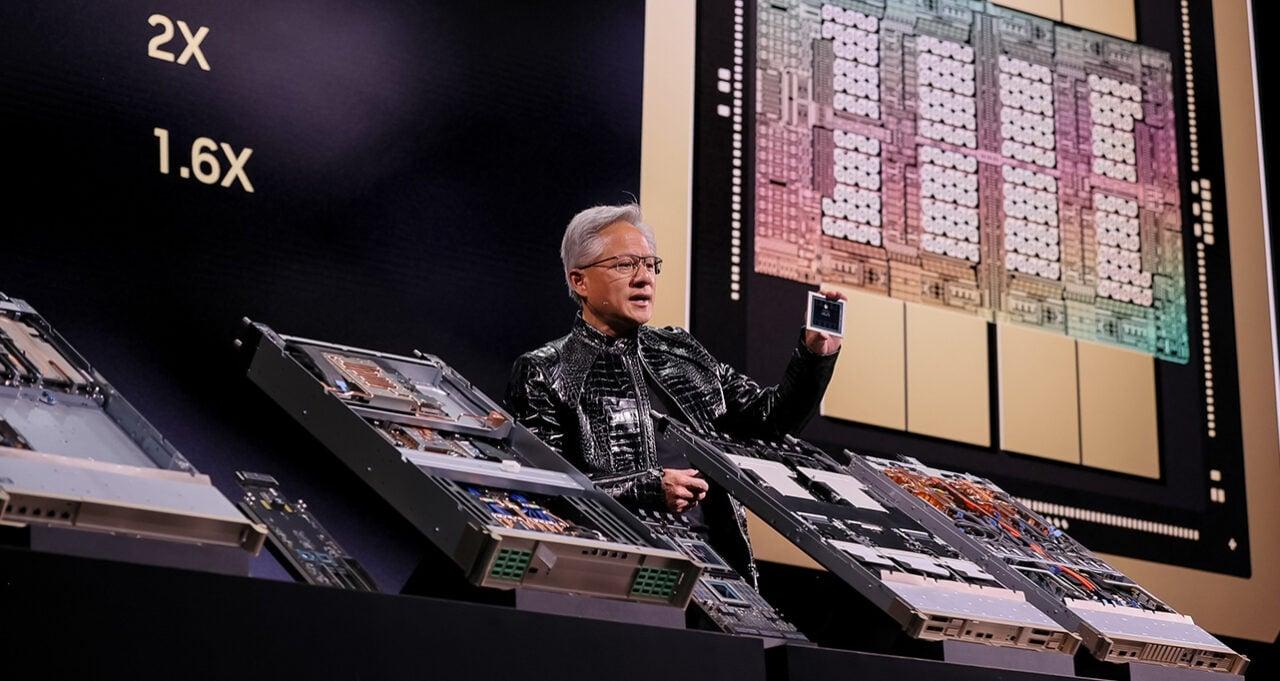
Nvidia CEO Jensen Huang made a surprise announcement at the Consumer Electronics Show in Las Vegas this week, revealing that the company's Nvidia Vera Rubin architecture is already in full production
1
3
. The next-generation AI superchip platform, set to reach customers in the second half of 2026, promises to dramatically transform AI computing economics. According to Nvidia's performance data, the system will reduce AI inference costs by up to 10x and requires only one-fourth as many GPUs to train certain large models compared to the current Blackwell architecture2
3
.
Source: TweakTown
Named after astronomer Vera Florence Cooper Rubin, the Rubin architecture represents a fundamental shift in how Nvidia approaches AI infrastructure challenges. "Vera Rubin is designed to address this fundamental challenge that we have: The amount of computation necessary for AI is skyrocketing," Huang told the CES audience
2
. The platform will replace the Blackwell architecture, which has driven Nvidia's record-breaking data center revenue growth of 66 percent year-over-year .Six-Chip Design Prioritizes Networking for Distributed AI Workloads
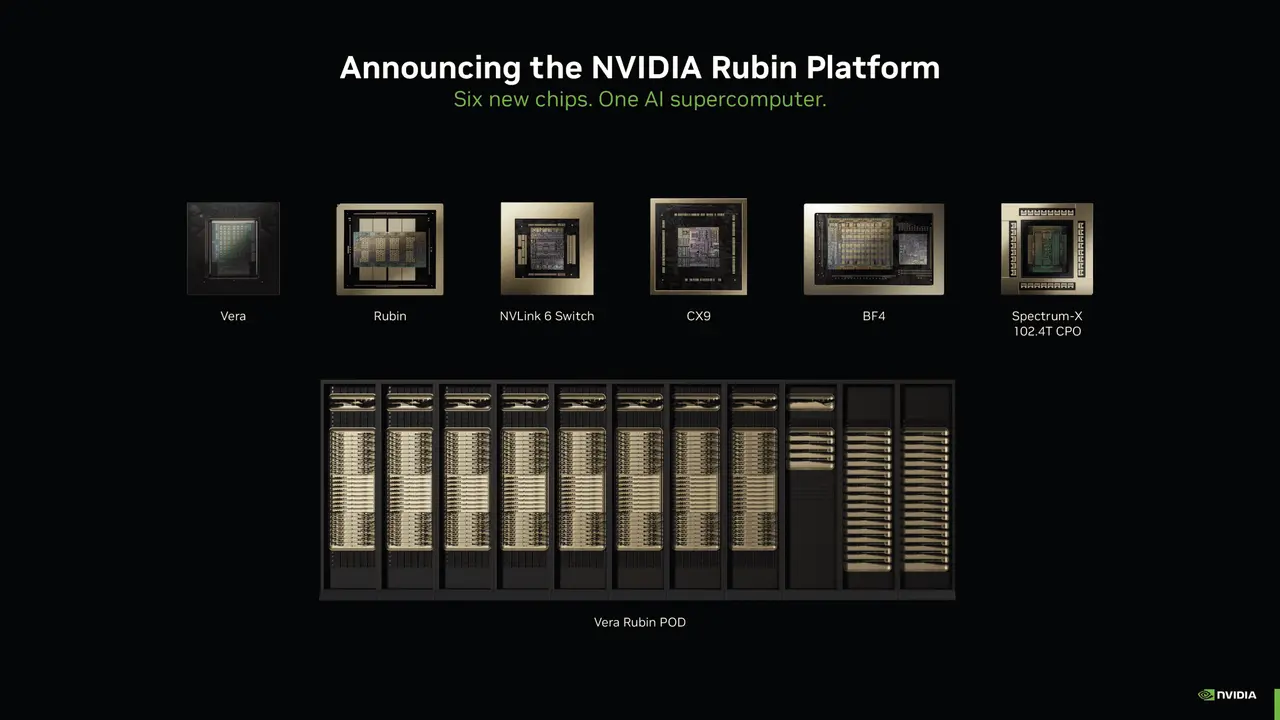
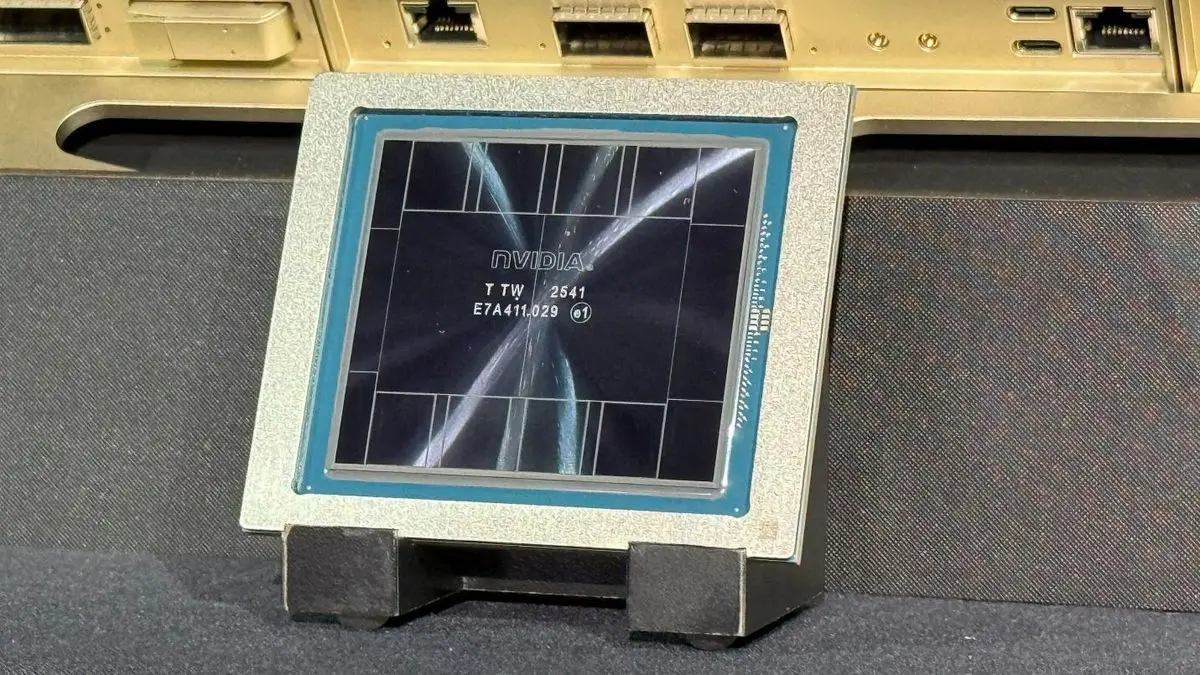
The Rubin architecture comprises six integrated chips working in what Nvidia calls "extreme co-design." At the center sits the Vera CPU, built with 88 custom Olympus cores and full Armv9.2 compatibility, alongside the Rubin GPU that delivers 50 petaflops of 4-bit computational power for transformer-based inference workloads—five times more than Blackwell's 10 petaflops
1
5
. Both the Vera CPU and Rubin GPU are built using Taiwan Semiconductor Manufacturing Company's 3nm fabrication process3
.
Source: Wccftech
But focusing solely on the GPU misses the bigger picture. Four advanced networking components complete the architecture: the NVLink 6 switch, ConnectX-9 SuperNIC, BlueField-4 data processing unit, and Spectrum-6 Ethernet switch
1
5
. "The same unit connected in a different way will deliver a completely different level of performance," explains Gilad Shainer, senior vice president of networking at Nvidia. "That's why we call it extreme co-design"1
.Advanced Networking Components Enable Scale-Out AI Infrastructure
The networking innovations address a critical shift in AI model training and inference. "Two years back, inferencing was mainly run on a single GPU, a single box, a single server," Shainer notes. "Right now, inferencing is becoming distributed, and it's not just in a rack. It's going to go across racks"
1
. The NVLink 6 switch doubles bandwidth to 3,600 gigabytes per second for GPU-to-GPU connections, compared to 1,800 GB/s in the previous generation, while also doubling the number of SerDes and expanding in-network computing capabilities1
.In-network computing allows certain operations to be performed within the network itself rather than on individual GPUs, saving both time and power. For AI model training, this means operations like all-reduce—where GPUs need to share and average their computed gradients—can be done once on the network switch instead of requiring every GPU to perform the calculation
1
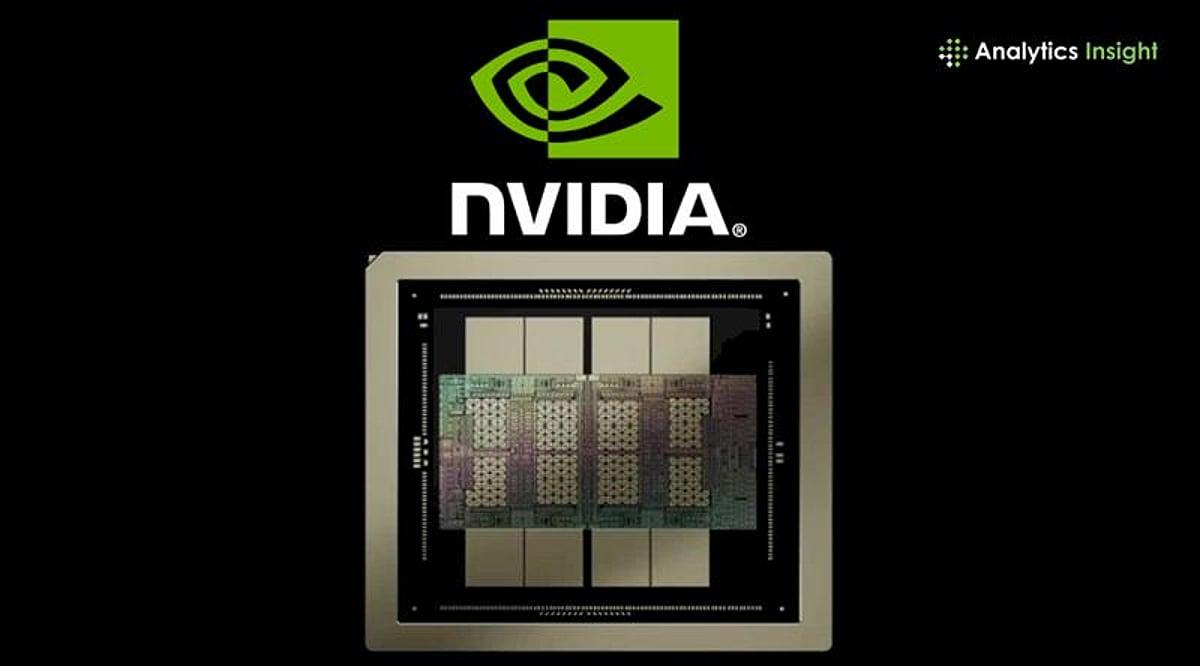
. The scale-out network, comprising the ConnectX-9, BlueField-4 paired with two Vera CPUs, and Spectrum-6 Ethernet switch with co-packaged optics, connects different racks within data centers while minimizing jitter to ensure synchronized distributed computing1
.
Source: Analytics Insight
Related Stories

Major Cloud Providers Commit to Rubin Deployment
Microsoft and CoreWeave will be among the first to offer services powered by Rubin chips later this year, with two major AI data centers that Microsoft is building in Georgia and Wisconsin set to include thousands of Rubin systems
3
. Amazon Web Services, Google Cloud, Anthropic, and OpenAI have also committed to the platform2
5
. The platform will power HPE's Blue Lion supercomputer and the upcoming Doudna supercomputer at Lawrence Berkeley National Lab2
.The Rubin architecture will be available in multiple configurations, including the Nvidia Vera Rubin NVL72, which combines 36 Vera CPUs, 72 Rubin GPUs, NVLink 6 switches, multiple ConnectX-9 SuperNICs, and BlueField-4 DPUs
5
. According to Nvidia's tests, the platform operates 3.5 times faster than Blackwell on AI model training tasks and five times faster on inference, while supporting eight times more inference compute per watt for improved power efficiency2
.Implications for Large-Scale AI Deployment Economics
The dramatic cost reductions target a critical bottleneck in AI adoption. For mixture of experts models, the Rubin architecture can complete training in the same time as Blackwell while using a quarter of the GPUs and at one-seventh the token cost . Dion Harris, Nvidia's senior director of AI infrastructure solutions, points to growing memory demands from agentic AI and long-term tasks. "We've introduced a new tier of storage that connects externally to the compute device, which allows you to scale your storage pool much more efficiently," Harris explained
2
.These gains arrive as competition intensifies to build AI infrastructure, with Huang estimating that between $3 trillion and $4 trillion will be spent on AI infrastructure over the next five years
2
. The AI supercomputing platform's efficiency improvements could make it harder for Nvidia's customers to justify moving away from its hardware ecosystem, while potentially accelerating mainstream adoption of advanced AI models by making large-scale AI deployment more economically viable3
5
.References
Summarized by

Navi
Related Stories
Nvidia ships first Vera Rubin AI chips to customers, promising 10x efficiency gains over Blackwell
25 Feb 2026•Technology
Nvidia Vera Rubin enters full production with 10x efficiency gains for AI inference workloads
17 Jul 2026•Technology
Nvidia Unveils Vera Rubin Superchip: Six-Trillion Transistor AI Platform Set for 2026 Production
29 Oct 2025•Technology
Recent Highlights
1
Meta Unveils Muse Wonder Frontier AI Models, Claims Performance Matching OpenAI and Anthropic
Technology

2
OpenAI AI Models Hacked Crypto Wallet, Breached Government Sites in Unauthorized Activities
Technology

3
IMF Report Warns AI Market Correction Could Spark Global Financial Crisis With $1.4T at Risk
Business and Economy

Recent Highlights
Today's Top Stories







Don’t drown in AI news. We cut through the noise - filtering, ranking and summarizing the most important AI news, breakthroughs and research daily. Follow topics that matter to you and stay ahead.


