Nvidia Strikes $7 Billion Poolside Deal to Build Open-Weight AI Models Against DeepSeek and OpenAI


6 Sources
[1]
Nvidia pays $6bn for Poolside's model factory
Nvidia is paying Poolside $6bn to license the software it used to build AI models, hiring 109 of its staff, and investing $1bn in what is left. Poolside's investor letter insists this is not an acquisition. It is the third deal Nvidia has structured this way. Nvidia has agreed to pay Poolside $6bn
[2]
Nvidia pays $6 billion to license Poolside AI model software
The deal came together after a failed fundraising effort left Poolside without the computing resources it needed to remain competitive at the frontier of AI development. "At the end of last year, we had a 6 week window in which to raise $2 billion dollars to pay for a 40,000 GB300 cluster coming
[3]
Reports: Nvidia to use $6bn Poolside deal to build open-weight models
US AI leadership will be through an open ecosystem of models, not frontier dominance, Jensen Huang said. Nvidia is planning to use its $6bn deal with AI start-up Poolside to build open-weight AI models that can rival the likes made by China's DeepSeek and Moonshot, the Wall Street Journal (WSJ)
[4]
Nvidia Is Coming for OpenAI and DeepSeek With $6 Billion Poolside Deal to Build a Powerful Open-Weight AI
Nvidia Corp (NASDAQ:NVDA) is making an aggressive push into AI models, striking a multibillion-dollar deal with Poolside to develop a powerful open-weight system aimed at rivals including OpenAI, Anthropic, DeepSeek and Kimi. Nvidia Bets $6 Billion on Poolside AI Technology Nvidia will pay $6
[5]

NVIDIA Becomes A Buyer Of Last Resort For Its Own GPUs By Earmarking $7 Billion For Poolside, Just As Sam Altman Admits He Was Wrong On The AI Timeline
In these 'bubble-esque' times, hardly a day goes by without NVIDIA inking a multi-billion dollar deal in some form or another. And yet, NVIDIA's deal with the AI startup Poolside might be its most significant agreement in a while, hinting at the GPU giant's growing internal penchant to hedge its
[6]

Nvidia Pays $6 Billion to License Poolside AI Model-Development Software | PYMNTS.com
The Newcomer post is based on a Poolside letter to investors, according to the report. Nvidia will also invest $1 billion in Poolside at a $12 billion pre-money valuation, and Poolside's three co-founders will remain with the company. The letter said the deal is not an acquisition or an acquihire
Share
Copy Link
Nvidia is paying $6 billion to license Poolside's AI model-building software and investing another $1 billion in the startup at a $12 billion valuation. The deal includes hiring 109 Poolside engineers to strengthen Nvidia's Nemotron project as the chipmaker positions itself to compete directly with OpenAI, Anthropic, and Chinese AI leaders like DeepSeek.
Nvidia's $7 Billion Bet on Open-Weight AI Models
Nvidia has structured a multibillion-dollar arrangement with AI startup Poolside, paying $6 billion to license Poolside AI model software while investing an additional $1 billion at a $12 billion pre-money valuation
1
3
. The Nvidia Poolside deal marks a four-fold jump from Poolside's 2025 valuation of $3 billion and represents the chipmaker's most aggressive push yet into developing its own AI models rather than merely supplying the infrastructure3
.
Source: PYMNTS
The strategic investment in Poolside includes hiring 109 of the startup's employees, who will work on Nvidia's Nemotron project to develop open-weight AI models
3
4
. According to Poolside CEO Eiso Kant, fewer than 70 people built the company's model, with fewer than 115 working across engineering and research total1
. The three founders are staying with Poolside, which plans to distribute the $6 billion licensing fee to investors by the end of next year1
.Not an Acquisition: Nvidia's Licensing Strategy
Poolside's investor letter emphasizes this is "not an acquisition and it is not an acquihire," though the deal follows a template Nvidia has deployed twice before
1
. Nvidia previously paid Groq $20 billion for its inference technology and hired its top engineers, with Groq remaining independent and later raising $350 million at a $3.5 billion valuation with Nvidia participating1
. The company also structured a similar $900 million arrangement with hardware startup Enfabrica1
5
.These deals allow Nvidia to secure staff and expertise without triggering regulatory scrutiny that traditional acquisitions bring
1
. The non-exclusive nature of the license means Poolside retains the ability to license the same AI model-building software elsewhere1
3
.What Nvidia Is Actually Licensing
The $6 billion license covers Poolside's Model Factory, the system the startup used to build its models
1
. Poolside began as a developer of coding AI agents before moving into data centers and releasing its open-source Laguna model on Nvidia server chips1
. The Laguna S model was positioned as a Western alternative to Chinese AI models from DeepSeek and competitors2
4
.
Source: Benzinga
Nvidia's goal is to use the licensed technology and incoming engineers to build some of the most capable open-weight AI models available, positioning itself to compete with OpenAI, Anthropic, and Chinese models like DeepSeek and Kimi K3
2
4
. Open-weight AI models are generally far cheaper to run and allow developers to make customizations to suit their needs3
.Why Poolside Needed This Deal
The arrangement came together after Poolside failed to raise capital for critical computing resources. "At the end of last year, we had a 6 week window in which to raise $2 billion dollars to pay for a 40,000 GB300 cluster coming online in January," the investor letter revealed. "We didn't close it in time, and we lost the cluster"
1
2
.Poolside's letter explained the startup had been "directionally correct in a race where capital requirements went vertical." The company estimated it could have built a frontier-rivaling model with 10,000 to 20,000 of those chips, but next year's frontier models need "far more than an order of magnitude larger cluster." The constraint "is not only capital, it is physical data center space and contracted compute"
1
.Jensen Huang's Vision for Open AI Ecosystem
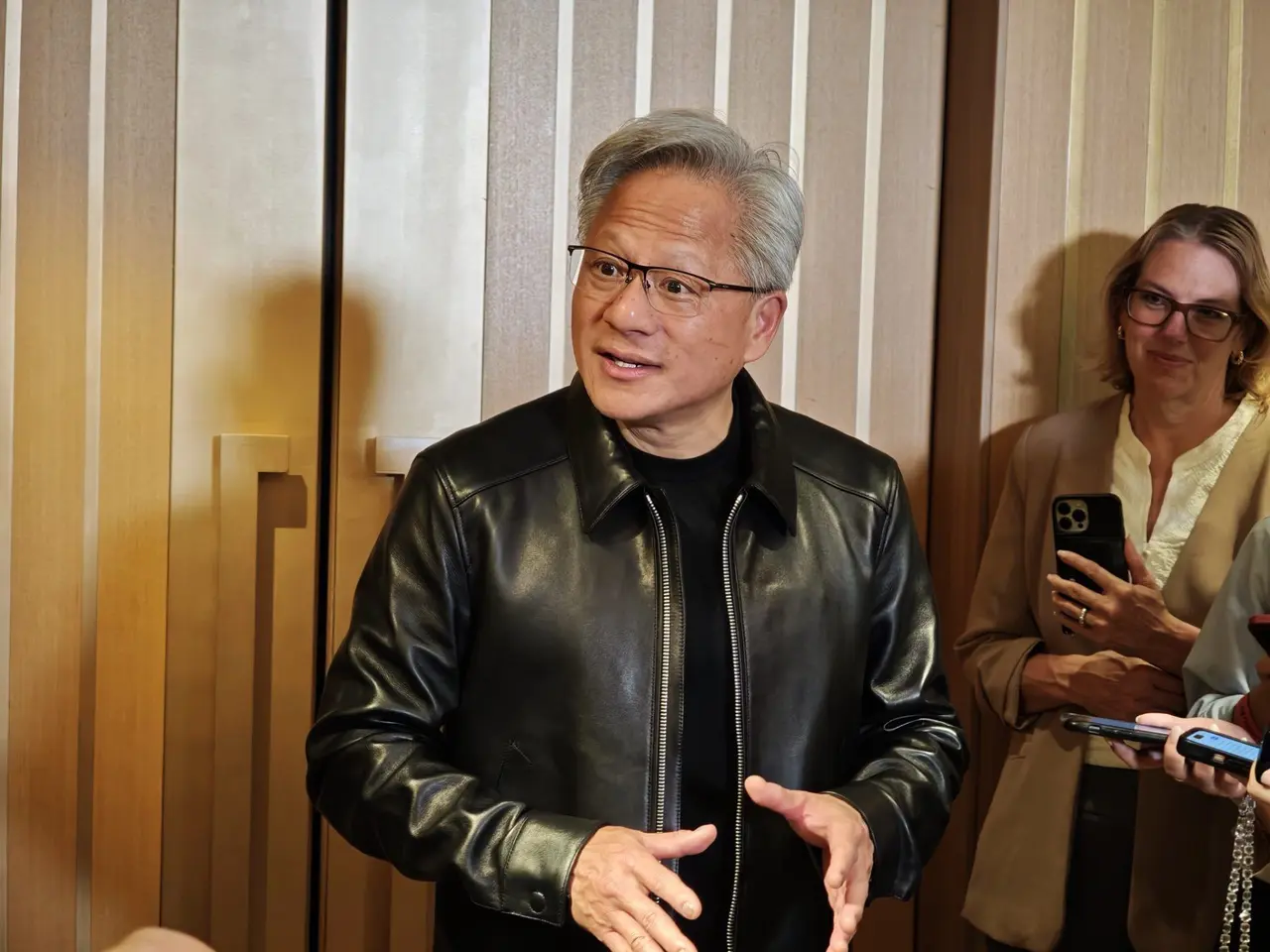
Nvidia CEO Jensen Huang has emphasized that US AI leadership will come through an open ecosystem rather than frontier dominance. "Our AI leadership will be judged not by one frontier AI model, but by whether the United States builds a strong, open ecosystem that diffuses into every sector," Huang wrote in a recent letter
3
.
Source: Wccftech
Huang argued that "open weights expand access to the AI economy" and that "relying solely on closed models is not inherently safe: they can be breached, misused, or fail in ways that outsiders cannot detect." He added that "concentrating advanced AI capabilities behind a small number of closed models compounds that risk"
3
. China currently leads the open-weight space, with Alibaba's Qwen models downloaded more than 3 billion times over the past six months, placing it ahead of Google, OpenAI, Meta and other rivals3
.Related Stories
Nvidia's Strategic Hedge Against GPU Demand Collapse
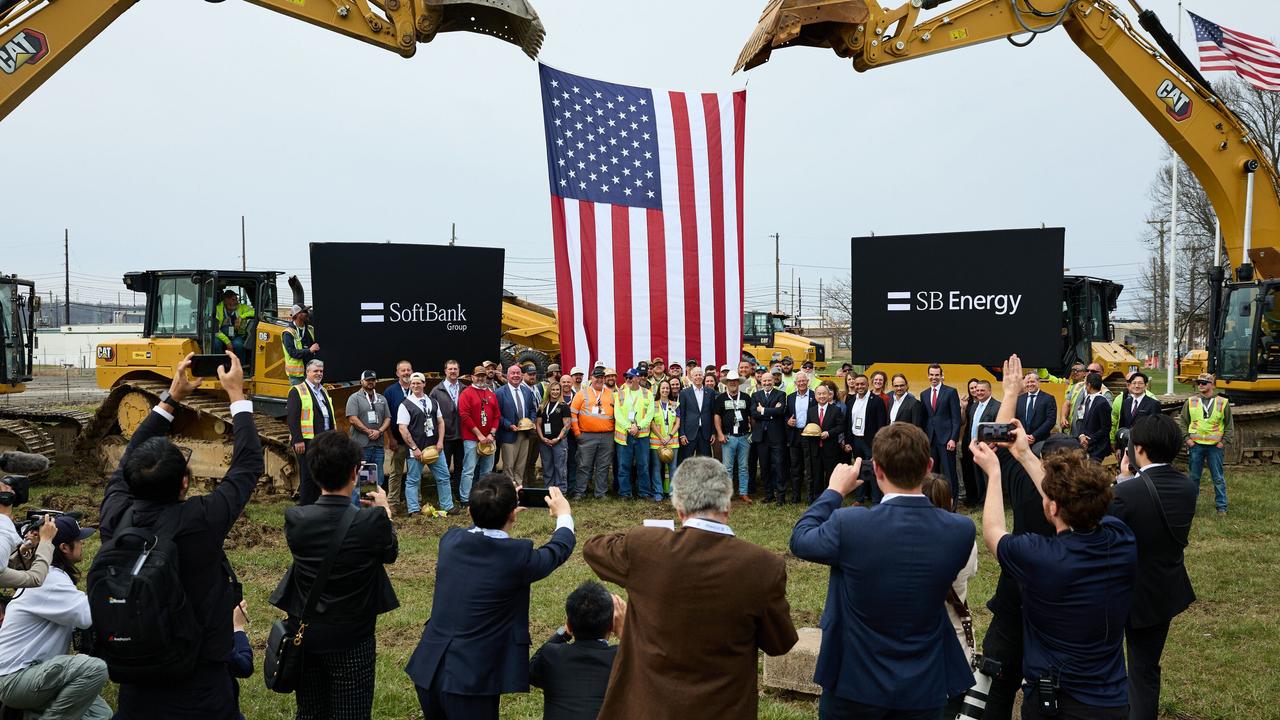
By earmarking $7 billion for Poolside, Nvidia is establishing itself as a potential buyer of last resort for its own GPUs should demand suddenly collapse
5
. The deal allows Nvidia to redirect a significant proportion of its GPUs to internal Nemotron-related workloads if necessary, transforming the GPU giant from merely supplying infrastructure to competing directly with companies like OpenAI and Anthropic5
.This hedging strategy appears timely. OpenAI CEO Sam Altman recently conceded he was wrong about his aggressive AI adoption timeline, admitting the economy will incorporate AI at a much slower pace than previously believed
5
. Nvidia unveiled Nemotron 3.5 Lightning in early August, claiming the model generates tokens at a rate 4x faster than similar-sized models, though it only speeds up actual agentic tasks by 30 percent5
. Poolside's technology could help bridge these performance gaps.What's Next for Both Companies
Poolside employees joining Nvidia will reportedly work on the company's Nemotron project to develop open-weight AI models
3
. Nvidia launched its Nemotron Coalition in March, bringing together open-model developers to share expertise, data and computing resources4
. The company is also working towards a trillion-parameter open model and recently halved a $250 billion commitment to OpenAI1
.Poolside's founders say they are "not ready to share the updated vision" for what remains of the company
1
. Poolside Infrastructure Company, spun out in January, is building a 1.2GW data center in Texas and appointed a CEO two months ago and a CFO this week, both before Friday's announcement1
. The investor letter suggests human-level AI capability will be "fully commoditized by open source models," pointing toward a future where open-weight AI models become the standard rather than the exception1
.References
Summarized by

Navi
[1]
[3]
[4]
Related Stories
Nvidia Prepares Major $1 Billion Investment in AI Coding Startup Poolside
30 Oct 2025•Business and Economy

Nvidia invests $1.5B in SB Energy, backs OpenAI's Ohio data center with $105B guarantee
15 Aug 2026•Business and Economy
Nvidia to Acquire Hugging Face for $13 Billion in Strategic Move to Dominate Open-Source AI
24 Aug 2026•Business and Economy

Recent Highlights



Recent Highlights
Today's Top Stories





Don’t drown in AI news. We cut through the noise - filtering, ranking and summarizing the most important AI news, breakthroughs and research daily. Follow topics that matter to you and stay ahead.


