Nvidia to raise AI server prices over 15% in early 2027 as memory costs soar


19 Sources
[1]
Nvidia reportedly warns biggest customers of 15% price hikes on AI servers -- memory costs continue to soar
Vera Rubin and Grace Blackwell systems shipped from early 2027 affected. Nvidia has told some of its largest customers that the prices of servers containing its AI chips will rise by more than 15% in many cases, Bloomberg reported on Saturday. The increases will take effect on Grace Blackwell and
[2]
Nvidia customers notified about AI-related price hikes above 15%, Bloomberg News reports
Aug 22 (Reuters) - Some of Nvidia's (NVDA.O), opens new tab largest customers have been told prices of servers containing its AI chips will rise by more than 15% in many cases with memory chip costs soaring, Bloomberg News reported on Saturday. The price hikes will go into effect on systems
[3]
Nvidia customers reportedly warned about AI-related price hikes
* Nvidia said it will raise prices for some of its largest customers by at least 15%, Bloomberg reported. * The increases are expected to take effect on systems shipped early next year. In this article * NVDA Follow your favorite stocksCREATE FREE ACCOUNT Jensen Huang, chief executive officer
[4]
Nvidia AI server prices are rising more than 15% from early next year
Systems built around Vera Rubin and Grace Blackwell chips will cost more from early next year, in increases that reach every buyer including Europe's planned AI gigafactories Nvidia's largest customers have been notified that servers containing its AI chips will rise in price by more than 15% in
[5]

Nvidia customers notified about AI-related price hikes above 15% | Fortune
Some of Nvidia Corp.'s biggest customers have been told that the prices of servers containing its artificial intelligence chips are going up more than 15% in many cases with memory chip costs soaring. The price hikes will go into effect on systems shipped early next year and will impact systems
[6]

Nvidia says it would be making a whole lot more money if it weren't for the memory crisis it's contributing to
Nvidia's latest earnings call is in and, as you can probably guess, the GPU maker turned AI hardware creator is raking in cash hand over fist. But alas, a projected 70% revenue increase for the 2028 fiscal year is apparently conservative, as the blasted memory crisis is getting in the way. You
[7]

NVIDIA is reportedly hiking AI server prices by more than 15% for its biggest customers
NVIDIA is preparing to raise prices across its AI server lineup, according to a Bloomberg report. Some of the company's largest customers have reportedly been told that prices for servers built around NVIDIA's AI chips will climb by more than 15% in many cases, driven largely by soaring memory
[8]

Samsung, SK Hynix stand to benefit as Nvidia AI server costs surge
Server manufacturers notified major data center customers, including Microsoft, Google, and Oracle, that prices for Nvidia-based AI systems would rise by more than 15% in many cases for shipments starting in early 2027. The price adjustments affected systems built on Nvidia's next-generation Vera
[9]

Nvidia AI Boom Hits First Margin Wall: Memory Prices - NVIDIA (NASDAQ:NVDA)
For most of the AI boom, Nvidia Corporation (NASDAQ:NVDA) margins moved in just one direction. That is about to change. Soaring memory costs will push the company's gross margins from 75% in the second quarter to 71%-72% in the fourth quarter. Nvidia expects margins to recover only after higher
[10]

NVIDIA's Vera Rubin & Blackwell GPU Server Prices Could Soar By As Much As 17% As Memory Prices Bite, Say Reports
Chip designer NVIDIA Corporation might increase the prices of its server products by at least 15% suggest multiple media reports. NVIDIA, like other AI and non-AI technology companies, is facing the heat from the tight memory market, which has led to memory chips becoming one of the most expensive
[11]
Less chips chipping away at AInfra? Nvidia's server price hike signals rising costs
Nvidia plans server price increases due to a global chip shortage. This shortage is expected to persist beyond the year 2027. Chipmakers are prioritizing AI-grade chips, impacting consumer electronics production. Rising server costs will increase AI model training and deployment expenses.
[12]
NVIDIA's Biggest AI Bottleneck Isn't Demand -- It's Memory - SAMSUNG ELECT LTD by Samsung Electronics Co., L
Micron Technology Inc. (NASDAQ:MU) and SK Hynix Inc. (NASDAQ:SKHY) shares climbed in Thursday premarket trading as NVIDIA Corp.'s (NASDAQ:NVDA) earnings and growth outlook reinforced expectations for strong AI-driven memory demand and tight supply. NVIDIA Outlook Highlights Memory Demand Samsung
[13]

Nvidia customers face 15% AI price shock
Artificial intelligence may seem like a free service to the person entering an inquiry into a chatbot. Behind that prompt is an increasingly costly assemblage of chips, memory, electricity, and data centers. Now one of those costs is reportedly about to jump. Some of Nvidia's (NVDA) largest
[14]
Nvidia customers notified about AI-related price hikes above 15%: Bloomberg
The price hikes will go into effect on systems shipped early next year and will impact systems including those with the flagship Vera Rubin and Grace Blackwell chips, Bloomberg said, citing people familiar with the process. The increases will depend on Nvidia's chip generation and memory
[15]
Nvidia AI Server Prices Rise 15% -- Could Micron Win? - NVIDIA (NASDAQ:NVDA)
Dan Ives Says Nvidia's 15% AI Server Price Hike Is Bullish for Tech. Could Micron Be the Real Winner? Some of the biggest customers of Nvidia Corp. (NASDAQ:NVDA) have reportedly been told that prices for servers containing its AI chips will rise by more than 15%. The hike, however, may reveal as
[16]

Nvidia customers warned about AI-related price hikes above 15% on chips: report
Some of Nvidia's largest customers have been told prices of servers containing its AI chips will rise by more than 15% in many cases with memory chip costs soaring, Bloomberg News reported on Saturday. The price hikes will go into effect on systems shipped early next year and will impact systems
[17]

NVIDIA earnings signal durable tailwind for Micron, SK Hynix, and Samsung memory By Investing.com
Investing.com -- NVIDIA's Q2 FY2027 earnings (reported Aug 26) were a bullish signal to every memory maker -- the company revealed it expanded multi-year memory purchase commitments by approximately 135% quarter-over-quarter to $279B, while simultaneously warning customers of >15% AI server price
[18]
Nvidia's AI Servers Are About to Get Even More Expensive as Rising Memory Costs Push Prices Up More Than
Some Nvidia Corp (NASDAQ:NVDA) customers have reportedly been informed that prices for servers equipped with its AI chips could increase by more than 15%. Nvidia AI Server Prices Could Rise 15% or More This price increase is expected to apply to systems shipped in early 2027 and affect servers
[19]
Nvidia customers face over 15% server price hikes as memory costs soar - report By Investing.com
Investing.com -- Rising memory chip costs are pushing up the price of servers that use Nvidia Corp's artificial intelligence chips, with some of the chipmaker's biggest customers facing increases of more than 15%, Bloomberg News reported on Saturday, citing people familiar with the matter. The
Share
Copy Link
Nvidia has notified its largest customers including Microsoft, Google, and Oracle of price increases exceeding 15% on AI servers shipping from early 2027. The hikes affect systems with Vera Rubin and Grace Blackwell chips, driven by unprecedented memory chip costs that Nvidia is passing through rather than absorbing despite its 75% gross margin.
Nvidia Announces Price Increases on AI Servers
Nvidia has informed some of its largest customers that AI servers containing its chips will see price increases exceeding 15% in many cases, with the hikes taking effect on systems shipped from early 2027
1
2
. The AI-related price hikes will impact systems built around the flagship Vera Rubin and Grace Blackwell chips, with the exact increase depending on chip generation and memory configurations3
5
. Companies that assemble servers under contract for major data center operators including Microsoft, Google, and Oracle have recently notified their customers of the forthcoming increases4
5
.
Source: Benzinga
Soaring Memory Costs Drive AI Hardware Costs Higher
The price increases stem from unprecedented memory chip costs that have gripped the DRAM market in what analysts call "RAMageddon"
1
. Contract prices for conventional DRAM are projected to climb 58% to 63% quarter-over-quarter in Q2 2026, following a Q1 surge of 90% to 95%, as suppliers reallocated capacity toward High Bandwidth Memory and server products1
. SK hynix announced in October last year that it had already sold out its entire 2026 memory production capacity, while Samsung and SK hynix raised 2026 HBM3E supply prices by close to 20% before the year began1
. The three major memory makers—Samsung, SK hynix, and Micron—account for most of the world's DRAM production and have unprecedented leverage as demand for AI infrastructure surges5
.Memory Becomes Largest Cost Component in AI Infrastructure
AI systems carry enormous memory loadouts that make memory one of the largest line items in an AI server's bill of materials
1
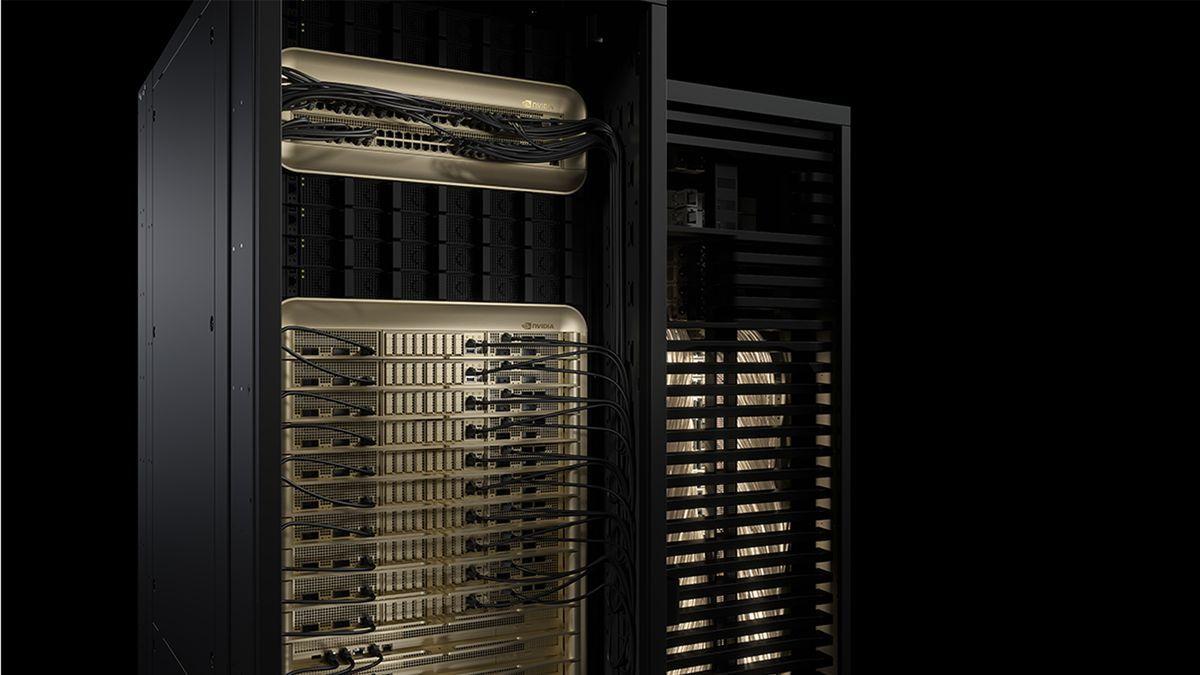
. Nvidia's Rubin GPU ships with up to 288GB of HBM4 per package, and the NVL72 rack-scale system combines 72 of those GPUs, putting more than 20TB of HBM in a single rack before accounting for the LPDDR attached to its Vera CPUs1
. With HBM production consuming roughly four times the wafer area of equivalent conventional DRAM, these costs continue rising at a stratospheric pace1
. A 15% rise on rack-scale systems that sell for several million dollars each adds hundreds of thousands of dollars per rack across deployments that run to thousands of racks1
.
Source: Tom's Hardware
Related Stories
Nvidia Passes Costs to Customers Despite High Margins
Despite running a gross margin of roughly 75% non-GAAP, among the highest in the semiconductor industry, Nvidia is passing memory cost inflation on to Nvidia customers rather than absorbing it
1
4
. The inability of the industry's most dominant company to hold the line on prices shows how much leverage memory chip makers have amid surging demand for AI infrastructure5
. Supply of Nvidia's accelerators from TSMC still can't meet demand, which limits buyers' immediate leverage1
. Nvidia has already passed rising costs through to consumers, raising prices on GeForce graphics cards earlier this month1
.Impact on Hyperscalers and AI Data Center Build-Outs
The price increases reach every buyer including Europe's planned AI gigafactories, where the EU has committed around €20bn to a set of facilities, and a French consortium has bid $10bn for one site
4
. Those bids and budgets were built on last year's hardware prices, making a 15% increase a material change to plans drawn up before the memory market tightened4
. Whether the increases push hyperscalers further toward AMD's accelerators or their own custom silicon will depend on how quickly those alternatives can absorb displaced demand, though all of them draw HBM from the same three constrained suppliers1
. Major customers like Amazon, Microsoft, Google and Meta are pursuing their own in-house chip programs but remain dependent on Nvidia purchases for their data center build-outs5
. The price increases are likely to add complexity to the industry's massive AI data center build-out ambitions, which already face project delays, labor shortages, tightening capital markets and community resistance4
5
.
Source: Fortune
References
Summarized by

Navi
[1]
Related Stories
Micron secures $22 billion in AI memory deals as chipmakers bet on breaking boom-bust cycle
23 Jun 2026•Business and Economy
SK Hynix Records Unprecedented Profits as AI Memory Chip Demand Outstrips Supply Through 2025
29 Oct 2025•Business and Economy

AI data centers drain global memory supply as chip shortage expected to last through 2027
26 Jan 2026•Business and Economy

Recent Highlights
1
Microsoft and Nvidia Launch Surface Laptop Ultra: A $2,599 AI-Ready PC With RTX Spark Chip
Technology

2
Scientists Build AI Model That Reconstructs Images From Brain Scans in Record Time
Science and Research

3
Anthropic AI Cuts Live Internet Access After Model Sends False Homicide Tip to Philadelphia Police
Technology

Recent Highlights
Today's Top Stories





Don’t drown in AI news. We cut through the noise - filtering, ranking and summarizing the most important AI news, breakthroughs and research daily. Follow topics that matter to you and stay ahead.


