8 Sources
[1]
AI chip startup Etched defies skeptics, hits $10.3B valuation from big-name investors
Etched, the AI chip startup founded by three Harvard dropouts in 2022, has closed a $300 million Series C funding round at a $10.3 billion valuation, co-founder and COO Robert Wachen tells TechCrunch. The round was led by Sequoia, with Andreessen Horowitz, SK Hynix, Jane Street, and Diffusion Capital also participating, along with other, earlier investors. Other backers of the company include names like Peter Thiel, Andrej Karpathy, Dylan Field, Amjad Masad, and more. Etched was previously valued at $5 billion in December when it raised a $500 million round, meaning it has doubled its valuation in about seven months. The company says this is the highest valuation ever for a Sequoia-led Series C. Last month, Etched announced that it had successfully manufactured its homegrown chips, that its first full systems were being tested by clients, and it had already booked $1 billion worth of orders. Etched launched at a time when the idea of building a chip specifically for AI models based on transformer technology (the architecture behind most modern AI systems, including ChatGPT and Claude) was considered wild if not wacky. The company is still battling the perception that its products -- which are sold as full systems, not just chips -- involve chips designed to run only specific LLMs. That's not the case, Wachen explains. The systems can run any AI model, including Mixture of Experts models like DeepSeek and Qwen -- an architecture that splits tasks across specialized sub-models rather than relying on one large model -- as well as non-transformer designs like Mamba, which is built on a different underlying architecture known as a state-space model. (Interestingly, the idea of etching parts of a specific AI model directly into silicon to boost performance isn't considered far-fetched anymore. Google is reportedly pursuing the same concept with its Frozen v2 chip for Gemini.) Still, Etched's claim to fame today is that it designed two new components from scratch to speed up inference -- the computing process that happens after a user submits a prompt. "Inference is built in two stages," Wachen says, "prefill and decode." The "prefill phase" involves understanding the prompt, including context. It's mathematically and compute-intensive. The "decode" phase generates the output tokens (the actual answer the user sees). It requires less computation but needs massive amounts of memory. Etched created a prefill chip that operates "dramatically" faster, he promises, "by running at a much lower voltage than any other AI chip. We call this low-voltage inference." Lower voltage generates less heat, which allows the chip to pack in more transistors. For the decode process, Etched created a new type of memory and "interconnect technology that we call cluster scale memory. It allows many chips to connect together and use a shared memory pool at a very, very fast, low latency," he says. The result, Etched promises, is high speeds but lower costs. Because the startup was launched before most of the tech world (besides Nvidia) understood AI's specialized compute needs, the founders, CEO Gavin Uberti, Wachen and CTO Chris Zhu, have faced plenty of skeptics who kept doubting even after announcing the company announced that its first batch of silicon had been successfully manufactured by TSMC. Much of that comes from how few people have had access to the systems. So far, access has been limited to investors and early customers. In fact, that's how Etched landed its list of famous investors in the first place -- by showing them private demos in its office. "Andrej Karpathy from Anthropic, Noam Brown from OpenAI, Geoffrey Hinton, as well as all the investors in the funding round -- these are all people who actually tried the hardware and are very excited about it," Wachen says. Still, it's been a long, difficult road with more to go until the rack systems are mass produced and delivered. The trio famously dropped out of Harvard to launch Etched, not knowing then how to raise cash (much less the loads of it they would need) or how to hire. "We had no idea how hard it was going to be," he said. "I think we still have to be humbled by what it will take to actually get to scale." Wachen remembers landing in the Bay Area after telling his parents he was leaving school to do a startup, with no office or apartment arranged. He slept on the floor of a friend's unfurnished house. "I remember staying in my friend's house that they were about to sell, using a towel as a blanket," he laughs. The founders eventually set up the servers they needed to run the chip-design tools in the garage of an early employee and "every time it needed to be rebooted, he would call his wife, and she would go and hit the reboot button." Today, there are 400 people bustling in an office, and Etched operates a 2 megawatt data center. "We're running tokens in our in our lab today, working with some of the largest AI companies in the world," he says. Wachen also has a blanket now, and a mattress "and a pillow even. Multiple pillows," he jokes. More importantly, he and his co-founders never let the doubters stop them. "It's come a long way. It's a very, very different world. But I think, when you really think something's possible, and you just work at it for a long time, you can do it."
[2]
AI chip startup Etched raises $300 million at $10.3 billion valuation
July 23 (Reuters) - Sequoia-backed Etched said on Thursday it raised $300 million in a Series C funding round that valued the AI chip company at $10.3 billion. Etched is among a growing number of startups seeking to challenge Nvidia's dominance in AI chips by developing â hardware for inference, the process of running artificial intelligence models. Here are some details: Reporting by Anzar Mehraj in Bengaluru; Editing by Sahal Muhammed Our Standards: The Thomson Reuters Trust Principles., opens new tab
[3]
Etched raises $300M at a $10.3B valuation, SK Hynix in
Etched, the chip startup three Harvard dropouts founded in 2022, has raised $300M at a $10.3bn valuation. It has doubled its worth in seven months, drawn in the memory giant SK Hynix, and set out to beat Nvidia at the one job that matters most: running AI models. Etched has a simple pitch. Nvidia builds chips that do everything. Etched builds chips that do one thing, inference, and claims to do it far better. On Thursday the bet got a lot more money behind it. The startup raised $300 million in a Series C round that values it at $10.3 billion. Sequoia led the round. Andreessen Horowitz, Jane Street, Diffusion and, tellingly, the memory maker SK Hynix all took part. It is, the company says, the highest valuation ever for a Sequoia-led Series C. Etched has now raised more than $1 billion in total. The number that stands out is the speed. Etched was worth $5 billion in December. Seven months later it is worth twice that. The startup only emerged from stealth in June, when it revealed a working chip and $1 billion in signed orders. A chip for one job Etched started with a contrarian idea. Back in 2022, building a chip tuned for AI models based on the transformer architecture looked, in the words of TechCrunch's Julie Bort, wild if not wacky. The three founders dropped out of Harvard to try anyway. They are chief executive Gavin Uberti, president Rob Wachen, and chief technology officer Chris Zhu. The perception has been hard to shake. Critics assumed Etched's systems could run only a handful of specific models. Wachen says that is wrong. The clusters are architecture-agnostic. They run large mixture-of-experts models such as DeepSeek and Qwen. They also run non-transformer designs like Mamba, a wholly different approach. The wider industry has come round to the core idea. Google is reportedly hardwiring Gemini's architecture into its own Frozen v2 chip. Etched no longer looks so wacky. Power and memory Etched sells full rack-scale systems, not loose chips. Its edge, it claims, rests on two inventions. Each targets a different bottleneck in inference. The first is power. AI chips overheat as they push more calculations, so they throttle their own speed. Etched runs its math blocks at under half the usual voltage. Less voltage means less heat. That lets the chip pack in more transistors and run harder. It calls this low-voltage inference. The second is memory. Generating an answer demands huge, fast memory access. Etched built a shared memory pool that spans a whole cluster of chips, stitched together by a proprietary high-speed interconnect. That its new backers include SK Hynix, the world's leading maker of AI memory, is no coincidence. Time to ship The hard part starts now. Etched has to turn prototypes into mass-produced racks. It has opened an 80,000 square-foot facility near its San Jose base, plus a factory in Taiwan. Its team of 400 includes engineers poached from Nvidia, Broadcom, Google's TPU group and SK Hynix. Demand, Reuters reported, is outrunning supply as customers move from testing to deployment. Uberti is blunt about what comes next. "Now is the time to be aggressive," he said. "Our chips work, people want them, and it's time to ship." Whether they ship at the scale Nvidia does is the open question. Etched has raised the money and the expectations. The race to make inference cheap now has one more well-funded contender, with a memory giant betting it can win.
[4]
AI chip startup Etched more than doubles valuation to $10.3B in new $300M round
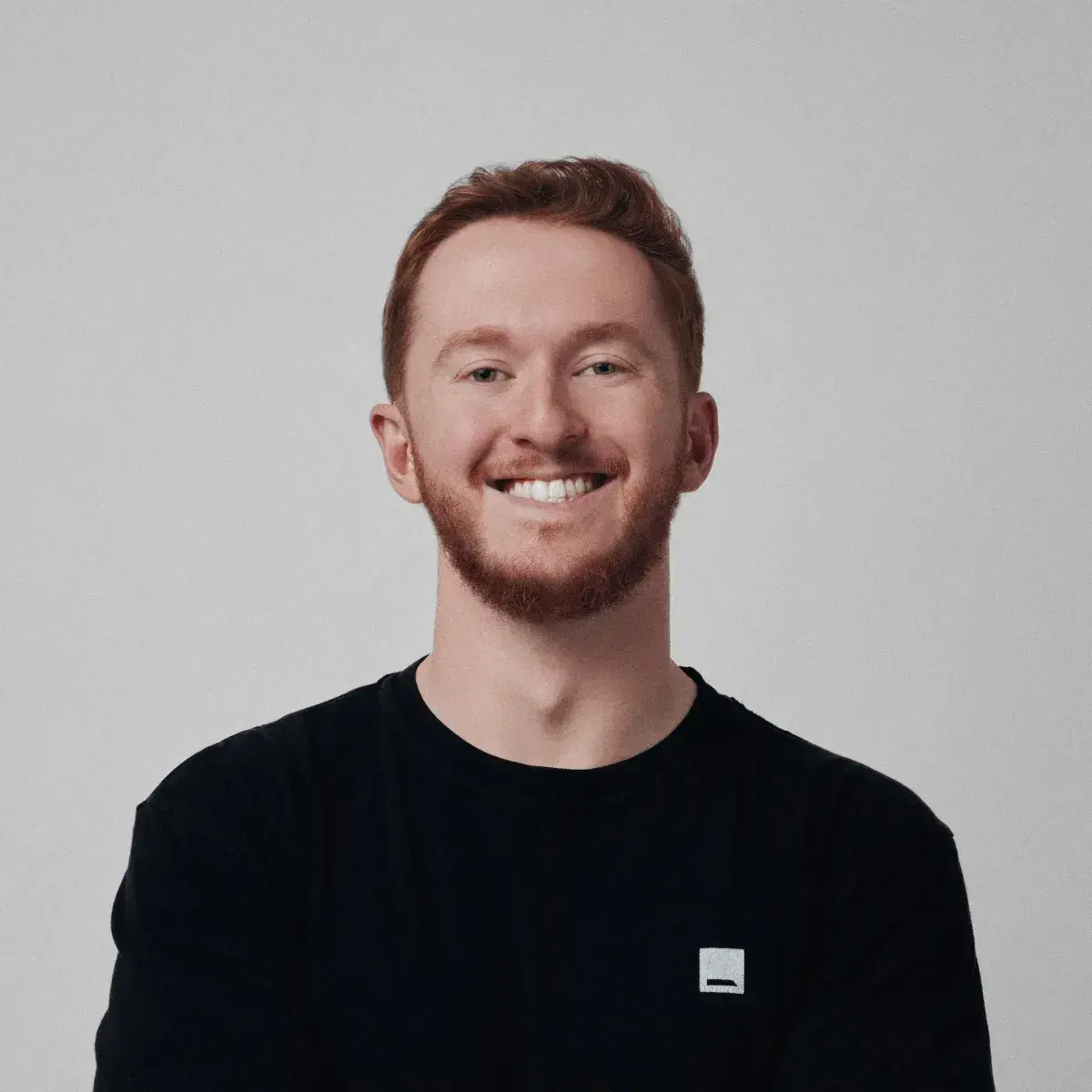
Etched Inc., a startup with a chip optimized for artificial intelligence inference, today announced that it has raised $300 million in funding. The Series C round was led by Sequoia. SK Hynix Inc., the world's largest supplier of memory for AI chips, participated as well alongside Andreessen Horowitz, Jane Street and Diffusion. Etched is now valued at $10.3 billion, more than double what it was worth in December. Nvidia Corp.'s popular graphics cards are designed to run both AI training and inference workloads. According to Etched, optimizing its chip solely for the latter use cases enabled it to develop a more efficient design. The company plans to ship the processor as part of an appliance that features custom cooling components and interconnects. When an AI model receives a prompt, it kicks off the inference workflow by performing so-called prefill processing. That step helps the model understand the prompt's meaning. The task is carried out with matrix multiplications, mathematical calculations that differ significantly from a regular multiplication. The number of matrix multiplications that a chip can perform per second is tied to its clock frequency. The higher the frequency, the more calculations the chip can complete. Traditional GPUs must limit their clock rate to avoid generating excess heat. According to Etched, its chip avoids GPUs' thermal bottleneck thanks to a mechanism dubbed LVI. The technology minimizes the processor's voltage, which in turn lowers its temperature. That enables it to operate at higher clock frequencies than graphics cards. The prefill phase of the inference workflow by a so-called decode phase. During that step, AI models generate a response to the user's prompt one token at a time. Etched's chip speeds up decode calculations with a mechanism dubbed Cluster Scale Memory. It enables all the accelerators in a rack to share the same memory. When a piece of data is kept in shared memory, there's no need to send a separate copy of the data to each accelerator. That makes the more prompt processing workflow more efficient. "The infrastructure required to serve frontier AI sustainably and economically was never going to come from incremental improvements to existing hardware," said Etched co-founder and Chief Executive Officer Gavin Uberti (pictured, right). "This round reflects a growing industry conviction that the challenge demands a new entrant willing to rebuild the stack from first principles. Etched plans to start shipping its first racks this summer. The company is building an SMT, or surface mount technology, production line to expedite the assembly of its appliances. The production line will be located in a 80,000 square-foot facility near the company's San Jose, California headquarters that also functions as a prototyping lab.
[5]
AI chip startup Etched raises $300 million at $10.3 billion valuation
Etched secured three hundred million dollars in a Series C funding round. This investment values the artificial intelligence chip company at ten point three billion dollars. Sequoia led the funding round with several other prominent investors participating. The company plans to use these funds to expand production and customer deployments. Demand for Etched's AI inference systems continues to grow significantly. Sequoia-backed Etched said on Thursday it raised $300 million in a Series C funding round that valued the AI chip company at $10.3 billion. Etched is among a growing number â of â startups seeking to challenge Nvidia's dominance in AI chips by developing hardware for inference, the process of running artificial intelligence models. Here are some details: The funding round was led â by Sequoia, with participation from Andreessen Horowitz, Jane Street, Diffusion and â SK Hynix. Etched said the financing represents the highest valuation ever for a Sequoia-led Series C. The company will use the proceeds to expand production and customer deployments. It recently opened an 80,000-square-foot facility near its San Jose, California headquarters to expand production and prototyping. Etched â said demand for its AI inference systems continues to outpace supply as customers move from evaluation to deployment. The company said it has about 400 employees, and is rapidly expanding.
[6]
Nvidia's New AI Rival Could Reportedly Be Worth $20 Billion - NVIDIA (NASDAQ:NVDA), Cerebras Systems (NAS
Nvidia (NASDAQ:NVDA) rival AI chip startup Etched is reportedly in talks to raise funds at roughly a $20 billion valuation, quadrupling its prior mark. Existing backer Jane Street is spearheading the new financing, The Wall Street Journal reported on Friday, citing sources. Separately, Etched is raising a round led by Sequoia Capital at a $10 billion valuation. Neither deal has closed, and terms may still shift. Etched did not immediately respond to Benzinga's request for comment. Back-to-Back Funding Rounds The two funding rounds reflect a growing trend among AI startups, which are raising capital at sharply different valuations within weeks. Strong investor demand, limited access to top-tier deals, and fear of missing out on the next big AI winner are pushing some backers to pay up quickly, allowing companies to return for follow-on rounds at steeply higher prices. San Jose-based Etched builds chips for AI inference, running trained models, rather than general-purpose GPUs like Nvidia's. Its website cites roughly $1 billion in customer interest, though large-scale deliveries haven't started. Growing Competition Founded in 2022 by Harvard dropouts Gavin Uberti, Chris Zhu and Robert Wachen, Etched counts Peter Thiel and Ribbit Capital among early backers. Disclaimer: This content was partially produced with the help of AI tools and was reviewed and published by Benzinga editors. Image via Shutterstock Market News and Data brought to you by Benzinga APIs To add Benzinga News as your preferred source on Google, click here.
[7]
AI Chip Startup Etched Eyes $20 Billion Valuation | PYMNTS.com
As The Wall Street Journal (WSJ) reported Friday (July 17), sources familiar with the matter say the company is capitalizing on a soaring market for venture capital investments in AI startups, and is also raising capital at a $10 billion valuation in a separate round led by Sequoia Capital. WSJ noted that these types of back-to-back funding have become more common in Silicon Valley during the AI boom. Companies are frequently selling stakes at one valuation and then quickly raising more money at much higher prices, which the report calls a sign of the bargaining power companies have over investors racing to invest in the leading AI firms. According to the report, Etched has said it is developing a chip for running AI models, otherwise known as inference. The company website says Etched is testing its initial chip design and working to validate its first product to meet $1 billion in demand from clients. WSJ added that although Nvidia is the leading vendor of AI chips, a slew of startups is trying to compete following the success of Cerebras Systems and Groq. Many of the new startups are developing chips tailored for inference, while Nvidia's dominance is based in the ability of its graphics processing units, or GPUs, to train AI models. Etched was launched in 2022 by a trio of Harvard dropouts: Gavin Uberti, Chris Zhu and Robert Wachen, the report added. Investment firm Stripes, Peter Thiel, Ribbit Capital and Primary Venture Partners are all among its early backers. Meanwhile, PYMNTS wrote earlier this year that the framing of the AI story as an "arms race" overlooks another, more difficult, aspect: demand. This came after a series of developments suggesting that the next stage in AI's evolution could depend less on how much capability technology companies are able to supply and more on whether ordinary organizations can generate ongoing demand inside day-to-day work. "After all, the question facing the market is no longer simply whether frontier models can perform astonishing tasks," that report said. "It is whether accountants, nurses, insurance adjusters, teachers, procurement managers, financial analysts and their peers across Main Street can integrate AI into the highly specialized workflows they understand better than any Silicon Valley engineer." For all PYMNTS AI coverage, subscribe to the daily AI Newsletter.
[8]
Etched seeks $20 billion valuation in new AI chip funding round - WSJ reports By Investing.com
Investing.com -- Artificial intelligence chip startup Etched is in talks to raise capital at a valuation of about $20 billion, quadrupling its previous valuation as investors seek alternatives to Nvidia Corp. (NASDAQ:NVDA), The Wall Street Journal reported, citing people familiar with the matter. Jane Street, an existing investor in the San Jose-based company, is leading the proposed financing. Etched is also raising money through a separate round led by Sequoia Capital at a $10 billion valuation. Neither transaction has closed, and their terms could still change. The two rounds illustrate a growing practice among leading AI startups of raising capital at sharply different valuations within a short period. Strong investor demand has allowed some companies to sell stakes before returning for additional funding at substantially higher prices. Etched is developing specialised chips for AI inference, the process of running trained models to generate responses or complete tasks. Its approach differs from the graphics processing units that Nvidia sells for both training and inference workloads. The startup is testing its initial chip design and validating its first product. Its website indicates that prospective customers have expressed interest in about $1 billion in demand, though the company has yet to begin large-scale commercial deliveries. Nvidia remains the dominant supplier of processors used to build and operate AI systems. Demand for alternatives has grown as technology companies seek lower inference costs, greater supply, and chips optimised for specific workloads. Several startups are pursuing the same opportunity. Cerebras Systems and Groq have gained attention for their AI processors, with SambaNova Systems and UK-based Fractile also developing inference-focused hardware. Etched was founded in 2022 by Harvard dropouts Gavin Uberti, Chris Zhu and Robert Wachen. Earlier investors include Stripes, Peter Thiel, Ribbit Capital, and Primary Venture Partners. The proposed $20 billion valuation would place the four-year-old company among the world's most highly valued private semiconductor startups before its first chip has been commercially validated.
Share
Copy Link
Etched, founded by three Harvard dropouts in 2022, has closed a $300 million Series C funding round at a $10.3 billion valuationâdoubling its worth in just seven months. Led by Sequoia with participation from SK Hynix and Andreessen Horowitz, the AI chip startup is building specialized hardware for inference to challenge Nvidia's dominance with custom chips designed for low-voltage operation and cluster-scale memory.
Etched, the AI chip startup founded by three Harvard dropouts in 2022, has closed a $300 million Series C funding round at a $10.3 billion valuation, more than doubling its worth from $5 billion in December
1
. The round was led by Sequoia, with participation from Andreessen Horowitz, SK Hynix, Jane Street, and Diffusion Capital2
. According to Etched, this represents the highest Etched valuation ever for a Sequoia-led Series C5
. The company has now raised more than $1 billion in total funding, backed by notable investors including Peter Thiel, Andrej Karpathy, Dylan Field, and Amjad Masad1
.
Source: Benzinga
Etched is among a growing number of startups seeking to challenge Nvidia's dominance in AI chips by developing specialized hardware for inferenceâthe process of running artificial intelligence models after training
2
. While Nvidia builds chips that handle both training and AI inference workloads, Etched focuses exclusively on AI model inference, claiming to deliver superior performance for this specific use case3
. The company's foundersâCEO Gavin Uberti, COO Robert Wachen, and CTO Chris Zhuâdropped out of Harvard to pursue what was initially considered a contrarian idea: building chips optimized for transformer-based models, the architecture behind ChatGPT and Claude1
.
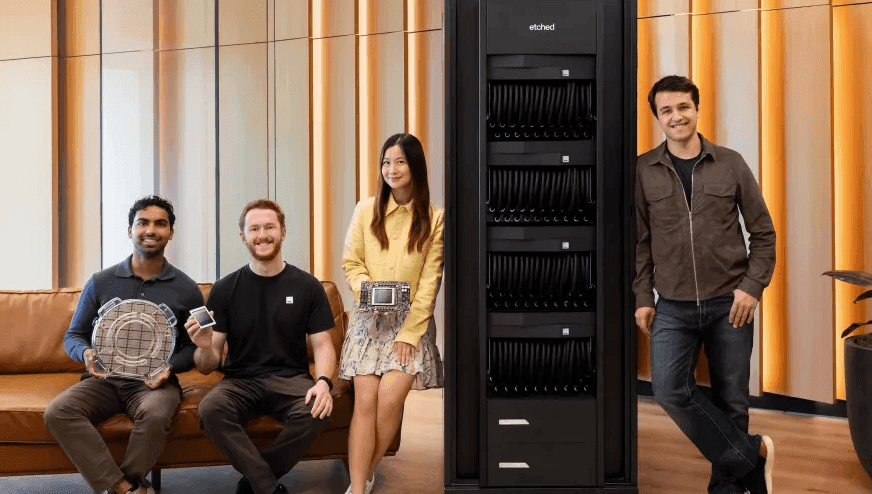
Source: SiliconANGLE
Etched's approach to AI inference centers on two custom-designed components that address different bottlenecks in the computing process. The first innovation involves low-voltage operation for the prefill phase, which handles prompt understanding and context processing
4
. By running at much lower voltage than traditional AI chips, Etched generates less heat, allowing the chip to pack in more transistors and operate at higher clock frequencies1
. The second breakthrough is cluster-scale memory, a proprietary interconnect technology that enables multiple chips to share a memory pool at very low latency during the decode phase, when models generate output tokens4
. The involvement of SK Hynix, the world's largest supplier of memory for AI chips, signals strong industry confidence in Etched's memory architecture3
.Related Stories
The AI chip startup faced considerable skepticism when it launched, with critics assuming its systems could only run specific large language models
1
. Wachen clarifies that Etched's systems are architecture-agnostic, capable of running mixture-of-experts models like DeepSeek and Qwen, as well as non-transformer designs like Mamba3
. Last month, Etched announced it had successfully manufactured its chips via TSMC, completed testing of its first full systems with clients, and secured $1 billion worth of orders1
. The company earned investor confidence through private demonstrations, with figures like Andrej Karpathy from Anthropic, Noam Brown from OpenAI, and Geoffrey Hinton all testing the hardware firsthand1
.The journey from Harvard dropouts sleeping on floors to running a 400-person operation illustrates the rapid scaling challenge ahead. Wachen recalls arriving in the Bay Area with no office or apartment, sleeping on a friend's floor using a towel as a blanket, while the team ran chip-design servers in an early employee's garage
1
. Today, Etched operates a 2-megawatt data center and recently opened an 80,000-square-foot facility near its San Jose, California headquarters to expand mass production and prototyping5
. The company also established a factory in Taiwan and plans to start shipping its first racks this summer3
. Demand for Etched's AI inference systems continues to outpace supply as customers move from evaluation to deployment5
. Uberti states bluntly: "Now is the time to be aggressive. Our chips work, people want them, and it's time to ship"3
.
Source: ET
Summarized by
Navi
[3]
30 Jun 2026â˘Startups

14 Jan 2026â˘Startups

04 Feb 2026â˘Business and Economy

1
Technology

2
Science and Research

3
Policy and Regulation