Nvidia's Rubin HPC GPU targets science, and it won't ship until 2028


7 Sources
[1]
Nvidia reveals Rubin HPC, a GPU with 50,000+ CUDA cores for scientific simulation
Serving tech enthusiasts for over 25 years. TechSpot means tech analysis and advice you can trust. What we know so far: Nvidia is building a GPU with more than 50,000 CUDA cores for one main job: running the simulations that AI agents start when they help scientists and engineers test ideas. The
[2]
Nvidia debuts new Rubin HPC chip, scientific research libraries
Nvidia Corp. today introduced a set of offerings designed to speed up scientific research across a range of fields. The lineup is headlined by Rubin HPC, an upcoming graphics card with significantly more cores than the company's current flagship chip. It's joined by over a half-dozen software
[3]
NVIDIA Rubin HPC GPU Brings More Than 50,000 CUDA Cores to Scientific Computing
NVIDIA unveiled Rubin HPC at SC26 as a new GPU for scientific simulation, analytics, engineering, and AI-assisted research. The company says one GPU will contain more than 50,000 CUDA cores, its largest disclosed CUDA core count to date. Rubin HPC is part of the Vera Rubin platform and is designed
[4]
NVIDIA's next supercomputing GPU packs over 50,000 CUDA cores, but won't arrive until 2028
NVIDIA's Rubin HPC targets scientific simulations and supercomputing, with sparse data acceleration and seventh-generation NVLink arriving in 2028. NVIDIA has used the SC26 supercomputing conference to unveil Rubin HPC, a GPU with more than 50,000 CUDA cores on a single chip, the most it has ever
[5]

NVIDIA Rubin HPC GPU Packs Over 50,000 CUDA Cores, All Connected Using 7th Gen NVLink To Accelerate Simulations & Data Processing As Launch Slated For 2028
NVIDIA Rubin HPC is designed as the company's most powerful solution for science & engineering workloads, offering over 50K cores. NVIDIA Brings Record-Breaking CUDA Core Count With Rubin HPC, Coming in 2028 Today at SC26, NVIDIA is announcing its Rubin HPC GPU. The GPU is based on the Rubin
[6]

NVIDIA Unveils Rubin HPC GPU for Science and Engineering
NVIDIA unveiled Rubin HPC at SC26. The GPU packs over 50,000 CUDA cores and uses seventh-generation NVLink. It speeds sparse matrix work and keeps data flowing to the cores. Paired with CUDA-X libraries, it helps AI agents run simulations. Launch is set for 2028. NVIDIA has announced a new chip
[7]

GPU giants throw HPC users some tasty crumbs
Nvidia unveils an HPC-optimized Rubin GPU to challenge AMD's 288 teraFLOPS MI430X At Supercomputing 2026 this week, Nvidia unveiled a new variant of its Rubin GPUs aimed at - you'll never believe it - high performance computing (HPC). The creatively named Rubin HPC promises more than 50,000 CUDA
Share
Copy Link
NVIDIA announced its largest disclosed CUDA core count yet for a single GPU, aimed at scientific simulation. The specs buyers need are missing, and the chip is expected in 2028.
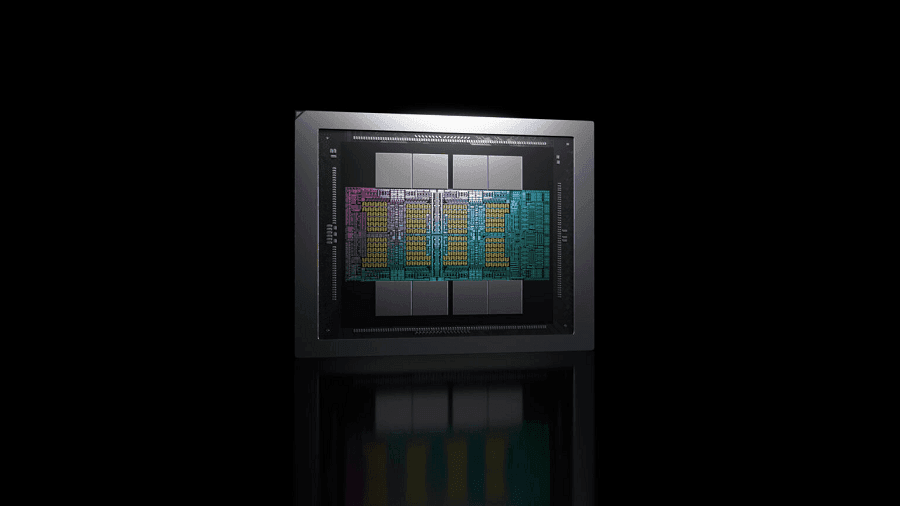
NVIDIA has announced the Rubin HPC GPU, a chip aimed at scientific simulation and engineering rather than AI alone, and it carries the largest CUDA core count NVIDIA has disclosed for a single GPU: more than 50,000
5
2
1
.
Source: SiliconANGLE
The chip debuted at the SC26 supercomputing conference in Chicago on November 16
5
2
1
, and it is not expected to be available until 20282
4
.
Source: Analytics Insight
Built for simulation
NVIDIA's argument is that faster simulation lets AI agents test ideas, check the results and steer the next run. Scientists and engineers can then screen more candidate materials, molecules and designs. "For agents tackling science and engineering, faster simulation means faster discovery," said Ian Buck, the company's vice president of hyperscale and high-performance computing
5
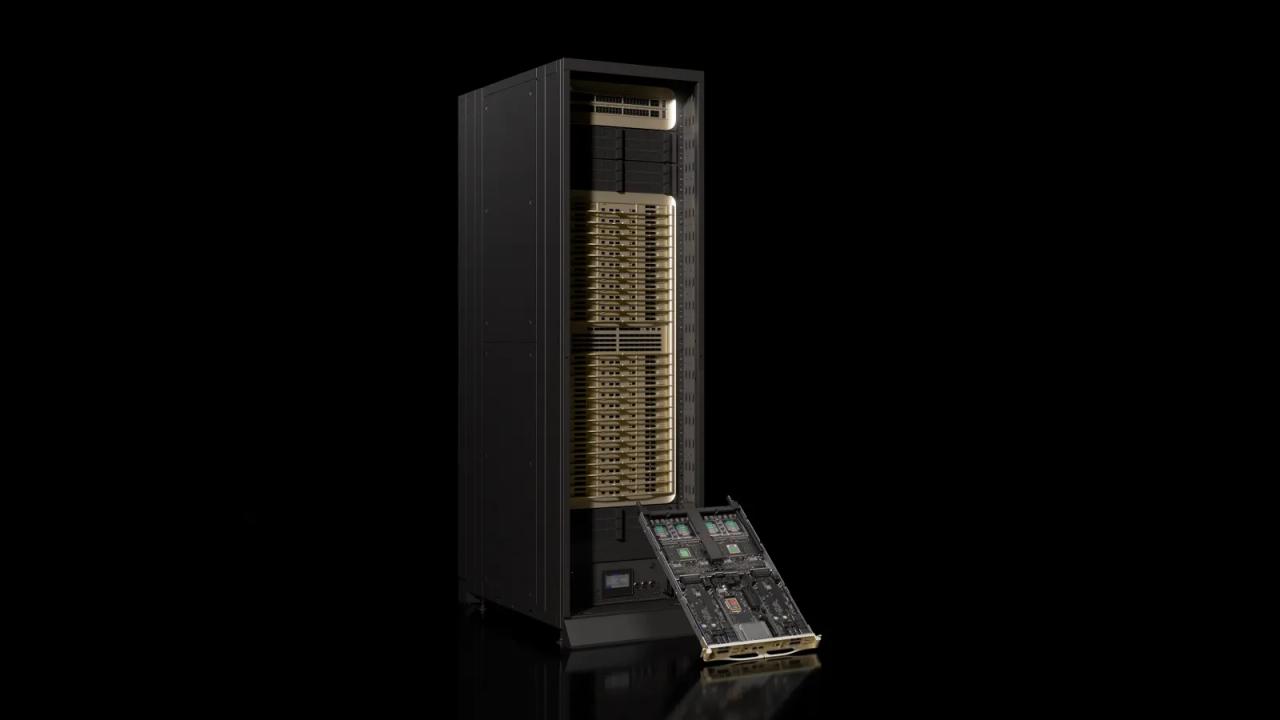
.The design reflects that pitch. Rubin HPC uses seventh-generation NVLink to connect GPUs to each other and includes a sparse data acceleration feature whose job is keeping all those cores supplied with data
5
3
. For scale, the current flagship Rubin GPU has 28,672 CUDA cores. That would be at least 74% more cores, a jump worked out by TechSpot rather than claimed by NVIDIA1
.
Source: Guru3D
What NVIDIA left out
NVIDIA said nothing about memory type or capacity, memory bandwidth, board power, double-precision performance, configurations, price or how the chip compares to anything else
3
1
4
. Double-precision arithmetic, the math traditional scientific computing runs on, is exactly where the answer is missing. That absence matters because AMD used the same conference to promote an Instinct MI400 variant with record double-precision numbers. It is a field NVIDIA has largely sat out while it concentrated on AI5
1
.Even the core count has an asterisk. One report's reading of NVIDIA's released image points to two GPUs joined by NVLink rather than one, which would change what 50,000 cores means. NVIDIA has not confirmed the layout, and its own description stops at the single-GPU count
5
1
4
. None of those numbers can be checked yet. Until independent testing exists, the gains depend on model size, memory capacity, libraries and how well each workload fits the GPU3
.Related Stories

The software ships first
What researchers can use today is software. NVIDIA debuted more than half a dozen tools alongside the chip
2
6
. cuPhoton.xBeam, per NVIDIA, cut an Event Horizon Telescope analysis from a month-long task to eight minutes in one test2
. cuSpa, an open-source tool for calculating cell shapes, ran 900-fold over CPUs in one test at Memorial Sloan Kettering Cancer Center, again by NVIDIA's account2
6
. There is also a Nemotron for Science bundle built on a 124-billion-parameter model trained on roughly 50,000 chemistry questions, plus new CUDA-Q quantum building blocks2
6
. Buck framed the software push the same way, saying Nemotron for Science supplies open models, data and post-training recipes for agents that put CUDA-X tools to work2
.Alongside all of it, NVIDIA is teaming with IBM and the US Energy Department's Fermilab on a modular quantum codesign platform. The goal is to pair DGX B200 systems with IBM quantum hardware in one codesign environment
2
.The question one report raises, citing the cancelled Rubin CPX, is whether Rubin HPC reaches market at all, and nothing NVIDIA said at SC26 settles it
5
.References
Summarized by

Navi
[2]
[4]
Related Stories
NVIDIA Unveils Next-Gen AI Powerhouses: Rubin and Rubin Ultra GPUs with Vera CPUs
19 Mar 2025•Technology

Nvidia Unveils Vera Rubin Superchip: Six-Trillion Transistor AI Platform Set for 2026 Production
29 Oct 2025•Technology

Nvidia Vera Rubin architecture slashes AI costs by 10x with advanced networking at its core
06 Jan 2026•Technology
Recent Highlights


Recent Highlights
Today's Top Stories





Don’t drown in AI news. We cut through the noise - filtering, ranking and summarizing the most important AI news, breakthroughs and research daily. Follow topics that matter to you and stay ahead.


