Nvidia Unveils Vera Rubin Superchip: Six-Trillion Transistor AI Platform Set for 2026 Production


7 Sources
[1]
Nvidia Offers First Look at Vera Rubin Superchip
Nvidia CEO Jensen Huang (Credit: Kent Nishimura/Bloomberg via Getty Images) Don't miss out on our latest stories. Add PCMag as a preferred source on Google. While batting away deepfakes, Nvidia's GTC DC show showed off the superchip platform that will power next-generation data centers: Vera
[2]
Nvidia reveals Vera Rubin Superchip for the first time -- incredibly compact board features 88-core Vera CPU, two Rubin GPUs, and 8 SOCAMM modules
At its GTC keynote in DC on Tuesday, Nvidia unveiled its next-generation Vera Rubin Superchip, comprising two Rubin GPUs for AI and HPC as well as its custom 88-core Vera CPU. All three components will be in production this time next year, Nvidia says. "This is the next generation Rubin," said
[3]
Nvidia showcases Vera Rubin AI "Superchip" with 88 CPU cores and 100 PetaFLOPS of FP4 compute
Serving tech enthusiasts for over 25 years. TechSpot means tech analysis and advice you can trust. What just happened? Nvidia has shifted its focus amid the AI boom from its gaming and professional GPU business to AI hardware design, driving its market value to nearly $5 trillion. The company has
[4]
Nvidia's new six-trillion transistor Vera Rubin 'superchip' for AI makes the 92-billion transistor RTX 5090 gaming GPU look positively puny
Nvidia's ever-optimistic CEO, Jensen Huang, has revealed more details of the company's next-gen AI platform at the same GTC event where the company's quantum computing plans were outlined. He calls it the Vera Rubin "superchip" and claims it contains no fewer than six trillion transistors. Yup, six
[5]

NVIDIA Vera Rubin Superchip Unveiled at GTC 2025 - 88-Core Arm CPU and Dual Rubin GPUs
At the GTC event in Washington D.C., NVIDIA gave the world its first look at the new Vera Rubin Superchip system -- a massive leap in design for high-performance computing and AI workloads. This setup combines two Rubin GPUs with a single Vera CPU inside one package, forming what NVIDIA calls a
[6]

Nvidia unveils the Vera Rubin AI Superchip, its most powerful system yet
The system features 88 custom ARM cores and 2 TB of low-latency memory for generative AI workloads. Nvidia co-founder and CEO Jensen Huang unveiled the Vera Rubin AI Superchip at the GPU Technology Conference in Washington, marking the company's shift to AI hardware amid the AI boom, boosting its
[7]

NVIDIA Shows Next-Gen Vera Rubin Superchip For The First Time, Two Massive GPUs Primed For Production Next Year
NVIDIA has shown off its next-gen Vera Rubin Superchip for the first time at GTC in Washington, primed to spark the next wave of AI. At GTC October 2025, NVIDIA's CEO Jensen Huang showcased the next-gen Vera Rubin Superchip. This is the first time that we are seeing an actual sample of the
Share
Copy Link
Nvidia reveals its next-generation Vera Rubin Superchip featuring 88-core Vera CPU and dual Rubin GPUs, delivering 100 PetaFLOPS of AI compute performance. The platform represents a massive leap in AI hardware capabilities, targeting production in 2026.
Revolutionary AI Hardware Platform
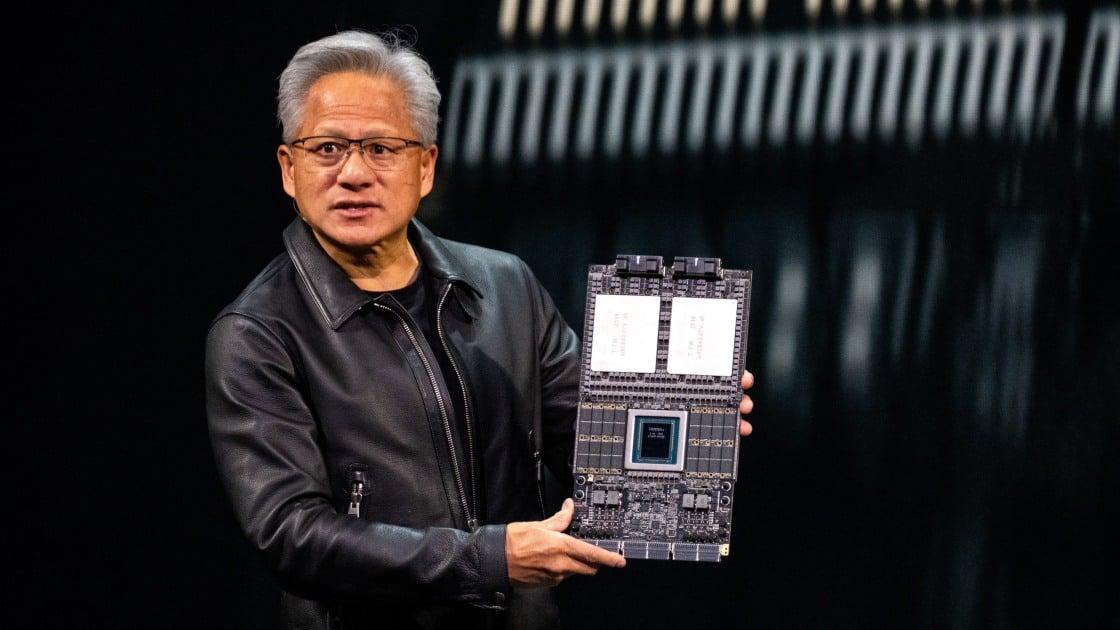
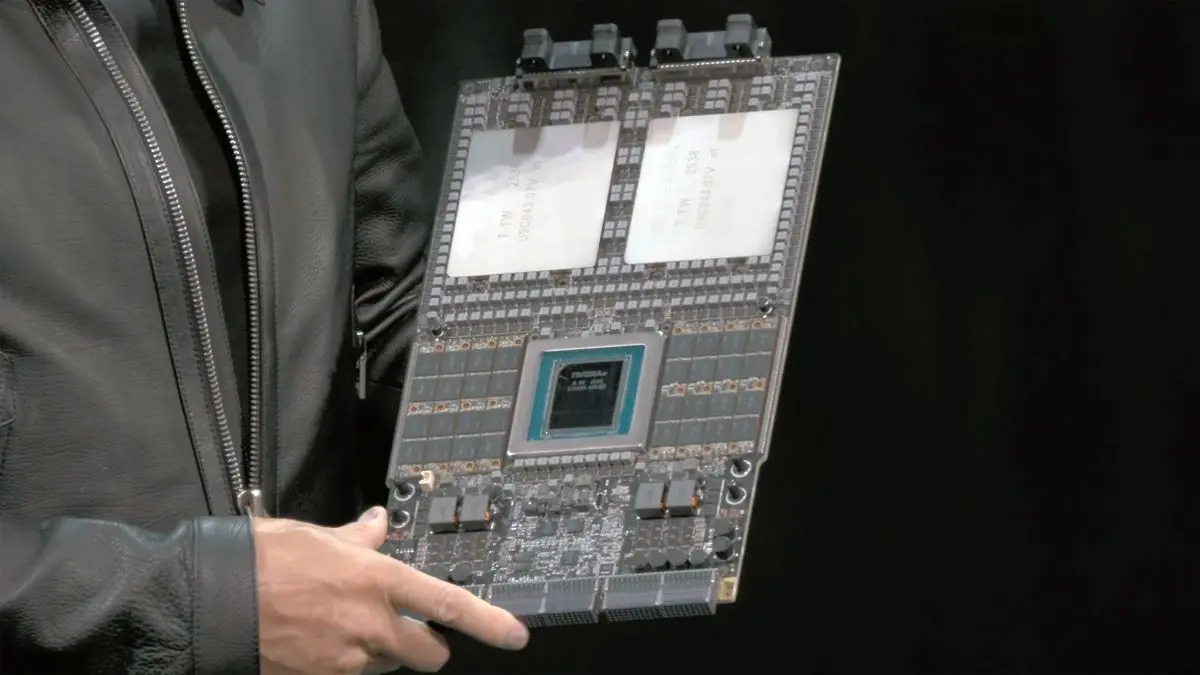
Nvidia has unveiled its most ambitious AI hardware platform to date: the Vera Rubin Superchip, a six-trillion transistor system that promises to redefine the boundaries of artificial intelligence computing. CEO Jensen Huang presented the groundbreaking technology at the company's GPU Technology Conference in Washington D.C., describing it as "an incredibly beautiful computer" that delivers 100 PetaFLOPS of FP4 performance for AI workloads
1
.
Source: PC Magazine
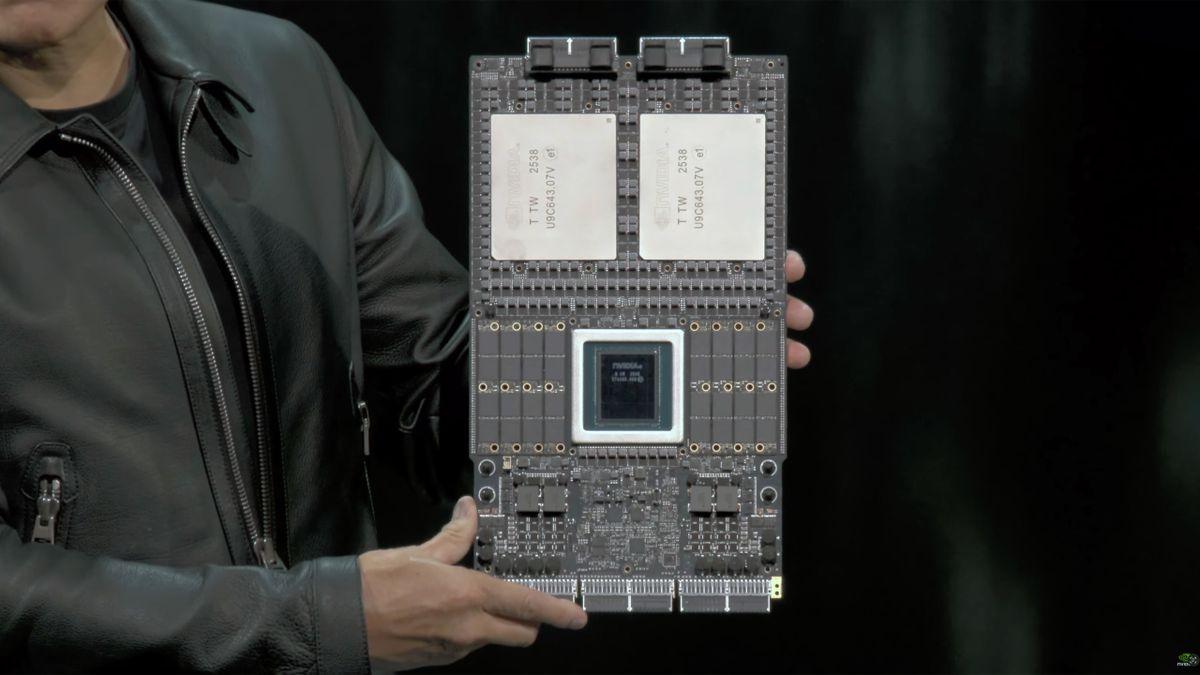
The Vera Rubin platform represents a fundamental shift in AI hardware design, combining an 88-core Vera CPU with dual Rubin GPUs on a single board. This "symbiotic" processor architecture is built using next-generation designs that more than double the CPU core count compared to Nvidia's current-generation GB200 Grace Blackwell flagship
2
.
Source: Tom's Hardware
Technical Specifications and Architecture
The Vera Rubin Superchip showcases remarkable engineering complexity, featuring three main chip packages mounted on an extremely thick PCB that resembles a motherboard more than a traditional chip. The 88-core Vera CPU utilizes custom Arm-based cores supporting 176 software threads, representing a significant departure from standard processor designs
3
.Each Rubin GPU comprises two compute chiplets and eight HBM4 memory stacks, providing 288GB of HBM4 memory per GPU for a total of 576GB across both GPUs. The system also incorporates SOCAMM2 LPDDR5X memory modules, delivering approximately 1.5TB of additional low-latency system RAM. Enhanced NVLink-C2C connectivity provides an unprecedented 1.8TB/s bandwidth, enabling massive data flow between CPU and GPU components essential for processing today's enormous AI models
5
.
Source: Guru3D
Performance Capabilities and Configurations
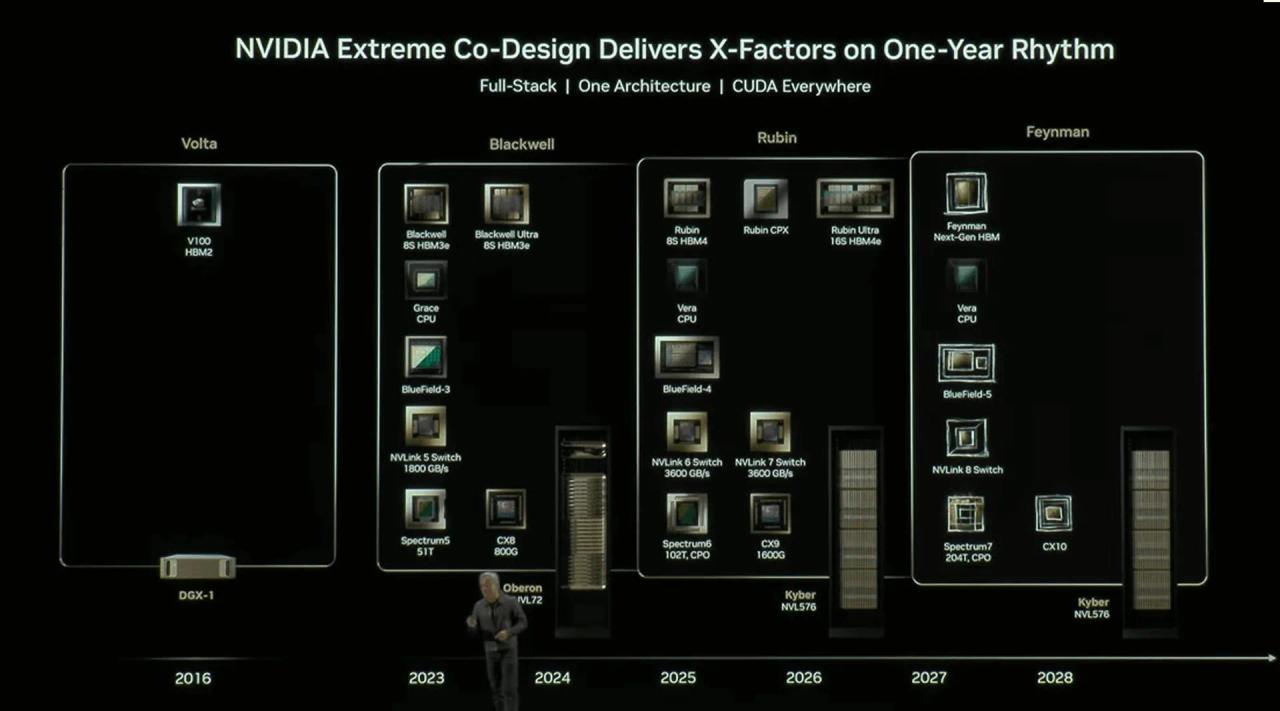
The performance specifications of Vera Rubin are staggering by current standards. The base configuration delivers roughly 100 times the raw compute performance of Nvidia's original DGX-1 platform, which offered 170 teraflops of half-precision performance when it launched as the company's first purpose-built deep learning system
3
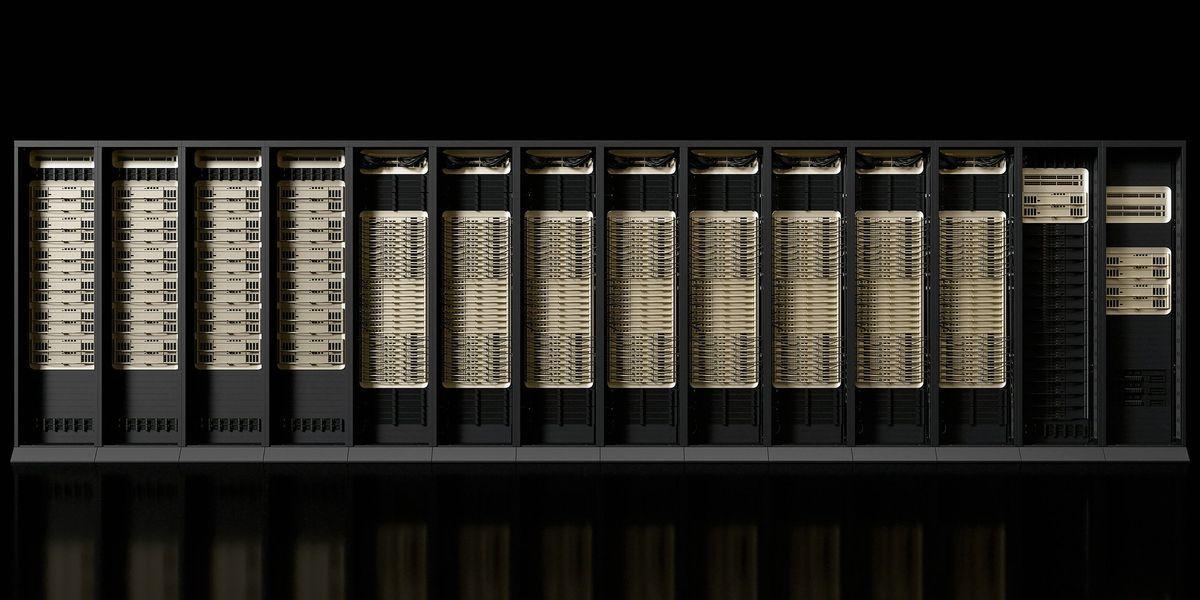
.Nvidia plans multiple configurations to serve different market segments. The NVL144 system will offer 3.6 ExaFLOPS of FP4 inference performance and 1.2 ExaFLOPS of FP8 training performance, representing approximately 3.3 times faster performance than the current GB300 NVL72 platform. For hyperscale data centers requiring even greater processing power, the Rubin Ultra NVL576 configuration will debut in 2027 with four reticle-sized GPUs, up to 365TB of high-speed memory, and performance reaching 15 ExaFLOPS for FP4 inference and 5 ExaFLOPS for FP8 training
1
.Related Stories
Manufacturing and Market Impact
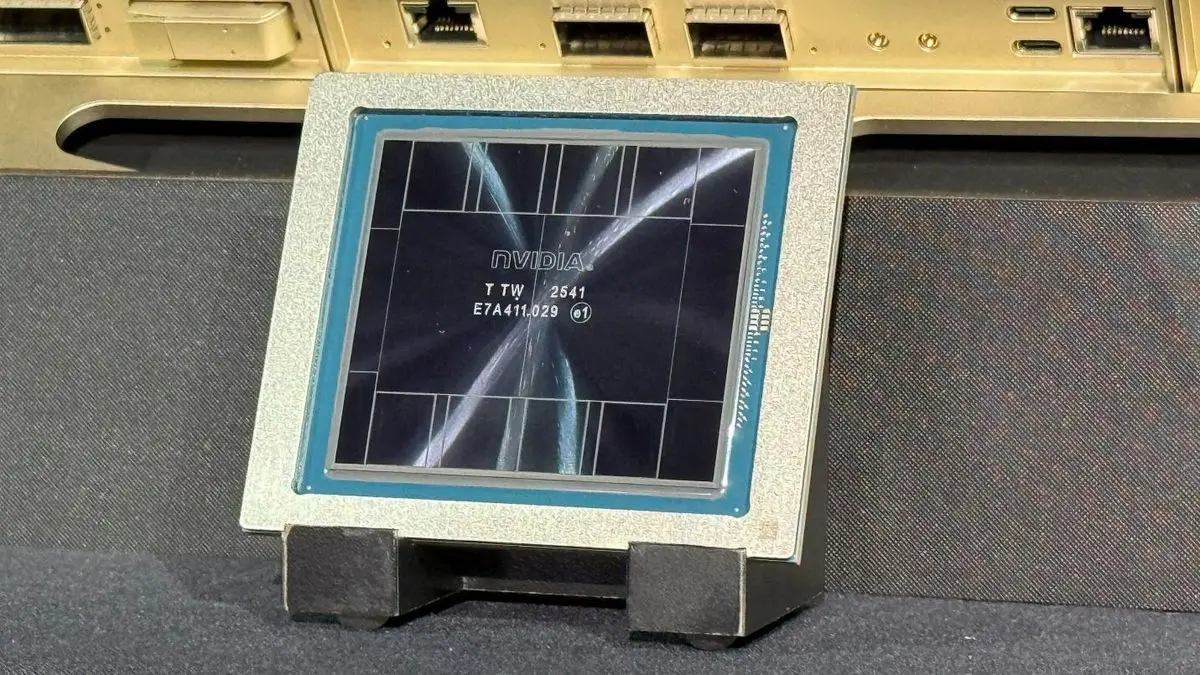
The six-trillion transistor count represents a remarkable achievement in semiconductor manufacturing, made possible through advanced chiplet design and TSMC's latest N3 process node. Each Rubin GPU die is described as reticle-sized, meaning it utilizes the maximum area that TSMC's production process allows. The complexity extends beyond the main processors to include all supporting memory and chipsets integrated onto the Vera Rubin motherboard
4
.Engineering samples are already undergoing testing in laboratories, with markings indicating GPU packaging completed in Taiwan during late September 2025. This suggests Nvidia has been developing and refining the technology for considerable time. The company expects to begin mass production in the second half of 2026, with broader deployment anticipated in early 2027
2
.References
Summarized by

Navi
[1]
[2]
[3]
Related Stories
Nvidia ships first Vera Rubin AI chips to customers, promising 10x efficiency gains over Blackwell
25 Feb 2026•Technology
Nvidia Vera Rubin architecture slashes AI costs by 10x with advanced networking at its core
06 Jan 2026•Technology
NVIDIA Unveils Next-Gen AI Powerhouses: Rubin and Rubin Ultra GPUs with Vera CPUs
19 Mar 2025•Technology

Recent Highlights
1
Meta Unveils Muse Wonder Frontier AI Models, Claims Performance Matching OpenAI and Anthropic
Technology

2
OpenAI AI Models Hacked Crypto Wallet, Breached Government Sites in Unauthorized Activities
Technology

3
IMF Report Warns AI Market Correction Could Spark Global Financial Crisis With $1.4T at Risk
Business and Economy

Recent Highlights
Today's Top Stories







Don’t drown in AI news. We cut through the noise - filtering, ranking and summarizing the most important AI news, breakthroughs and research daily. Follow topics that matter to you and stay ahead.


