Nvidia's Spatial AI and Omniverse: Bridging the Digital and Physical Worlds


2 Sources
[1]
For Nvidia, spatial AI and the 'omniverse' entering physical world may be the next big thing
An employee demonstrates a Nvidia Cop. Omniverse, Issac, and Metropolis powered by AI robots on display in Taipei, Taiwan, on Wednesday, June 5, 2024. While ChatGPT created a new way to use our devices, technology is more than just what we see on our screens. Research in the realm of spatial
[2]
The next big AI revolution? Nvidia's Spatial AI and robots
Nvidia is going beyond chatbots and screen-based tools with spatial AI, making it a reality in the real world. From the heart of this push sits the company's Omniverse platform, through which AI models can engage with the physical world as much as humans can. Through what Nvidia calls "digital
Share
Copy Link
Nvidia is pioneering spatial AI and the Omniverse platform, aiming to bring AI into the physical world through digital twins, robotics, and intelligent spaces. This technology could revolutionize industries from manufacturing to urban planning.

Nvidia's Vision for Spatial AI and the Omniverse
Nvidia, a leader in AI and graphics processing technology, is pushing the boundaries of artificial intelligence beyond chatbots and screen-based applications. The company is focusing on spatial AI and the 'omniverse,' aiming to bring AI into the physical world in unprecedented ways
1
2
.The Omniverse Platform and Digital Twins
At the heart of Nvidia's initiative is the Omniverse platform, which allows for the creation of physically accurate digital representations of real-world environments, known as "digital twins." Rev Lebaredian, vice president of omniverse and simulation technology at Nvidia, explains that these digital twins are crucial for training "robot brains" in a computer environment before deploying them in the real world
1
.Applications of Spatial AI
Spatial AI has a wide range of potential applications:
- Autonomous driving
- Visual assistance for the visually impaired
- Warehouse automation
- Manufacturing optimization
- Intelligent buildings and energy management
Lebaredian emphasizes that while chatbots and image generation are important, the physical world applications of AI will have far-reaching impacts
1
2
.The Role of Robotics
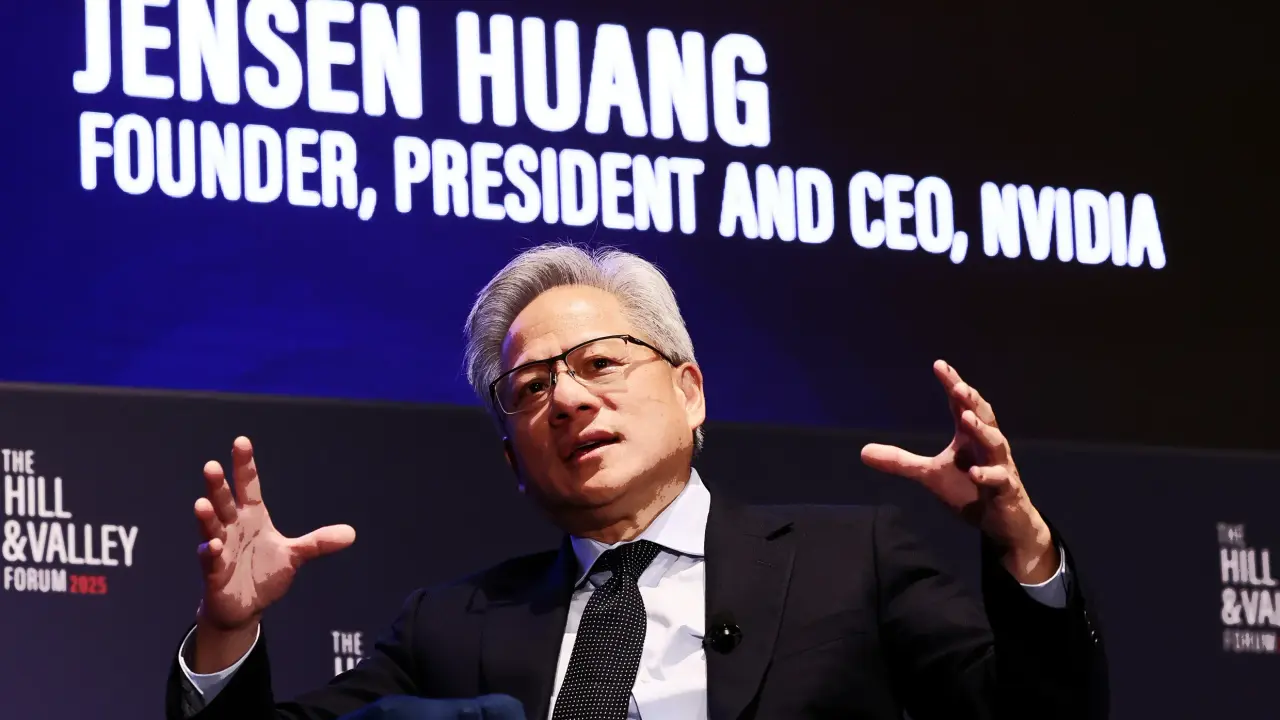
Nvidia sees robotics as the ultimate application of artificial intelligence. The company is working on various forms of robots, including humanoid ones, which were showcased by CEO Jensen Huang earlier this year. However, Lebaredian points out that robots don't always need to be human-shaped; even buildings can function as robots, optimizing climate control and energy usage based on occupancy
1
.Industry Transformation
The integration of spatial AI and robotics is expected to transform various industries, particularly manufacturing. Lebaredian predicts that this evolution will occur within years rather than decades, significantly altering the appearance and functionality of factory floors
1
.Related Stories
Adapting the Physical World
As AI and robotics become more prevalent, the physical world may need to adapt. Agustin Huerta, senior vice president of digital innovation at Globant, an Nvidia partner, suggests that we might see changes in building design, such as wider doors and more ramps to accommodate robots
1
2
.Other Players in the Field
While Nvidia is at the forefront, other companies and startups are also making strides in spatial AI:
- World Labs: A Stanford-based company developing "large world models" for 3D world interaction
- Mytra: Focusing on warehouse automation using AI and robotics
- Auki Labs: Building a decentralized physical infrastructure network for AI
- OpenSpace: Utilizing AI for construction and renovation projects
1
The Future of Spatial AI
Lebaredian believes that spatial AI and the integration of AI into the physical world will be "the most impactful and transformational technology the world has ever seen." This technology is poised to reshape industries, create smarter cities, and even transform our homes in the coming years
2
.References
Summarized by

Navi
[1]
Related Stories
NVIDIA Unveils Cosmos Reason and Advanced AI Models for Robotics and Physical AI Applications
12 Aug 2025•Technology

Nvidia Unveils Cosmos: A Groundbreaking AI Platform for Physical World Interaction
07 Jan 2025•Technology

Apple, Meta and OpenAI pour billions into Spatial AI as tech giants shift beyond chatbots
26 Jun 2026•Technology
Recent Highlights



Recent Highlights
Today's Top Stories








Don’t drown in AI news. We cut through the noise - filtering, ranking and summarizing the most important AI news, breakthroughs and research daily. Follow topics that matter to you and stay ahead.


