NVIDIA Unveils Alpamayo-R1: First Open-Source Reasoning AI Model for Autonomous Driving Research


6 Sources
[1]
Nvidia announces new open AI models and tools for autonomous driving research
Nvidia announces new open AI models and tools for autonomous driving research Nvidia announced new infrastructure and AI models on Monday as it works to build the backbone technology for physical AI, including robots and autonomous vehicles that can perceive and interact with the real world. The
[2]
At NeurIPS, NVIDIA Advances Open Model Development for Digital and Physical AI
Your browser doesn't support HTML5 video. Here is a link to the video instead. Researchers worldwide rely on open-source technologies as the foundation of their work. To equip the community with the latest advancements in digital and physical AI, NVIDIA is further expanding its collection of open
[3]
NVIDIA debuts first open reasoning AI for self-driving vehicles
NVIDIA is expanding the frontiers of AI research with a bold move. The company on Monday announced the launch of open physical and digital AI models that could reshape autonomous vehicles, robotics, and speech processing. The company unveiled these breakthroughs at NeurIPS, one of the world's top
[4]
NVIDIA Open Sources Reasoning Model for Autonomous Driving at NeurIPS 2025 | AIM
NVIDIA, AR1 breaks down scenes step by step, considers possible trajectories and uses contextual data to determine routes. At NeurIPS 2025, NVIDIA announced a new set of open models, datasets and tools spanning autonomous driving, speech AI and safety research, strengthening its position in open
[5]

Nvidia just unveiled its first AI model for autonomous driving research
Nvidia announced new AI models and infrastructure on Monday at the NeurIPS AI conference in San Diego, California, to advance physical AI for robots and autonomous vehicles that perceive and interact with the real world. The initiative focuses on developing backbone technology for autonomous
[6]

Nvidia releases open-source software for self-driving car development
On Monday, Nvidia released Alpamayo-R1 for self-driving vehicles. The software is what is known as a "vision-language-action" AI model, which means that the self-driving vehicle translates what its sensor banks see on the road into a description using natural language. Nvidia on Monday released
Share
Copy Link
NVIDIA announced Alpamayo-R1, the world's first open reasoning vision-language-action model for autonomous driving research at NeurIPS 2025. The model combines chain-of-thought reasoning with path planning to help vehicles navigate complex scenarios with human-like judgment, marking a significant step toward Level 4 autonomous driving capabilities.
NVIDIA's Breakthrough in Autonomous Driving AI
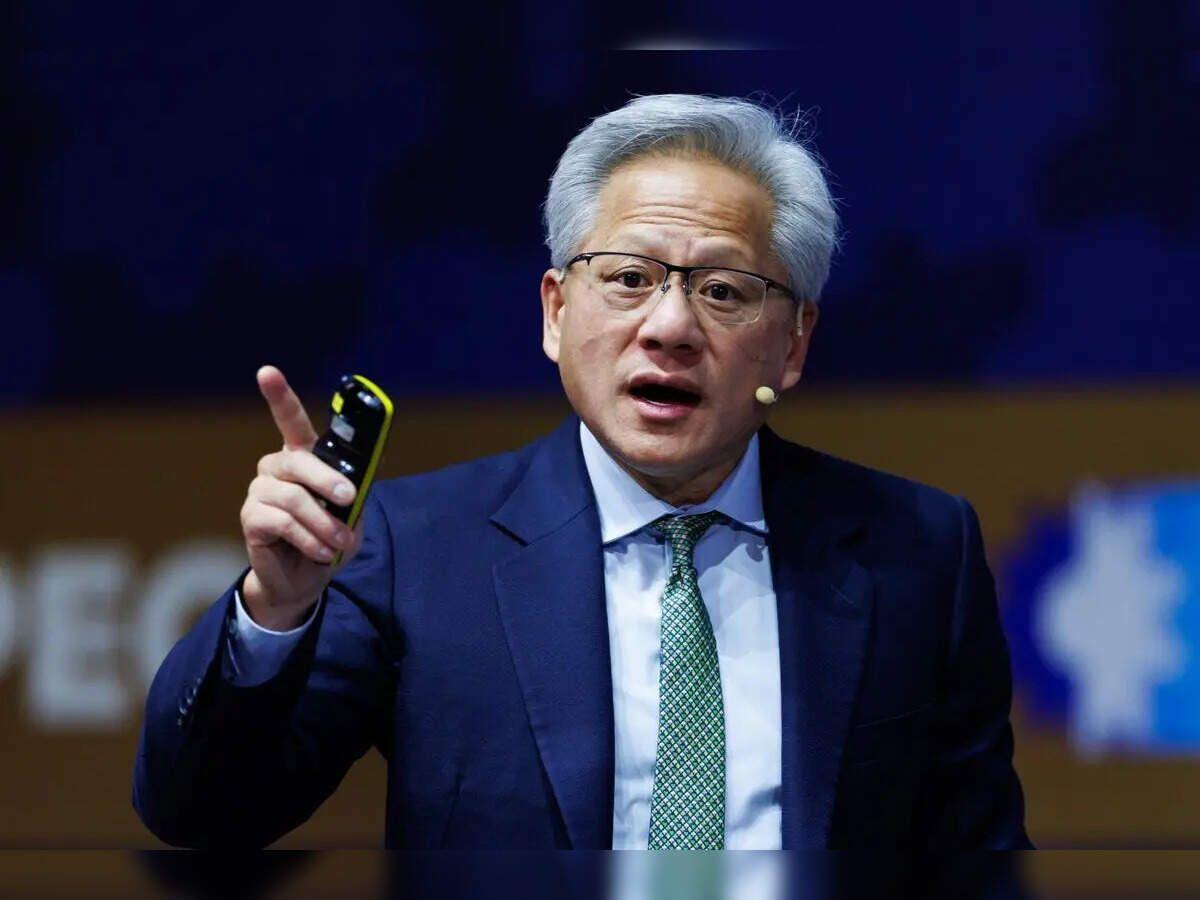
NVIDIA announced a significant advancement in autonomous driving technology at the NeurIPS AI conference in San Diego, California, unveiling Alpamayo-R1 (AR1), described as the world's first open reasoning vision-language-action (VLA) model specifically designed for autonomous driving research
1
. This groundbreaking model represents a major step forward in the company's push toward physical AI applications, combining advanced reasoning capabilities with practical autonomous vehicle development2
.
Source: ET
The semiconductor giant positions AR1 as a critical technology for companies pursuing Level 4 autonomous driving, which defines full autonomy within designated operational areas under specific conditions
1
. Unlike previous iterations of self-driving models that struggled with nuanced situations, AR1 incorporates chain-of-thought reasoning that enables vehicles to approach complex driving scenarios with human-like judgment2
.Technical Architecture and Capabilities
Alpamayo-R1 builds directly on NVIDIA's Cosmos Reason model, a reasoning framework that deliberates through decisions before generating responses
5
. As a vision-language model, AR1 can process both text and images simultaneously, allowing vehicles to "see" their surroundings and make informed decisions based on perceptual inputs from the environment1
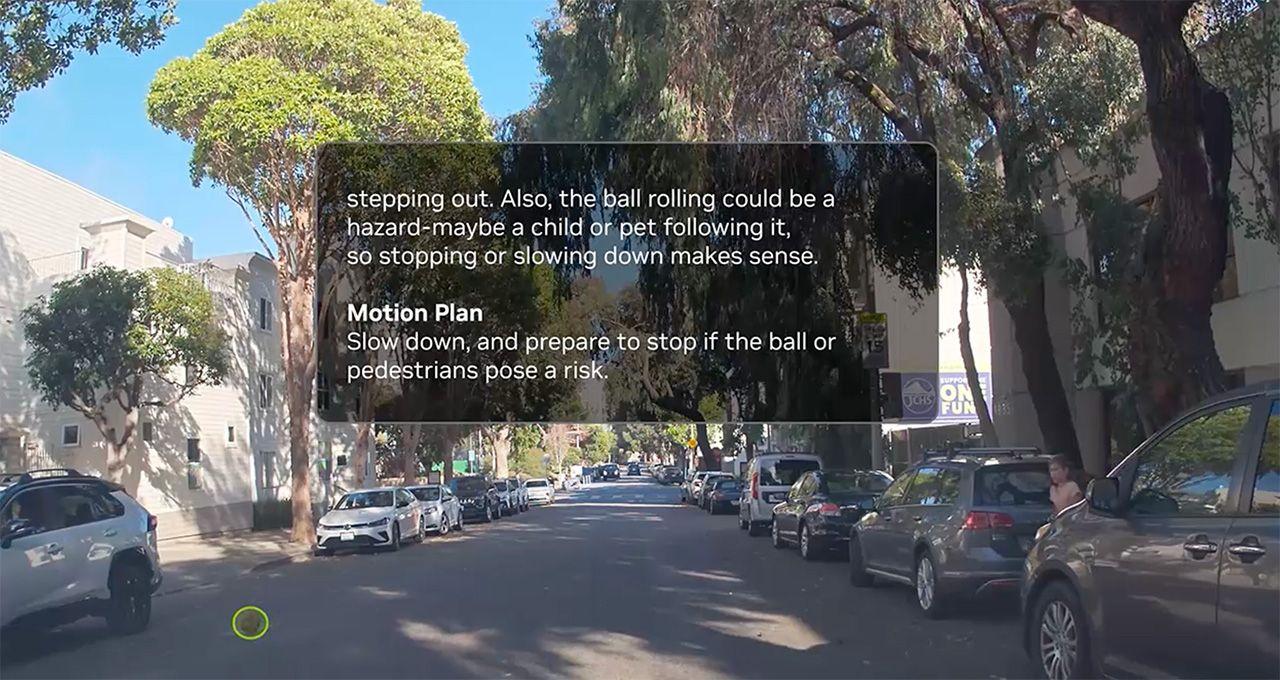
.The model's reasoning process involves breaking down complex scenarios step by step, considering all possible trajectories, and using contextual data to determine the optimal route
4
. For example, when navigating a pedestrian-heavy area adjacent to a bike lane, AR1 can incorporate reasoning traces—explanations for specific actions—to plan future trajectories, such as moving away from bike lanes or stopping for potential jaywalkers2
.
Source: NVIDIA
Open-Source Accessibility and Development Tools
NVIDIA has made Alpamayo-R1 immediately accessible to researchers and developers through GitHub and Hugging Face platforms, facilitating widespread adoption and experimentation in autonomous driving projects
1
. The model's open foundation allows researchers to customize it for non-commercial use cases, whether for benchmarking or building experimental autonomous vehicle applications2
.Accompanying the model release, NVIDIA introduced the Cosmos Cookbook, a comprehensive collection of step-by-step guides, inference resources, and post-training workflows uploaded to GitHub
1
. This resource covers essential aspects of AI development including data curation, synthetic data generation, and model evaluation, providing developers with the tools necessary to train and deploy Cosmos models for targeted applications5
.
Source: Interesting Engineering
Related Stories

Industry Recognition and Strategic Vision
NVIDIA's commitment to open-source development has gained recognition from Artificial Analysis' new Openness Index, which rates the company's Nemotron family among the most transparent model ecosystems in AI
4
. The index evaluates models based on license permissibility, data transparency, and availability of technical details2
.CEO Jensen Huang has consistently emphasized that the next wave of AI development lies in physical AI applications, with Chief Scientist Bill Dally reinforcing this vision by stating the company's goal to "basically be making the brains of all the robots"
1
. This strategic direction positions NVIDIA at the forefront of developing foundational technologies for autonomous vehicles and robotics applications3
.References
Summarized by

Navi
[3]
Related Stories
Nvidia Opens Alpamayo 2 Super AI Model for Commercial Robotaxis and Autonomous Vehicles
04 Aug 2026•Technology
Nvidia launches Alpamayo open AI models to bring human-like reasoning to autonomous vehicles
06 Jan 2026•Technology

NVIDIA Unveils Cosmos Reason and Advanced AI Models for Robotics and Physical AI Applications
12 Aug 2025•Technology

Recent Highlights



Recent Highlights
Today's Top Stories






Don’t drown in AI news. We cut through the noise - filtering, ranking and summarizing the most important AI news, breakthroughs and research daily. Follow topics that matter to you and stay ahead.


