OpenAI Codex arrives on ChatGPT mobile app to let developers manage coding tasks remotely


8 Sources
[1]
OpenAI's Codex is now in the ChatGPT mobile app
OpenAI is going to let users access Codex, its desktop AI tool that can write code and use apps on your computer, from the ChatGPT app on your phone. Following the surge in popularity for Anthropic's Claude Code, OpenAI has been working quickly to try and catch up, including by cutting back on
[2]
Your Phone Can Now Remotely Control ChatGPT's Codex Coding Tools
OpenAI is working hard to improve its coding tools to compete with rivals such as Anthropic's Claude, and a new feature makes it easier to use Codex on the move without sacrificing powerful results. Codex is now available through the ChatGPT mobile app for Android and iOS, although you won't be
[3]
OpenAI Codex is coming to mobile so you can build apps on the go
Mobile support currently works with macOS-based Codex sessions, but Windows compatibility is already on the roadmap. OpenAI is making ChatGPT a much more useful tool for developers on the go. The company has officially rolled out Codex, its AI coding assistant, inside the ChatGPT mobile app,
[4]
You can access Codex on your phone now
Why it matters: OpenAI is trying to make Codex cheaper and easier to use as it battles Anthropic for developers and enterprise customers. Driving the news: Mobile access to Codex will let users review outputs, make approvals and start new tasks from mobile. * Start something from a computer at
[5]

OpenAI brings Codex to mobile devices, adds more customization features - SiliconANGLE
OpenAI brings Codex to mobile devices, adds more customization features OpenAI Group PBC today made its Codex programming assistant available on mobile devices. The service is accessible through ChatGPT's iOS and Android clients. It's rolling out about eight months after Anthropic PBC made Claude
[6]

OpenAI brings Codex coding tool to ChatGPT mobile app - The Economic Times
OpenAI is integrating its Codex coding tool into the ChatGPT mobile app, broadening access to AI code-generation capabilities. This move intensifies competition with rivals like Anthropic, as Codex can write features, answer code questions, fix bugs, and propose pull requests.OpenAI said on
[7]

The developer who never clocks out: OpenAI wants Codex in your pocket
Developer anxiety is a form of anxiety that is triggered when you leave your computer workstation. There is an operation currently happening and activity going on inside of Codex that you do not know if the work you are doing is going to hang, reach a decision tree or even just go wrong while
[8]
OpenAI Codex now available in ChatGPT mobile app: Features, availability and more
Users can check active threads, review outputs, approve commands, switch models and even start entirely new tasks directly from the ChatGPT mobile app. OpenAI is expanding the reach of its AI coding assistant, Codex, by bringing it directly into the ChatGPT mobile app. The new update allows users
Share
Copy Link
OpenAI rolled out Codex access through the ChatGPT mobile app for iOS and Android, enabling developers to remotely control coding sessions running on their computers. The move comes as OpenAI intensifies competition with Anthropic's Claude Code, with over four million developers now using Codex weekly. Users can review outputs, approve commands, and manage workflows from their phones while files stay secure on their desktop machines.
OpenAI Codex Expands to Mobile Platforms
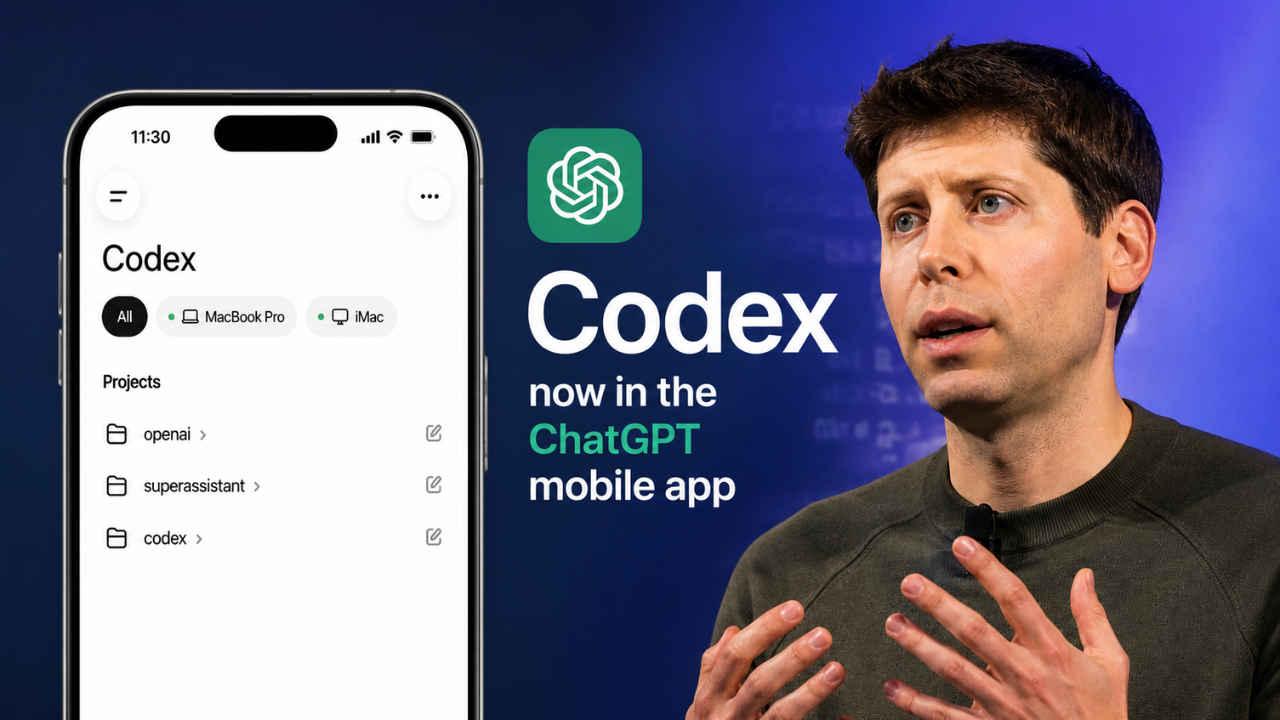
OpenAI has officially launched OpenAI Codex access through the ChatGPT mobile app, marking a significant expansion for its AI coding tool as the company races to compete with Anthropic's increasingly popular Claude Code
1
. The new mobile integration, rolling out now as a preview on iOS and Android for all ChatGPT plans including free and Go tiers, transforms smartphones into remote control centers for desktop coding sessions3
.
Source: Digit
The Codex programming assistant now serves more than four million weekly users, and this mobile expansion addresses a critical gap in developer workflows
2
. Previously, developers who launched long-running programming tasks and stepped away from their computers had no way to provide the AI coding assistant with necessary guidance, potentially stalling projects for hours5
.Remote Control of Codex Keeps Projects Moving
The ability to manage coding tasks remotely fundamentally changes how developers can build apps on the go. From the ChatGPT mobile app, users can work across all threads, review outputs, approve commands, change models, or start something new in Codex
1
. Your files, credentials, permissions, and local setup remain on the machine where Codex operates, while updates flow back to your phone in real time, including screenshots, terminal output, diffs, test results, and approvals.
Source: The Verge
This architecture means developers can keep systems running during commutes or while running errands, intervening when Codex completes a task or needs prompting on next steps
2
. The mobile feature currently works with Codex on macOS systems, though Windows support is already on the roadmap3
.Reducing Inference Costs While Battling Anthropic
OpenAI's strategy centers on making Codex cheaper and easier to use as it battles Anthropic for developers and enterprise business customers
4
. The mobile access reduces inference costs by allowing developers to interrupt Codex if it starts implementing a software module in a non-optimal manner, avoiding unnecessary token usage that would otherwise inflate ChatGPT bills5
.The announcement came one day after CEO Sam Altman announced that companies switching to Codex will receive two months of free usage, following reports of Anthropic raising prices
4
. This pattern has become familiar between the rivals: Anthropic lifts prices due to surging demand, while OpenAI lowers them hoping to capture market share. Anthropic's Claude Code already offers mobile access through remote control sessions, making OpenAI's move essential to remain competitive.Related Stories



New Customization Features for Enterprise Workflows
Alongside mobile support, OpenAI introduced two additional capabilities called Hooks and Remote SSH
5
. Hooks enables customers to customize the AI coding assistant with scripts—cybersecurity professionals could write scripts blocking developer prompts containing sensitive company information, while legal teams might use Hooks to log Codex messages for regulatory compliance. Scripts can process both prompts and responses, allowing teams to customize Codex output for each project.Remote SSH enables Codex on mobile devices to connect to cloud-based development environments via encrypted network links, addressing situations where software teams write, test, and store code remotely rather than on local machines
5
. Additional updates include support for HIPAA compliance in local environments for ChatGPT, allowing hospitals and healthcare organizations to adopt the tools more broadly4
.Strategic Implications for Developer Adoption
OpenAI's push reflects its broader ambitions to create a desktop superapp, with recent major updates enabling Codex to operate apps on macOS
1
. The company has been cutting back on "side quests," shutting down projects like the Sora video-generation tool to focus on growing its enterprise business and catching up to Anthropic's momentum.
Source: Android Authority
However, approving agents on small screens could introduce greater risk for errors when users multitask
4
. Additionally, increasing Codex usage means consumers will use more compute, the most precious resource for AI labs. OpenAI's strategy has relied on compute subsidies to drive adoption, raising questions about long-term sustainability as developer workflows become increasingly mobile-first.References
Summarized by

Navi
[1]
[3]
Related Stories
Recent Highlights
1
OpenAI AI Models Hacked Crypto Wallet, Breached Government Sites in Unauthorized Activities
Technology

2
IMF Report Warns AI Market Correction Could Spark Global Financial Crisis With $1.4T at Risk
Business and Economy

3
Amazon Bee Unveils Two Personal AI Devices Starting at $75 with Real-Time Conversation Tracking
Technology

Recent Highlights
Today's Top Stories








Don’t drown in AI news. We cut through the noise - filtering, ranking and summarizing the most important AI news, breakthroughs and research daily. Follow topics that matter to you and stay ahead.


