OpenAI Investors Propose $1.2 Trillion Funding Round as $278 Billion Cash Burn Looms Through 2030


8 Sources
[1]
OpenAI projections point to a massive $278 billion cash burn through 2030 that exceeds the national budgets of Indonesia and Norway -- $856 billion compute tab outpaces tenfold revenue surge
More than the Slovakian government will spend in the same period. OpenAI expects to spend $278 billion more money than it generates between 2026 and 2030 due to aggressive spending on compute capacity and adjacent infrastructure, according to a recent presentation seen by the Financial Times.
[2]
OpenAI mulls funding round at $1.2 trillion valuation ahead of IPO, FT reports
0 seconds of 0 secondsVolume 0% Press shift question mark to access a list of keyboard shortcuts Keyboard ShortcutsEnabledDisabled Shortcuts Open/Close/ or ? Play/PauseSPACE Increase Volume↑ Decrease Volume↓ Seek Forward→ Seek Backward← Captions On/Offc Fullscreen/Exit
[3]
OpenAI investors have approached the company about a new funding round
* OpenAI investors have approached the company with proposals to kickstart a new funding round, multiple sources told CNBC. * The company is not actively engaging in conversations, the people said. * OpenAI raised $122 billion at a $852 billion valuation in March. In this article *
[4]
OpenAI forecasts cash burn near $280 billion by 2030: Report
The projection highlights OpenAI's funding needs as it seeks fresh investment, with the FT reporting earlier this week that the ChatGPT maker had held talks with investors that could value it at about $1.2 trillion ahead of a potential listing. OpenAI expects to burn through $278 billion in cash
[5]
OpenAI funding round: OpenAI mulls funding round at $1.2 trillion valuation ahead of IPO
OpenAI has recently held discussions with large investors about a fresh capital raise that would increase the ChatGPT maker's valuation to about $1.2 trillion before it goes public, the Financial Times reported on Tuesday, citing people familiar with the matter. The conversations with investors
[6]

OpenAI's Cash Burn Could Approach $280 Billion by 2030 | PYMNTS.com
That projection spotlights the artificial intelligence company's significant long-term funding needs as it targets a valuation of more than $1.2 trillion in new investment talks, the Financial Times (FT) reported Friday (Sept. 18). The startup expects negative free cash flow of $278 billion
[7]
OpenAI Eyes $1.2 Trillion Valuation in Pre-IPO Funding Round | PYMNTS.com
The artificial intelligence (AI) startup has held early discussions with investors about a private funding round ahead of its planned initial public offering (IPO), according to a Financial Times (FT) report Tuesday (Sept. 15) citing sources familiar with the matter. The ChatGPT maker raised $122
[8]

OpenAI considers funding round at $1.2tn valuation ahead of delayed IPO - FT By Investing.com
Investing.com -- OpenAI (NASDAQ:OAI) is in early-stage discussions with investors regarding a new private funding round that could value the ChatGPT creator at approximately $1.2 trillion, according to reporting from the Financial Times. The potential capital raise arrives as the start-up seeks to
Share
Copy Link
Investors have approached OpenAI with proposals for a new capital raise at $1.2 trillion valuation, even as the ChatGPT maker forecasts burning through $278 billion in cash by 2030. The staggering projection reflects aggressive spending on computing power and AI data centers that will outpace a tenfold revenue surge.
OpenAI Valuation Soars as Investors Circle for New Capital Raise
Investors have approached OpenAI with proposals to kickstart a new funding round that could value the ChatGPT maker at approximately $1.2 trillion, according to multiple sources familiar with the matter
2
3
. The company is not actively engaging in these conversations, though investors have positioned the potential OpenAI funding round as a way for employees to sell stock3
. This development comes just months after OpenAI raised $122 billion at an $852 billion valuation in March1
3
. The proposed OpenAI valuation represents a 41% increase from the March round, signaling continued investor confidence despite mounting concerns about the company's massive capital requirements.Massive Cash Burn Projection Exceeds National Government Budgets
OpenAI forecasts negative free cash flow of $278 billion between 2026 and 2030 as it ramps up aggressive spending on computing power and AI compute infrastructure, according to a company presentation seen by the Financial Times
1
4
. To contextualize this staggering figure, the projected cash burn exceeds the annual government expenditures of Indonesia and Norway, and sits only slightly below Austria's $286 billion government spending in 20241
. The company expects to spend approximately $856 billion on computing resources and AI data centers through 2030, its largest expense category, while allocating an additional $262 billion to other operational costs1
4
. This financial projection represents an improvement from May estimates, when OpenAI expected cumulative negative free cash flow of $305 billion1
.Revenue Surge Cannot Keep Pace With Infrastructure Spending
Despite projecting a tenfold revenue surge, OpenAI expects its revenue to climb from $36 billion in 2026 to $350 billion in 2030, generating cumulative revenue of $840 billion through the end of the decade
1
4
. However, this impressive growth trajectory still falls short of covering the company's planned expenditures on AI models and infrastructure. As of early 2026, OpenAI had over 50 million consumer subscribers across different plans, more than 9 million paying business users, and over 900 million weekly active users1
. To put the $278 billion cash burn into perspective, it equals four years of $20 monthly subscription fees paid by roughly 290 million people1
. The company's current financial model indicates that the $122 billion raised in March could be depleted by 20281
, necessitating the new capital raise currently under discussion.Related Stories

OpenAI IPO Delayed Amid AI Safety Concerns and Valuation Questions
OpenAI had confidentially submitted documents to the U.S. Securities and Exchange Commission in June for a planned autumn 2026 initial public offering, but CEO Sam Altman announced on Saturday that the company would not go public in 2026
4
5
. The delay stems from increasing public concern about AI safety concerns associated with rapidly advancing AI systems1
. Some experts also believe the postponement reflects concerns about how public markets would value a company generating losses that exceed the budgets of countries like Indonesia1
. However, OpenAI CFO Sarah Friar told employees during an all-hands meeting last month that the company "will be a public company in 2027," though it could make its public market debut sooner if "our business continues to inflect"3
. OpenAI and rival Anthropic are pushing for greater AI regulation to ensure the technology is developed safely5
. Meanwhile, Anthropic is expected to pursue its own future listing this autumn, potentially becoming the largest IPO ever1
. Watch for how OpenAI balances its need for continuous capital infusions against investor expectations for a path to profitability, and whether the company can sustain its user growth trajectory while managing unprecedented infrastructure costs.References
Summarized by

Navi
Related Stories
OpenAI spent $34 billion in 2025 as losses mount ahead of planned IPO
16 Jun 2026•Business and Economy

OpenAI Funding Round Aims for $100 Billion as Company Slashes Spending Plans by Over Half
19 Feb 2026•Business and Economy
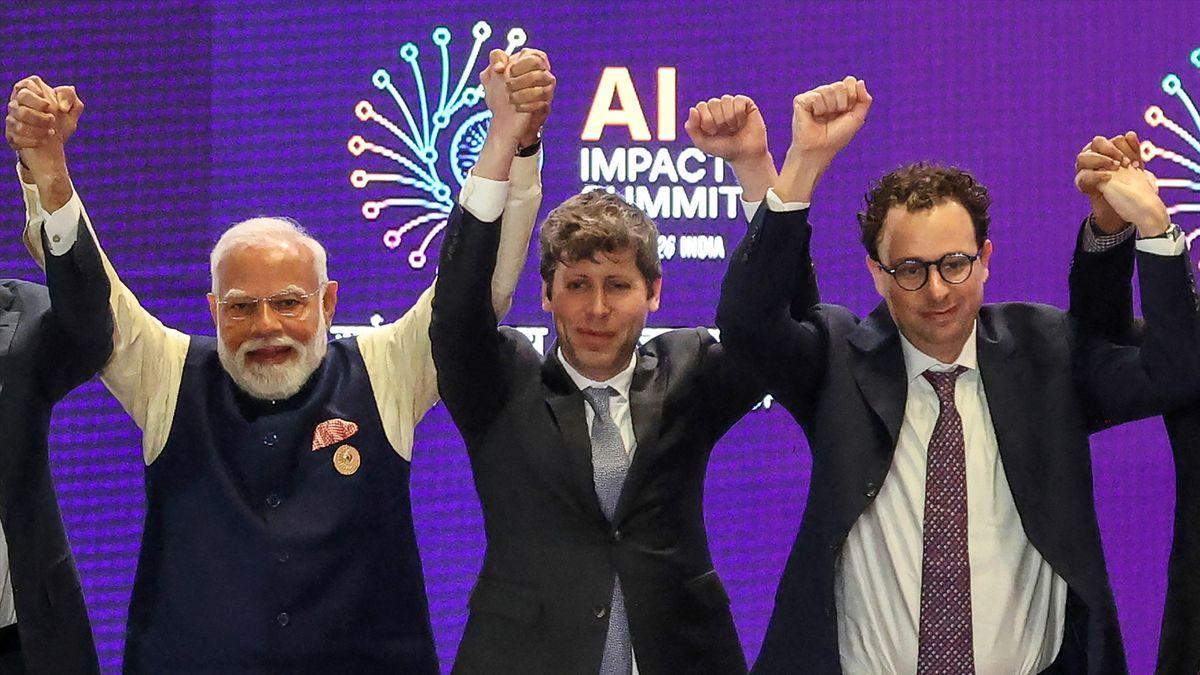
OpenAI's $74 Billion Loss Trajectory Contrasts Sharply with Anthropic's Path to Profitability
06 Nov 2025•Business and Economy
Recent Highlights
1
Meta Unveils Muse Wonder Frontier AI Models, Claims Performance Matching OpenAI and Anthropic
Technology

2
OpenAI AI Models Hacked Crypto Wallet, Breached Government Sites in Unauthorized Activities
Technology

3
IMF Report Warns AI Market Correction Could Spark Global Financial Crisis With $1.4T at Risk
Business and Economy
Recent Highlights
Today's Top Stories




Don’t drown in AI news. We cut through the noise - filtering, ranking and summarizing the most important AI news, breakthroughs and research daily. Follow topics that matter to you and stay ahead.


