OpenAI employee compensation reaches $1.5 million per worker, shattering Silicon Valley records


3 Sources
[1]
OpenAI's employee compensation dwarfs every major tech IPO of the past 25 years
Serving tech enthusiasts for over 25 years. TechSpot means tech analysis and advice you can trust. Bottom line: OpenAI's financial model reflects the intense pressure to retain the people driving its breakthroughs. The company's willingness to spend aggressively on equity has redefined what
[2]
Inside OpenAI's $1.5 million compensation packages
OpenAI is paying its employees at levels that have little precedent in Silicon Valley history -- $1.5 million in stock-based compensation per employee in 2025. That's according to financial projections shared with investors and first reported by the Wall Street Journal. Such compensation dwarfs
[3]
OpenAI's pay tops every major tech startup as stock awards hit...
OpenAI is reportedly paying its employees more than any major tech startup, showering workers with an average of $1.5 million each in stock-based compensation -- a staggering sum that amounts to nearly half of the company's projected 2025 revenue. The unusually rich payouts, disclosed in financial
Share
Copy Link
OpenAI is paying its 4,000 employees an average of $1.5 million each in stock-based compensation, far exceeding what Google, Facebook, or any major tech company offered before going public. The aggressive pay structure reflects the intense competition for AI talent, with costs projected to reach 46% of revenue by 2025—the highest among major tech startups analyzed over the past 25 years.
OpenAI Sets Record With $1.5 Million Compensation Packages
Internal financial disclosures reveal that OpenAI is distributing more equity per employee than any major technology startup on record. The company's stock-based compensation averages roughly $1.5 million per worker across a staff of about 4,000, according to data shared with investors and first reported by the
Wall Street Journal
1
. This aggressive pay structure marks an extraordinary shift in how top AI firms compete for talent, redefining what competitive compensation looks like in artificial intelligence.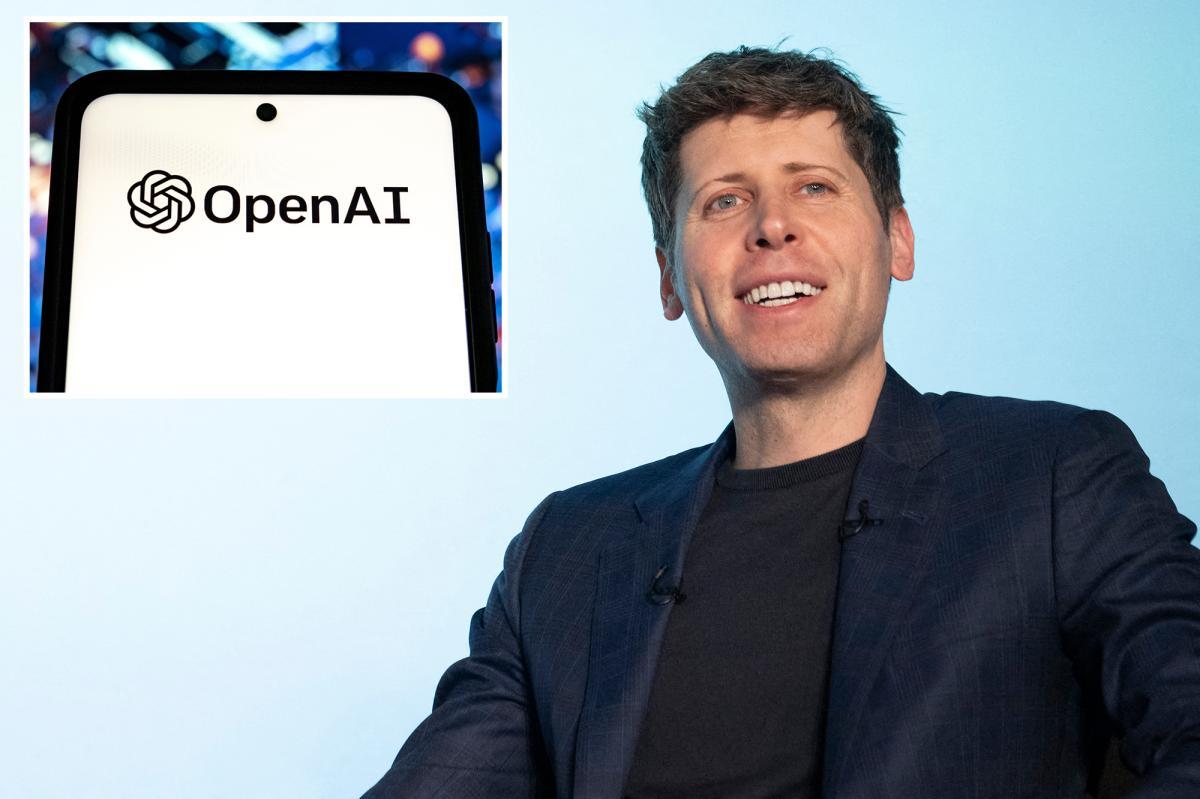
Source: New York Post
Adjusted for inflation to 2025 dollars, OpenAI employee compensation is seven times higher than the stock-based pay Google reported in 2003, the year before its initial public offering. An analysis of 18 other major tech companies found that OpenAI's average equity payouts are 34 times larger than typical pre-IPO compensation levels over the past 25 years, based on data compiled by compensation research firm
Equilar
1
. The unprecedented level of pay reflects the company's determination to secure its lead in the generative AI landscape.Competition for AI Talent Drives Costs to Record Highs
The bidding war for top AI talent has intensified dramatically as researchers and engineers with relevant expertise become some of the most expensive employees anywhere in the world. Costs surged after
Meta
3
CEO Mark Zuckerberg began offering compensation packages worth hundreds of millions of dollars—and in rare cases as much as $1 billion—to senior AI researchers and executives as part of an aggressive recruitment campaign.
Source: Quartz
That effort lured more than 20 OpenAI employees, including
ChatGPT
3
co-creator Shengjia Zhao, prompting OpenAI to issue one-time retention bonuses in August, some valued in the millions. The competition for AI talent has created a situation where no single company can afford restraint when competitors are bidding aggressively—not when falling behind in talent means falling behind in the technologyitself
2
.Stock-Based Compensation Approaches Half of Revenue
By 2025, OpenAI's compensation costs are projected to account for 46% of total revenue, the highest among major tech startups and a higher ratio than any large tech firm prior to going public except for EV maker Rivian, which reported no revenue in the year before its IPO. For comparison, Palantir's stock-based pay equaled 33% of revenue in 2020, Google's stood at 15% before its IPO, and Facebook's was just 6%, according to the Equilar
analysis
1
. On average, pre-IPO tech companies devoted about 6% of revenue to stock-based compensation.Financial projections shared with investors indicate that OpenAI expects its stock-based compensation to grow by approximately $3 billion annually through 2030, underscoring how central pay incentives have become to its growth
strategy
1
. Those stock-based packages are intended to secure the company's lead in the AI arms race, while also driving up operating losses and diluting shareholder value, according to people familiar with OpenAI's financials.Related Stories

Vesting Changes Accelerate Talent Retention Strategy
In another change likely to push costs higher, OpenAI recently ended a policy requiring employees to work at least six months before their equity vests, eliminating a standard cliff used by most Silicon Valley firms to manage turnover
risk
1
. The move reflects a job market where researchers frequently move between companies and can command immediate payouts, forcing OpenAI to loosen internal equity rules to staycompetitive
2
.
Source: TechSpot
This shift in talent retention strategy comes as OpenAI races to defend its position in generative AI, even as the equity-heavy compensation inflates losses. Founded in 2015 as a nonprofit, OpenAI initially rejected profit motives altogether before creating a capped-profit subsidiary in 2019 to attract outside investment. The company's willingness to spend aggressively on equity payouts has redefined competitive pay in artificial intelligence and raised the stakes for every firm vying to shape the field's future.
References
Summarized by

Navi
[3]
Related Stories
AI Startups Offer Staggering Salaries to Attract Top Talent in Competitive Market
02 Jul 2025•Business and Economy

OpenAI's Financial Gamble: Massive Stock Compensation Amid AI Talent War
09 Jul 2025•Business and Economy

OpenAI spent $34 billion in 2025 as losses mount ahead of planned IPO
16 Jun 2026•Business and Economy

Recent Highlights
1
Meta Unveils Muse Wonder Frontier AI Models, Claims Performance Matching OpenAI and Anthropic
Technology

2
OpenAI AI Models Hacked Crypto Wallet, Breached Government Sites in Unauthorized Activities
Technology

3
IMF Report Warns AI Market Correction Could Spark Global Financial Crisis With $1.4T at Risk
Business and Economy

Recent Highlights
Today's Top Stories



Don’t drown in AI news. We cut through the noise - filtering, ranking and summarizing the most important AI news, breakthroughs and research daily. Follow topics that matter to you and stay ahead.


