7 Sources
[1]
OpenAI is building 'a family of devices,' Greg Brockman confirms
The president says voice will replace typing and the hardware is coming 'soon,' while brushing off Apple's lawsuit: "we have no interest in other companies' trade secrets." OpenAI is not building one gadget but several, its president Greg Brockman has confirmed, describing "a family of devices" in an interview that put the company's long-rumoured hardware ambitions on the record.< Speaking to the journalist Joanna Stern, Brockman said the products are coming "soon," without offering a date.The confirmation ends little suspense but adds some shape. OpenAI has spent a year assembling a hardware effort around Jony Ive, the former Apple design chief whose screen-free speaker has already leaked, and Brockman's "family" language suggests the speaker is only the first of a range. OpenAI bought its way into the effort. It acquired Ive's hardware startup, io, in a multibillion-dollar deal, folding a team of former Apple engineers into a company that had never shipped a physical product, which is part of what Apple's lawsuit is now about. The deal made OpenAI a hardware company overnight, at least on paper. Brockman's pitch rests on a single bet: that talking beats typing. Voice, he said, is "a far more natural way to interact with a machine," the premise behind a device meant to be spoken to rather than tapped, and the reason OpenAI thinks it can build hardware around ChatGPT rather than an app. He was vaguer on everything else. Asked to confirm the rumoured smart speaker, Brockman neither denied nor detailed it, folding the question back into his "family of devices" line, a practised non-answer from a company that has learned to tease without committing. The interview's sharper moment was about Apple. The iPhone maker is suing OpenAI, alleging former staff carried hardware trade secrets across to the AI firm, a case that has thrown a shadow over the whole device project. "We have no interest in other companies' trade secrets. We are plenty innovative," he said, declining to go further on the active litigation but making clear OpenAI intends to fight rather than settle quietly. The dispute is not costless. Apple's suit has already complicated OpenAI's hardware plans, a reminder that building physical products drags a software firm into unfamiliar and expensive legal terrain. The ambition behind the devices is large. OpenAI is not only making a speaker; it is reportedly working on a phone with Qualcomm and MediaTek, aiming at hundreds of millions of shipments a year by the end of the decade, an assault on the market Apple built. That framing explains Apple's alarm. A "family of devices" built around voice and ChatGPT is, in the long run, a bid to replace the phone as the thing people reach for, which is precisely the market Apple cannot afford to cede. The competition is already crowded. Meta is betting on smart glasses, Amazon has spent a decade trying to make Alexa a platform, and Google keeps folding its assistant into everything, so OpenAI is entering a race rather than opening one. Whether OpenAI can pull it off is another matter. Hardware is unforgiving, margins are thin, and the graveyard of ambitious AI gadgets, from pins to pendants, is already crowded with products that promised to end the smartphone and instead ended themselves. Brockman's confidence rests on distribution. OpenAI has hundreds of millions of ChatGPT users and a partner in Ive who knows how to make objects people want, a combination few rivals can match, whatever the courts eventually decide about how the designs were made. For now, the news is the shape of the plan. Not one device but many, built for the voice, arriving "soon," and defended in advance against an Apple lawsuit that OpenAI is treating as a nuisance rather than a threat. The next move belongs to the calendar. OpenAI has confirmed the what and the why; the when, and whether the first of these devices lands before the legal fight is resolved, is the part Brockman was careful not to pin down.
[2]
Jony Ive's first OpenAI hardware device sounds rather like ... a HomePad
Jony Ive and Sam Altman have been teasing an AI hardware device for a long time now, and it's increasingly looking like that tease was premature. We're still not expecting to see a launch until some point next year. OpenAI continues to be exceedingly vague about what form its first hardware device might take, but an interview yesterday seems to point to something rather like a HomePad ... Apple's upcoming 'HomePad' We've long been expecting Apple to launch a new smart home device combining a smart speaker with a display. Since that sounds rather like a combo HomePod and iPad, we've been referring to it as a HomePad (though one report suggested it may be branded a HomePod Touch). Apple's hope is that it will serve as a "command center for the home" with a combination of Apple apps, Apple Intelligence, and integration with HomeKit [...] It will feature a square display that Bloomberg says is roughly 6 inches and "about the size of two iPhones side by side." It's possible there may be options for both wall mounting and placing onto a kitchen countertop or desk, and it looks likely to be launched alongside the new iPhones in September of this year. OpenAI's mysterious hardware device Ive and Altman made big claims for OpenAI's upcoming hardware device in a frustrating teaser video more than a year ago. In particular, they strongly implied it was going to be a completely new form factor, unlike any other smart device seen to date. "I think it is the coolest piece of technology that the world will have ever seen" Independent reporting, however, has suggested that this may have been hyperbolic even by tech industry standards. Recent reporting suggests it may be nothing more than a smart speaker with a camera, able to perform similar tasks to Visual Intelligence or Ray-Ban Meta glasses. Latest clue The company is sticking to its strategy of trying to remain mysterious about the product, but Joanna Stern's interview of OpenAI president Greg Brockman yesterday provided at least a potential clue. Brockman deflected a question about it to ChatGPT, but didn't disagree with what it said, nor with Stern pointing to reports of a speaker. ChatGPT: My take, something ambient and low friction, voice first but not voice only and with a clear privacy signal. Stern: So what what do you make of these reports that it's a speaker? Brockman: Well, I'll tell you we're building a family of devices, right? Stern asked whether the device would need a screen, and Brockman replied, "We'll just have to see." Whether that was a clue in the form of a pun or just chance phrasing isn't clear, but I do find it interesting that he didn't dismiss this. It could be argued that if people are suggesting a screen and you're not planning to deliver one, you should probably shoot down that idea in order to manage expectations. You can watch the full interview below and then share your thoughts in the comments. If you want to jump directly to talk of the devices, this begins at 6:32. What are your thoughts? Please share in the comments.
[3]
OpenAI President on Apple Lawsuit: We Don't Need Your Secrets
OpenAI president Greg Brockman recently did an interview with Joanna Stern, where he commented on the lawsuit OpenAI is facing from Apple and talked about OpenAI's product plans. I would say that we have no interest in other companies' trade secrets. We are plenty innovative. We are thinking about things from our own angle. And so that's how we operate and that's what we do. He also said OpenAI is working on its own long-term product plans. It's active litigation, so not something that I want to talk about, but all I can say is we're very committed to a long-term roadmap here and that we are focused on our own development and technology. That's what we're interested in. Apple accused OpenAI of a months-long scheme to steal confidential Apple information from Apple employees interviewing with OpenAI. Apple said OpenAI has created a culture of hardware theft, and that its hardware business is "rotten to the core" because the hardware it's building relies on info stolen from Apple. OpenAI's products are being developed with former Apple designer Jony Ive, though Ive wasn't named in the lawsuit. Brockman declined to say when OpenAI's first hardware devices will come out, but he said people should "expect them soon." Rumors suggest OpenAI's first product will be a mobile smart speaker without a display, and it has been described as a "humanlike AI companion" designed for home use. He further said OpenAI is working on a "family of devices" and is building its own chips. OpenAI wants to offer "value over time" and deliver on a device that's "built for the AI era" and "maximally useful." He had ChatGPT answer a question about what OpenAI's first AI device would look like. My take, something ambient and low friction, voice first but not voice only and with a clear privacy signal. ChatGPT also answered whether the company's first device would need a screen, and it said "nope." People haven't been thrilled with the recent merging of ChatGPT and Codex, and Brockman acknowledged that the app is "kind of a mess." He described the current app as "incremental progress towards the future," and said the separate Work tab should be gone by the end of the year, with everything molding into ChatGPT. Brockman's full interview, which goes into more detail on ChatGPT's future, OpenAI's hardware work, and the company's ambitions, can be watched on YouTube.
[4]
OpenAI president confirms a family of ChatGPT devices is coming soon
Brockman won't confirm the smart speaker rumors, but he's already thinking bigger than one gadget. Talking to your computer instead of typing to it might sound like a sci-fi fantasy, but OpenAI is betting big on it. In a chat with Joanna Stern on her YouTube channel, OpenAI president Greg Brockman confirmed that the company is not stopping at just one gadget. Get ready, because a whole family of devices is on the way. When Stern brought up rumors of an AI smart speaker, Brockman did not confirm or deny it. Instead, he said, "we're building a family of devices," adding that the focus is not on any single product but on delivering value over time. As for a launch date, Brockman kept things just as mysterious, only saying, "you should expect them soon." Is Apple's lawsuit going to delay the launch? Given that OpenAI is reportedly working with former Apple design chief Jony Ive on these devices, and Apple has sued the company over alleged trade secret theft, the question was unavoidable. Brockman would not get into details since it is active litigation, but he made it clear that OpenAI is not losing sleep over it. He said the company is "focused on our own development and technology," adding, "we have no interest in other companies' trade secrets. We are plenty innovative." Why does OpenAI think we will stop typing? Brockman also explained where this hardware ambition comes from. He believes talking will soon replace typing for most of what we do with our devices, calling it a far more natural way to interact with a machine. Recommended Videos He even brought up the soundproof "beak" masks some office workers wear so they can talk to their computer without bothering everyone around them. He does not use one himself, but admits it "shows you where there's product market fit," even if it looks a little silly. On the trust front, Brockman said OpenAI is investing in technology that offers verifiable and auditable guarantees, ensuring only the AI reviews your private data. This should ease some of the concerns swirling around how private ChatGPT's temporary chat mode really is.
[5]
OpenAI Confirms Plans for a Family of AI Hardware Products
* ChatGPT's Work tab could disappear this year * Voice interactions could replace typing for many tasks * OpenAI is expanding privacy safeguards for Temporary Chat OpenAI is preparing a wider hardware push centred on its artificial intelligence technology, according to comments made by the company's president. During a recent interview, Greg Brockman said OpenAI is developing a family of AI devices instead of a single hardware product. He did not reveal the form factor or launch schedule of the upcoming devices but indicated that the first products are not far away. Brockman also discussed OpenAI's desktop app redesign, voice-first computing, privacy efforts and the company's broader hardware vision. Greg Brockman Details OpenAI's Family of AI Devices Strategy According to an interview on Joanna Stern's YouTube channel, Brockman said OpenAI is building a family of hardware products around its AI models. He did not confirm reports suggesting the company's first device could be a smart speaker, a wearable similar to the Humane AI Pin, a pen-like gadget or AI-powered earphones. He also did not reveal how many devices are currently in development. Rather than focusing on hardware alone, Brockman said OpenAI wants to build products that people would actually use in their daily lives. He also suggested that speaking to computers could eventually become more common than typing. While discussing how that shift might work in offices and other shared spaces, he pointed to recently introduced soundproof masks as an early example of products designed for voice-based AI interactions, although he did not see them as a lasting solution. The interview also touched on OpenAI's partnership with former Apple design chief Jony Ive and Apple's ongoing lawsuit involving the company. Brockman said OpenAI remained focused on its own technology roadmap and innovation. He added that the company was developing its products independently and had no interest in competitors' trade secrets. Although Brockman did not announce a launch date, he indicated that OpenAI's first hardware products are expected to arrive soon. Earlier this year, OpenAI chief global affairs officer Chris Lehane said the company's first AI device remained on track for an unveiling in the second half of 2026. Brockman also responded to criticism of the redesigned ChatGPT desktop application, which combined ChatGPT and Codex while introducing the new Work mode. He acknowledged that the interface had become more complicated than intended and said it was part of a gradual transition. According to Brockman, OpenAI expects to remove the standalone Work tab before the end of the year by bringing those features directly into ChatGPT. Despite the criticism, Brockman said the redesign had helped more people discover Codex. He said the coding assistant's user base grew from around five million to 10 million users within a few days of the rollout. He added that OpenAI ultimately wants to make AI agents easier for more people to use and help them get more value from the technology. Brockman also said OpenAI is working on ways to let users verify how private conversations, including those in Temporary Chat, are handled. According to him, the goal is to give users greater confidence that private AI interactions remain secure through verifiable and auditable safeguards.
[6]
Why is Apple suing ChatGPT? Here's what's really going on with the battle between the tech giants
Apple and OpenAI were supposed to be working together. Instead, they're fighting over alleged trade secrets, former employees and the future of AI hardware... Only last year, Apple announced that ChatGPT would be integrated into iPhones via Apple Intelligence, letting Siri hand more complex requests over to OpenAI's chatbot. Now, Apple is accusing OpenAI and two former senior Apple employees of misusing confidential information that it claims could help develop a new generation of AI hardware. Awkward. At first glance, it sounds like another Silicon Valley legal battle. Tech companies have spent decades suing one another over patents, intellectual property, and trade secrets, after all. But this case has attracted far more attention than most. That's partly because of who's involved. OpenAI isn't just the company behind ChatGPT anymore. It's rapidly become one of the biggest names in tech, acquired Sir Jony Ive's AI hardware startup, and recruited hundreds of former Apple employees. Oh, and it's also widely expected to be working on its first AI hardware device. So with the scene set... What is Apple actually accusing OpenAI of? Apple isn't suing OpenAI because it created ChatGPT. And it's not claiming that the chatbot copied Siri or infringed Apple's AI models. Instead, the lawsuit centres on OpenAI's growing hardware ambitions following its acquisition last year of io, the AI hardware company co-founded by former Apple design chief Sir Jony Ive, along with several other former Apple executives. Apple alleges that former Apple vice-president Tang Yew Tan and former Apple engineer Chang Liu helped OpenAI gain access to confidential Apple information that could accelerate work on competing AI hardware. According to Apple's complaint, Tang encouraged Apple employees interviewing with OpenAI to discuss confidential projects and even bring Apple components to interviews as part of "show and tell" sessions. Apple also alleges that Liu retained an Apple laptop after leaving the company, regained access to Apple's internal network and downloaded confidential engineering documents relating to future hardware projects. Apple argues that OpenAI ultimately benefited from confidential information covering product development, supplier relationships, manufacturing processes and engineering work that took years to develop. The company says that it first raised concerns directly with OpenAI in February 2026, before eventually filing the lawsuit. Apple's complaint also highlights the scale of OpenAI's recruitment from Cupertino, claiming that more than 400(!) former Apple employees now work at the company. There's nothing illegal about engineers moving between rival firms - that's commonplace across Silicon Valley - but Apple argues that the sheer number of former staff helps explain why it's taking the alleged misuse of confidential information so seriously. It's important to remember, though, that these are allegations, not established facts. Apple's claims have yet to be tested in court, and OpenAI disputes the company's account of events. OpenAI, in return, has said that it is reviewing the complaint, has "no interest in other companies' trade secrets", and remains focused on building its own technology. If Apple ultimately succeeds, the court could award damages and potentially restrict how any misappropriated information is used in future products. If OpenAI successfully defends the case, though, then its hardware ambitions are likely to continue. How does OpenAI's mysterious device fit into all this? OpenAI has said surprisingly little about its first consumer device, despite the hype surrounding it. The company has made it clear that it wants to build hardware designed specifically for the AI era, but beyond that, almost everything we know comes from reports and industry insiders rather than OpenAI itself. Those reports suggest that the company's first product could be a compact, screen-free AI companion that relies on microphones, cameras and other sensors to understand what's happening around you. Rather than constantly opening apps or typing prompts, the idea is that you'd simply talk to it naturally while it uses surrounding context to provide more useful responses. If that sounds familiar, it's because others have already tried something similar. Humane's AI Pin and Rabbit's R1 both promised a new way to interact with AI, but neither managed to convince most people to carry another gadget alongside the smartphone already in their pocket. OpenAI has some obvious advantages. ChatGPT is already one of the world's most popular AI platforms, and the company has attracted many of Silicon Valley's top hardware designers and engineers. For Apple, though, that's beside the point. This lawsuit isn't about whether OpenAI's mystery device will compete with the iPhone. We don't know if it even will at this stage. Ultimately, the courts will decide whether Apple's claims stand up. And by the time that happens, we might finally know whether OpenAI's long-rumoured mystery device is the future of tech - or another ambitious idea that couldn't live up to the hype.
[7]
OpenAI president says AI devices are coming soon, addresses Apple lawsuit
Brockman also admitted that the ChatGPT app is "kind of a mess" after the merger with Codex. OpenAI president Greg Brockman has shared details about the company's hardware plans. In an interview with Joanna Stern, Brockman said OpenAI is building a family of AI devices and is working on its own chips. Brockman also addressed the lawsuit filed by Apple against the company. He did not comment on the legal case in detail but denied any interest in using another company's confidential information. Brockman did not reveal when OpenAI's first family of hardware devices would launch, but he said people should "expect them soon." Reports suggest the first device may be a smart speaker without a display. It is expected to work as a human-like AI companion for use at home. Also read: Apple services down: App Store, iTunes Store and Mac App Store are facing issues He also said that OpenAI wants to offer "value over time" and offer a device that's "built for the AI era" and "maximally useful." During the interview, Brockman asked ChatGPT what OpenAI's first AI device might look like. The chatbot replied, "My take, something ambient and low friction, voice first but not voice only and with a clear privacy signal." When asked if the first device would need a screen, ChatGPT answered, "nope." Brockman also responded to Apple's lawsuit against OpenAI. Apple has accused the company of trying to collect confidential information from Apple employees during job interviews. The iPhone maker also claimed OpenAI's hardware work depends on information taken from Apple. Also read: Over 1,100 OpenAI, Google, Anthropic and other AI employees call for AI slowdown, cite real risk He repeated OpenAI's earlier position, saying, "I would say that we have no interest in other companies' trade secrets. We are plenty innovative. We are thinking about things from our own angle. And so that's how we operate and that's what we do." He also said, "It's active litigation, so not something that I want to talk about, but all I can say is we're very committed to a long-term roadmap here and that we are focused on our own development and technology. That's what we're interested in." Furthermore, Brockman admitted that the current ChatGPT app has become complicated after the merger with Codex. He said the app is "kind of a mess" at the moment, describing it as "incremental progress towards the future." He added that the separate Work tab is expected to disappear by the end of the year.
Share
Copy Link
OpenAI president Greg Brockman has confirmed the company is developing a family of devices rather than a single product, signaling an ambitious hardware push centered on voice interaction. The announcement comes amid an Apple lawsuit alleging trade secret theft, but Brockman insists OpenAI is focused on its own innovation and expects the first products to arrive soon.
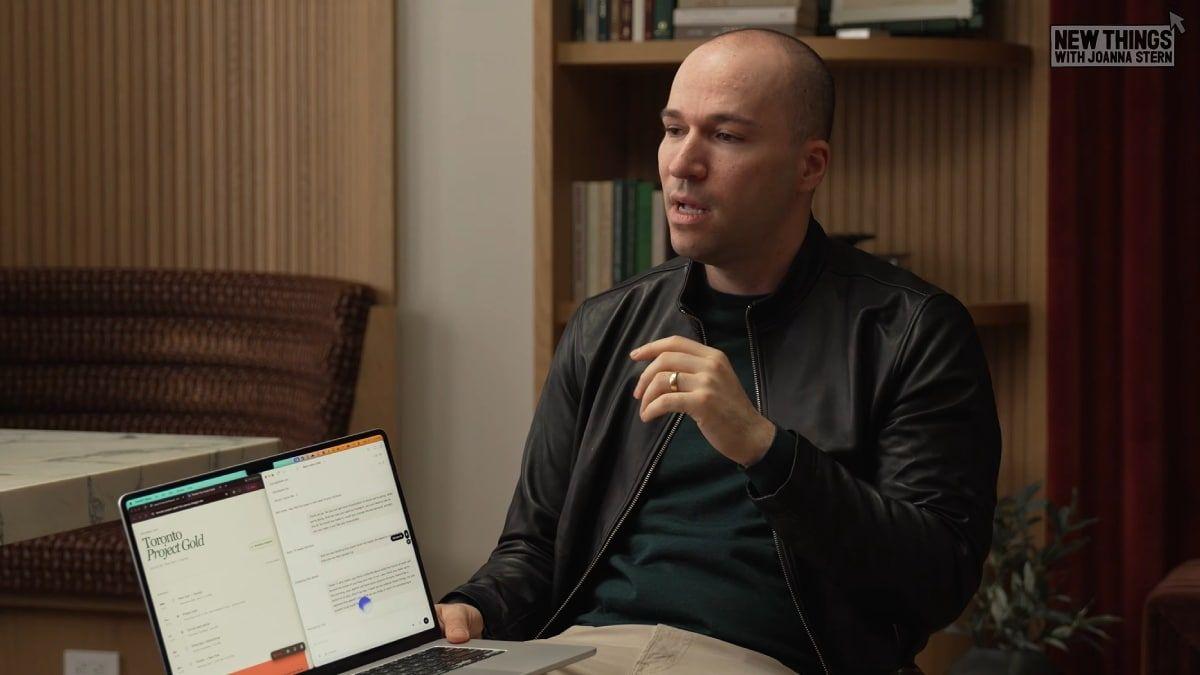
OpenAI is building a family of devices, not just one gadget, according to president Greg Brockman in a recent interview with Joanna Stern
1
. The confirmation marks a significant shift in understanding the company's hardware ambitions, which have been developing around former Apple design chief Jony Ive since OpenAI acquired his hardware startup, io, in a multibillion-dollar deal1
. When asked about reports of a smart speaker, Brockman neither confirmed nor denied the specific device, instead emphasizing the broader strategy: "we're building a family of devices"3
. While he declined to provide a specific launch date, Brockman stated people should "expect them soon"3
.
Source: Gadgets 360
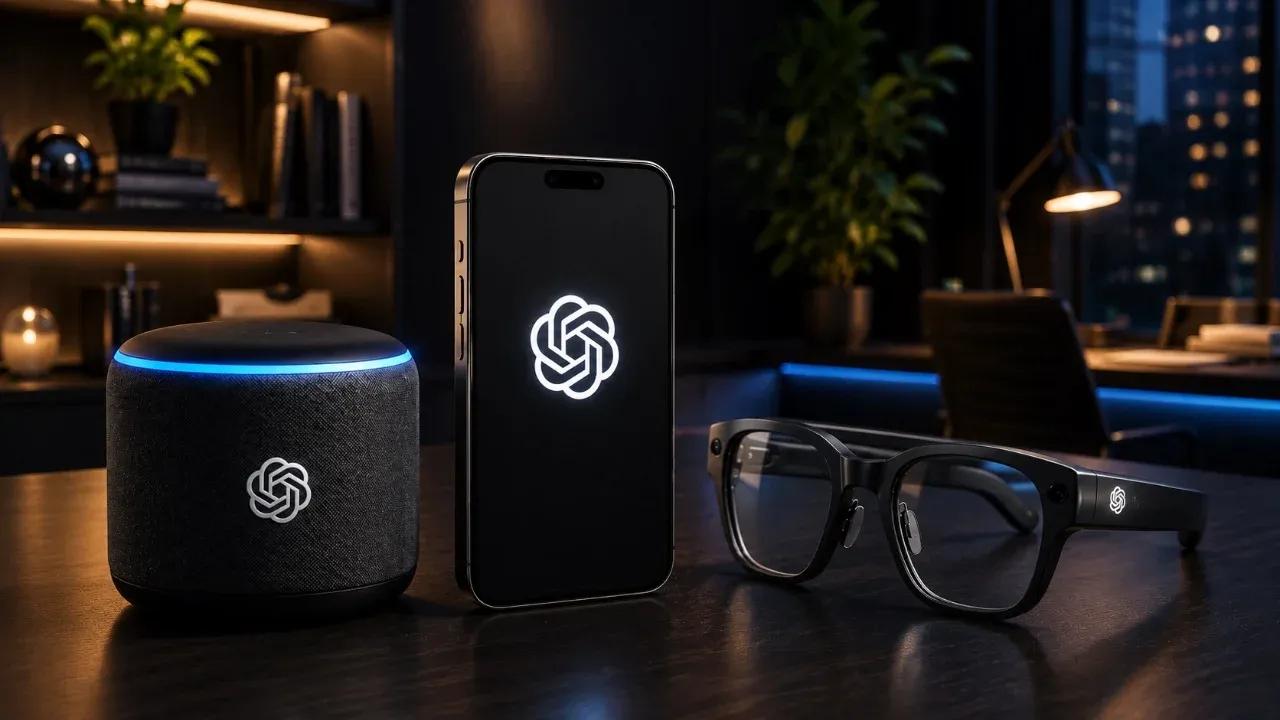
The foundation of OpenAI's hardware push rests on a single premise: voice interaction will replace typing as the primary way people communicate with machines. Brockman described voice as "a far more natural way to interact with a machine"
1
, explaining why the company believes it can build ChatGPT devices rather than rely solely on apps. When ChatGPT itself was asked to describe OpenAI's first AI device, it responded: "something ambient and low friction, voice first but not voice only and with a clear privacy signal"3
. This voice-first hardware devices approach represents OpenAI's bet that talking to computers will become more common than typing, even in office environments. Brockman referenced soundproof "beak" masks that some office workers now wear to speak to their computers without disturbing colleagues, noting it "shows you where there's product market fit"4
.
Source: 9to5Mac
The AI hardware products development occurs against the backdrop of an Apple lawsuit alleging OpenAI orchestrated a months-long scheme to steal confidential information through former Apple employees
3
. Apple accused OpenAI of creating a culture of hardware theft and claimed its hardware business is "rotten to the core" because products rely on information stolen from Apple3
. Brockman dismissed these concerns, stating: "We have no interest in other companies' trade secrets. We are plenty innovative"1
. He emphasized OpenAI remains "focused on our own development and technology" and is "very committed to a long-term roadmap"3
. The company is treating the litigation as a nuisance rather than a threat that would delay its hardware plans1
.
Source: MacRumors
Related Stories
OpenAI's hardware ambitions extend far beyond a single AI companion device. The company is reportedly working on a phone with Qualcomm and MediaTek, targeting hundreds of millions of shipments annually by the end of the decade
1
. This represents a direct assault on the smartphone market Apple built and explains the iPhone maker's alarm over OpenAI's plans. The company is also developing custom chips to power its AI-powered devices5
. OpenAI enters a crowded field where Meta is betting on smart glasses, Amazon has spent a decade building Alexa as a platform, and Google continues integrating its assistant across products1
. The hardware graveyard is already littered with ambitious AI gadgets that promised to end the smartphone era but failed to achieve product-market fit1
.Brockman addressed concerns about privacy, stating OpenAI is investing in technology that offers verifiable and auditable guarantees to ensure only AI reviews private data
4
. The company is working on ways to let users verify how private conversations, including those in Temporary Chat mode, are handled through verifiable data handling systems5
. Regarding the recent desktop app redesign that merged ChatGPT and Codex, Brockman acknowledged the interface is "kind of a mess" but described it as "incremental progress towards the future"3
. The standalone Work tab should disappear by the end of the year, with features integrated directly into ChatGPT5
. Despite criticism, the redesign helped Codex grow from approximately five million to 10 million users within days5
.Summarized by
Navi
[1]
[4]
[5]
19 Jan 2026•Technology

15 Jul 2026•Technology

19 Sept 2025•Technology

1
Technology

2
Technology

3
Technology