7 Sources
[1]
OpenAI's AI spending spree has ballooned to $750B
OpenAI announced Wednesday that it will spend $750 billion on infrastructure through 2030, some 25% more than it estimated earlier this year, the Wall Street Journal reported The renewed blitz comes as its Stargate data center project appears to have stalled. The first salvo in OpenAI's spending spree will be a $20 billion data center campus in Georgia known as Project Camellia. The development will span 1,400 acres northwest of Savannah and will draw at least 3.2 gigawatts of power from Georgia Power, the region's utility. The generating capacity is expected to become available between 2028 and 2032. The AI company said it would "pay the full cost of the infrastructure and electric-service costs" for the new data center. The Georgia Public Service Commission (PSC) adopted a rule last year to prevent utilities from passing on costs associated with new users drawing more than 100 megawatts. Georgia Power also said OpenAI will reduce its power draw by up to 1 gigawatt during periods of high demand on the grid. OpenAI is receiving a 50% property tax abatement for 15 years from Effingham County, according to the Effingham Herald. Neither OpenAI nor Georgia Power has said how Project Camellia will be powered. TechCrunch asked both companies for specifics, but did not immediately receive a reply. Regulatory filings might provide some clues. In December, Georgia Power received approval from the PSC to produce an additional 9,885 megawatts. The utility told the PSC it expects to have all the capacity contracted by the end of 2026. The OpenAI deal accounts for about a third of that. Based on documents Georgia Power filed with the PSC, most of the new capacity will come from natural gas. The utility said it will build or buy from third parties about 5.8 gigawatts of natural gas generating capacity, about a quarter of which will be from more polluting simple-cycle turbines. Altogether, the new fossil fuel capacity will more than double Georgia Power's natural gas fleet. The remainder will be supplied by grid-scale batteries and solar. While electricity from Georgia Power is expected to start flowing in 2028, OpenAI did not give a timeline for when the first GPU will be turned on. That could happen sooner than 2028 given that OpenAI recently hired Brett Mayo to lead data center construction. Mayo previously worked at xAI, where he oversaw the Colossus data center in Memphis. Colossus was built in record time, but it has allegedly taken its toll on local air quality, according to a lawsuit filed by the NAACP and the Southern Environmental Law Center. The xAI data center has been running dozens of unpermitted natural gas turbines, claiming exemption from federal clean air regulations.
[2]
OpenAI drives US expansion with $30B Georgia data center build
OpenAI is preparing one of the largest artificial intelligence infrastructure investments in the United States, committing more than $30 billion to a massive data center campus in coastal Georgia. The project will provide up to 3.2 gigawatts of computing capacity over the next decade, giving the ChatGPT developer another major boost as demand for AI computing continues to climb. The investment places OpenAI among a growing group of technology companies building hyperscale AI infrastructure across the U.S. CEO Sam Altman is also expected to visit Washington next week to brief the Trump administration and members of Congress on next-generation AI models before the country's AI regulatory framework evolves. OpenAI has secured up to 3.2 gigawatts of electricity from Georgia Power for its planned campus in Effingham County near Savannah. That amount of power rivals the electricity needs of roughly 2.4 million U.S. homes, underscoring the scale of computing resources required to train and operate advanced AI models. The first several hundred megawatts should become available in 2028, with construction expected to continue through 2032. Sachin Katti, OpenAI's vice president of compute strategy, reportedly said the fully built facility will likely cost more than $30 billion. The company has already committed $20 billion to the project and is searching for partners to finance and develop the remaining phases. Katti said OpenAI has gained valuable experience after several generations of AI infrastructure projects. Engineers have refined facility layouts, improved networking architecture and standardized system designs to reduce costs while accelerating deployment schedules. The Georgia campus also reflects a shift in OpenAI's infrastructure strategy. Stargate began as a joint effort with Oracle and SoftBank, but OpenAI now plays a larger role in planning and designing new facilities. The company also intends to release standardized blueprints covering data centers, networking systems, and hardware, allowing future campuses to come online more quickly. OpenAI has also refined its global infrastructure pipeline. It recently stepped back from selected projects in the United Kingdom and Norway and paused expansion at its flagship Stargate campus in Texas. Those decisions allow the company to concentrate resources on larger developments with greater long-term strategic value. Large AI campuses have faced criticism over electricity demand, water consumption and pressure on local infrastructure. OpenAI said it will pay for the transmission and distribution upgrades required for the Georgia site instead of passing those costs to local ratepayers. The company also plans to reduce electricity use during periods of peak grid demand and operate a closed-loop cooling system to limit water consumption. OpenAI expects to contribute hundreds of millions of dollars in state and local taxes over time, establish a community fund and provide product credits for local students. Alongside its infrastructure expansion, OpenAI introduced Presence, a new enterprise platform that connects AI models with internal company data, software and business workflows. The platform allows organizations to deploy AI agents that can handle customer support, sales operations and IT service requests with minimal human intervention. The launch broadens OpenAI's strategy beyond selling access to foundation models. As rivals continue improving model performance and driving prices lower, the company is betting that combining large-scale computing infrastructure with enterprise software will strengthen its long-term position in the rapidly expanding AI market.
[3]
OpenAI announces $20 billion Georgia data center project
Why it matters: Computing infrastructure is a major constraint on how quickly AI improves and how broadly it can be deployed. Between the lines: OpenAI says guarantees are in place that residential electricity prices won't increase and also that OpenAI will reduce its power consumption during periods of high demand before others are impacted. * The new data center will use closed-loop cooling with minimal water usage, the company says. * OpenAI says it will provide $80 million in benefits toward supporting local priorities such as schools, public safety, health care, workforce training and housing. The company says it expects to also pay hundreds of millions of dollars in state and local taxes and become the county's largest taxpayer. * It will also provide up to $71 million in Codex credits for use by every student at a college in Georgia and pay for an independent auditor to verify it is following through on all of its commitments. The big picture: OpenAI's new project comes amid growing public resistance to data center construction from across the political spectrum. * New York Gov. Kathy Hochul signed an executive order last week aimed at imposing a one-year moratorium on the building of new data centers by large tech companies. What they're saying: OpenAI is presenting its Georgia project as a model for early community engagement and accountability as it seeks approval for new data centers.
[4]
OpenAI plans $20 billion data center campus near Savannah, Georgia
The project, called Project Camellia, will draw 3.2 gigawatts of power from Georgia Power in phases between 2028 and 2032 OpenAI announced plans Wednesday to build a data center campus in Effingham County, Georgia, committing $20 billion to the project in order to qualify for a local incentive package. The facility, named Project Camellia, is located within the Savannah Gateway Industrial Hub, about 45 minutes outside of Savannah, and would be the first data center that OpenAI is designing and building itself. The company has contracted with Georgia Power to receive 3.2 gigawatts of power, with delivery expected in phases between 2028 and 2032. At the full scale of the project, total costs would likely exceed $30 billion, according to Bloomberg. OpenAI is currently seeking partners to help finance and build the campus, the company said. Under a 25-year agreement, OpenAI has committed to providing up to 1,000 megawatts of flexible demand response, Georgia Power said. That means OpenAI will reduce its power consumption during periods of peak grid demand before residential customers are affected. Georgia Power said the arrangement is among the largest single-facility demand response commitments in the country. OpenAI said electricity rates for existing Georgia Power customers will not increase because of the project, and that it will pay the full cost of electrical infrastructure and service. The data center will use a closed-loop cooling system designed to keep ongoing water use low, the company said. On the community side, OpenAI said it has pledged $80 million in community benefits across the life of the project, targeting areas including education, public safety, health care, workforce development, housing, and local small business support. OpenAI also anticipates its tax obligations to the state and county will reach into the hundreds of millions of dollars, which it said would make it Effingham County's single largest taxpayer. An additional $71 million in credits for OpenAI's Codex coding tool will be made available to eligible students at Georgia colleges and technical schools. In a statement cited by Axios, Effingham County Commissioner Jamie DeLoach said the project's low water demands, its lack of impact on residential energy bills, and the new tax revenue it would bring were among the factors that won over county officials. The county projects that revenue flowing from the facility could cut property tax bills for a typical homeowner by roughly 40%. OpenAI plans to hold a public open house on Thursday where residents can meet the project team and provide input that will shape a formal community compact. The company also said it will commission an annual independent audit to verify compliance with its commitments. The Georgia project comes as OpenAI has raised its projected spending on computing infrastructure to around $750 billion through 2030, up from roughly $600 billion earlier this year. Unlike its other facilities, where OpenAI leases chip capacity from providers such as Oracle $ORCL and Amazon $AMZN Web Services, the Effingham County site marks the company's first venture as principal designer and builder. According to Bloomberg, Sachin Katti, OpenAI's vice president of compute strategy, said the company intends to develop uniform data center blueprints and make them publicly available as a resource for the broader industry. OpenAI policy chief Chris Lehane told Axios that the company is presenting the Georgia project as a model for early community engagement. "At the end of the day, you're only going to get approvals to be able to build these projects if you're actually doing right by these communities," Lehane said.
[5]
OpenAI raises planned AI infrastructure spending to $750 billion
OpenAI has raised its projected spending on computing infrastructure to around $750 billion through 2030, up from roughly $600 billion earlier this year, according to The Wall Street Journal. New deals with cloud-computing providers are driving the higher figure, as OpenAI continues its push to obtain the vast computing resources its AI models require. On Wednesday, OpenAI said it would invest $20 billion to begin construction on a data center called Project Camellia in Effingham County, Georgia. Unlike its other facilities, where the company leases chip capacity from providers such as Oracle $ORCL and Amazon $AMZN Web Services, the Savannah Gateway Industrial Hub site marks OpenAI's first venture as the principal designer and builder of its own data center.
[6]
OpenAI plans $30B Georgia data center mega-project By Investing.com
Investing.com -- OpenAI is planning a massive data center complex in Effingham County, Georgia, near Savannah, according to The Wall Street Journal. The project underscores the extreme capital and energy demands required to power the next generation of AI. Core Project Details Moving away from exclusive reliance on cloud partners like Microsoft, Oracle, and SoftBank, OpenAI is leading the facility's design directly. "There's a bunch of lessons around how these things should be designed that can cut both costs as well as make it faster to build," Sachin Katti, OpenAI's VP of compute strategy, told the Journal. OpenAI plans to open-source these blueprints as standard reference models. The project is part of Sam Altman's broader "Stargate" infrastructure initiative. However, OpenAI recently pulled back from sites in the UK, Norway, and Texas to streamline capital into massive, high-yield hubs ahead of an expected IPO. Securing multi-gigawatt power access is now the primary bottleneck in AI development. While the deal establishes Georgia as a major tech hub, it brings new scrutiny over grid capacity and clean-energy targets.
[7]
Southern Company's Georgia Power to Supply OpenAI's Planned Georgia Data Center Under 25-Year Power Agreement
Southern Company's Georgia Power said Wednesday it will provide electric service to OpenAI's planned data center project in Effingham County, Ga., under a long-term agreement that includes one of the country's largest single-site demand response commitments. OpenAI earlier Wednesday announced plans to invest $20 billion in the first phase of the project, which is expected to create thousands of jobs and billions of dollars in local investment. The artificial-intelligence company said the campus is expected to require about 3,200 megawatts of electricity between 2028 and 2032 as it scales operations. Under the 25-year agreement, OpenAI will fund the full cost of the electric infrastructure needed to serve the facility and meet Georgia Power's requirements for long-term energy contracts and financial assurances intended to protect other customers, the utility said. OpenAI also agreed to provide up to 1,000 megawatts of flexible demand response, allowing Georgia Power to reduce power delivered to the facility during periods of peak demand to help maintain grid reliability. Georgia Power said the arrangement could reduce the need to build additional generation capacity and lower long-term costs for customers. The project marks OpenAI's first data center in which it is serving as the lead developer and designer, rather than leasing computing capacity from cloud providers. It comes as the company expands its infrastructure buildout to support growing demand for artificial-intelligence services. Earlier this year, OpenAI increased its projected spending on computing infrastructure through 2030 to about $750 billion, up from an earlier estimate of roughly $600 billion.
Share
Copy Link
OpenAI announced a 25% increase in AI infrastructure spending to $750 billion through 2030, unveiling Project Camellia—a $20 billion data center campus in Georgia spanning 1,400 acres. The facility will draw 3.2 gigawatts of power from Georgia Power between 2028 and 2032, marking OpenAI's first self-designed and built data center as computing demands continue to escalate.
OpenAI announced Wednesday that it will raise AI infrastructure spending to $750 billion through 2030, representing a 25% increase from its earlier estimate of roughly $600 billion this year, according to The Wall Street Journal
1
5
. The escalation comes as new deals with cloud-computing providers drive the higher figure and as the company's Stargate data center project appears to have stalled. This massive capital commitment underscores the computing resources required to train and operate advanced AI models as demand for AI computing continues to climb across the industry.
Source: Axios
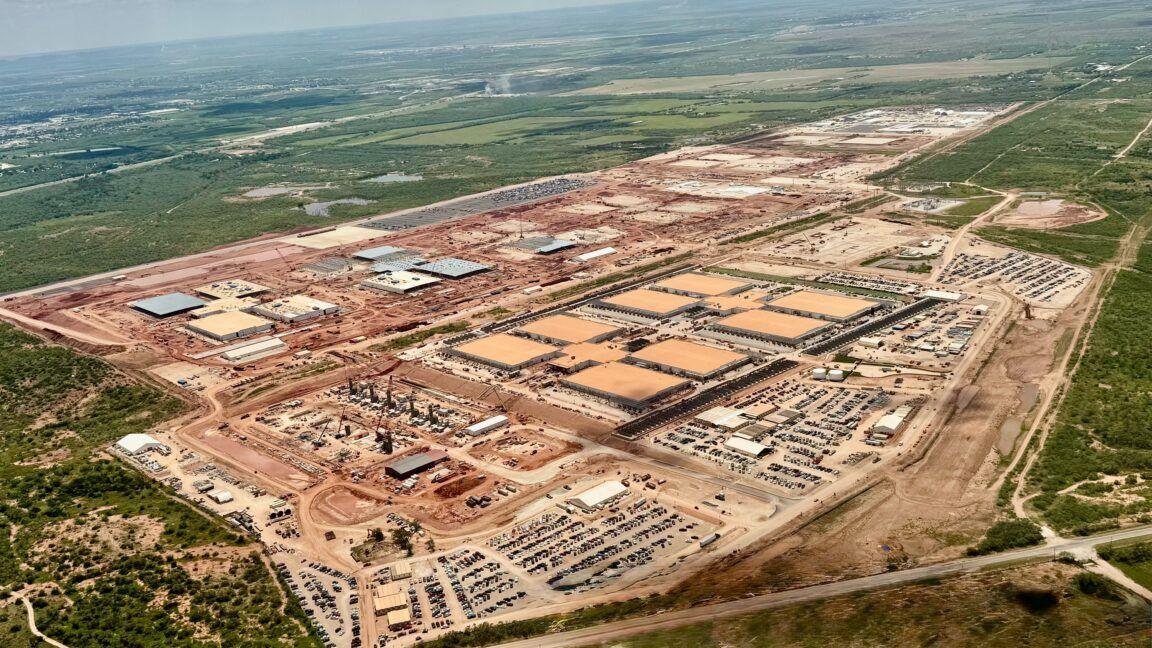
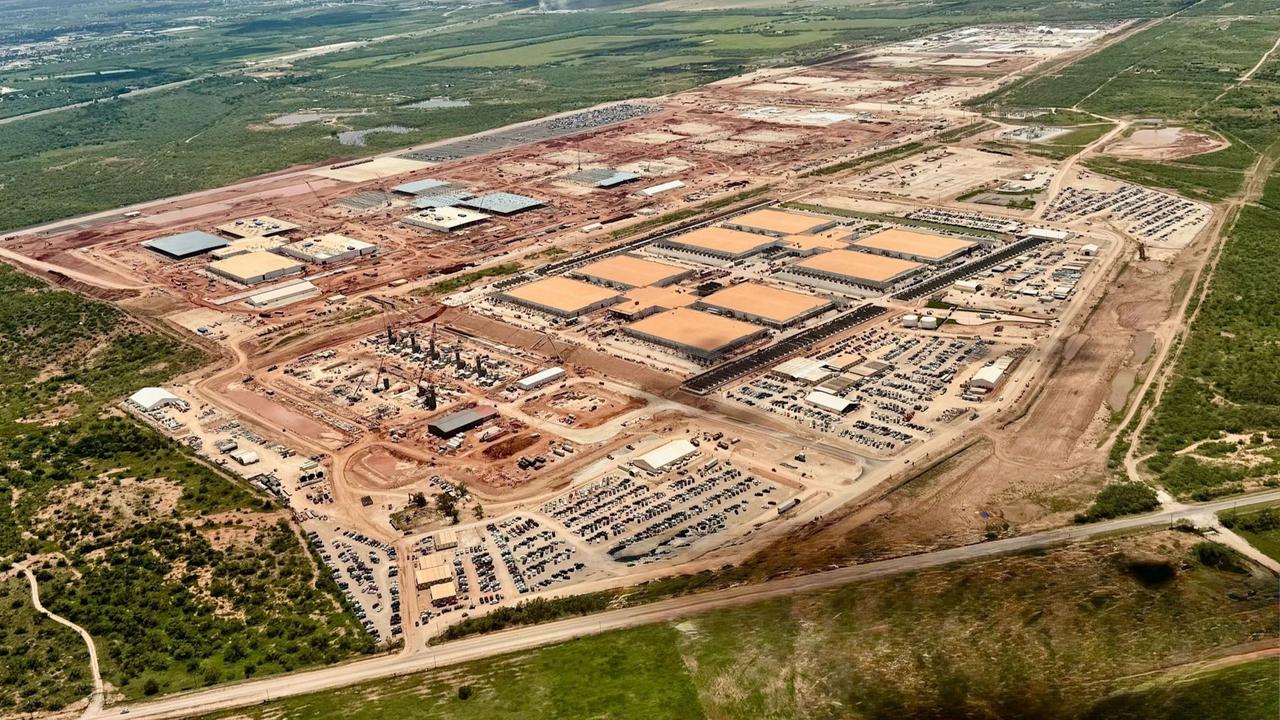
The centerpiece of this AI expansion strategy is Project Camellia, a $20 billion data center campus in Effingham County Georgia, located within the Savannah Gateway Industrial Hub about 45 minutes northwest of Savannah
1
4
. This OpenAI data center project spans 1,400 acres and represents the company's first venture as principal designer and builder of its own facility, a significant shift from leasing chip capacity from providers such as Oracle and Amazon Web Services. Sachin Katti, OpenAI's vice president of compute strategy, reportedly said the fully built facility will likely cost more than $30 billion, with the company currently seeking partners to finance and develop the remaining phases2
. The Georgia data center will draw at least 3.2 gigawatts of power from Georgia Power, with generating capacity expected to become available between 2028 and 20321
.
Source: Interesting Engineering
The 3.2 gigawatts of electricity contracted from Georgia Power rivals the power consumption of roughly 2.4 million U.S. homes, highlighting the scale of compute infrastructure needed for AI development
2
. Regulatory filings reveal that most of the new capacity will come from natural gas, with Georgia Power planning to build or buy approximately 5.8 gigawatts of natural gas generating capacity—more than doubling the utility's natural gas fleet1
. Neither OpenAI nor Georgia Power has specified exactly how Project Camellia will be powered, raising concerns about environmental impact similar to those faced by xAI's Colossus data center in Memphis, which has been accused of running dozens of unpermitted natural gas turbines1
.
Source: TechCrunch
OpenAI is positioning the Georgia data center as a model for community engagement amid growing public resistance to data center construction across the political spectrum
3
. The company committed to paying the full cost of infrastructure and electric-service costs for the new facility, ensuring that electricity rates for existing Georgia Power customers will not increase4
. Under a 25-year demand response agreement, OpenAI will reduce power consumption by up to 1 gigawatt during periods of high demand on the grid before residential customers are affected—among the largest single-facility demand response commitments in the country1
4
. The facility will use closed-loop cooling with minimal water usage to address concerns about resource consumption3
.Related Stories
OpenAI is receiving a 50% property tax abatement for 15 years from Effingham County, though the company expects to become the county's largest taxpayer, contributing hundreds of millions of dollars in state and local taxes over time
1
4
. The county projects that revenue flowing from the facility could cut property tax bills for a typical homeowner by roughly 40%4
. OpenAI pledged $80 million in community benefits targeting education, public safety, health care, workforce development, housing, and local small business support3
4
. Additionally, the company will provide up to $71 million in Codex credits for use by every student at Georgia colleges and technical schools, and pay for an independent auditor to verify compliance with its commitments3
4
.The self-designed data center reflects a strategic shift for OpenAI as it refines its global infrastructure pipeline. Katti said the company has gained valuable experience after several generations of AI infrastructure projects, improving facility layouts, networking architecture, and standardized system designs to reduce costs while accelerating deployment schedules
2
. OpenAI intends to release standardized blueprints covering data centers, networking systems, and hardware, allowing future campuses to come online more quickly2
. The company recently stepped back from selected projects in the United Kingdom and Norway and paused expansion at its flagship Stargate campus in Texas to concentrate resources on larger developments with greater long-term strategic value2
. CEO Sam Altman is expected to visit Washington next week to brief the Trump administration and members of Congress on next-generation AI models before the country's AI regulatory framework evolves2
.Summarized by
Navi
[1]
[2]
22 Jul 2025•Business and Economy

30 Apr 2026•Technology

25 Sept 2024

1
Technology

2
Policy and Regulation

3
Science and Research