3 Sources
[1]
OpenAI Meets Key AI Computing Capacity Goal Ahead of Schedule
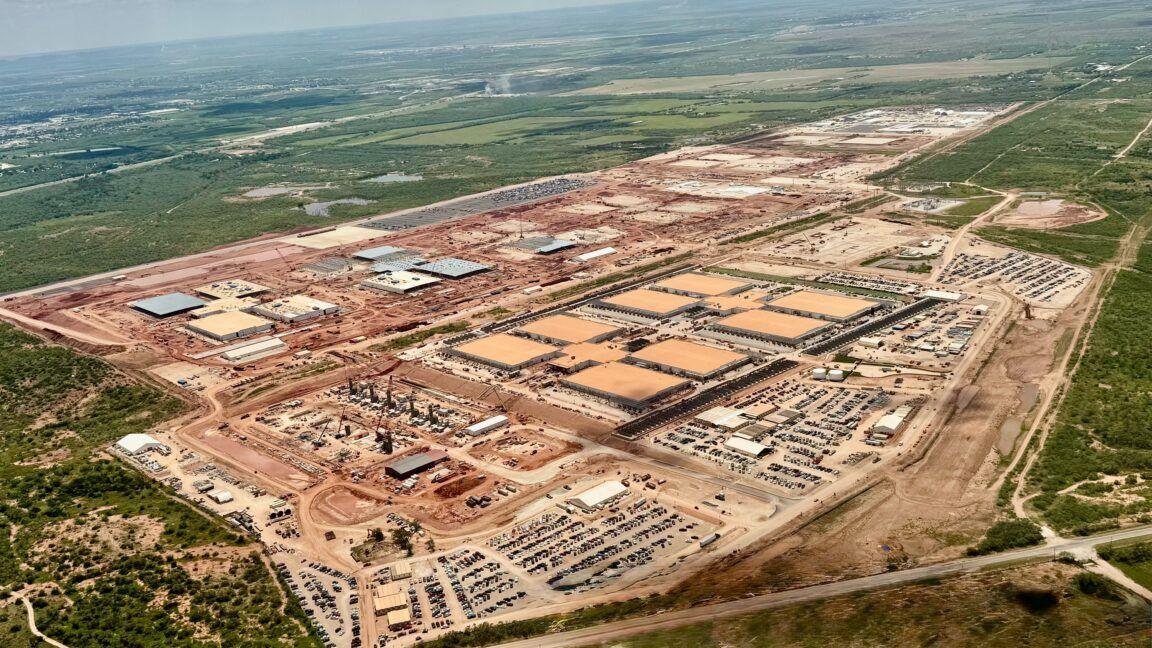
OpenAI said it's looking at additional sites and "will significantly expand our compute capacity in the years ahead". OpenAI has met a key milestone for securing AI capacity in the US several years ahead of schedule, boosting the startup's ambitious plans for data center expansion. The ChatGPT creator has signed contracts for 10 gigawatts of artificial intelligence computing capacity, it said in a blog post on Wednesday. The company had originally aimed to reach that goal by 2029. Stargate was unveiled in January 2025 as a $500 billion venture among OpenAI, Oracle Corp. and SoftBank Group Corp. But more recently the project has morphed into a catchall brand for all of OpenAI's data center plans. OpenAI has recently pulled back from some projects related to the highly publicized initiative, which was announced at an event at White House. It declined to lease an expansion to Stargate's flagship Abilene data center site in Texas and paused another effort in the UK, citing the country's high cost of energy and regulation. OpenAI had also initially been in talks for capacity in Norway at a site developed by Nscale, which is also behind the UK project, but opted not to conclude a deal, people familiar with the matter told Bloomberg News this month. OpenAI said in the Wednesday blog post that 3 of the 10 gigawatts under contract had been secured in the past 90 days. That includes 2 gigawatts from Amazon.com Inc. and a further 1 gigawatt the company hasn't disclosed. A gigawatt is enough electricity to power about 750,000 US homes at any one time. The startup said it's looking at additional sites and "will significantly expand our compute capacity in the years ahead." Microsoft Corp. and OpenAI have agreed to drop the software giant's exclusive right to sell the startup's AI models, opening the door for the ChatGPT maker to pursue deals with cloud-computing rivals like Amazon.com Inc. In exchange for ending that exclusivity -- which helped boost Microsoft's cloud sales in the early years of the AI boom -- the world's largest software maker will no longer pay a revenue share on OpenAI products it resells on its cloud. The two companies announced the revised deal in a joint statement on Monday. Bloomberg Intelligence OpenAI Breaks From Exclusive AI Pact With Microsoft Arrow Right 22:33 The new pact is meant to simplify a complicated relationship that has been foundational to OpenAI's rise and the broader artificial intelligence boom. OpenAI has since pursued deals with multiple cloud providers, including Amazon, to meet its growing computing needs to build and serve AI software to a wider audience. "The greater predictability in the amended agreement strengthens our joint ability to build and operate AI platforms at scale while providing both companies the flexibility to pursue new opportunities," OpenAI and Microsoft said in their statement. Monday's agreement clears the way to OpenAI's models appearing on Amazon Web Services and other cloud-computing providers. As part of an investment announced earlier this year, the Amazon unit said it was jointly developing products with OpenAI that would be hosted on AWS. Microsoft weighed legal action, on the view that the effort would almost certainly breach its exclusive rights to OpenAI's intellectual property, the Financial Times reported last month. Microsoft remains OpenAI's "primary cloud provider," and new products from the startup will be made available first on Azure, Microsoft's cloud unit. Revenue share paid by OpenAI on sales of its products that it makes itself will be capped, the companies said. But until they reach that cap -- which wasn't disclosed -- the revised deal brings more certainty that OpenAI will continue to send those checks. Take our Markets Pulse surveyAre companies' expenditures on AI justified by the returns they're getting? Let us know. Microsoft will receive a revenue share from OpenAI through 2030, regardless of progress the startup makes toward its goal of building artificial general intelligence -- a system capable of matching human capability across tasks. Under the prior agreement, revenue share payments were due to stop should OpenAI reach that milestone. As part of OpenAI's restructuring last year as a for-profit business, Microsoft received a 27% ownership stake in the AI startup. The software giant was a key holdout in OpenAI's corporate overhaul as the two negotiated the complex terms of their partnership. Microsoft's relationship with OpenAI is set to be in the spotlight this week as the companies square off against Elon Musk in court. The billionaire has accused OpenAI of abandoning its founding principles by converting to a for-profit company with billions of dollars in support from Microsoft. He's seeking as much as $134 billion in damages from OpenAI and Microsoft. Microsoft shares were down about 1% as the markets opened in New York on Monday. Amazon fell less than 1%. "We do not believe this revised agreement should come as a major surprise to investors at this point," analysts with Evercore ISI wrote in a note to clients on Monday. "Microsoft has increasingly signaled interest in a broader multi-model strategy, while OpenAI has clear incentives to expand distribution more broadly across the market."
[2]
How OpenAI's $500bn data centre venture Stargate has shifted shape
George Hammond and Stephen Morris in San Francisco, David Keohane in Tokyo and Tim Bradshaw in London OpenAI's $500bn Stargate plan to secure computing power is being reworked and, in places, abandoned. Yet its willingness to strike whatever deals are necessary to secure capacity has given it an edge in the race to build AI infrastructure. In recent weeks, the group has halted planned data centres in the UK and Norway, declined to expand its flagship site in Abilene, Texas and seen several senior figures tied to Stargate leave for rival Meta. Originally announced in early 2025 by Donald Trump as a $500bn joint venture between OpenAI, Oracle, Abu Dhabi fund MGX and Japan's SoftBank, Stargate was designed to finance and build dedicated data centres for OpenAI's use. The idea was to pool capital to tackle the cost and complexity of AI infrastructure. That concept has rapidly given way to a more flexible approach, with OpenAI increasingly relying on third-party providers, leasing capacity rather than building and owning its own facilities. "I don't know what 'Stargate' means at this point," said a person who was involved in the data centre buildout at the outset. "I think it is a completely antiquated line right now." The shape-shifting scheme embodies OpenAI's broader efforts. From core technology to partnerships, the company places overlapping bets and abandons all but the most expedient. The approach owes much to chief executive Sam Altman's "venture mindset", said one person close to the company. People familiar with the changes at Stargate said that, in practice, OpenAI has abandoned the joint venture in favour of a series of large bilateral deals. But OpenAI executives said the guiding principle remains to "build more compute". Oracle has played the most prominent role, agreeing last year to supply OpenAI with 4.5 gigawatts of computing capacity under a five-year, $300bn agreement. The company has also struck partnerships with AMD, Broadcom, Nvidia, CoreWeave and Cerebras in deals that at one point totalled more than $1tn in commitments, some of which have since been scaled back. Questions remain over whether it can afford its huge infrastructure spending. On Tuesday, a report that OpenAI had missed internal targets for revenue and user growth led to share price falls at companies linked to the start-up including SoftBank, Oracle and CoreWeave. OpenAI said in response that its business is "firing on all cylinders." OpenAI has cut costs by sidelining or revising Stargate plans. But the willingness to renegotiate or walk away from projects has unsettled partners and raised questions about OpenAI's reliability as a counterparty. It initially aimed to develop its own data centres under the Stargate banner as it faced two challenges: a complex supply chain, and wariness from lenders about funding a lossmaking start-up with no credit rating. The joint venture -- pooling cash from blue-chip partners and gaining the imprimatur of the US president -- aimed to tackle both issues. Since then, a surge in demand for AI tools has spurred chip, cloud and infrastructure groups into action and eased investor scepticism. "We created enough demand in the market, and others came along, so we sidelined first party data centres," said the person involved in Stargate. OpenAI said: "Stargate is the umbrella for our compute strategy and we've done exactly what we said we would do: secure the compute OpenAI needs at unprecedented scale. "We've expanded to a broad partner network across clouds, silicon, and infrastructure, capacity is coming online, and we're ahead of schedule. Building at this scale is what allows us to put powerful AI into the hands of more people, businesses, and developers." OpenAI this month put on hold one data centre project in the north-east of England and rejigged another in Narvik, Norway. Both projects were badged as being part of Stargate in a tie-up with AI cloud start-up Nscale. OpenAI annoyed the British government by blaming restrictive regulation and high energy costs for halting plans in the country. The UK AI minister Kanishka Narayan said that the "only thing that has changed [since] the moment of those commitments . . . has been the financing environment for OpenAI." UK-based Nscale had been investing heavily in anticipation of leasing capacity to OpenAI. Microsoft has stepped in at Nscale's Narvik site. OpenAI said it still plans to access capacity in Norway via its broader Microsoft deal, instead of leasing directly from Nscale. Last month, the AI lab ditched plans to expand its Abilene, Texas site, declining to take up a lease option with developer Crusoe. The person involved in Stargate said OpenAI sourced cheaper options, including in Michigan, because "there is limited money in the world, whatever Sam [Altman] might say [and] the expansion was at an insane price." Microsoft has stepped in to take the extra capacity at Abilene. A person close to Crusoe said Microsoft was a preferable tenant. "It's a better outcome, [they are] more creditworthy." Someone familiar with Microsoft's thinking said its decision "helps out those who are feeling let down and misled by OpenAI on projects". "Stargate has now had three or four permutations, I don't know what it is right now. I can't tell you. Maybe it never really existed in the first place," the person added. When Stargate launched, the company set a goal of locking in 10GW of capacity -- roughly equivalent to 10 nuclear power stations -- at a cost of about $500bn by the end of the decade. The company now aims to beat that target. It claims to have already secured more than 8GW of capacity, and forecasts spending more than $600bn by the end of 2030. That would mean the lossmaking company far outspending rivals such as Anthropic and Elon Musk's xAI. OpenAI's commitments are more in line with Amazon, Google, Microsoft and Meta -- which generate tens of billions in annual profit. SoftBank, the main financial sponsor of the original joint venture, is working on building its own data centres but those are yet to come online. The computing capacity from one project in Ohio could eventually go to OpenAI after a tender process, said a person close to the situation. "Stargate hasn't disappeared but it has evolved and people can basically pick their own definition of Stargate now," said another person familiar with the Japanese investor's thinking. "In one way, basically any compute that involves Softbank or Oracle can be Stargate". SoftBank declined to comment. According to the person involved in Stargate, the term lost its meaning when it was co-opted by OpenAI's policy and public relations teams as a catch-all for infrastructure build-out. The idea that being the tenant of a data centre in Europe fell under the Stargate umbrella was "always fake", they said. Still, OpenAI's infrastructure push could give it an advantage. Anthropic chief executive Dario Amodei has criticised rivals for their gung-ho plans. But with power constraints starting to weigh on its ability to meet fast-rising demand, Amodei signed off hundreds of billions of dollars of spending on long-term capacity this month. OpenAI's moves may be prescient, as long as the company can meet its lavish spending commitments. In a note to sales staff earlier this month, OpenAI's chief revenue officer Denise Dresser wrote: "We saw the exponential compute curve earlier, acted on it faster, and now have a real structural advantage."
[3]
OpenAI's Stargate hits 10GW AI capacity target years ahead of schedule By Investing.com
Investing.com-- OpenAI said on Wednesday it has surpassed its target of securing 10 gigawatts of artificial intelligence computing capacity in the U.S. several years ahead of schedule, underscoring surging demand for AI infrastructure. The milestone, initially set for 2029 under the Stargate initiative, was reached just over a year after the program's launch, with more than 3 gigawatts added in the past 90 days alone, the company said. Get premium insights on market-moving news with InvestingPro Stargate, a $500 billion AI infrastructure project, is OpenAI's long-term push to build the computing backbone needed for advanced AI, spanning large-scale data centres, power supply and high-performance chips. The effort is being developed with partners including Oracle (NYSE:ORCL), NVIDIA (NASDAQ:NVDA), Microsoft (NASDAQ:MSFT), alongside other utilities and local governments. OpenAI said rapid expansion of computing power is essential to train more advanced AI models, scale deployment and meet growing demand from businesses, developers and governments. OpenAI added it was assessing additional data centre sites across the country as it looks to further expand capacity. A recent Wall Street Journal report said OpenAI missed internal targets for revenue and user growth, including falling short of its goal to reach one billion weekly users for ChatGPT, raising concerns about its ability to sustain heavy spending on computing infrastructure.
Share
Copy Link
OpenAI hit its 10 gigawatts AI computing capacity target years ahead of the 2029 deadline, adding 3 gigawatts in just 90 days. But the $500 billion Stargate initiative has transformed from a joint venture building dedicated data centers into a flexible approach of leasing capacity from third-party providers. The company has halted projects in the UK and Norway while expanding partnerships with Amazon, Oracle, and Microsoft.
OpenAI has secured 10 gigawatts AI computing capacity in the United States, reaching a target originally set for 2029 several years ahead of schedule
1
. The ChatGPT creator announced the milestone in a blog post on Wednesday, revealing that 3 of the 10 gigawatts under contract had been secured in the past 90 days alone1
. This includes 2 gigawatts from Amazon Web Services and a further 1 gigawatt from an undisclosed provider. A single gigawatt is enough electricity to power approximately 750,000 US homes at any one time1
.
Source: FT
The rapid expansion of AI computing capacity is essential for training advanced AI models, scaling deployment, and meeting growing demand from businesses, developers, and governments
3
. Sam Altman's company stated it is assessing additional data center sites across the country and "will significantly expand our compute capacity in the years ahead"1
.What began as the $500 billion Stargate initiative has undergone a dramatic shift in strategy. Originally unveiled in January 2025 by Donald Trump as a joint venture among OpenAI, Oracle, SoftBank Group Corp., and Abu Dhabi fund MGX, Stargate was designed to pool capital to finance and build dedicated data centres for OpenAI's exclusive use
2
. The concept aimed to tackle the cost and complexity of AI infrastructure by having OpenAI own its facilities.That vision has rapidly given way to a more flexible approach, with OpenAI increasingly relying on leasing capacity from third-party providers rather than building and owning its own facilities
2
. "I don't know what 'Stargate' means at this point," said a person who was involved in the data center buildout at the outset. "I think it is a completely antiquated line right now"2
. The project has morphed into a catchall brand for all of OpenAI's data center expansion plans1
.
Source: Bloomberg
OpenAI has abandoned the joint venture in favor of a series of large bilateral deals with multiple partners
2
. Oracle has played the most prominent role, agreeing to supply OpenAI with 4.5 gigawatts of computing capacity under a five-year, $300 billion agreement2
. The company has also struck partnerships with AMD, Broadcom, NVIDIA, CoreWeave, and Cerebras in deals that at one point totalled more than $1 trillion in commitments, some of which have since been scaled back2
.Microsoft and OpenAI recently agreed to drop the software giant's exclusive right to sell the startup's AI models, opening the door for securing computing power from cloud-computing rivals
1
. In exchange for ending that exclusivity, Microsoft will no longer pay a revenue share on OpenAI products it resells on its cloud1
. Microsoft will receive a revenue share from OpenAI through 2030, regardless of progress toward artificial general intelligence1
. Microsoft remains OpenAI's "primary cloud provider," and new products will be made available first on Azure1
.Related Stories
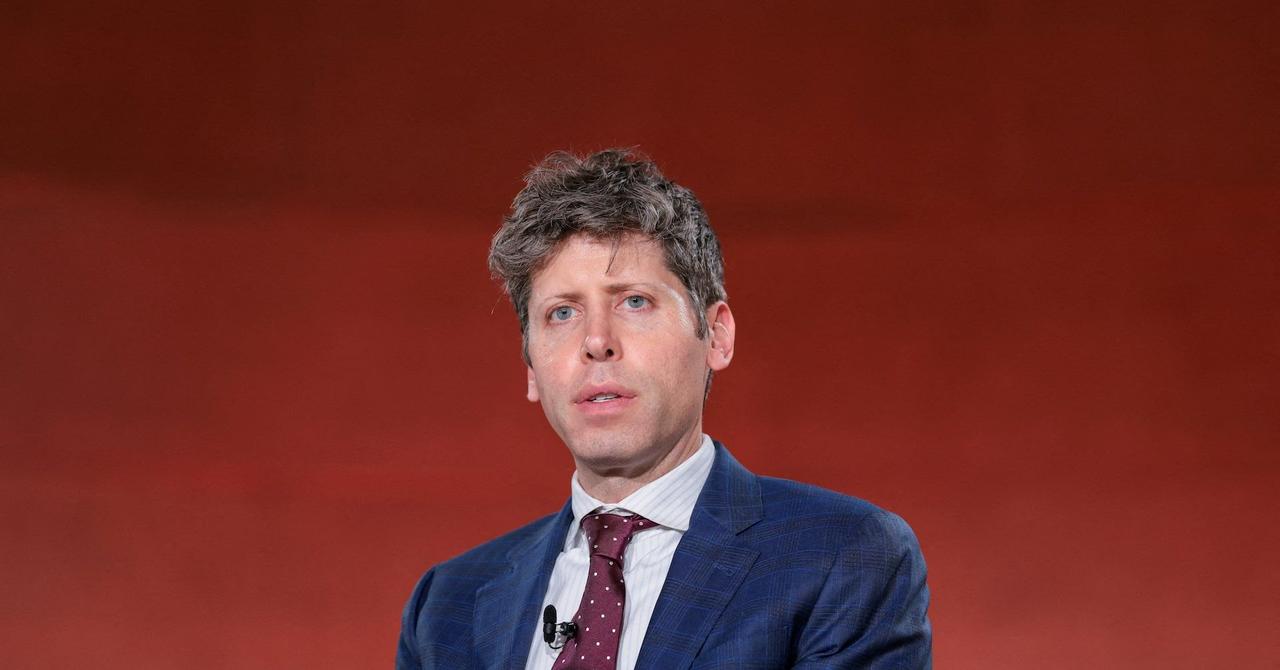
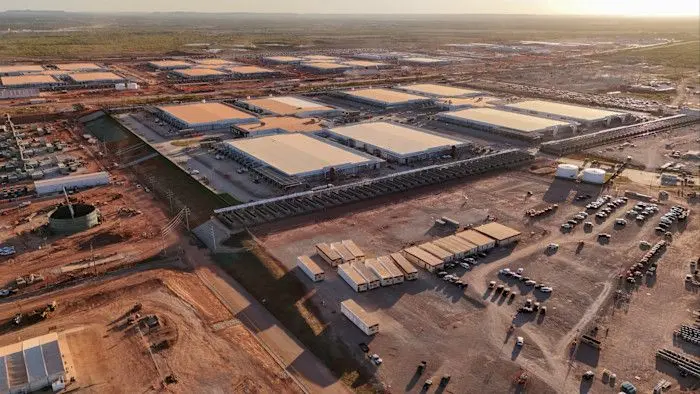
OpenAI has recently pulled back from several projects related to the highly publicized initiative. The company declined to lease an expansion to Stargate's flagship Abilene data center site in Texas and paused another effort in the UK, citing the country's high energy costs and regulation
1
. OpenAI also halted planned data centres in Norway and saw several senior figures tied to Stargate leave for rival Meta2
.The willingness to renegotiate or walk away from projects has unsettled partners and raised questions about OpenAI's reliability as a counterparty
2
. Questions remain over whether the company can afford its huge infrastructure spending, particularly after a recent Wall Street Journal report suggested OpenAI missed internal targets for revenue and user growth2
3
. OpenAI responded that its business is "firing on all cylinders"2
.The shape-shifting scheme embodies OpenAI's broader approach, which owes much to Sam Altman's "venture mindset" of placing overlapping bets and abandoning all but the most expedient, according to a person close to the company
2
. OpenAI defended its strategy, stating: "Stargate is the umbrella for our compute strategy and we've done exactly what we said we would do: secure the compute OpenAI needs at unprecedented scale"2
. The company's relationship with Microsoft is set to be in the spotlight as the companies square off against Elon Musk in court, who is seeking as much as $134 billion in damages1
.Summarized by
Navi
22 Jul 2025•Business and Economy

01 Jul 2025•Business and Economy

23 Feb 2026•Business and Economy

1
Policy and Regulation

2
Science and Research

3
Entertainment and Society