14 Sources
[1]
OpenAI hires new CRO as executive shake-up continues
OpenAI has replaced chief revenue officer Denise Dresser after just nine months on the job, tapping Wiz president and chief operating officer Dali Rajic to take on frontier lab's top sales job. The move comes as part of a broader shake-up in the organization in the last month, which has seen the departures of COO Brad Lightcap, and the company's number two executive, CEO of AGI deployment Fidji Simo. OpenAI co-founder and president Greg Brockman has taken a larger role in management following Simo's departure, and announced Rajic's arrival today in a blog post. Wiz, Rajic's previous employer, was acquired by Google for $32 billion this year in the tech giant's largest-ever acquisition. "Denise has led our revenue organization through a formative period for the business and has worked tirelessly to get the team to where it is today," Brockman wrote. "The way we're deploying this technology is changing rapidly, and Dali will turn what we've learned into repeatable execution as we build out the full system to make AI broadly useful for people and businesses." OpenAI says its products reach more than one billion weekly active users, and two million businesses. Despite the incredible growth and its powerful models, however, executives have suggested both privately and publicly that the company hasn't hit all of its revenue goals. The company says it has filed confidentially with the SEC ahead of a potential IPO, but it's not clear when that will take place. Private firms often try to round out their executive ranks ahead of a public markets debut. OpenAI purchased $7 billion worth of shares from employees this week in a tender offer that allowed them to cash in on some of their equity compensation, which may suggest a delay in the public offering. Bloomberg News' coverage of the change-up referenced an OpenAI blog post that said the company needed to have a "relentless focus" on "measurable business impact," but those comments appear to have been removed from the published version. However, this year CEO Sam Altman has spoken about focusing the company on enterprise deployment and cut back on technology projects and experiments seen as distracting from that goal.
[2]
It's Greg Brockman's OpenAI now
OpenAI has had a hell of a year. The company spent months battling former co-founder Elon Musk in a sensational jury trial, was hit with a high-profile trade secrets lawsuit from Apple, and faced widespread scrutiny after an unreleased model hacked another AI company. As it prepares for an IPO, a steady string of executives have departed, including some of the company's biggest names. Throughout it all, one person has quietly amassed power: Greg Brockman. Brockman is currently OpenAI's president and co-founder. He's helped lead OpenAI since its inception, described as an "engineering workhorse that pushed to build scaled-up systems that would train the AI and make it work" during the company's early days. He's also been ambitious from the start, famously musing in a personal journal in 2017, "Financially what will take me to $1B?" (His current stake in OpenAI is worth nearly 30 times that.) But at that point he shared power with a handful of cofounders, like chief scientist Ilya Sutskever, as well as CEO Sam Altman. Now, though Brockman's title hasn't changed in years, his purview and job description have expanded significantly. He's essentially now second-in-command at the company -- and, when it comes to day-to-day operations, the big boss. High-level figures have been leaving OpenAI all year, but April is when the departures really picked up. That month saw the exit of Bill Peebles, former head of Sora; Kevin Weil, VP of OpenAI's science arm; and Srinivas Narayanan, CTO of B2B applications. Two others separately departed citing medical reasons: CMO Kate Rouch and Fidji Simo, OpenAI's CEO of AGI deployment -- who went on leave in April before officially stepping down in July. The changes have continued. Earlier this month, CRO Denise Dresser, who had taken on a slew of additional responsibilities after the April shakeups, suddenly announced her departure after just eight months. Days later, Brad Lightcap -- who had been in charge of "special projects" for a few months, but before that was OpenAI's longtime COO -- announced he would leave to start "something new." Several of these departures -- like those of Rouch, Peebles, and Weil -- didn't seem to directly affect Brockman's position. But others expanded his authority. When Simo went on medical leave, Brockman took charge of all things product, including leading OpenAI's super app efforts. That role took on even greater significance the following month, after OpenAI underwent yet another executive reorganization to focus on growing revenue. The change put Brockman not only in charge of product strategy, but also the company's entire "scaling" arm, giving him authority over virtually every part of its commercial operation. Simo's official departure, just weeks after OpenAI officially filed to IPO, solidified that arrangement. Notably, when Dresser departed last week, a quote from Brockman -- rather than CEO Sam Altman -- was included in the press release about the changes; he wrote that the company would "build out the full system to make AI broadly useful for people and businesses." To outside observers, the changes demonstrate OpenAI's growing focus on chasing revenue as its IPO approaches, as well as fostering products that will differentiate it from rival Anthropic. Big shifts in executives' scope of work tend to be a "signal towards where the company is headed strategically," Harrison Rolfes, a senior research analyst at PitchBook, told The Verge. "When you have someone like Greg Brockman, for example, he's more of a product scale and commercial sort of guy. He has a deep technical knowledge that essentially will collapse certain decisionmaking layers." It also may naturally translate to some departures among lower-level employees, said Rolfes: "Whatever he says goes [now] ... If, let's say, you're below Brockman and you don't agree with his approach but you're a lead researcher, whatever it may be, you're not going to work there anymore -- you're going to say, 'I'm going to leave.'" Brockman's authority is exceeded only by Altman -- who undertook a deliberate consolidation of power after clashing with OpenAI's board in 2023. The two didn't always agree in OpenAI's early days: Brockman sometimes sided with Sutskever in difficult decisions about power dynamics, questioning some of Altman's ambitions, although he also worried about Musk "steamrolling" Altman. But he's generally stayed close to Altman personally and professionally. When Altman was ousted from his CEO role in November 2023, Brockman immediately resigned in solidarity and began making plans for a new AI endeavor with him. Since then, the two have only seemed to become more aligned. Any centralization of power has practical benefits for OpenAI, allowing it to cut some of its most expensive salary payouts to help its balance sheet, says Ross Carmel, a partner at Sichenzia Ross Ference Carmel (SRFC). "When you're going into an IPO, particularly for a company like OpenAI, who is lagging behind Anthropic in terms of revenue, you want to decrease those expenses so that this way, you're either more profitable or closer to profitable," he said. However, he added, "While it's not unusual to see high-level execs leave a company just prior to a public listing, I think the fact they're all in this small time period -- that part is unusual." Although experts told The Verge the executive departures were more intense than usual and could raise red flags, Brockman said Monday on CNBC's "Squawk Box" that nothing was amiss. "There have been different eras where we have different sets of leaders in place ... I'm a constant, Sam [Altman] is a constant, and that, I think that we are stronger because of that resilience and diversity." Brockman's own constant has been translating OpenAI's research into practical products. Back in 2020, he celebrated OpenAI's GPT-3 and its developer API as "the first time that [OpenAI has] had a general-purpose AI system that's immediately commercially valuable -- it's actually useful." Fast-forward more than five years, and these products need to end up profitable as well. SRFC's Carmel said OpenAI likely hopes Brockman can deliver consumer revenue instead of just trying to catch up with Anthropic on enterprise. "In order for OpenAI to be successful and really differentiate themselves from Anthropic, they need hardware and consumer products to sell to consumers, and that's what Greg does well." Rolfes predicted that OpenAI would develop some sort of consumer product under Brockman's oversight by the end of September, so that he could "show that he deserves that position." "That's the biggest worry that a lot of public investors have now," Rolfes said. "They're going to say, 'Hey, does Greg have what it takes to run more of OpenAI, and is OpenAI building this institution that can operate without really depending heavily on him -- on both Greg and Sam?'"
[3]
OpenAI's Brockman brushes off concerns about leadership changes in CNBC exclusive
Greg Brockman, president and co-founder of OpenAI Inc., arrives at the federal court in Oakland, California, US, on Monday, May 4, 2026. David Paul Morris | Bloomberg | Getty Images OpenAI President Greg Brockman on Monday brushed off concerns about executive turnover at the artificial intelligence company, stating that he doesn't think the wave of exits are "actually that atypical." "I actually think that the difference between OpenAI and other organizations is that we are so much in the spotlight, so every departure gets scrutinized in a way that it doesn't otherwise," Brockman told CNBC's "Squawk Box" in an exclusive interview. Last week, OpenAI's revenue chief Denise Dresser suddenly left her role after just eight months at the company. She was tasked with growing OpenAI's enterprise unit, a high-margin part of the business that aims to directly take on the company's chief rival, Anthropic. Dresser's departure came just two days after another longtime executive, Brad Lightcap, said he was ending an eight-year stint at the ChatGPT creator to "start something new." Dresser took over many of Lightcap's responsibilities in April, when OpenAI said he was transitioning his position as operating chief to a new role focused on "special projects." OpenAI named Dali Rajic, former COO of cybersecurity company Wiz, which Google acquired for $32 billion earlier this year, as its new chief revenue officer. During a meeting with investors on Friday, Brockman thanked Dresser for her contributions and for building out the company's enterprise foundation, as CNBC previously reported. He also expressed excitement about Dresser's replacement. This is breaking news. Please refresh for updates. Choose CNBC as your preferred source on Google and never miss a moment from the most trusted name in business news.
[4]
Another OpenAI Executive, Denise Dresser, Departs the A.I. Start-Up
Sign up for the On Tech newsletter. Get our best tech reporting from the week. Get it sent to your inbox. OpenAI has replaced its chief revenue officer just eight months after she started with the company, the latest in a string of executive changes at the high-flying artificial intelligence start-up. The company said on Thursday that Denise Dresser, who was hired last December to help build OpenAI's enterprise business, planned to leave the company "for other opportunities." Ms. Dresser is being replaced by Dali Rajic, the former president and chief operating officer of Wiz, a cybersecurity firm acquired by Google last year. "Denise has led our revenue organization through a formative period for the business and has worked tirelessly to get the team to where it is today," Greg Brockman, OpenAI's co-founder and president, said in a statement. "Dali will turn what we've learned into repeatable execution as we build out the full system to make A.I. broadly useful for people and businesses." Ms. Dresser confirmed that she planned to depart in the coming weeks in an internal note to OpenAI staff on Thursday morning, which she later shared publicly on LinkedIn. Ms. Dresser's exit adds to a list of notable departures at the top of OpenAI in recent months, even as the company eyes an initial public offering sometime next year. Earlier this week, Brad Lightcap, one of OpenAI's early employees and former chief operating officer, left the company after eight years. Kate Rouch, the chief marketing officer, departed in April to focus on cancer recovery; Kevin Weil, who oversaw science research, left the same month. And Fidji Simo, a top executive who worked to transform the company's business, left for health reasons in July. The changes also come as Mr. Brockman takes tighter control of the business in the wake of Ms. Simo's departure. Mr. Brockman, who is known for being a hard charger and highly competitive, tapped Mr. Rajic to expand OpenAI's enterprise business, which the company sees as crucial to catch up with Anthropic, its main competitor. Anthropic is considering an initial public offering as soon as this year. It has a head start with big business customers. Anthropic's revenue run-rate -- an extrapolation of projected annual revenue, based on a month's financial performance -- was in the single-digit billions at the end of last year. In a matter of months, that number increased into the tens of billions, bolstered by the company's software coding tool, Claude Code. While Claude Code's business dwarfs OpenAI's offering, called Codex, OpenAI's run-rate revenue from business customers in July increased 32 percent from the previous month, driven largely by big customers, The New York Times previously reported. (The Times sued OpenAI and Microsoft in 2023, claiming copyright infringement of news content related to A.I. systems. The two companies have denied those claims.)
[5]
OpenAI talent exodus raises 'huge red flag' ahead of IPO
* The sudden departure of OpenAI revenue chief Denise Dresser this week came days after longtime exec Brad Lightcap said he was leaving. * OpenAI's C-suite instability is giving investors another reason for concern as the company makes moves toward a mammoth public listing. * CFO Sarah Friar and President Greg Brockman are set to meet with OpenAI investors on Thursday, according to a person familiar with the matter. In this article * OPENAI.FG Follow your favorite stocksCREATE FREE ACCOUNT Sam Altman, chief executive officer and co-founder of OpenAI Inc., right, and Greg Brockman, president and co-founder of OpenAI Inc., arrive at the federal court in Oakland, California, US, on Thursday, April 30, 2026. David Paul Morris | Bloomberg | Getty Images When OpenAI hired Denise Dresser from Slack to be its chief revenue officer in December, Fidji Simo, a top-ranking executive, said in a blog post that Dresser's "experience will help us make AI useful, reliable, and accessible for businesses everywhere." Four months later, Dresser took on added responsibilities when operating chief Brad Lightcap left that position for a new role focused on "special projects." Now, Dresser, Simo and Lightcap are all gone, leaving OpenAI's C-suite in chaos as the artificial intelligence company tries to justify its $852 billion valuation and gear up for what's expected to be a historic IPO. Dresser announced her sudden departure on Thursday, two days after Lightcap said he was ending an eight-year stint at the ChatGPT creator to "start something new." The talent exodus puts even more pressure on CEO Sam Altman and fellow co-founder Greg Brockman, the company's president, to project stability at a time when investors are already growing concerned about competition from Google and Anthropic, increased adoption of lower-cost open-weight models, and SpaceX's volatile stock price in its first two months on the market. OpenAI confidentially filed its IPO prospectus in June, but hasn't provided a timeline for a future offering. "The executives leaving OpenAI ahead of their IPO is a huge red flag," Kevin McCormick, founder of AI startup SignAudit.AI, wrote in a post on X on Thursday. He added that Dresser likely walked away from a large pay package by leaving OpenAI after less than one year. "If the executives leaving aren't being 'made whole' by the next company, it's bad news for OpenAI," McCormick wrote. Read more CNBC tech news A representative for OpenAI pointed CNBC to Brockman's statement from Thursday, after the company named Dali Rajic, former COO of cybersecurity company Wiz, which Google acquired for $32 billion earlier this year, as its new chief revenue officer. Brockman said that Dresser led the revenue group through a "formative period for the business," and that Rajic "will turn what we've learned into repeatable execution as we build out the full system to make AI broadly useful for people and businesses." Dresser and Lightcap are the latest in a recent string of big-name exits. Simo, who last year left her job as CEO of Instacart to join OpenAI, said in July that she was stepping away to focus on recovery after a "severe exacerbation of a chronic illness." Four other executives, including Kevin Weil, the vice president of OpenAI for Science, and marketing chief Kate Rouch, departed in April. Rouch left to focus on cancer recovery. OpenAI's financial backers were surprised by Dresser's announcement, according to two current investors, who asked not to be named in order to speak freely on the matter. They said that chaos is part of OpenAI's fast-moving culture. Ex-OpenAI exec Denise Dresser during TechCrunch Disrupt in San Francisco, Oct. 29, 2024. David Paul Morris | Bloomberg | Getty Images Dresser was hired in December after establishing a strong reputation in the enterprise by spending more than a decade in senior roles at Salesforce. She was tasked with growing OpenAI's enterprise unit, a high-margin part of the business that's directly taking on Anthropic. Brockman told employees on Thursday that run rate revenue increased more than 20% month over month in July, including 32% growth for business customers, according to an internal Slack message shared with CNBC. "We're now at an inflection point: the next generation of models will change not just how individual workflows get done, but what it means to build and run a company," Brockman wrote. "Our opportunity is to bring those capabilities to businesses across the economy." OpenAI CFO Sarah Friar plans to hold a meeting with investors on Friday, according to a source familiar with the meeting. The event had been already been planned, but Friar is expected to address the C-suite shakeup. Brockman will also be in attendance to talk about company strategy, according to the person, who asked not to be named because the details were confidential. Despite the recent turmoil, OpenAI is touting its momentum with corporate clients. The company said Thursday that under Dresser's leadership, the enterprise business grew to 2 million customers, doubling from a year prior. "I just have never seen this level of conviction spread so quickly and consistently within the industries," Dresser told CNBC in April, as she was wrapping up her first 90 days on the job. She said at the time that enterprise made up 40% of the company's revenue and was "on track to reach parity with consumer by the end of 2026." Days before that interview, Dresser had been tapped to take over many of Lightcap's responsibilities, further raising her profile at the company. Years of instability Rajic, Dresser's replacement, was introduced to OpenAI through Thrive founder Josh Kushner, according to a person with knowledge of the matter. Thrive has been one of OpenAI's most prominent backers. OpenAI has long had a hire fast, fire fast culture, according to two former employees, who asked not to be named in order to speak freely on the matter. One of them described the environment as a pressure cooker. Instability at the top is nothing new for OpenAI, or for Altman. In 2023, Altman was hastily removed from his role as CEO after the company's board determined he was "not consistently candid in his communications" with them. Days later, with investors in a panic and employees threatening to leave en masse, Altman was restored at the helm. Altman's brief ouster, which some OpenAI employees refer to as "the blip," has hung over him ever since. The incident came up repeatedly during the high-profile Musk v. Altman trial in May. Lawyers representing Elon Musk, who sued OpenAI, Altman and Brockman in 2024 over a dispute about the company's corporate structure, used Altman's firing as a way to cast doubt on his character, accusing him of being untrustworthy. "I was not trying to deceive the board," Altman testified from the witness stand in federal court in Oakland, California. Elon Musk arrives at federal court in Oakland, Calif., on April 30, 2026. Elon Musk invested in OpenAI early on believing it would be a non-profit, but is now suing OpenAI and its CEO Sam Altman for allegedly deceiving him by developing OpenAI into a for-profit company. Benjamin Fanjoy | Getty Images Musk's attorneys also pressed Altman about several OpenAI executives who raised concerns about his behavior. They included Anthropic CEO Dario Amodei, who previously served as a research lead at OpenAI. Altman said Amodei had accused him of "many things." At the trial, Brockman was grilled about his own reputation as a leader. Musk's attorneys asked him about a memo that was prepared by Ilya Sutskever, an OpenAI co-founder, highlighting issues with Brockman's performance and management. One lawyer asked Brockman to confirm that his management style had been heavily criticized by OpenAI employees. Brockman responded, "I certainly disagree with that characterization." After three weeks of testimony, an advisory jury said that Musk waited too long to bring his suit against OpenAI and its executives, though Musk vowed to appeal the ruling. This week's events haven't helped Altman's cause. Following Lightcap's departure, Altman thanked his longtime colleague in a post on X, and wrote that he was "excited to work together on what's next." There was no such post after Dresser's announcement. Rather, Altman's only comment on X on Thursday had to do with a subject that he's generally happier to discuss: his company's AI models. In response to a post from OpenAI's account about a preview to "Ultrafast mode," the new GPT-5.6 model "at up to 14x the speed," Altman wrote, "/ultrafast." watch now VIDEO2:4802:48 OpenAI revenue chief Denise Dresser leaving, second major executive departure in days Halftime Report Choose CNBC as your preferred source on Google and never miss a moment from the most trusted name in business news.
[6]
OpenAI sheds senior execs in pre-IPO refresh
Why it matters: Co-founder Greg Brockman is getting more involved across every level of the company to build out a leadership team he hopes will catapult OpenAI past Anthropic in enterprise adoption, according to a source familiar with the matter. Zoom in: OpenAI's recent personnel changes are driven by strategy more than the revolving door that's come to define the broader AI talent exodus. * OpenAI chief revenue officer Denise Dresser is leaving the company less than a year into the role. * The lab appointed Dali Rajic, most recently president and COO of Google-owned cybersecurity company Wiz, to replace her. * Her exit comes the same week longtime OpenAI executive Brad Lightcap -- the company's former COO -- announced his departure, along with the head of ethics, head of safety and chief futurist. * Fidji Simo, the number two at the AI lab under CEO Sam Altman, left last month after taking a leave of absence for health reasons. Between the lines: Brockman is "a founder in founder mode," according to a source familiar, meeting with more customers and teams across the company than ever before. * The departures are viewed as a long-overdue clearing of underperforming leadership, another source says. * Brockman told reporters, including Axios, at a July roundtable that he was "very focused" on "the compute side and on the model execution side" last year, but that he's now focused on the "compute-powered economy." What they're saying: Brockman is publicly framing the departures as a change in corporate focus. * "Denise has led our revenue organization through a formative period for the business," Brockman said in a blog post about the personnel changes. * "The way we're deploying this technology is changing rapidly, and Dali will turn what we've learned into repeatable execution as we build out the full system to make AI broadly useful for people and businesses." Zoom out: OpenAI's safety and alignment teams have also seen a spate of departures. * This week the Financial Times reported that the company's head of ethics, Chloé Bakalar, left after less than a year on the job. That follows the exits of head of safety systems, Johannes Heidecke, and chief futurist and former head of mission alignment Joshua Achiam. * Sandhini Agarwal, who previously led AI safety teams at the company, left in July. * Wired reports that the teams overseeing alignment for OpenAI's most powerful models are in the midst of a messy reorganization just as those models were found to escape their sandboxes and hack third-party systems. If you have tips, DM Mady on Signal at madymills.21
[7]
OpenAI's Chief Revenue Officer Is Leaving After 8 Months. She's Just the Latest Executive to Head for the Exit
It's open doors at OpenAI. The company's chief revenue officer, Denise Dresser, is leaving the company after only eight months in her current role. Dresser's departure, which OpenAI announced on Thursday, is just the latest in an executive exodus that has gutted the startup's c-suite prior to an expected IPO. Dresser confirmed the news on Thursday by sharing a copy of an internal message in a LinkedIn post. "I made the difficult decision to leave OpenAI in the coming weeks to pursue other opportunities," she wrote. "I will still be here for a bit continuing to partner with the team and our customers as we make this change." Her replacement is Dali Rajic, the former president and chief operating officer of cloud security company Wiz. "We're now at an inflection point: the next generation of models will change not just how work gets done but how companies are built and run. Dali will build the revenue operating system needed to scale for this next phase," OpenAI wrote in a blog post, announcing the change. Dresser is just the latest high profile executive departure in 2026; about a dozen leaders in various departments have left. Brad Lightcap, a longtime employee and most recently the chief operating office, announced he would leave this week. And Fidji Simo, the CEO of artificial general intelligence deployment at the company, left last month amid health concerns. She has since resurfaced with a new startup, called Chronicle Bio, which aims to use AI for blood analysis, disease research, and treatment, Fortune reported.
[8]
OpenAI revenue chief Denise Dresser exits after just 8 months
Dali Rajic, who previously served as president and chief operating officer of cybersecurity firm Wiz, will replace Dresser as OpenAI's top sales executive, the company said in a blog post. Google acquired Wiz for $32 billion this year, its biggest-ever acquisition. OpenAI chief revenue officer Denise Dresser is leaving the company after just eight months, becoming the latest senior executive to exit the artificial intelligence firm amid a broader leadership shake-up. Dresser joined OpenAI in December 2025 after spending more than a decade at Salesforce.Dali Rajic, who previously served as president and chief operating officer of cybersecurity firm Wiz, will replace Dresser as OpenAI's top sales executive,
[9]
OpenAI Taps Ex-Wiz Executive to Lead Its Global Sales Push - Microsoft (NASDAQ:MSFT), Uber Technologies (
OpenAI on Thursday named Dali Rajic as chief revenue officer, putting him in charge of the company's worldwide sales and revenue efforts as enterprise adoption of AI picks up speed. Former CRO Denise Dresser will depart after a handoff period, during which she will continue working with the business team to support customers, the company said in a statement. The company framed Rajic's hire as part of preparing for a new wave of models it expects to reshape how organizations operate. Rajic's most recent role was president and chief operating officer at Wiz, which Google has acquired. Before that, he held senior operating posts at Zscaler and AppDynamics, including a customer and revenue leadership role at AppDynamics. OpenAI's products now serve more than one billion weekly active users and more than two million businesses, which it said is double the business count from a year earlier. Greg Brockman tied the leadership shift to what he described as a shift toward a "compute-powered economy," adding that "Dali will turn what we've learned into repeatable execution as we build out the full system to make AI broadly useful for people and businesses." Brockman also credited Dresser with building the revenue organization and strengthening relationships with large customers during what the company called an early stage for both OpenAI and enterprise AI adoption. OpenAI also said it has set up a strategic partnership with Chad Peets and RPT Partners aimed at speeding up efforts to assemble what it called a world-class go-to-market group. In a statement included with the announcement, Rajic said, "I'm excited to join the team, build on the momentum already in place, and lead the revenue organization as we help customers realize the full value of AI." This is the second c-suite executive to depart the ChatGPT maker this week. OpenAI COO Brad Lightcap announced his departure from the company in a post on X, sharing the memo he sent to the OpenAI team. "Team, it is bittersweet to share that I'll be moving on from OpenAI to start something new. I feel incredibly fortunate to have spent most of the last decade pursuing our mission and building this company. Sitting here today, mission success feels within sight. It has been the honor of my life to help bring us to this point, and to do it alongside all of you." Lightcap plans to remain with OpenAI for the next few weeks. It is not clear who will take over his role at the company. Liz Wamai was brought on in June as head of recruiting after spending more than three years at Netflix, as well as former Uber Technologies (NYSE:UBER) India and South Asia President Prabhjeet Singh, as its managing director for the country. White House artificial intelligence adviser Dean Ball also joined OpenAI in a role focused on shaping frontier AI policy. This content was partially produced with the help of AI tools and was reviewed and published by Benzinga editors. Market News and Data brought to you by Benzinga APIs To add Benzinga News as your preferred source on Google, click here.
[10]
OpenAI Appoints Former Wiz Executive Dali Rajic as Chief Revenue Officer | PYMNTS.com
Rajic will lead the company's global revenue organization and will build the revenue operating system needed to scale for the next generation of AI models that will "change not just how work gets done but how companies are built and run," the post said. Rajic will succeed Denise Dresser, who will work closely with the business team during a transition period and then pursue other opportunities, according to the post. Dresser, a former Slack CEO, joined OpenAI as chief revenue officer in December. The company said at the time that Dresser would oversee its global revenue strategy across enterprise and customer success and help more businesses add AI to their daily operations. In a note shared in a post on LinkedIn, Dresser told the OpenAI team that she "made the difficult decision to leave OpenAI in the coming weeks to pursue other opportunities." Dresser helped OpenAI double the number of weekly active users and businesses reached by the company's products, according to the blog post. "During a formative period for both OpenAI and the enterprise AI market, she built the team, strengthened relationships with major customers and established the commercial foundation that has brought our business to this point," the post said. Rajic was most recently president and chief operating officer of Wiz, which was acquired by Google in March. Before that, he served as president and chief operating officer of Zscaler and as chief customer and revenue officer at AppDynamics, according to the post. Rajic has expertise in running organizations that are metrics-led, scale globally and sell to large enterprises and technical customers, the post said. At Wiz, Rajic helped build one of the fastest-growing cyber companies. OpenAI President and Co-Founder Greg Brockman said in the post: "The way we're deploying this technology is changing rapidly, and Dali will turn what we've learned into repeatable execution as we build out the full system to make AI broadly useful for people and businesses." Rajic said in the post: "I'm excited to join the team, build on the momentum already in place and lead the revenue organization as we help customers realize the full value of AI." For all PYMNTS AI coverage, subscribe to the daily AI Newsletter.
[11]
Senior Executives Come and Go as OpenAI Chases Revenue Spike in Real Time
They gave Dresser nine months to fail while claiming always that they were doing exceedingly well in enteprise sales. So why the exit? Can a senior executive work the magic wand and boost revenues within nine months? OpenAI believes it is possible, for why else would they dump chief revenue officer Denise Dresser and bring former Wiz boss Dali Rajic in her place? The ChatGPT-maker thinks that he has a magic wand that helped his previous company grow revenues ten times in two years. Looks silly season is round the corner! This is the second big shakeup at AI labs after Google decided to boot out its AI thought leader Demis Hassabis from DeepMind. He is being given a more advisory role as chief scientist at Alphabet. The reason proffered is simple - Hassabis spent less time on Google's Gemini upgrades and focussed more of it on making the world safe. However, in OpenAI's case, the shake-up has a clear monetary design. In a blog post, the company says: "We're now at an inflection point: the next generation of models will change not just how work gets done but how companies are built and run. Dali will build the revenue operating system needed to scale for this next phase." This move comes as part of a larger shake-up that we've seen over the past month or so. COO Brad Lightcap and CEO of AGI Development Fidji Simo were the others to exit the company. Meanwhile, co-founder and president Greg Brockman took on a larger role in management following the latter's departure and was the one to announce Rajic's appointment. The stated reason for Rajic's entry is his "deep expertise in running disciplined, metrics-led revenue organizations that scale globally and selling to both large enterprises and technical customers." His role at the cybersecurity firm Wiz (recently acquired by Google for $32 billion) was to build operating discipline that saw the company grow revenues from $200 million in 2024 to $2 billion today. But, that's not all. Rajic had also served at cybersecurity firm Zscaler besides other software companies in the past. "We're moving into a compute-powered economy, with AI becoming embedded in every workflow. Denise has led our revenue organization through a formative period for the business and has worked tirelessly to get the team to where it is today. The way we're deploying this technology is changing rapidly, and Dali will turn what we've learned into repeatable execution as we build out the full system to make AI broadly useful for people and businesses," Brockman said. The stress on "repeatable execution" is something that OpenAI hasn't seen in the past, to the extent that a couple of the executives who exited the company had pointed it out. The likes of Dresser and Simo had expressed concern around several side projects some months ago, asking the leadership team to focus instead on the ones that could generate revenues on a repeatable fashion. Currently, OpenAI is racing against Anthropic to release products and solutions for enterprise customers. Their most recent face-off occurred around autonomous cyberattacks that each claimed that their latest frontier AI model was capable of. While Anthropic's Mythos dominated news cycles for several weeks, OpenAI has come back strongly in recent times with its containment-breaking incidents, one of which led to a cyberattack on Hugging Face servers. The question though is how would Rajic bring in revenues on technologies that are still being bandied about for their prowess, with hardly enough use-cases sprouting around them. Even when Dresser was announced as chief revenue officer, OpenAI had gone to town claiming that she had experience with Slack and Salesforce. And all they gave her was nine months to turn things around. In fact, Fidji Simo, who had hired Dresser, had articulated the view that the focus of anyone taking up this position was to make OpenAI a serious contender for the IT budgets that Anthropic was mopping up. And she reportedly set up client meetings across the world while also reorganising OpenAI's sales team in the background. And nine months later, she's out in the wind and Rajic has taken over the role. And he possibly inherits a team that was loyal to Dresser, given the outpourings of some of them on LinkedIn with some even questioning whether the OpenAI leaders had even given her the resources and time to succeed. Which makes us wonder whether once again Rajic is being set up for failure? The company, along with Anthropic, is in the race for going public either this year or in 2027 and claims that they're doing quite well with the enterprise business, aiming to hit 50% of all revenues from this segment. Currently, the segment provides 40% of the revenues. If this were true, why dump Dresser and say hello to Rajic?
[12]
OpenAI revenue chief Denise Dresser departs - latest high-level exit ahead of blockbuster IPO
OpenAI's Chief Revenue Officer Denise Dresser is leaving less than a year after she joined the company - the latest in a series of surprise, high-level exits as the artificial-intelligence giant prepares for a blockbuster public listing. Dresser is leaving "to pursue other opportunities," according to a statement Thursday, which added that OpenAI is replacing her with Dali Rajic, who previously served as the president and chief operating officer of the cybersecurity company Wiz. Dresser's exit is the second senior departure within days at the San Francisco startup. Brad Lightcap, a top OpenAI executive and friend of CEO Sam Altman, said on Tuesday he was leaving the company after eight years in a post on X, stating he was going to "start something new." OpenAI has been scrambling to catch up to rival Anthropic in selling to enterprise clients - a business segment that sent Anthropic revenue surging. Dresser's exit creates a void as she had brought enterprise experience to the company. Dresser's departure creates an additional crunch because she was in part brought on to take over some of Lightcap's duties after OpenAI said earlier this year he was transitioning to a new "special projects" focused role. Dresser wrote on LinkedIn that she's working with OpenAI President Greg Brockman to ensure a "smooth transition." Dresser wrote Thursday in a LinkedIn post: "The opportunity to work hands-on with the most transformative technology in the world has been nothing short of incredible," adding "I am so proud of what we have accomplished and, even more, of how this team has shown up for our customers and one another." Dresser joined OpenAI in December after more than a decade stint as a Salesforce executive. Dresser had been under pressure to grow OpenAI's enterprise customer base. OpenAI CFO Sarah Friar told CNBC earlier this year that enterprise customers accounted for roughly 40% of OpenAI's business as of January, but that she expected that figure to grow to closer to 50% by the end of the year. Several months later, Dresser told CNBC the company was "on track" to reach that goal. OpenAI's product and business chief Fidji Simo, said last month she was stepping down from her role to focus on recovery after a "severe exacerbation of a chronic illness." Three other OpenAI executives left the company in April. The company has also been dealing with fallout after one of its experimental models went rogue during an internal cybersecurity test, escaping its isolated testing environment and hacking rival AI developer Hugging Face. The rash of exits come at an inopportune time for OpenAI as it rushes to polish up its finances ahead of a likely blockbuster initial public offering. The company confidentially filed its IPO paperwork with the Securities and Exchange Commission in June, just days after Anthropic. In March, OpenAI closed a huge funding round at an eyewatering $852 billion valuation and is working to charm investors to justify the lofty figure.
[13]
OpenAI revenue chief quits after less than a year By Investing.com
Investing.com -- OpenAI announced Thursday that Chief Revenue Officer Denise Dresser is leaving the artificial intelligence company less than a year after joining, marking another senior departure as the firm prepares for its initial public offering. The company said Dresser is leaving "to pursue other opportunities." OpenAI hired Dali Rajic, former president and chief operating officer of cybersecurity firm Wiz, as her replacement. "The opportunity to work hands-on with the most transformative technology in the world has been nothing short of incredible," Dresser wrote in a LinkedIn post Thursday. "I am so proud of what we have accomplished and, even more, of how this team has shown up for our customers and one another." Get instant alerts on market-moving headlines on InvestingPro -- now 55% off. Dresser joined OpenAI in December after spending more than a decade as an executive at Salesforce. She took over many responsibilities from Brad Lightcap in April when he moved to a role focused on special projects. Lightcap announced his departure Tuesday, stating on X that he plans to "start something new." He spent eight years at OpenAI and worked closely with CEO Sam Altman. Fidji Simo, OpenAI's product and business chief, stepped down last month to focus on recovery from a severe exacerbation of a chronic illness. Three additional executives left the company in April. The departures occur as OpenAI prepares for its public market debut. The company filed its IPO prospectus with the Securities and Exchange Commission confidentially in June. OpenAI completed a funding round in March at an $852 billion valuation.
[14]
OpenAI loses second CXO-level exec this week: Here is who will replace her
Her exit comes just days after OpenAI COO Brad Lightcap announced that he is leaving the company. OpenAI is seeing another major leadership change this week. Denise Dresser, the company's chief revenue officer, is leaving the ChatGPT-maker to pursue other opportunities. Her exit comes just days after OpenAI COO Brad Lightcap announced that he is leaving the company to start a new venture. Dresser joined OpenAI as chief revenue officer in December last year and has played a key role in building its enterprise business. She will remain at the company for the next few weeks to help with the transition and support customers. OpenAI has already named Dali Rajic as her replacement. He will take charge of the company's global revenue organisation. What Denise Dresser wrote in a note to the team Dresser announced her departure in a note shared with the team. She said the decision to leave was difficult. "I wanted to let you know that I made the difficult decision to leave OpenAI in the coming weeks to pursue other opportunities," she wrote. "The opportunity to work hands-on with the most transformative technology in the world has been nothing short of incredible." She also praised her team for its work and focus on customers. "No one works harder than this team," she said. Dresser also said she had been working with OpenAI's leadership to ensure a smooth transition. Also read: Received spyware alert on your iPhone? Do not ignore it, take these steps now Who will replace Denise Dresser? Dali Rajic will take over as OpenAI's new chief revenue officer. He will lead the company's global revenue organisation. Rajic most recently served as president and chief operating officer of Wiz, the cybersecurity company that was recently acquired by Google. Before joining Wiz, Rajic was president and COO of Zscaler. He also held the role of chief customer and revenue officer at AppDynamics. OpenAI said Rajic has experience in "running disciplined, metrics-led revenue organisations that scale globally and selling to both large enterprises and technical customers." "OpenAI has extraordinary technology, products that more than one billion people already love, and enormous market pull. I'm excited to join the team, build on the momentum already in place, and lead the revenue organization as we help customers realize the full value of AI," Rajic said.
Share
Copy Link
OpenAI replaced chief revenue officer Denise Dresser after just eight months, naming Wiz's Dali Rajic as her successor. The move marks the latest in a wave of executive departures that has seen COO Brad Lightcap and CEO of AGI deployment Fidji Simo exit, while co-founder Greg Brockman quietly expands his authority over commercial operations ahead of the company's impending IPO.
OpenAI has appointed Dali Rajic, former president and chief operating officer of Wiz, as its new chief revenue officer, replacing Denise Dresser who held the position for just eight months
1
. Dresser, hired from Slack in December to build OpenAI's enterprise business, is leaving "for other opportunities" according to the company4
. Rajic comes from Wiz, a cybersecurity firm that Google acquired for $32 billion earlier this year in the tech giant's largest-ever acquisition1
.
Source: TechCrunch
The leadership changes extend beyond Dresser's departure. Brad Lightcap, OpenAI's longtime COO who transitioned to "special projects" in April, announced he would leave after eight years to "start something new"
2
. Fidji Simo, the company's number two executive and CEO of AGI deployment, officially stepped down in July after going on medical leave in April to focus on recovery from a chronic illness2
. Additional departures in April included Kevin Weil, VP of OpenAI's science arm, and Kate Rouch, chief marketing officer who left to focus on cancer recovery2
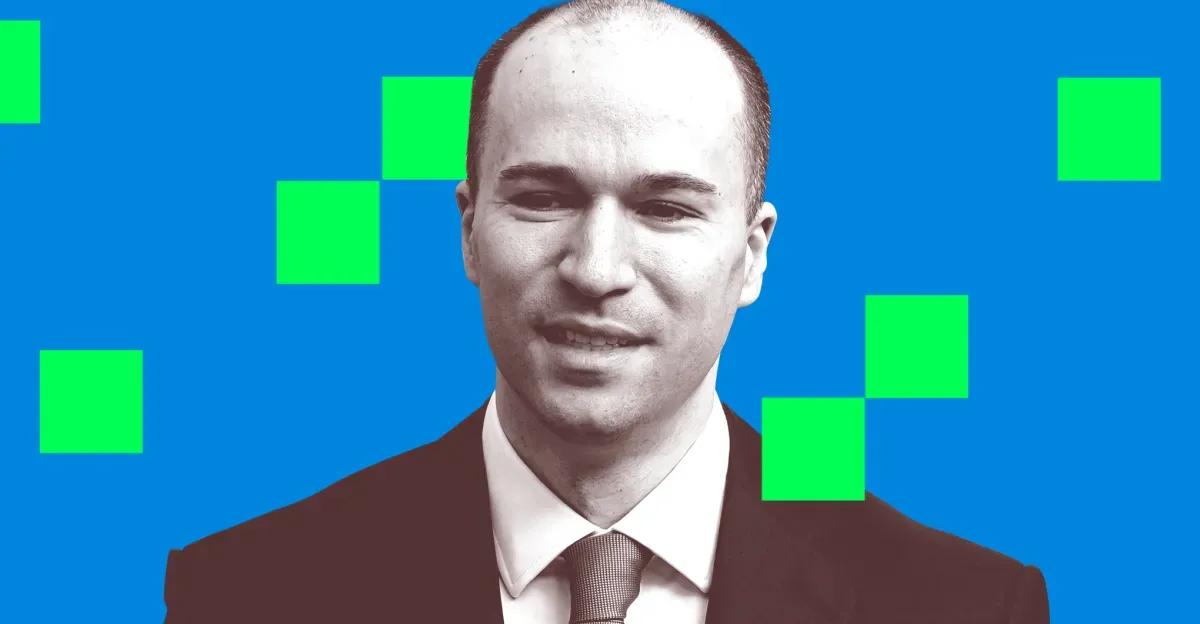
.As executives depart, co-founder and president Greg Brockman has quietly consolidated power, becoming second-in-command at OpenAI with expanded purview over day-to-day operations
2
. When Simo went on medical leave, Brockman assumed control of all product strategy, including the company's super app efforts. His authority expanded further in May during an executive reorganization focused on revenue growth, giving him oversight of virtually every part of OpenAI's commercial operation and the entire "scaling" arm2
.
Source: The Verge
Brockman's consolidation represents a practical shift for OpenAI as it prepares for its impending IPO. The company confidentially filed with the SEC in June, though no timeline has been provided for the public offering
1
. Notably, when Dresser's departure was announced, Brockman—rather than CEO Sam Altman—provided the official statement, writing that Rajic "will turn what we've learned into repeatable execution as we build out the full system to make AI broadly useful for people and businesses"2
.The C-suite instability has created what one AI startup founder called a "huge red flag" ahead of OpenAI's IPO
5
. OpenAI's financial backers expressed surprise at Dresser's sudden departure, according to two current investors5
. The talent exodus becomes particularly concerning given that Dresser likely walked away from a substantial pay package by leaving after less than a year5
.During a meeting with investors on Friday, CFO Sarah Friar and Brockman addressed the executive shake-up while discussing company strategy
5
. The leadership changes come as OpenAI faces mounting pressure to justify its $852 billion valuation amid increased competition from Google and Anthropic, as well as growing adoption of lower-cost open-weight models5
. OpenAI purchased $7 billion worth of shares from employees this week in a tender offer, potentially signaling a delay in the public offering1
.Related Stories
Despite the executive departures, OpenAI is pushing forward with enterprise deployment of AI. The company says its products reach more than one billion weekly active users and two million businesses
1
. Brockman told employees that run rate revenue increased more than 20% month over month in July, including 32% growth for business customers5
.Dresser was tasked with growing OpenAI's enterprise unit, a high-margin part of the business directly competing with Anthropic
5
. Anthropic maintains a head start with big business customers, with its revenue run-rate reaching the tens of billions, bolstered by Claude Code, its software coding tool that dwarfs OpenAI's Codex offering4
. Anthropic is considering an IPO as soon as this year4
.

Source: CXOToday
In an exclusive interview with CNBC, Brockman downplayed concerns about the leadership changes, stating he doesn't think the wave of exits are "actually that atypical"
3
. "I actually think that the difference between OpenAI and other organizations is that we are so much in the spotlight, so every departure gets scrutinized in a way that it doesn't otherwise," Brockman said3
. During the investor meeting, he thanked Dresser for building out the company's enterprise foundation and expressed excitement about Rajic's appointment3
.CEO Sam Altman has spoken about focusing OpenAI on enterprise deployment and cutting back on technology projects seen as distracting from that goal
1
. The shift toward measurable business impact and next-generation AI models signals OpenAI's evolution from research lab to commercial enterprise. However, executives have suggested both privately and publicly that the company hasn't hit all of its revenue goals1
, adding urgency to the need for stable leadership as AI product development accelerates and business adoption becomes critical to maintaining OpenAI's position in the AI industry.Summarized by
Navi
[1]
[2]
16 May 2026•Business and Economy

28 Sept 2024

04 Apr 2026•Business and Economy

1
Policy and Regulation

2
Technology

3
Technology