OpenAI shuts down Atlas browser but doubles down on AI-powered browsing through ChatGPT app


15 Sources
[1]
OpenAI is shutting down Atlas, but its AI browser ambitions are still growing
OpenAI is sunsetting Atlas, the AI-powered browser it launched in October with ChatGPT at its core. But it's not giving up on the idea that AI should help people browse the web. Instead, it's taking some of the agentic browsing features it tested in Atlas and redistributing them across ChatGPT's
[2]
OpenAI Will Shutter Its ChatGPT Browser Atlas in August
Omar Gallaga has covered technology, digital culture and other topics for outlets including CNET, NPR, WIRED, Texas Monthly, MSNBC, Consumer Reports, The Washington Post, the Los Angeles Times, The Atlantic and the Austin American-Statesman, where he was a longtime tech reporter, editor and
[3]
OpenAI to Retire ChatGPT Atlas Browser Less Than a Year After Launch
OpenAI's ChatGPT Atlas is headed for the 2026 tech graveyard. The company is "sunsetting" the browser as it pivots to the in-browsing capabilities in the revamped ChatGPT desktop app. OpenAI disclosed Atlas's retirement in a Thursday post introducing a more powerful ChatGPT desktop app, following
[4]
OpenAI's Atlas browser doesn't make it to its first birthday
Standalone experiment killed after less than 12 months as model maker redirects agentic ambitions towards workplace productivity OpenAI has decided its AI browser experiment has run its course, pulling the plug on ChatGPT Atlas less than a year after launch and moving its browser-based agent
[5]

OpenAI's browser isn't dead, it just moved to the ChatGPT app - Engadget
I know a lot of people want to celebrate any stumble OpenAI makes, and rightfully so, but the imminent "death" of its Atlas browser isn't a sign of a company retreating from a competitive market. If you didn't catch the news yesterday, OpenAI announced, as part of the release of ChatGPT Work, that
[6]

OpenAI is shutting down the ChatGPT Atlas browser only months after its release
The company has decided to shut down ChatGPT Atlas due to these rollouts. It was only months ago that ChatGPT Atlas was the hot new AI web browser in town. After only nine months, it's already time to start saying goodbye. OpenAI has decided to shut the project down. Along with the announcement
[7]

With ChatGPT Atlas shutting down, here are the AI browsers people actually use
OpenAI is pulling the plug on its dedicated web browser, ChatGPT Atlas. Instead of investing in an AI browser with a small user base, the company is improving agentic web use features inside the new ChatGPT desktop app. While ChatGPT Atlas may not have gained much traction, AI browsers can be
[8]

OpenAI is shutting down its AI browser -- here's how to get its best features in Google Chrome
Install OpenAI's new Chrome extension and start using the same features today OpenAI has officially called time on Atlas, its ambitious standalone AI web browser. But while the browser itself is being sunset, the core technology that made it special isn't disappearing. Instead, the company is
[9]

OpenAI shuts down its Atlas browser after not even a year
* Agentic Atlas browser pulled as OpenAI focuses on one single app * New ChatGPT desktop app includes built-in browser and agentic capabilities * Could this finally be the 'superapp' we were promised back in April 2026? Not even a full year after OpenAI launched its own, dedicated agentic
[10]

OpenAI is shutting down its Atlas web browser
Nine months ago, OpenAI announced the launch of its brand new web browser known as Atlas. Now the AI giant has announced it is sunsetting the product. OpenAI's James Sun, a member of the product staff, announced a slew of OpenAI updates Thursday. These included the new ChatGPT 5.6 and a new
[11]

OpenAI is killing ChatGPT Atlas browser. I loved it, but it was an uphill race to the top
It was a trailblazer in a few ways, before it was copied down to its skeleton. When OpenAI launched its own web browser, there was plenty of skepticism as to why a frontier AI lab is even bothering with making a browser in the first place. And yet, the company went ahead and launched ChatGPT Atlas
[12]
OpenAI is shutting down its AI browser -- but ChatGPT users are getting something better
OpenAI is saying goodbye to Atlas, the AI-powered web browser it launched less than a year ago. But don't mistake the move for a retreat from the web. Instead of trying to convince millions of people to abandon Chrome or Safari, OpenAI is folding Atlas' most useful AI features directly into
[13]

ChatGPT Atlas didn't even last a year before its shutdown
Nine months. That's how long OpenAI's standalone browser lasted before getting the axe. The ChatGPT Atlas shutdown is now official, with OpenAI confirming the app will stop working on August 9. OpenAI announced the news through James Sun, the executive who leads its browsing efforts, in a post on
[14]

RIP Atlas - OpenAI Buries Its Browser Experiment Launched Last October
The browser experiment was part of several similar efforts by AI labs in order to take on Chrome OpenAI is being true to its words. Or rather the words of former CEO of applications Fidji Simo who recently announced her decision to quit over persistent health issues. The company, while announcing
[15]

ChatGPT Atlas shuts down: browser tools move to ChatGPT Work
OpenAI replaces the standalone browser with a desktop app and Chrome extension OpenAI pulled ChatGPT Atlas, its standalone Chromium-based browser, on August 9, 2026, less than a year after launching Atlas for macOS in October 2025. Rather than keep Atlas going as a separate app, the company is
Share
Copy Link
OpenAI is discontinuing Atlas, the AI-powered browser launched in October, with a shutdown date set for August 9. Rather than abandoning web browsing altogether, the company is redistributing Atlas's agentic browsing features across its ChatGPT desktop app and a new Google Chrome extension, signaling a strategic pivot toward treating AI as a feature rather than building standalone products.
OpenAI Discontinues Atlas Browser Less Than a Year After Launch
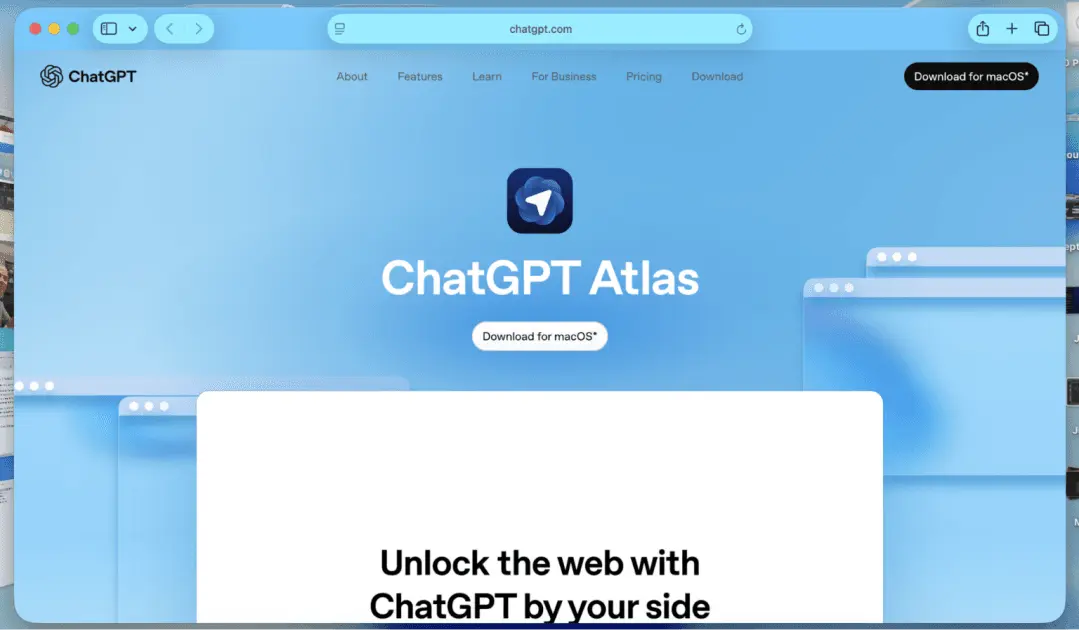
OpenAI is sunsetting its Atlas browser on August 9, less than 10 months after its October debut
1
. The AI-powered browser, which integrated ChatGPT at its core, represented OpenAI's attempt to reimagine web browsing through conversational AI2
. However, the company has concluded that maintaining a standalone browser isn't necessary to deliver its vision of AI-enhanced web browsing. Instead, OpenAI is redistributing the agentic browsing features tested in Atlas across its ChatGPT desktop app and a new Google Chrome extension1
.
Source: PC Magazine
The decision follows guidance from OpenAI's former CEO of applications Fidji Simo, who instructed teams to avoid "side quests" and focus on core offerings
1
. This same strategic pivot led to the shutdown of the Sora app, OpenAI's AI video generation tool2
.Strategic Pivot: From Standalone Browser to Integrated Features
OpenAI's retreat from Atlas doesn't signal an abandonment of web browsing capabilities. Rather, it reflects a fundamental shift in how the company views browser technology—as AI as a feature, not a destination
1
. The company is launching a ChatGPT extension for Chrome that provides access to webpage context, allows users to ask questions about content, summarize information, and initiate longer tasks directly from the browser1
. This positions the extension as a direct competitor to Google's Gemini Side Panel, which offers similar functionality1
.The ChatGPT desktop app is receiving substantial upgrades that integrate AI-driven browsing capabilities. Users can now browse websites, log into accounts, download files, and interact with web pages without leaving the desktop application
1
. A separate cloud browser runs remotely on OpenAI's servers, providing a space where AI agents can complete tasks on behalf of users1
.
Source: TechCrunch
ChatGPT Work: Building a Productivity Suite
The Atlas shutdown coincides with the launch of ChatGPT Work, OpenAI's new productivity suite that combines ChatGPT, Codex, and browser functionality into a unified desktop application
4
. This superapp can connect to files and business applications, browse the web, generate documents, spreadsheets, presentations, and websites while maintaining context across long-running projects4
. Powered by GPT-5.6, OpenAI's latest model series, the platform demonstrates improved reasoning through multi-step tasks and better adherence to user templates and reference materials4
.ChatGPT Work integrates with tools including Slack, Microsoft Teams, Google Drive, SharePoint, email, calendars, CRMs, and project trackers, allowing the AI to pull context automatically or when explicitly requested
4
. The platform is available across Plus, Pro, Business, Enterprise, and Edu plans.Related Stories

What Atlas Users Taught OpenAI
In a post on X, OpenAI developer James Sun acknowledged that Atlas served as a valuable learning experience. "All these capabilities were built on what we learned from Atlas users who took a leap of faith on a new browser," Sun wrote. "You taught us how agents can help make browsing and doing work on the open web better, and we are applying these learnings to these new products"
2
. This user feedback directly informed the development of the new agentic browsing features now distributed across OpenAI's ecosystem5
.Atlas faced challenges from its earliest days. Within days of its October launch, security researchers demonstrated prompt injection attacks that could manipulate the browser's AI assistant into following malicious instructions embedded in web pages
4
. Additional security vulnerabilities allowed malformed URLs to expose information about previously visited sites4
. These security vulnerabilities highlighted the gap between launching an AI browser and building one ready for widespread use on the open web4
.Implications for AI Browser Competition
For much of the past year, the AI industry engaged in efforts to challenge Chrome's dominance as the primary platform where people spend time online. Perplexity launched Comet, The Browser Company introduced Dia, and both Google and Microsoft updated Chrome and Edge with new AI-powered features
1
. OpenAI's decision to fold Atlas into existing products suggests the company concluded that convincing users to switch browsers entirely was more difficult than enhancing the tools they already use.
Source: The Register
The move positions OpenAI to compete directly within Chrome itself rather than attempting to replace it. By offering a Chrome extension alongside enhanced desktop application capabilities, the company can reach users where they already work without requiring them to adopt an entirely new browser
5
. This approach aligns with OpenAI's apparent conclusion that the browser functions better as a feature integrated into broader productivity tools rather than as a standalone destination1
.Disclosure: Ziff Davis, parent company of CNET and PCMag, filed a lawsuit against OpenAI in April 2025, alleging copyright infringement in training and operating its AI systems
2
3
.References
Summarized by

Navi
[4]
Related Stories
OpenAI Challenges Chrome with AI-Powered Browser ChatGPT Atlas
21 Oct 2025•Technology
ChatGPT Atlas Browser Receives Major Update with Vertical Tabs and Enhanced Security Features
20 Nov 2025•Technology

AI Browsers Bypass Paywalls and Legal Restrictions, Raising Concerns for Digital Media
30 Oct 2025•Technology

Recent Highlights
1
Microsoft and Nvidia Launch Surface Laptop Ultra: A $2,599 AI-Ready PC With RTX Spark Chip
Technology

2
Google Unveils Gemini 4 Argon AI Model, Restricts Access to Trusted Cyber Defenders
Technology

3
OpenAI Releases 722 AI-Generated Math Papers on GitHub, Igniting Fury Among Mathematicians
Science and Research

Recent Highlights
Today's Top Stories






Don’t drown in AI news. We cut through the noise - filtering, ranking and summarizing the most important AI news, breakthroughs and research daily. Follow topics that matter to you and stay ahead.


