OpenAI upgrades ChatGPT health responses as 230 million users seek medical information weekly


3 Sources
[1]
OpenAI improves health responses for free ChatGPT users
OpenAI announced that GPT-5.5 Instant, the default model for free ChatGPT users, now performs comparably to its frontier Thinking models on health-related questions, according to the company's evaluations. This update arrives amid growing scrutiny of AI-generated health answers, as highlighted by a
[2]
OpenAI Boosts ChatGPT's Medical Knowledge to Deliver Better Health Answers
OpenAI has improved ChatGPT's ability to answer health questions with clearer and more reliable information. The update could change how people search for medical advice online and prepare for doctor visits. OpenAI has made ChatGPT better at answering health-related questions. The company
[3]
OpenAI improves health intelligence in ChatGPT, here is how
OpenAI noted that GPT-5.5 Instant now performs at a level comparable to some of its most advanced reasoning models on difficult health evaluations. OpenAI has announced major improvements to ChatGPT's health intelligence. The company says more than 230 million people use ChatGPT every week for
Share
Copy Link
OpenAI announced that GPT-5.5 Instant now delivers health responses comparable to its advanced reasoning models, with a 71% drop in factuality issues. The update comes as 230 million users turn to ChatGPT weekly for health-related queries, from understanding symptoms to preparing for doctor visits, raising questions about AI's growing role in medical information access.
OpenAI Enhances Free ChatGPT Model for Health-Related Queries
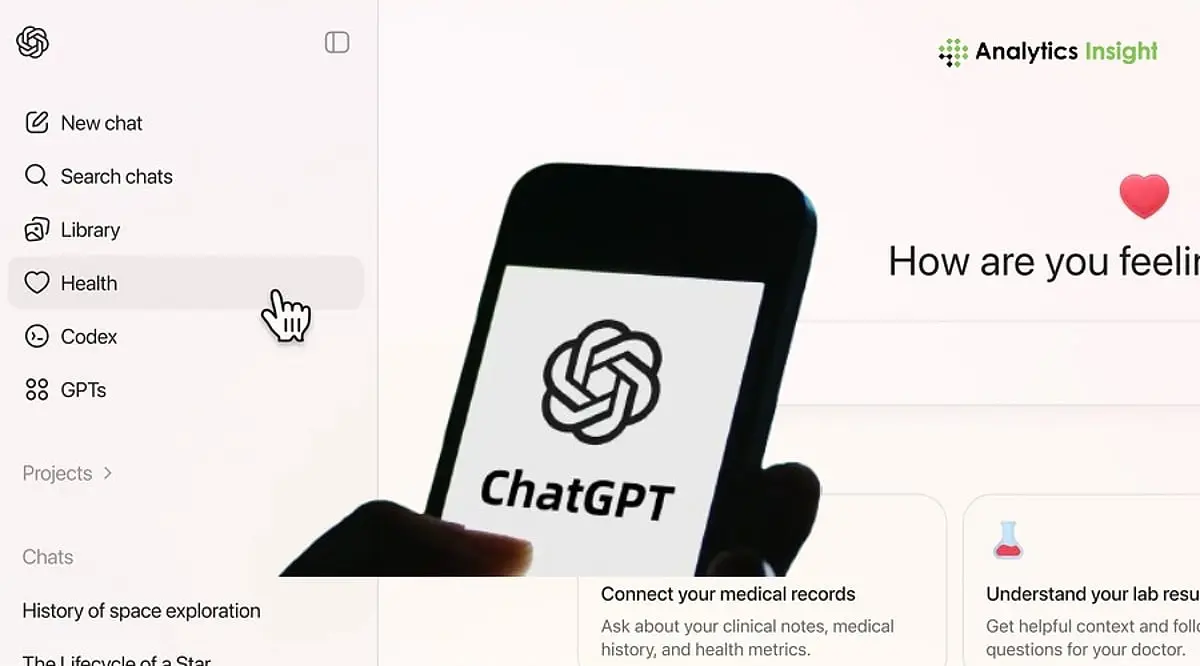
OpenAI announced that GPT-5.5 Instant, the default AI model for health queries available to free ChatGPT users, now performs at levels comparable to its frontier Thinking models on health-related questions
1
. The update addresses mounting concerns about AI-generated health information accuracy, particularly following a Guardian investigation that exposed factual inaccuracies in Google AI Overviews and prompted removal of certain features1
. More than 230 million users now turn to ChatGPT weekly for health and wellness topics, making it one of the chatbot's most significant use cases1
3
. Users rely on the platform for understanding symptoms, checking lab reports, preparing for doctor visits, managing insurance, and building healthier habits3
.
Source: Analytics Insight
Significant Reduction in Factual Inaccuracies Through Enhanced Medical Knowledge
OpenAI claims GPT-5.5 Instant outperforms its predecessor, GPT-5.3 Instant, based on internal benchmarks including HealthBench and HealthBench Professional
1
. The company reported a 71% decline in the rate of health responses flagged for factuality issues over two months, based on monitoring of live traffic1
. The model demonstrates improved health intelligence capabilities across multiple dimensions, including better identification of urgent medical situations, asking follow-up questions when additional information is needed, and explaining complex medical topics in simpler language3
. OpenAI emphasized that delivering reliable responses to health-related questions requires not just accurate information but good judgment—knowing when there's insufficient information, communicating uncertainty clearly, and helping users understand when to seek professional medical care3
.Physician-Led Comparison Shows AI Outperforming Human Doctors
In a separate physician-led comparison, OpenAI had doctors write responses to representative health queries, then had a distinct panel of healthcare professionals rate the outputs
1
. The evaluation revealed that GPT-5.5 Instant's responses scored higher than those crafted by physicians across measures of accuracy, communication, and completeness in a pool of 3,500 reviewed interactions1
. The model displayed fewer failure modes than previous versions and physicians, with reduced instances of missing important red flags or failing to request additional user context1
. OpenAI also noted that GPT-5.5 Instant had fewer instances of not tailoring to local healthcare context compared to both older models and physicians3
.Related Stories

Global Physician Network Shapes AI Model Development
HealthBench, the benchmark used by OpenAI, was developed with input from more than 260 physicians across 60 countries, 49 languages, and 26 medical specialties who have assessed over 700,000 example responses
1
3
. Their feedback becomes rubrics and evaluation criteria that help researchers measure whether responses are accurate, safe, clear, complete, appropriately cautious, and useful in real-world health situations3
. However, the figure of 260 physicians has remained consistent since ChatGPT Health launched in January, and results from the evaluations have not been made available for external review1
. This creates challenges for external validation of OpenAI's accuracy claims, which remain based on in-house evaluations1
.Implications for Medical Advice Access and Healthcare Professional Responsibility
OpenAI clarified that ChatGPT is not meant to replace doctors but is designed to help users learn more about health issues and make informed decisions before speaking with a healthcare professional
2
. According to an Ahrefs analysis, medical queries receive the highest exposure rate for AI-generated answers, indicating a potential shift in demand towards ChatGPT's free tier1
. Health topics are prioritized in OpenAI's policies, which prohibit running advertisements in health-related discussions1
. The company stated that "improving human health will be one of the most personal, tangible impacts of AGI," with the goal of making ChatGPT "more accurate, more useful, and more impactful"3
. The future implications regarding how these developments may affect citations and the responsibility of practitioners for verifying AI responses remain unclear1
.References
Summarized by

Navi
[1]
[2]
Related Stories
ChatGPT Introduces Break Reminders Amid Mental Health Concerns
05 Aug 2025•Technology

OpenAI launches ChatGPT Health to connect medical records to AI amid accuracy concerns
05 Jan 2026•Technology

ChatGPT Health rolls out to all US adults, reading medical records amid lawsuit controversy
24 Jul 2026•Technology
Recent Highlights



Recent Highlights
Today's Top Stories




Don’t drown in AI news. We cut through the noise - filtering, ranking and summarizing the most important AI news, breakthroughs and research daily. Follow topics that matter to you and stay ahead.


