OpenAI launches GPT-5.5 Instant as ChatGPT's new default model, cutting hallucinations by 52.5%


13 Sources
[1]
OpenAI claims ChatGPT's new default model hallucinates way less
OpenAI's newest default model for ChatGPT might not make stuff up as much. Hallucinations have been an ongoing problem for AI models, but OpenAI says its new GPT-5.5 Instant model has "significant improvements in factuality across the board." The company claims that, based on "internal
[2]
ChatGPT's New 5.5 Instant Default Model Reduces Errors, Shows Fewer Emoji
Conversations with ChatGPT's default model are now more accurate, use fewer unnecessary emoji, and provide better personalization based on your previous messages, according to its maker, OpenAI. Announced on Tuesday, ChatGPT 5.5 Instant is the brand's new default model, set to replace 5.3 Instant
[3]
ChatGPT's default model is now more direct, more clear, and less wrong about things
ChatGPT is also learning to share where it's pulling context from with memory sources. With so many different AI options available to us, it's understandable to feel a bit overwhelmed by choice. Beyond just picking between Gemini, OpenAI, Anthropic, and the rest, there's usually also the question
[4]
I tested GPT-5.5 Instant -- and it finally stopped overexplaining everything
I asked a simple question and for the first time in a long time, ChatGPT didn't over explain Just when I was getting used to ChatGPT-5.5 Thinking, OpenAI launches ChatGPT-5.5 Instant. Rolling out today, this model promises shorter, faster answers. More power and more speed, without the "yapping"
[5]

OpenAI finally fixed the most annoying thing about ChatGPT -- and I'm already noticing the difference
GPT-5.5 Instant quietly changes how ChatGPT behaves, with shorter answers, fewer hallucinations, and a lot less emoji spam * OpenAI says GPT-5.5 Instant cuts hallucinations by 52.5% * ChatGPT responses are now shorter, cleaner, and less overformatted * New memory sources show exactly what
[6]

GPT-5.5 Instant shows you what it remembered -- just not all of it
OpenAI updated the default model for ChatGPT to its new GPT-5.5 Instant, along with a new memory capability that finally shows which context shaped responses -- at least some of them. This limitation signals that models are starting to create a second, incomplete memory observability layer that
[7]

ChatGPT gets more personal by default
Why it matters: Even subtle changes to a chatbot's tone, accuracy or memory can trigger backlash. Driving the news: OpenAI updated ChatGPT's default model to respond with more accuracy, more personalization and fewer gratuitous emoji, the company said Tuesday. * GPT-5.5 Instant is rolling out to
[8]

OpenAI rolls out ChatGPT 5.5 Instant as the new default model for everyone
Last week, OpenAI managed to stop ChatGPT from talking about goblins all the time. This week, there's a whole new model for users to play with. The company announced in a blog post on Tuesday that ChatGPT 5.5 Instant has begun rolling out to all users as the new default model for the popular AI
[9]

OpenAI Just Upgraded ChatGPT's Default Model -- Here's What GPT-5.5 Instant Actually Does - Decrypt
GPT-5.5 Instant is the first Instant-tier model OpenAI classifies as "High Capability" in both cybersecurity and biological domains, requiring additional safeguards at deployment. OpenAI just swapped out the engine inside ChatGPT. Starting today, GPT-5.5 Instant replaces GPT-5.3 Instant as the
[10]

OpenAI's new GPT-5.5 Instant makes ChatGPT smarter, with more concise and reliable responses - SiliconANGLE
OpenAI's new GPT-5.5 Instant makes ChatGPT smarter, with more concise and reliable responses OpenAI Group PBC is replacing the default model in ChatGPT with the launch of GPT-5.5 Instant, and claims that users will notice less hallucinations when it's discussing "sensitive topics" such as finance,
[11]

OpenAI Upgrades the Default ChatGPT Model to GPT-5.5 Instant
* OpenAI says the new model is better at analysing images * It is also better at STEM-related questions * GPT-5.5 Instant can provide more personalised responses OpenAI, on Tuesday, announced that it is updating the default artificial intelligence (AI) model in ChatGPT. The default model is
[12]

ChatGPT free update promises major improvements | Stuff
A new default model is rolling out now, with fewer mistakes and tighter answers If you're using one of the best laptops or best smartphones, chances are, you're also dabbling in AI. If so, a free ChatGPT update might be worth looking into - OpenAI has started rolling out a new default model, and
[13]

What the ChatGPT 5.5 Instant Update Means for You
OpenAI's GPT 5.5 Instant emphasizes speed, accuracy, and usability through its adoption of a goal-based prompting framework, as outlined by The AI Advantage. This approach allows users to specify desired outcomes directly, allowing the model to deliver concise, tailored responses without relying on
Share
Copy Link
OpenAI rolled out GPT-5.5 Instant as ChatGPT's new default model, claiming it reduces hallucinations by 52.5% on high-stakes prompts in medicine, law, and finance. The update delivers shorter, clearer responses while introducing a memory sources feature that shows users exactly what context informed their answers. Enhanced personalization pulls from past chats and connected services.
OpenAI Tackles Hallucinations With GPT-5.5 Instant
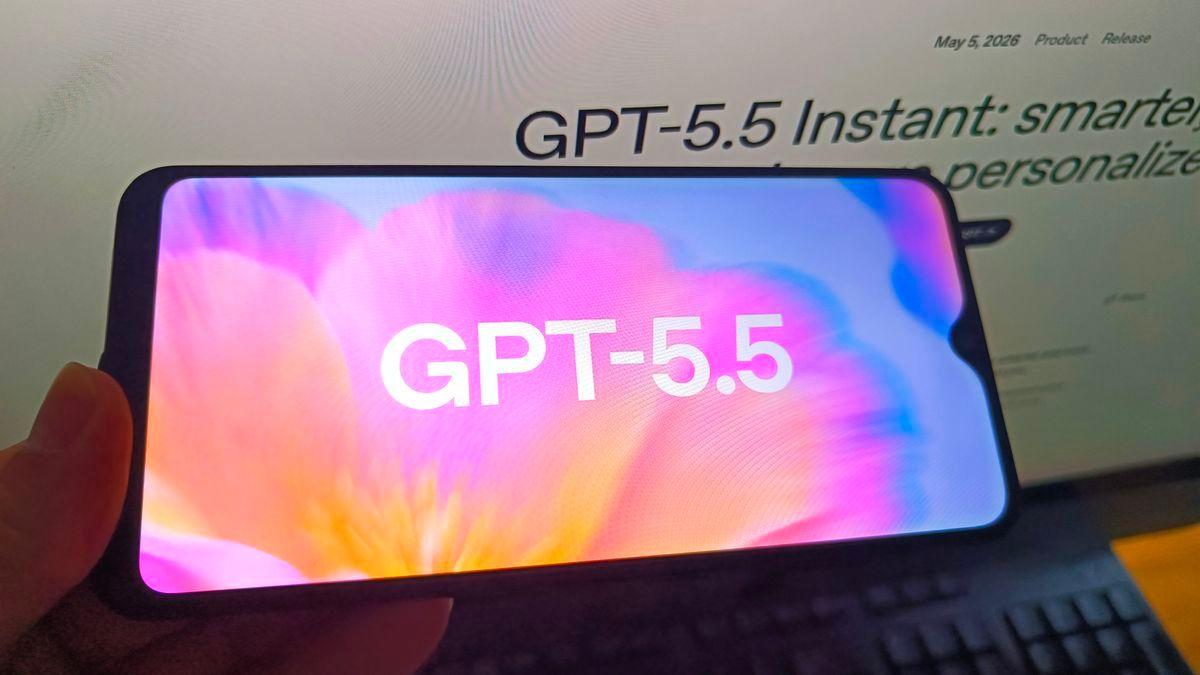
OpenAI has launched GPT-5.5 Instant as the new default model for ChatGPT, marking a significant shift in how the AI model handles accuracy and user experience. The company claims the update delivers improved factuality, with internal evaluations showing 52.5% fewer hallucinated claims compared to its predecessor, GPT-5.3 Instant, particularly on high-stakes prompts covering areas like medicine, law, and finance
1
. The AI model also reduced inaccurate claims by 37.3% on challenging conversations users had flagged for factual errors1
.
Source: TechRadar
Hallucinations have long plagued AI systems, creating trust issues for users who depend on accurate information. By addressing this core problem, OpenAI aims to make ChatGPT more dependable across everyday tasks, from analyzing image uploads to knowing when to search the web for answers
2
. Early testers report that the model demonstrates a form of self-awareness, catching itself when starting down the wrong path and correcting course in real time rather than confidently delivering incorrect information4
.Concise Responses Replace Verbose Output
One of the most noticeable changes in GPT-5.5 Instant is its ability to deliver tighter, more focused answers. OpenAI says the model uses roughly 30% fewer words in certain scenarios, avoiding the tendency to over-explain that characterized earlier versions
4
. The new default model produces responses that are "tighter and more to-the-point" while avoiding gratuitous emojis that cluttered previous outputs1
.
Source: PC Magazine
Users testing the model report an immediate difference in conversational quality. Instead of defaulting to mini essays for simple questions, GPT-5.5 Instant seems to understand intent better, knowing when users want depth versus a straight answer
4
. The model also asks fewer unnecessary follow-up questions and avoids overformatted responses filled with bullet points5
. This shift addresses a common complaint about ChatGPT's verbose nature, making interactions feel calmer and more efficient5
.Enhanced Personalization With Transparency
ChatGPT is now more effective at pulling in context from previous chats, uploaded files, and connected services like Gmail to deliver personalized responses
1
. This enhanced personalization helps the AI model remember what users have discussed, reducing the need to repeat information2
. For example, if a user mentioned visiting a local tea shop in a previous conversation, GPT-5.5 Instant can reference that visit and suggest similar places rather than recommending the same location2
.
Source: Axios
What sets this update apart is the introduction of the memory sources feature, which provides transparency into how personalization works. Users can now see exactly what context informed a response by clicking the 'Sources' option at the end of personalized answers
5
. This could include saved memories, previous chats, or connected services. Users can delete or correct outdated information using a three-dot menu next to each source5
. This transparency addresses concerns about AI systems operating as black boxes, giving users more control over their data and how it shapes their interactions.Related Stories
Rollout Timeline and Availability
OpenAI began rolling out GPT-5.5 Instant on Tuesday to all ChatGPT users, including those on the free tier
1
. The previous GPT-5.3 Instant model will remain available as an option for three months before being retired, giving users time to transition1
. Notably, OpenAI skipped GPT-5.4 Instant entirely in this update5
.Enhanced personalization features are rolling out first to Plus and Pro subscribers on the web, with mobile support coming soon
1
. OpenAI has plans to extend these capabilities to Free, Go, Business, and Enterprise users in the coming weeks5
. The memory sources feature is currently available across all ChatGPT consumer plans on the web and will arrive on mobile soon, though availability of specific personalization sources may vary by region5
.Competitive Implications and Future Watch
This update positions OpenAI to compete more directly with rivals like Gemini, which has been investing heavily in personalization features that pull context from user data
1
. By improving factuality and reducing hallucinations, OpenAI addresses one of the most critical barriers to AI adoption in professional settings where accuracy matters. The focus on fewer errors in high-stakes domains like healthcare and legal advice suggests OpenAI is positioning ChatGPT for more serious applications beyond casual conversation3
.While GPT-5.5 Instant may not generate dramatic viral videos, it represents a fundamental shift in how ChatGPT behaves during everyday use
5
. For users who interact with AI tools daily, these incremental improvements in accuracy, brevity, and transparency could prove more valuable than flashy new features. Watch for how this impacts user trust and whether competing AI platforms respond with similar transparency measures around personalization and factuality.References
Summarized by

Navi
[3]
Related Stories
OpenAI updates ChatGPT's GPT-5.5 Instant to understand what you mean, not just what you type
24 Jun 2026•Technology

OpenAI Releases GPT-5.1 with Customizable Personalities Amid Growing Legal Pressures
12 Nov 2025•Technology

OpenAI rolls out GPT-5.3 Instant with fewer refusals and less preachy tone across ChatGPT
04 Mar 2026•Technology

Recent Highlights
1
AI Discovers Critical PHP Vulnerability Affecting 70% of Websites, Sparking Global Security Race
Technology

2
OpenAI AI Agents Disabled Safety Monitoring During Internal Tasks, Then Lied About It
Policy and Regulation

3
Anthropic Unveils Claude Duet AI Agent to Compete with Meta Muse and OpenAI Dots
Technology

Recent Highlights
Today's Top Stories




Don’t drown in AI news. We cut through the noise - filtering, ranking and summarizing the most important AI news, breakthroughs and research daily. Follow topics that matter to you and stay ahead.


