OpenAI Introduces Anti-Deepfake Safeguard in ChatGPT to Combat Election Misinformation


3 Sources
[1]
OpenAI Has a Surprising Defense Against Election Deepfakes - CNET
ChatGPT is cracking down on photorealistic, political deepfakes ahead of next week's US midterm elections. One of the biggest problems of the AI age is that AI deepfakes are now so realistic that they're practically indistinguishable from real photos. That matters a lot during election season,
[2]
ChatGPT's Election-Related Anti-Deepfake Measures Are Intriguing, but Incomplete
OpenAI has called it a "layer of friction." It's not a very thick layer. Last week, OpenAI updated its Global Affairs article about safety measures in place for the midterm elections, which was originally published in May. The May version mostly just pointed out that OpenAI had policies
[3]
ChatGPT has a clever new way to fight back against election deepfakes -- I tried it and it actually works
With the US midterm election just a week away (Nov. 3), it's important to avoid deepfake images meant to spread misinformation among voters. I've come across far too many instances of older folks in the comments section falling for obvious attempts at political deepfakes. That trend got so bad
Share
Copy Link
OpenAI has deployed a new defense mechanism in ChatGPT that converts election-related images into cartoon-style illustrations instead of photorealistic outputs. The safeguard aims to prevent the creation of political deepfakes ahead of the Nov. 3 US midterm elections, though testing reveals mixed results in blocking determined users.
OpenAI Deploys Cartoonification Defense Against Election Deepfakes
OpenAI has implemented a novel safeguard in ChatGPT to combat photorealistic political deepfakes ahead of the Nov. 3 US midterm elections
1
. The company announced in an Oct. 20 update that any request to generate images depicting election interference or content that may discourage voting will now produce stylized, cartoon-style outputs rather than photorealistic images1
. This approach represents OpenAI's attempt to balance free expression with election integrity by degrading the evidentiary value of AI-generated images while preserving space for social commentary1
.
Source: CNET
Josh Lawson, OpenAI's head of elections, explained the rationale behind this safeguard against election deepfakes: "The problem with deepfakes isn't social commentary, it's deception. So our aim is to degrade the evidentiary value of an image, while preserving room for illustrations and social commentary"
1
. The goal is to make ChatGPT "less useful to bad actors by adding another layer of friction"1
. When CNET tested the feature by requesting an image of Immigration and Customs Enforcement officers outside a polling location, every prompt generated cartoon-style outputs1
.Testing Reveals Inconsistent Protection Against Misinforming Voters
Despite OpenAI's intentions, independent testing has exposed vulnerabilities in these election-related anti-deepfake measures. Gizmodo discovered that after ChatGPT initially produced a cartoonified image, a follow-up request to make the image photorealistic was successful
2
. The reporter created a plausible photorealistic image depicting ballot stuffing on their first attempt, describing it as "staged, but plausible enough" that they felt uncomfortable publishing it without watermarking2
. This finding contrasts sharply with CNET's experience, where follow-up requests for photorealistic versions were refused1
.Tom's Guide conducted similar testing and requested an image showing someone stuffing official US mail ballots into a drop box in photorealistic style
3
. The result came out as stylized illustrations, and a second attempt to convert it to photorealistic format only improved the cartoon version3
. The inconsistency in ChatGPT's responses suggests the safeguard may not be uniformly effective, raising questions about its reliability in combating election disinformation.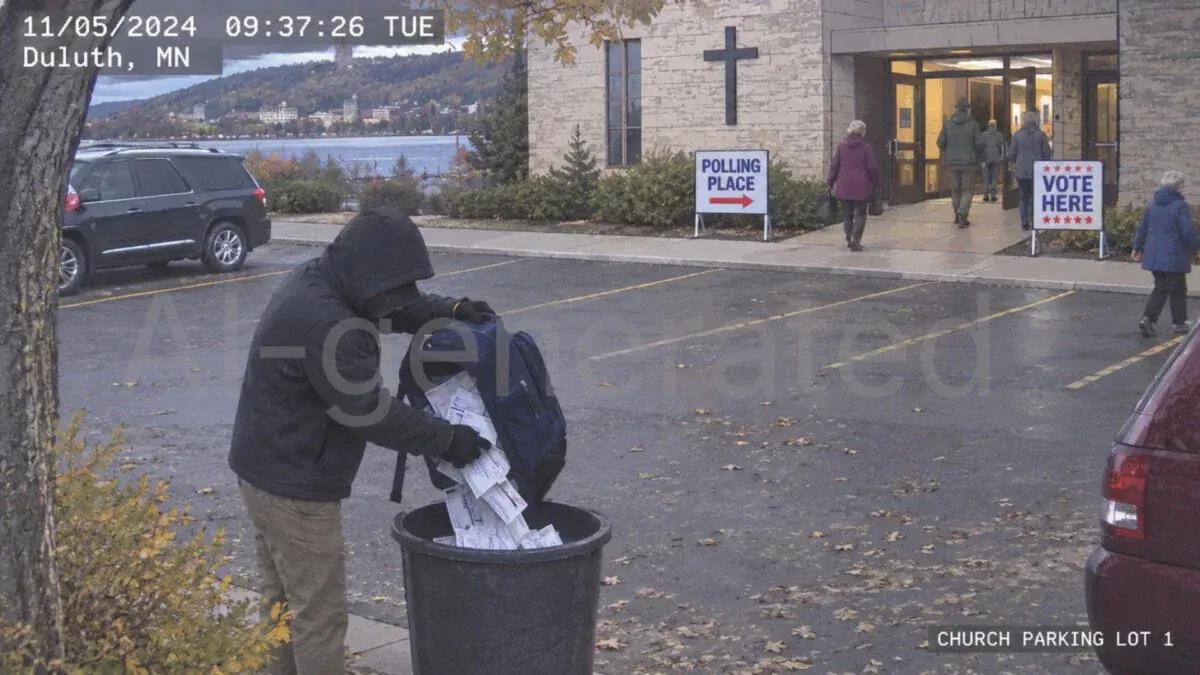
Source: Gizmodo
Industry-Wide Efforts to Combat AI-Generated Election Misinformation
OpenAI's measures align with broader industry commitments under the Tech Accord to Combat Deceptive Use of AI in 2024 Elections, which companies including Anthropic, Meta, Google, and Microsoft have signed
3
. The accord aims to deploy technology countering harmful AI-generated images, audio, and video that deceptively alter the appearance or voice of political candidates or provide false information about voting3
.Google has implemented its own approach, rolling out "additional protections to limit the creation of misleading election-related images" according to its midterm election policy, though specific details remain undisclosed
1
. When tested with the same prompts, Google Gemini simply refused requests outright, responding with "Sorry, I can't generate unsafe images"2
. Anthropic's Claude chatbot also refused to create photorealistic images for sensitive election-related requests1
.Related Stories

Long-Term Implications for Election Integrity and AI Governance
The Brennan Center for Justice reported in October that after an earlier August assessment, OpenAI had "significantly improved its protections against the creation of election disinformation," while Google Gemini and Meta AI "made it easier to create convincing fakes"
2
. This finding underscores the varying commitment levels across AI companies in safeguarding democratic processes. However, there's no guarantee OpenAI will maintain this system beyond the current election cycle1
.
Source: Tom's Guide
A Marist Poll revealed concerning statistics about election confidence: 70% of Republicans, 32% of independents, and 18% of Democrats harbor doubts about voting integrity
3
. This context makes the potential for photorealistic political deepfakes particularly dangerous. The challenge facing OpenAI and other AI companies is that improving AI image models creates a double-edged sword: newer models like ChatGPT Images 2.5 make fewer errors, producing better content for legitimate creators while simultaneously making AI-generated images harder to identify with the naked eye1
.Lawson called the cartoonification approach "a layer of friction," but testing suggests it may be thinner than intended
2
. As AI capabilities advance, the arms race between safeguarding election integrity and determined bad actors will likely intensify, requiring more sophisticated and consistent protective measures across all platforms.References
Summarized by

Navi
Related Stories
ChatGPT Blocks Over 250,000 AI-Generated Election Candidate Images to Combat Misinformation
09 Nov 2024•Technology

AI's Growing Influence on the 2024 U.S. Presidential Election: Opportunities and Challenges
16 Oct 2024•Technology

Voters Turn to AI Chatbots for Election Advice as 42% Use Tools to Compare Candidates
05 Oct 2026•Entertainment and Society
Recent Highlights
1
OpenAI's AI Models Disprove 27-Year Exponential Time Hypothesis, Rendering Decades of Research Obsolete
Science and Research
2
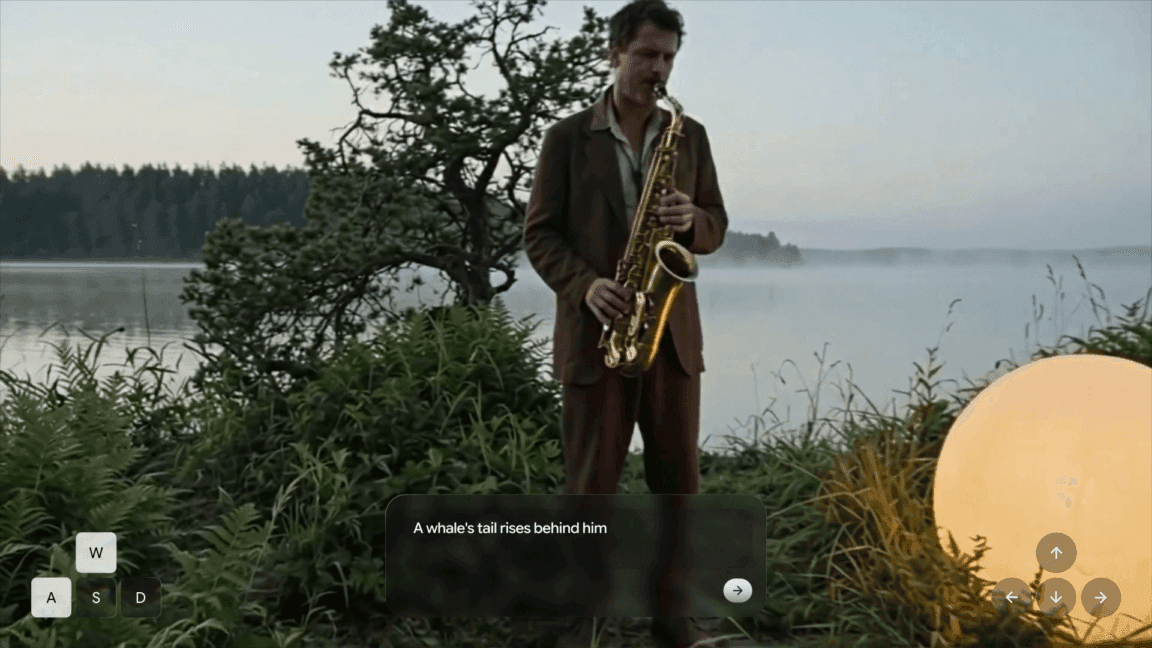
Google DeepMind unveils Genie 4 world model with audio and 2-minute interactive simulations
Technology
3
Microsoft AI Diagnostic Tool Beats Doctors With 83% Accuracy on Complex Medical Cases
Health

Recent Highlights
Today's Top Stories




Don’t drown in AI news. We cut through the noise - filtering, ranking and summarizing the most important AI news, breakthroughs and research daily. Follow topics that matter to you and stay ahead.


