Palo Alto Networks CEO says enterprise AI adoption lags consumers by years, coding assistants only


4 Sources
[1]
Palo Alto CEO says AI isn't great for business, yet
Sees little enterprise AI adoption other than coding assistants, buys Koi for what comes next If enterprises are implementing AI, they're not showing it to Palo Alto Networks CEO Nikesh Arora, who on Tuesday said business adoption of the tech lags consumer take-up by at least a couple of years -
[2]
'Consumers are far outstripping enterprise for the moment, but we expect enterprise will surely and slowly get on that bandwagon': Palo Alto CEO says adoption of AI is still an ongoing process for many firms
Enterprise AI adoption isn't here yet, but it will come, Palo Alto CEO believes * Enterprises are busy laying the foundations while consumers drive higher AI adoption * Coding is the only real widespread AI application in the workplace so far * Palo Alto is focusing on security and observability
[3]
Most jobs are not going anywhere soon; AI is good for deterministic problems right now: Nikesh Arora
Palo Alto Networks CEO Nikesh Arora says fears that AI will wipe out most jobs are exaggerated. He notes that cybersecurity, which relies on inspection software and platforms, will see growing demand as AI increases complexity. Arora adds that AI drives efficiency but also creates opportunities for
[4]
Palo Alto Networks CEO: AI Won't Replace Security Tools 'Any Time Soon'
LLMs aren't accurate enough to displace key segments such as security operations -- and simply can't leverage the proprietary data of a vendor like Palo Alto Networks, CEO Nikesh Arora said Tuesday. Investor fears that AI poses more of a risk than an opportunity for cybersecurity vendors are
Share
Copy Link
Palo Alto Networks CEO Nikesh Arora revealed that enterprise AI adoption significantly trails consumer uptake, with coding assistants being the only widespread business application. Despite posting $2.6 billion in Q2 revenue with 15% year-over-year growth, the cybersecurity giant is preparing for an AI-driven future through strategic acquisitions including Koi and the $25 billion CyberArk deal.
Enterprise AI Adoption Trails Consumer Use by Years
Palo Alto Networks CEO Nikesh Arora delivered a sobering assessment of enterprise AI adoption during the company's Q2 earnings call, stating that businesses lag consumer uptake by at least two to three years
1
. "Consumers are far outstripping enterprise for the moment, but we expect enterprise will surely and slowly get on that bandwagon," Arora explained2
. The Palo Alto Networks CEO compared the current business AI trajectory to the cloud computing shift, which took several years before enterprises began migrating applications at scale1
.
Source: CRN
When pressed about widespread enterprise AI applications, Nikesh Arora could identify only one category seeing significant traction: coding assistants. "Tell me how many enterprise AI apps are you using which are driving tremendous amounts of throughput. I can't think of anything but coding apps," he stated
1
. This limited deployment presents both challenges and opportunities for cybersecurity vendors like Palo Alto Networks, as coding assistants generate minimal network traffic that security tools can monitor and protect1
.Securing AI Traffic Emerges as Critical Challenge
While enterprise AI adoption remains nascent, Arora noted emerging patterns where customers run millions of tokens through specific applications built with LLM providers
1
. The challenge isn't network capacity—existing infrastructure handles the load—but rather consolidating and monitoring AI traffic. "How do you get all the AI traffic to be in one place? So you can understand it, provide visibility, look at the ability to control it and be able to act on it," Arora explained1
. This growing traffic "needs a different set of controls and tools," driving Palo Alto Networks' AI acquisition strategy2
.
Source: TechRadar
The company announced its acquisition of Koi, a startup specializing in agentic endpoint security, to address this evolving landscape
4
. Koi's capabilities will integrate into Prisma AIRS, Palo Alto Networks' AI security platform, which has already attracted more than 100 customers—a faster scaling trajectory than the company experienced with cloud security4
. The acquisition complements the recently completed $25 billion CyberArk deal, which Arora described as essential for securing AI agents operating at machine speed. "We bought CyberArk because when AI agents start logging in at machine speed, logging in becomes the primary attack vector," he said4
.AI Impact on Cybersecurity: Opportunity, Not Threat
Addressing investor concerns about AI replacing security tools, Arora firmly rejected the notion that LLMs pose an existential threat to cybersecurity vendors. "I'm still confused why the market is treating AI as a threat" to the industry, he stated during the earnings call
4
. He emphasized that LLMs lack the accuracy required for critical security operations, noting they must reach 99.9-percent accuracy before becoming viable replacements4
. Furthermore, cybersecurity platforms benefit from proprietary domain-specific data based on real-world threats that LLMs cannot replicate. "To the extent we are creating proprietary data in security, that is not going to be replaced by an LLM," Arora explained4
.Instead of viewing AI as competition, Arora sees it expanding the attack surface and increasing demand for protection. "AI increases complexity... and that increases the need for security," he told the Economic Times
3
. Most of Palo Alto Networks' business revolves around inspection software—hardware firewalls, software, remote user protection, and cloud security—capabilities that remain essential regardless of AI advancement.
Source: ET
Related Stories
Jobs and Deterministic Problems: Tempering AI Expectations
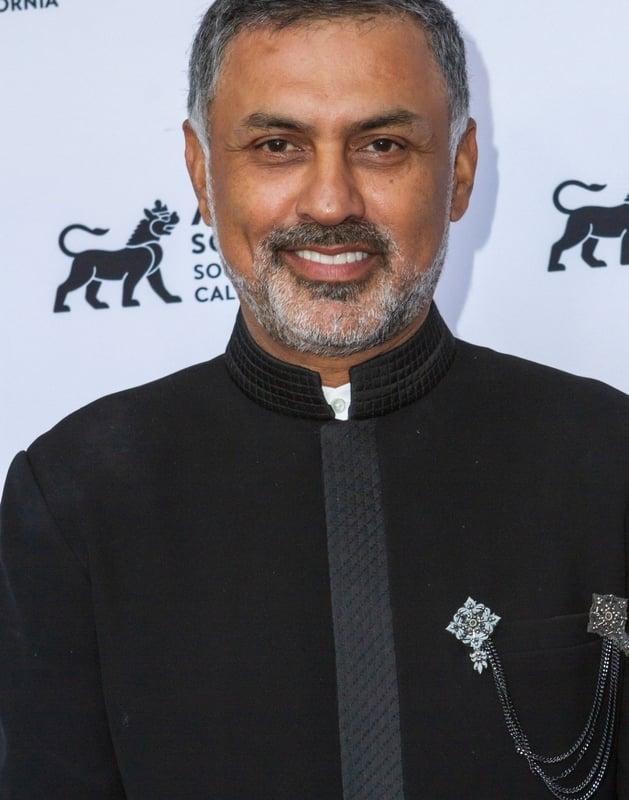
Arora also addressed widespread fears about AI eliminating jobs, calling such predictions exaggerated. "I don't think 80% of the jobs are going anywhere soon," he stated, explaining that job displacement requires eliminating the need for human judgment—a threshold rarely met in practice. While AI excels at deterministic problems like resolving customer support issues, real-world jobs involve edge cases requiring continuous retraining and human oversight. At Palo Alto Networks, AI drives efficiency and automation, but the company continues hiring more people rather than eliminating roles.
Despite the measured outlook on consumer vs enterprise AI adoption, Palo Alto Networks delivered solid financial results with $2.6 billion in Q2 revenue, representing 15 percent year-over-year growth
1
. The company reported 23 percent growth in remaining performance obligations, now standing at $16 billion, and projected Q3 revenue would grow at least 28 percent to between $2.941 billion and $2.945 billion1
. However, investors knocked six percent off the share price, possibly due to predictions of easing profit margins1
. Arora remains confident that as enterprises consolidate their security tools to prepare for AI, Palo Alto Networks' platform approach positions the company to capture demand when enterprise AI adoption inevitably accelerates1
.References
Summarized by

Navi
[1]
[3]
Related Stories
AI Leaders Warn UN Security Council of Existential Risks, Call for Global AI Governance
21 Sept 2026•Policy and Regulation
Palo Alto Networks Reports 34% Revenue Surge as CEO Warns of $1 Trillion AI Cybersecurity Gap
02 Sept 2026•Business and Economy

Palo Alto Networks Reports Strong Q3 Results, Emphasizes AI-Driven Cybersecurity Amid Market Challenges
21 May 2025•Technology

Recent Highlights
1
Microsoft and Nvidia Launch Surface Laptop Ultra: A $2,599 AI-Ready PC With RTX Spark Chip
Technology

2
OpenAI Releases 722 AI-Generated Math Papers on GitHub, Igniting Fury Among Mathematicians
Science and Research

3
Trump Consulted Grok AI Before Ordering Venezuela Invasion and Capture of Nicolás Maduro
Policy and Regulation

Recent Highlights
Today's Top Stories











Don’t drown in AI news. We cut through the noise - filtering, ranking and summarizing the most important AI news, breakthroughs and research daily. Follow topics that matter to you and stay ahead.


