Paper2Agent Transforms Scientific Papers Into Interactive AI Agents for Collaborative Research


3 Sources
[1]
Paper2Agent Turns Dense Science Papers Into Chatty AI Lab Partners
Elie Dolgin is a science writer specializing in biomedical research. Have you ever read a paper in Science or Nature and thought, "Man, that research was so cool. I wish I could try that method on my own data" -- only to spend a week wrestling with someone else's undocumented repo, broken
[2]
AI agents built from scientific papers surface new discoveries
Researchers say agent-to-agent collaboration could eventually link millions of papers, surfacing discoveries human researchers might otherwise miss while still crediting the original authors. Since 1665, scholarly journals have stood as a written record of scientific advancement - static words on
[3]
Scientific papers become agentic chatbots with new tool
There's no need to actually read a whole research paper when you can ask a bot to explain it to you. Scientific papers can transform into AI agents that, according to the Stanford team behind the project, should speed up the dissemination of new scientific discoveries. Paper2Agent, the team's new
Share
Copy Link
Stanford researchers unveiled Paper2Agent, an open-source AI framework that converts scientific papers into interactive agents. Published in Nature, the tool turns static research into dynamic AI collaborators that can reproduce analyses, apply methods to new data, and even discover new connections between studies—like identifying MPHOSPH9's link to ADHD risk.
Stanford Researchers Launch Open-Source Framework to Revolutionize Scientific Publishing
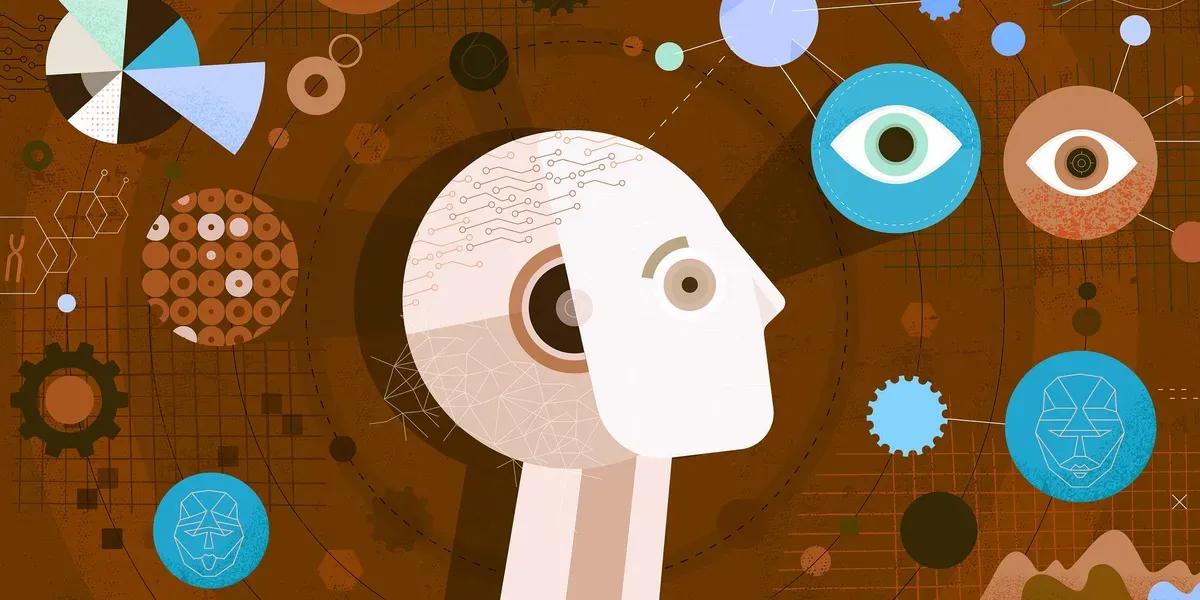
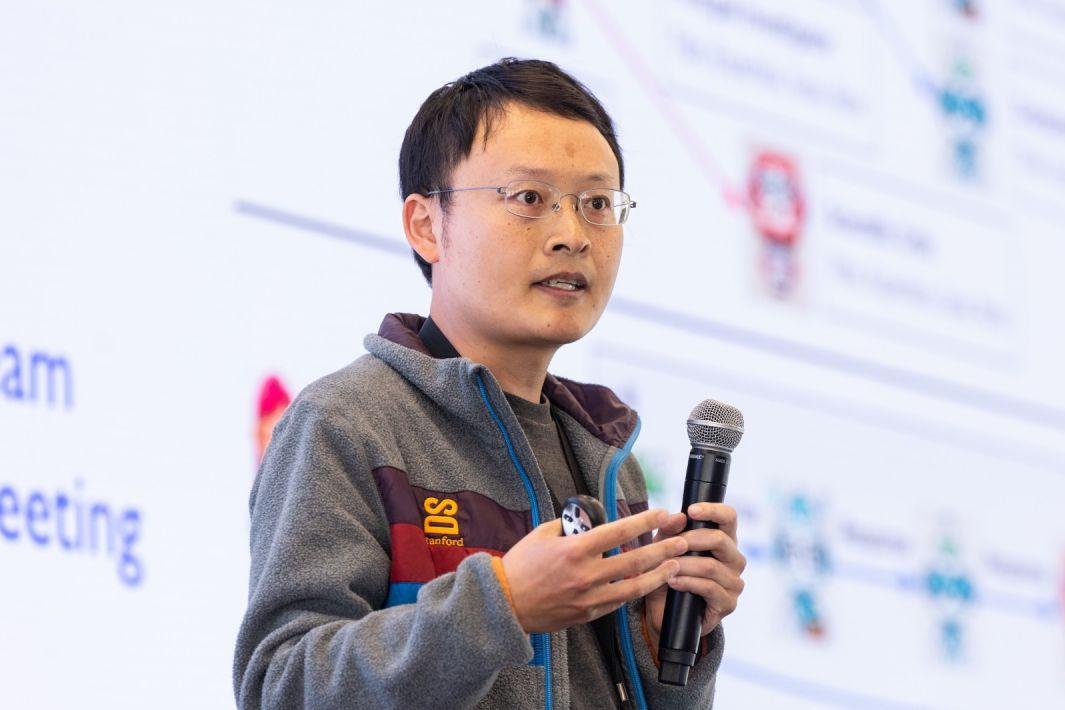
Stanford researchers led by postdoctoral scholar Jiacheng Miao and Associate Professor James Zou have introduced Paper2Agent, an open-source AI framework that converts scientific papers into interactive AI agents
1
2
. Published in Nature on September 16, the tool fundamentally reimagines how scientific knowledge is shared and utilized1
. Unlike Google's NotebookLM, which simply answers questions about documents, Paper2Agent enables AI agents to actually run the methods described in scientific papers and combine tools from multiple studies1
.The AI framework processes manuscripts along with their associated code, data, and supplementary materials to extract core workflows and create tested, runnable toolkits
1
. James Zou emphasizes that "knowledge should not be static records" but rather "dynamic and interactive," enabling reproducible research and new kinds of discovery1
. The transformation takes approximately 45 minutes on a personal laptop for less than $15 in computing costs1
.
Source: IEEE
How Paper2Agent Converts Scientific Papers Into Functional Tools
Paper2Agent employs a team of AI "worker agents" that analyze published papers and attempt to reproduce the original research from scratch
2
. The system uses the Model Context Protocol (MCP) to organize and store knowledge, creating a filing system where each paper section lives in separate folders2
. The MCP server exposes research tools, resources, and workflows that large language models can access through natural-language requests3
.The framework includes automated validation through a testing agent that runs sub-tools against reference results
1
. If tests fail, the agent diagnoses problems and attempts fixes up to six times per function before potentially dropping the tool altogether1
. In demonstrations using AlphaGenome, a deep-learning model for predicting mutation effects on gene regulation, Paper2Agent produced 22 validated tools covering different aspects of functionality1
. These tools were packaged into an MCP server and connected to Claude Code, creating a user-facing agent capable of answering questions in plain English and generating results with visualizations1
.Multi-Agent Research Collaboration Surfaces New Scientific Discoveries
The most compelling capability of Paper2Agent lies in enabling AI agents to collaborate with each other, potentially creating vast research networks
2
. Stanford researchers demonstrated this by converting two unrelated papers into agents: one on genome prediction tools and another on genome-wide association studies of ADHD risk2
. Through agent-to-agent collaboration, the system flagged a molecular variant near the MPHOSPH9 gene associated with increased ADHD risk—a connection not previously reported2
.
Source: The Register
In another demonstration focused on computational biology, three linked agents investigated the genetic basis of psoriasis
1
. The collaborative AI agents identified GPR137 as a likely causal factor and proposed 10 validation methods1
. When a human researcher selected one approach, the analysis revealed that silencing GPR137 produced gene activity changes strikingly similar to those caused by psoriasis-linked variants in immune cells1
. According to Zou, "These agents, because they're able to directly collaborate and communicate, can facilitate all these kinds of collaborations"1
.Reproducible Research Across Diverse Scientific Disciplines
The Stanford researchers tested Paper2Agent across 136 papers in diverse disciplines including statistics, econometrics, astrophysics, and computational biology
1
3
. Of 100 computational-biology papers evaluated, 74 were successfully converted into AI agents3
. Failures were attributed primarily to incomplete codebases, missing documentation, or unresolvable environment configurations3
.Dongping Chen, a computer scientist at the University of Maryland, notes that "the idea of making papers more dynamic and executable through an agentic interface is quite compelling"
1
. The AlphaGenome agent outperformed both standard Claude given the codebase and specialist AI co-scientist tool Biomni when tested with various questions ranging from simple requests to open-ended research problems1
.Related Stories

Addressing AI Hallucinations and Ensuring Research Integrity
While Paper2Agent offers significant potential for reproducible research, concerns about AI hallucinations remain
3
. The researchers acknowledge that scientists should always evaluate outputs to ensure correctness, viewing Paper2Agent "as a tool for augmenting scientific discovery and improving access, reproducibility and reuse of papers, rather than as an autonomous or authoritative source of scientific conclusions"3
.Each tool undergoes validation against paper results and figures, with tools "locked to ensure reproducibility"
3
. The MCP server can be hosted remotely or run locally to protect sensitive information, though data still passes to whichever large language model backend connects to Paper2Agent3
. James Zou advises that users with protected health information should exclude sensitive data from the framework3
.Open-Source Release and Future AI-Embodied Knowledge Networks
Paper2Agent is now available as an open-source tool on GitHub, with a live online version demonstrating the framework's capabilities
3
. The Stanford researchers plan to develop an online platform where paper agents can collaborate and discuss various "agentified" scientific discoveries3
. Zou hopes the open-source community will help improve the framework while his team continues development3
.This shift from passive artifacts to AI-embodied knowledge networks could eventually link millions of papers, surfacing discoveries human researchers might otherwise miss while crediting original authors
2
. The framework is compatible with various AI coding agents, though not all have been tested3
. As Zou states, this represents "an opportunity to fundamentally reimagine what knowledge looks like" by converting static records into active embodiments of scientific understanding2
.References
Summarized by

Navi
[3]
Related Stories
AI agents identify promising drug candidates in hours as Google and FutureHouse debut research systems
19 May 2026•Science and Research

AI Agents Transform Drug Discovery: 37,000 Virtual Scientists Identify Cancer Treatments
18 Sept 2026•Technology
Stanford Researchers Create AI-Driven 'Virtual Scientists' to Accelerate Scientific Discovery
30 Jul 2025•Science and Research
Recent Highlights
1
Microsoft and Nvidia Launch Surface Laptop Ultra: A $2,599 AI-Ready PC With RTX Spark Chip
Technology

2
OpenAI Releases 722 AI-Generated Math Papers on GitHub, Igniting Fury Among Mathematicians
Science and Research

3
Trump Consulted Grok AI Before Ordering Venezuela Invasion and Capture of Nicolás Maduro
Policy and Regulation

Recent Highlights
Today's Top Stories









Don’t drown in AI news. We cut through the noise - filtering, ranking and summarizing the most important AI news, breakthroughs and research daily. Follow topics that matter to you and stay ahead.


