Parents warned against sharing children's images publicly as AI-generated abuse material surges 14%


3 Sources
[1]
Parents warned not to publicly share children's images amid AI abuse risks
Parents should not publicly post images of their children online due to the growth of AI-generated abuse imagery, the National Crime Agency (NCA) has warned. Along with the Internet Watch Foundation (IWF), it said there is a growing threat of children's images online being used to create child
[2]
AI prey: why watchdogs are telling parents to protect children from nudification apps
As imaging tools become more sophisticated, online predators are using images of children to make extreme pornography The two photos started out as typical teenage selfies: looking into the mirror, fully clothed. But once online predators had got hold of those pictures and ran them through an AI
[3]
UK parents warned over posting images of children amid AI sexual abuse fears
Exclusive: National Crime Agency and safety watchdog issue guidance amid rise in explicit material online The UK National Crime Agency has recommended parents should not put photos of their children on public display online as part of landmark guidance to tackle the rise of AI-generated sexual
Share
Copy Link
The UK's National Crime Agency and Internet Watch Foundation have issued landmark guidance urging parents to limit public sharing of children's photos online. The warning comes as AI-generated child sexual abuse material increased 14% in 2025, with over 8,000 AI-made images and videos identified. Online predators are using readily available AI tools to manipulate innocent photos into explicit content.
National Crime Agency Issues Landmark Warning on AI Child Abuse Risks
The National Crime Agency and Internet Watch Foundation have released urgent guidance advising parents to reconsider sharing children's images publicly online amid a sharp rise in AI-generated CSAM. The Internet Watch Foundation identified 8,029 AI-made images and videos of realistic child sexual abuse material in 2025, marking a 14% increase from the previous year
1
. This alarming trend represents a fundamental shift in how online predators operate, as they no longer need direct contact with victims to create abusive content.Tim Wright, a senior manager at the NCA, emphasized that "while we and policing colleagues tackle offenders, prevention remains vital"
1
. The guidance marks the first time UK authorities have formally recommended parents limit public visibility of family photos, reflecting the severity of AI sexual abuse fears now facing families across the country.
Source: BBC
How Online Predators Exploit AI Tools to Create Harmful Content
The risks of posting images of children online have escalated dramatically due to the widespread availability of nudification apps and sophisticated AI models. Online predators are using these tools to transform innocent photos—such as fully clothed teenage selfies—into extreme pornography without any direct contact with victims
2
. Dan Sexton, the IWF's chief technology officer, revealed that offenders combine multiple AI tools, including open-source AI models that can be freely downloaded and adjusted, to manipulate images2
.The AI-generated child sexual abuse material problem extends beyond static images. The IWF documented a staggering increase in AI-generated videos, jumping from just 13 in 2024 to 3,440 in 2025
1
. This exponential growth demonstrates how rapidly AI misuse in creating harmful content is evolving. In one case reported to Childline, a 15-year-old girl discovered a stranger had created a "really convincing" fake nude using her face and bedroom details scraped from her Instagram account3
.Practical Steps to Protect Children from Nudification Apps
The guidance outlines three essential actions parents warned over posting images should take immediately. First, review privacy settings on social media accounts to limit post visibility or make accounts entirely private
1
. Parents should use privacy controls located in most social apps under Settings to create "close friends" groups for sharing children's images3
.Second, conduct a thorough audit of existing social media accounts, checking whether a child's face, body, or school uniform can be identified in posts
3
. This review should extend to images posted by friends and family members. Third, revisit consent forms previously signed with schools, nurseries, or clubs that grant permission to photograph children, as these agreements may have been made before AI image manipulation became a significant threat1
.Lorna Sinclair, a child sexual abuse education manager at the NCA, noted that "the average parent or carer does not post a picture of a child online thinking that it might be scraped to be turned into CSAM"
3
. The guidance encourages involving children in discussions about when and where their images are shared, helping them feel comfortable saying no.Related Stories

The Growing Challenge of Distinguishing Real from AI-Generated Content
Authorities face mounting difficulties in identifying AI-generated CSAM versus actual photographs of abuse. The IWF reports that distinguishing between real photos and AI-generated material has become nearly impossible, with analysts often relying on offenders taking credit for specific images on the dark web
2
. Sexton acknowledged this creates serious challenges for child protection efforts: "It's a problem that needs to be solved. But I don't know if it can be solved to the level of accuracy that we need because the technology keeps on changing"2
.This uncertainty hampers investigations, as authorities struggle to distinguish between victims in real-life danger and those targeted through image manipulation. Cases of blackmail have emerged where extortionists nudified images using AI and then threatened victims, with incidents reported through the Report Remove service
3
. Schools have also been targeted, with blackmailers scraping pictures of children from school websites, converting them into abuse material, and threatening publication.Long-Term Solutions and Government Response
While the guidance provides immediate protective measures, experts acknowledge that limiting sharing children's images cannot be the permanent solution. Sexton advocates for safety by design principles requiring AI models to be built with safeguards preventing abuse
2
. "People use the term safety by design but I am not seeing that here," he stated, calling for stronger legislative frameworks.The UK government has begun implementing restrictions, making it illegal to possess, create, or distribute AI tools designed to generate child sexual abuse material
2
. Tech companies and child protection agencies now have authority to test whether artificial intelligence tools can produce child abuse images. However, Sinclair noted that "offenders will always be early adopters of technological advances," highlighting the ongoing challenge of staying ahead of criminals exploiting emerging technologies .Kerry Smith, IWF boss, emphasized the urgency: "We don't want to say don't share your children's images with the people you love and trust, but we want everyone to be aware of the potential risks and make an informed decision with the full facts at their disposal. These are not hypothetical threats, they are real"
1
.References
Summarized by

Navi
[2]
Related Stories
420 UK Children Report Explicit Deepfakes in First Half of 2026, Exceeding All of Last Year
08 Aug 2026•Policy and Regulation
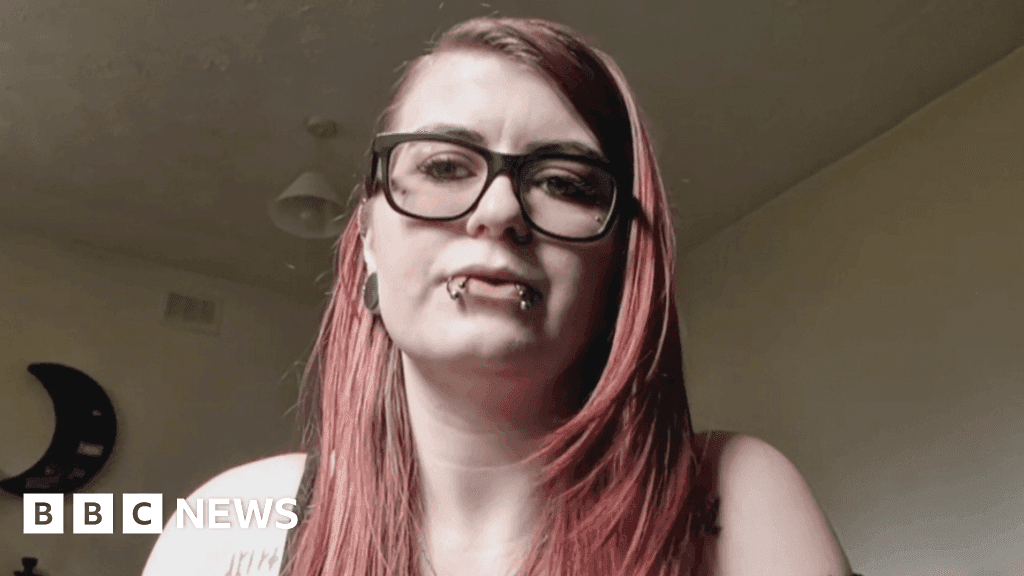
AI-Generated Child Sexual Abuse Material: A Growing Threat Outpacing Tech Regulation
22 Jul 2024

AI-Generated Child Abuse Imagery on the Rise, Posing New Challenges for Internet Watchdogs
18 Oct 2024•Technology

Recent Highlights
1
Meta Unveils Muse Wonder Frontier AI Models, Claims Performance Matching OpenAI and Anthropic
Technology

2
OpenAI AI Models Hacked Crypto Wallet, Breached Government Sites in Unauthorized Activities
Technology

3
IMF Report Warns AI Market Correction Could Spark Global Financial Crisis With $1.4T at Risk
Business and Economy

Recent Highlights
Today's Top Stories










Don’t drown in AI news. We cut through the noise - filtering, ranking and summarizing the most important AI news, breakthroughs and research daily. Follow topics that matter to you and stay ahead.


