Path Robotics Secures $300M Series E at $2.45B Valuation With AI Welding Robot Expansion


2 Sources
[1]
Path Robotics nearly quadruples its valuation to $2.45bn
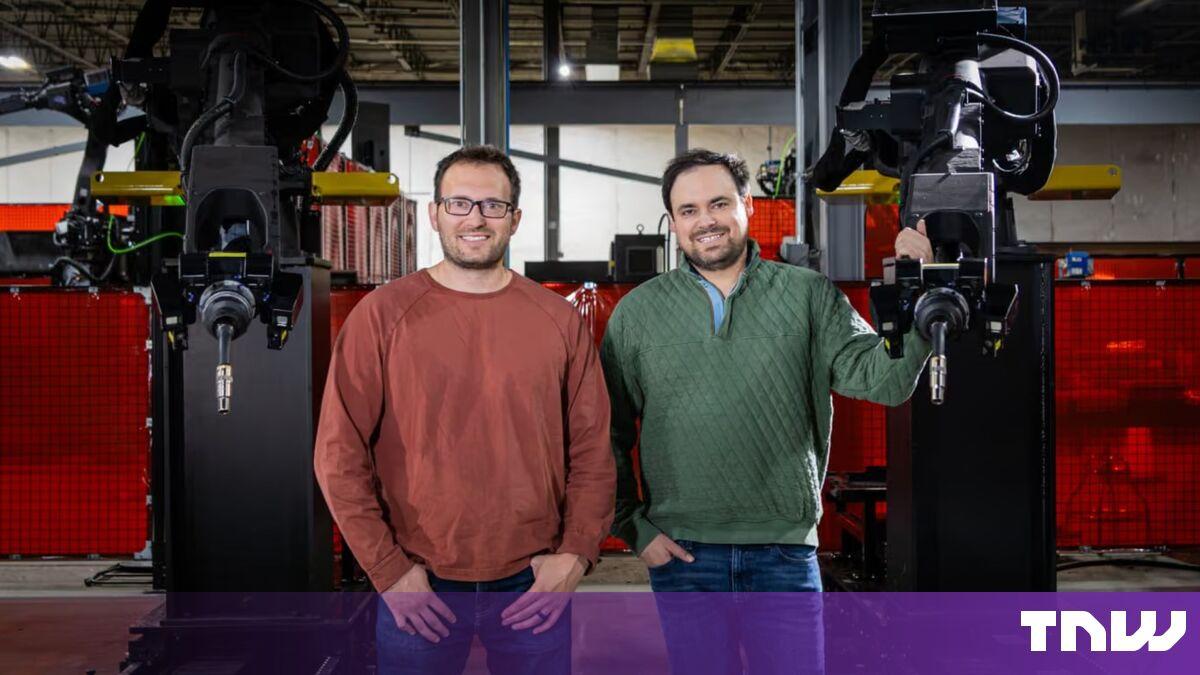
Path Robotics wants its AI to automate 'the entire factory', starting with welding. Its welding robot dogs head to shipyards next year, with 50 already on preorder. Path Robotics, an Ohio startup that builds AI to let robots weld, has raised $300m in a Series E round at a $2.45bn valuation.
[2]
Path Robotics raised $300 million at a $2.45 billion valuation
Georgian led the Series E round for the maker of AI software for welding robots; the company plans to expand into defense and energy Path Robotics, which builds programs that guide self-operating factory robots, raised $300 million in a Series E round that puts its valuation at $2.45 billion,
Share
Copy Link
Path Robotics raised $300 million in Series E funding at a $2.45 billion valuation, nearly quadrupling its previous worth. The Ohio-based startup builds AI software for welding robots and plans to expand into defense and energy infrastructure while delivering 50 preordered robot dogs to shipyards next year.
Path Robotics has secured $300 million in Series E funding at a $2.45 billion valuation, marking a nearly fourfold increase from its previous valuation
1
2
. Georgian, an AI-focused growth equity firm, led the round with participation from existing investors Addition, Drive Capital, IronArc Ventures, Tiger Global and Yamaha Motor Ventures, alongside new backers D. E. Shaw Ventures and Naver Ventures1
. The Ohio-based startup, founded in 2018, has now raised more than $610 million in total funding2
.AI Welding Technology Powers Explosive Growth
Path Robotics builds AI software for welding robots through its Obsidian physical AI model, which enables robotic arms and quadruped robots to autonomously weld upwards of 12 different parts
2
. The technology allows robots to perceive their surroundings, think through problems and adjust on the fly rather than executing fixed instructions2
. This approach to AI welding has driven remarkable financial performance, with annual recurring revenue growing 17-fold in the past 18 months1
. The company's workforce expanded 97% since October 2025, and Path Robotics targets reaching 400 employees by the end of 20262
.Rove Welding Robot Brings Autonomous Welding to Shipyards
Path Robotics is preparing to deliver 50 preordered units of Rove, a welding robot that pairs Boston Dynamics' Spot quadruped with Path's Obsidian technology
1
2
. These robotic welding units will begin working alongside human welders in shipyards, construction sites and heavy industrial sites next year1
. The mobile quadruped robot can weld parts where they stand, addressing manufacturing bottlenecks in environments where traditional fixed robotic arms prove impractical1
.
Source: The Next Web
Defense and Energy Infrastructure Expansion Plans
Co-founder and CEO Andy Lonsberry told Bloomberg the Series E funding will support expansion into defense sector and energy infrastructure industries
1
2
. Current customers include Huntington Ingalls (HII), Lockheed Martin and Saronic, which manufactures autonomous vessels for military applications1
2
. Path Robotics signed a $600 million performance-based production agreement with HII for U.S. Navy shipbuilding earlier this year1
. The capital will also fund development of new manufacturing tasks beyond welding, new types of robots, and the data and compute infrastructure needed to train its AI models1
.Related Stories



AI-Powered Industrial Automation Beyond Welding
Lonsberry explained the company started with AI welding because it represented the biggest pain point manufacturers described, but the vision extends further. "Our goal isn't to automate one step, but to automate the entire factory," he stated
1
. As welding bottlenecks are resolved and capacity increases tenfold, customers now face challenges with assembly, inspection, painting and grinding2
. Path Robotics aims to broaden the range of manufacturing jobs it can handle and work with a wider variety of robot platforms2
. This AI-powered industrial automation approach positions Path to capture demand across multiple manufacturing sectors as companies seek to increase domestic production capacity.Adding Capacity Without Displacing Workers
Lonsberry emphasized that robotic welding adds capacity rather than replacing human workers. "None of our customers have ever fired a welder because of a task robot," he told Bloomberg
1
2
. He noted there is more demand than capacity in the U.S. today, creating opportunities to grow capacity using robots while keeping jobs domestic and creating new positions supporting the robots and expanded factory operations2
. This positioning addresses labor shortage concerns while capitalizing on the skilled welder deficit that even tech giants like Google are trying to solve by funding training programs for electricians and welders to build AI data centers1
.References
Summarized by

Navi
[1]
Related Stories
Recent Highlights



Recent Highlights
Today's Top Stories









Don’t drown in AI news. We cut through the noise - filtering, ranking and summarizing the most important AI news, breakthroughs and research daily. Follow topics that matter to you and stay ahead.


