Josh Shapiro Signs Executive Order Imposing Nation's Strictest Rules on AI Data Centers in Pennsylvania


6 Sources
[1]
Pennsylvania governor signs order imposing new rules to set up AI data centers in state
Aug 18 (Reuters) - Pennsylvania Governor Josh Shapiro on Tuesday signed an executive order that would require companies setting up AI data centers in the state to meet environmental and transparency safeguards and secure local community approval for the projects. The state has become a
[2]
Pennsylvania just made itself one of the hardest US states to build a data centre in
No fast track, no non-disclosure agreements, and no shifting power costs onto households. Governor Josh Shapiro signed an executive order on Tuesday that makes Pennsylvania one of the harder places in America to build an AI data centre. The order strips data centres from the state's permit
[3]
Pennsylvania Cracks Down on AI Data Centers as Backlash Grows
The order calls for data centers to pay costs they impose on the electrical grid rather than passing them to other customers. Pennsylvania Governor Josh Shapiro signed an executive order Tuesday imposing new restrictions on large AI data centers, including rules aimed at making developers pay for
[4]
Shapiro on placing guardrails on AI data centers in Pennsylvania: "I don't want developers running roughshod"
Kathryn Watson is a politics reporter for CBS News Digital, based in Washington, D.C. Pennsylvania Gov. Josh Shapiro doesn't want data center developers "running roughshod" in Pennsylvania communities, he said, explaining his decision to sign an executive order on Tuesday limiting data centers in
[5]

Shapiro signs order restricting data centers in Pennsylvania
Pennsylvania Gov. Josh Shapiro (D) on Tuesday signed an executive order that could limit AI data center development in the Keystone State. The executive order, which implements his Governor's Responsible Infrastructure Development (GRID) requirements, requires prospective developers to provide a
[6]

Josh Shapiro Says He Won't Let Big Tech's Lawyers Bully Pennsylvanians, Signs Executive Order Imposing 'N
Pennsylvania Governor Josh Shapiro (D) has tightened the rules for AI data centers, requiring developers to meet strict energy, environmental and transparency standards and secure local approval before projects can move forward. Shapiro Takes Aim at AI Data Center Developers On Tuesday, Shapiro
Share
Copy Link
Pennsylvania Governor Josh Shapiro signed an executive order Tuesday that establishes the nation's strictest regulations on AI data centers. The order removes data centers from the state's Fast Track permit program, bars nondisclosure agreements, and requires developers to pay full electricity costs without shifting them to households. The move marks a reversal from Shapiro's earlier support for Amazon's $20 billion data center investment.
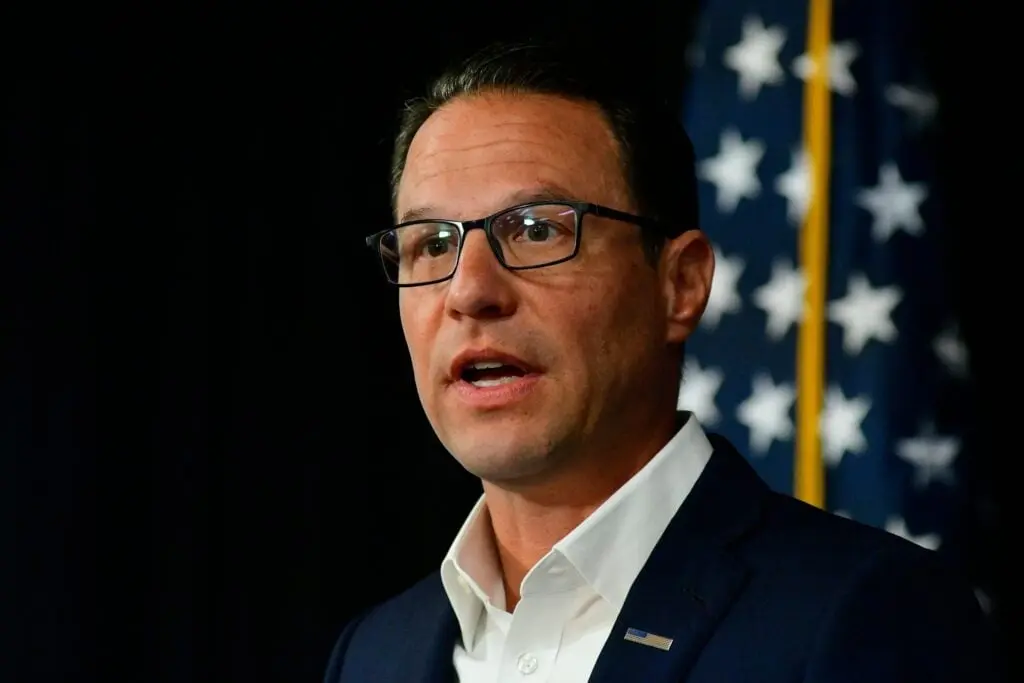
Pennsylvania Governor Josh Shapiro signed Executive Order 2026-05 on Tuesday, imposing what he calls the nation's strictest regulations on AI data centers in the state.
1
The executive order requires companies setting up AI data centers in Pennsylvania to meet environmental safeguards, secure local community approval, and pay full utility costs before construction can begin.3
Source: Benzinga
Reversal From Earlier Data Center Support
The order marks a significant shift from Shapiro's previous stance. Last year, the Democratic governor praised Amazon's $20 billion planned investment in Pennsylvania for two data centers, the largest private investment in state history.
1
2
However, Shapiro said he "heard loud and clear from the people of Pennsylvania" about concerns over data center construction, prompting the regulatory crackdown.5
"I showed up in communities and heard the concerns of neighbors," Shapiro explained on CBS Mornings, citing examples like a proposed data center at Eddie Staback Park in Lackawanna County that would have displaced parents watching their children's ball games.4
GRID Requirements and New Restrictions
The framework, branded GRID for Governor's Responsible Infrastructure Development, rests on four principles: energy affordability, transparency and community engagement, workforce development, and environmental protection.
2
The order applies to data centers with peak electricity demand above 25 megawatts and establishes binding requirements rather than voluntary standards.3
Developers must "pay the full cost of new electricity generation, transmission, distribution, and other infrastructure needed to power their project without shifting costs to Pennsylvania households and businesses," according to the order.2
Removal From Fast Track Permit Program
The executive order immediately removes all data centers from Pennsylvania's Fast Track permit program, which Amazon used last year to secure approval for its $20 billion investment.
5
The order bars any office or agency under Shapiro's jurisdiction from signing nondisclosure agreements with data center developers, ending what Shapiro called excessive secrecy around these projects.1
"Too often, developers refuse to give even basic info with neighbors -- like which tech company will occupy the AI data center or where the power will come from. That practice ends today," Shapiro stated.5
Community Approval and Environmental Review
The order blocks environmental review until developers have secured local community approval first, shifting power to municipalities.
2
Pennsylvania's Department of Environmental Protection will not begin reviewing permit applications unless developers sign a consent order binding them legally to GRID requirements and have obtained all required local approvals.2
"We will not be bullied by developers and bulldozed by the lawyers working for these big tech companies," Shapiro declared on social media platform X.1
Utility Costs and Grid Impact Provisions

Source: Decrypt
The ratepayer provisions carry significant financial teeth for Big Tech companies. The Special Counsel for Energy Affordability has been directed to write protocols under which data centers lose service before other customers during grid stress and to develop procedures charging data centers rather than ratepayers for reliability backstop auction costs.
2
This aligns Pennsylvania with federal efforts, as a bill introduced in June aimed to make Big Tech carry AI's power bills.2
Wholesale power prices in PJM territory rose 76% year-over-year in the first quarter of 2026, reaching $136.53 per megawatt-hour, with PJM's independent market monitor attributing $7.3 billion of the last capacity auction's $16.1 billion total to data center load.2
Mandatory Reporting and Transparency
Annual reporting of energy consumption, peak demand, total water use, and maximum-day water demand becomes mandatory for operating data centers.
2
Pennsylvania will create a public map of proposed facilities, and operating data centers must report their energy and water use beginning in July 2027.3
The state has identified more than 100 data center proposals, with 15 having applied for Department of Environmental Protection permits and five having received all necessary approvals.2
Related Stories

Growing National Backlash Against Data Center Construction
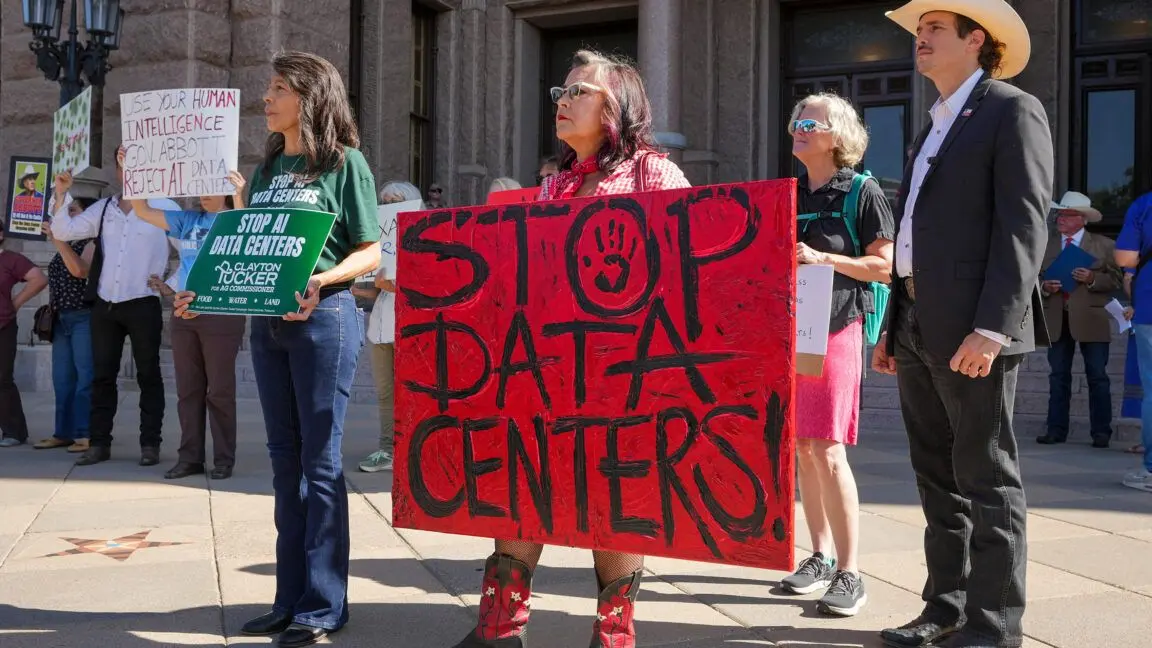
Opposition to rapid data center construction has grown steadily across the United States. A June Reuters/Ipsos poll found that only one-third of Americans approved of the pace of data center construction, while just 14% supported a data center being built in their community.
1
By August, at least 37 people had been arrested in protests tied to AI data centers across the country.3
Shapiro cited Archbald, a borough of 7,500 people facing six proposed data center campuses, as an example of the local pressure driving his decision.2
Pennsylvania's Strategic Position for Data Centers
Pennsylvania has become a sought-after location for AI data centers due to abundant natural gas from the Marcellus shale basin, existing power infrastructure, and proximity to major East Coast population centers.
1
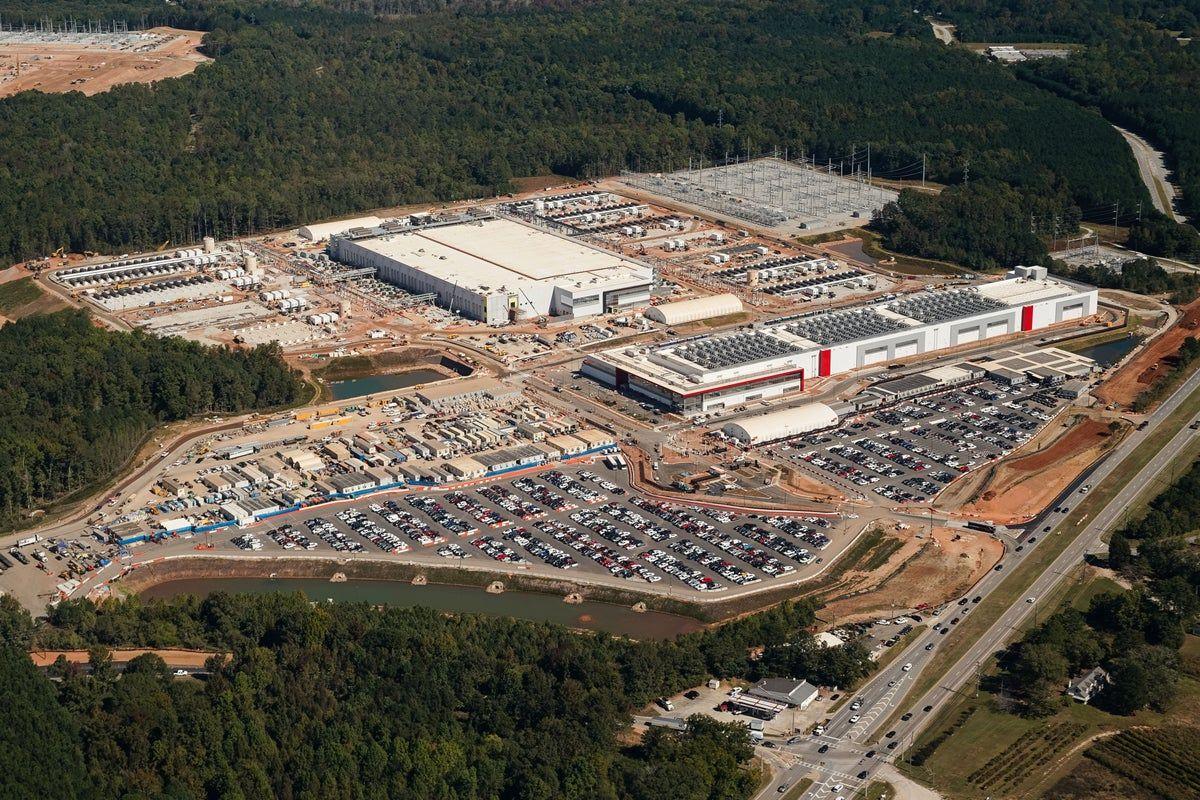
The Homer City Energy Campus represents a $10 billion-plus development with 4.5 gigawatts of gas generation across 3,200 acres, illustrating the scale of projects under consideration.2
However, this strategic advantage now comes with stringent guardrails on AI data centers that could reshape the state's data center landscape.Legislative Vacuum and Executive Action
The executive order fills a legislative vacuum after four data center bills passed the Pennsylvania House but stalled in the state Senate.
2
These bills covered Public Utility Commission rules for loads above 25 megawatts, water-use notification thresholds, annual reporting with $10,000 daily penalties, and a model township ordinance.2
Shapiro stated he had "no other option" but to sign the order given Senate Majority Leader Joe Pittman's inaction on bringing the House bill to a vote.5
Broader Trend of State-Level Restrictions

Source: The Hill
Pennsylvania joins other states imposing new rules for AI data centers. New York enacted a statewide hyperscale moratorium of up to one year in July, while Texas paused data center interconnection approvals against roughly 474 gigawatts of pending requests.
2
In March, Amazon, Google, Meta, Microsoft, OpenAI, Oracle, and xAI signed a White House pledge to pay for new electricity generation and infrastructure needed for their data centers as costs rose.3
These developments suggest restricting data centers and addressing community backlash have become priorities across multiple jurisdictions as AI infrastructure demands intensify.References
Summarized by

Navi
[2]
Related Stories
AI Data Centers Spark Bipartisan Political Backlash as Midterm Elections Loom
20 Aug 2026•Policy and Regulation

Texas Halts Data Center Approvals as AI Boom Threatens to Overwhelm Power Grid
05 Aug 2026•Policy and Regulation
New York becomes first state to halt AI data center construction with one-year moratorium
14 Jul 2026•Policy and Regulation
Recent Highlights



Recent Highlights
Today's Top Stories







Don’t drown in AI news. We cut through the noise - filtering, ranking and summarizing the most important AI news, breakthroughs and research daily. Follow topics that matter to you and stay ahead.


