8 Sources
[1]
Trump keeps embracing data centers even as they become toxic in midterm races
WASHINGTON (AP) -- President Donald Trump, speaking alongside cryptocurrency leaders at the White House this week, made a statement that Republican and Democratic candidates alike wouldn't touch with a 10-foot pole. "If I were the mayor of a town or the governor of a state, and I had a chance to get a big plant in, an AI plant or a data center," Trump said, "I would absolutely want it because the jobs are enormous and the money paid, the taxes paid, are just enormous." It's not the kind of message anyone is using in competitive midterm races. The race to build data centers, which power artificial intelligence and cloud computing, has run aground amid frustration from voters who don't want to live near the massive warehouse campuses. Even the Senate Republicans' campaign arm warned that anger over data centers -- some of which dwarf football stadiums and use more energy than small cities -- could cost them a seat. Opposition stretches across the political spectrum because of fears that the behemoths will jack up electricity bills, drain people's water wells, create unhealthy amounts of air and noise pollution and forever change a community's character -- all while getting lucrative tax breaks from states competing for their business. Trump has framed data centers as a necessary component of a top national and economic security priority: winning the AI race against China. However, he also has acknowledged concern over rising electricity bills, previously saying "it's only fair" for the companies to shoulder their costs. He also suggested this week that data centers need "a little public relations help." In recent months, he has gotten tech giants to sign a voluntary pledge to shield U.S. consumers from higher utility bills from data centers, even as he pushes to streamline the process for companies and utilities to build their own power plants. But building power plants doesn't happen overnight, and the immediate political reality for candidates across the country is far different. "It is yet another dimension in which the White House appears tone deaf -- tone deaf at best and indifferent to the interest of other Republican candidates at worst," said James Henson, the director of the Texas Politics Project at the University of Texas, Austin, a nonpartisan research organization. Republican committee issues warning over data centers in Ohio Statewide candidates from Nevada to Pennsylvania, both Republican and Democratic, are weaponizing data centers against their opponents, and candidates who absorb those attacks are subsequently trying to distance themselves from them. In Ohio, a data center hot spot with closely contested races for governor and U.S. Senate, the National Republican Senatorial Committee warned in a memo Tuesday that Sen. Jon Husted is vulnerable to losing his seat because of the centers. Democratic nominee Sherrod Brown is airing attack ads against Husted that call him the "face of data centers in Ohio" as people gather signatures for a statewide referendum to ban their construction. The Republican memo said it's been a "sleeper issue for the entire election cycle." "Brown is using it because it works," the NRSC said. "More than any other thing in this race, data centers are the anchor hanging around Husted's neck. If he loses and data centers get the blame, politicians across the country will take notice -- and they will not go near the next one." The memo suggested voters may balk at Democratic candidates who want to stop data center construction altogether in favor of a Republican candidate who only wants data centers built if a community approves it in a local vote and it pays for its own power, water and other utilities. Most registered voters oppose building a data center in their area, according to a July Fox News poll. Still, the issue falls behind other voter concerns, such as cost of living, as November looms. A Quinnipiac Poll conducted in June asked voters what issues were important in deciding who to vote for in U.S. House elections, and about 4 in 10 mentioned AI data centers. Trump's statement already put to use in Nevada race In Nevada, Democrat Aaron Ford quickly tied Trump's statement to Republican Gov. Joe Lombardo, characterizing them as being in "lockstep on data centers." In a statement, Ford said Trump and Lombardo are "Nevada data centers' biggest cheerleaders" who "only care about catering to their 'billionaire friends' while Nevadans pay the price." Ford this week unveiled a policy platform in which he said he would halt new state tax breaks for data centers -- he estimated them at $200 million currently -- while auditing existing projects to ensure they are delivering on promises. He also said he would ensure data centers pay for their electricity needs, do not deplete Nevada's water supply and help local governments negotiate strong benefits agreements with developers. Texas' governor changed course and got a jab from Trump Texas Gov. Greg Abbott, who last November celebrated Google's announcement of a $40 billion investment there by calling the state "the epicenter of AI development," is under attack from his Democratic challenger, Gina Hinojosa, over his pursuit of data center development. Abbott has since changed course by promising tougher action, such as removing the state's sales tax exemption and holding up projects to review their energy usage. Trump criticized the shift, saying "I think it's a mistake" in a recent interview with Punchbowl News. Asked about Trump's support for data centers, Abbott's office said the governor's "top priority is to protect Texans' safety and quality of life and ensure the integrity of our power grid and water supply." "Simply put, Texans must come first," Abbott's office said. Data centers complicated Wisconsin governor race While Trump embraces data centers, even some of his allies are using them for political attacks. U.S. Rep. Tom Tiffany, running for Wisconsin governor, released a TV ad this week branding his Democratic opponent as "Data Center David Crowley." The ad includes a clip of Crowley saying Wisconsin could become the "AI and data hub not only for the entire country, but for the entire globe." Crowley has said local communities must have veto authority while also calling data centers a part of the modern economy that could bring significant economic benefits to the state. Tiffany, who Trump has endorsed, has also said positive things about data centers. In January, Tiffany called data centers "exciting new technology," in an interview with PBS Wisconsin. And last December, he voted for a bipartisan bill known as the SPEED Act, which is designed to accelerate construction of new AI infrastructure projects like data centers. It hasn't passed the Senate. Neither Tiffany nor Crowley support a moratorium on new data center construction. Tiffany has called for repealing the state tax incentive for data centers, while Crowley has not. They both have called for stricter regulation. Crowley, at an event Wednesday where he received the endorsement of the environmental group Clean Wisconsin, downplayed the attacks Tiffany has made against his data center position. "He's getting very good at saying one thing and doing something different," Crowley said, pointing to Tiffany's votes in support of the SPEED Act. "What Congressman Tom Tiffany's doing is lying because he's trying to run away from his record in Congress," Crowley said. ___ Bauer reported from Madison, Wisconsin, and Levy from Harrisburg, Pennsylvania. Linley Sanders contributed from Washington.
[2]
AI data center outrage is showing up everywhere from ads to elections
* With less than three months until the midterm elections, opposition to AI data centers is becoming a bipartisan rallying cry in a growing number of states. * On a major primary election day, a pair of beverage companies seized on data center opposition and released a satirical ad about the facilities' water usage. * It was a key issue in Florida's Republican gubernatorial primary on Tuesday, which was won by Rep. Byron Donalds. Donalds was backed by major crypto PACs, but proposed restrictions on data centers in Florida. * That same day Pennsylvania Democratic Gov. Josh Shapiro signed an executive order placing harsh standards on data center development in his state. In this article * CRWV * OPENAI.FG Follow your favorite stocksCREATE FREE ACCOUNT In an aerial view, the Decker Creek Power Station is seen on July 28, 2026 in Austin, Texas. Brandon Bell | Getty Images During a brainstorming session earlier this summer, a group of comedians and employees at beverage company Liquid Death kicked around an idea for a brazen new advertising campaign that would humorously shed light on the amount of water required to operate massive AI data centers. "It was an idea of just, hey, what if we used pee to cool data centers instead of water?" Andy Pearson, vice president of creative at Liquid Death, told CNBC in an interview. The outlandish idea turned into a collaborative 90-second video, created with Garage Beer, which is owned by Jason and Travis Kelce. The clip pledges to "send your pee to the AI data center of your choice." Liquid Death and Garage Beer dropped the video on Tuesday, the same day voters in Florida headed to the polls to vote in the gubernatorial primaries, with the leading Republican candidates focused on data centers as a central issue. Rep. Byron Donalds, President Donald Trump's pick to succeed Gov. Ron DeSantis, won easily to move along to November's general election. Last month, Donalds introduced the "Protecting Ratepayers Act," which aims to "ensure that private developers, rather than American taxpayers, bear the investment costs of data center developments that advance our country's technological dominance," according to a release. Donalds, however, received significant financial support from AI PACs like Leading the Future. The Marc Andreessen-backed group congratulated Donalds after his win, saying he "understands that new, emerging technologies like AI play a key role in advancing that priority. Representative Byron Donalds, a Republican from Florida and gubernatorial candidate, during a "Get Out The Vote" rally ahead of a primary election in Boca Raton, Florida, US, on Sunday, Aug. 16, 2026. Eva Marie Uzcategui | Bloomberg | Getty Images AI data centers, the large facilities that house the hardware for training and running AI models, are popping up all over the country, with far more coming down the line, if leading AI companies and hyperscalers get their way. But with the midterm elections less than three months away and Americans grappling with increased costs for groceries and stubbornly high prices at the pump, data centers have become a physical manifestation of the widespread antipathy for AI, which consumers associate with inflated electricity bills and job loss. The National Republican Senatorial Committee (NRSC) warned on Tuesday that data centers have become a "sleeper issue" for the entire midterm election cycle, according to a memo obtained by CNBC. Democrats are currently ahead in the generic ballot by 6.4 percentage points, according to a polling average from RealClearPolitics. Pearson said Liquid Death tries to "stay out of political things," but so many people are talking about AI and data centers that it's become a "pretty universal topic." More than half of Americans say they're more concerned than excited about the growing use of the technology in daily life, according to a report from the Pew Research Center published Tuesday. That's up from 37% in 2021. "You literally can't turn on the TV or radio without hearing about it," Pearson said. "It's really an issue that's uniting people across political and cultural spectrums." The satirical video Pearson helped produce features former NFL star Jason Kelce, who is shown holding a jar of urine and walking through a field toward a data center singing, "We want your pee, please give us your pee. Let's pee on computers together, to save humanity." 'Industry will be blamed' In the NRSC's memo, the committee wrote that data centers have become a fixture of the contentious Senate race in Ohio, where Democratic candidate and former Sen. Sherrod Brown has made his opposition to them a "centerpiece" of his campaign against Republican incumbent Jon Husted. Ohio is home to several large data center projects, including a massive 10-gigawatt campus in Pike County that could cost more than $500 billion, as CNBC previously reported. OpenAI announced Monday that it has agreed to secure 8 gigawatts of that capacity, which is backstopped by a $105 billion commitment from Nvidia. Ten gigawatts is roughly equivalent to the annual power consumption of 8 million U.S. households, according to a CNBC analysis of data from the Energy Information Administration. "If voters' perceptions of data centers are not fixed quickly, the campaign against them will expand far beyond Ohio," the NRSC wrote in the memo, which was first reported by Axios. Should Husted lose because of data centers, "the industry will be blamed," and both parties will take notice, the committee wrote. The Ohio race is critical for Republicans in their effort to keep their slim majority in the Senate. watch now VIDEO7:0907:09 How AI super PACs are reshaping the midterms Markets and Politics Digital Original Video President Trump weighed in on Wednesday, acknowledging that while data centers "can use a little public relations help," communities should welcome them. "I would absolutely want it because the jobs are enormous and the money paid, the taxes paid, are just enormous," the president said. A big emerging problem for the tech industry, however, is that voters from both parties disagree. Politicians are responding to their anger. In Pennsylvania, Democratic Gov. Josh Shapiro, who is eyeing a potential 2028 presidential bid, signed an executive order on Tuesday placing harsh standards on data center development in his state. The order requires data center developers to pay for all new electricity generation, transmission, distribution and other infrastructure required for their project. Developers also must commit to open and transparent engagement with local stakeholders, hire and train local workers, enter into "community benefit agreements" and abide by strict water and environmental standards. Read more CNBC tech news Shapiro, who once welcomed data center projects, said he signed the order after hearing from "many residents across our Commonwealth who are concerned about what data center development could mean for our communities, our environment, and our utility bills." Shapiro's Republican opponent in this year's election, state Treasurer Stacy Garrity, has also seized on data centers as an issue in the campaign, calling for a pause on future development while slamming Shapiro for his earlier positions. Garrity's campaign website, which includes a link to "Donate with Crypto," accuses Shapiro of opening "Pennsylvania's door to data centers" and giving away "state tax dollars and resources to a company on the other side of the country." CNBC reported in April that the data center boom in Pennsylvania was potentially putting incumbent Republicans in the state at risk. Greg Abbott, governor of Texas, speaks during a ribbon-cutting ceremony for the grand opening of Texas Instruments' (TI) new semiconductor wafer plant in Sherman, Texas, US, on Wednesday, Dec. 17, 2025. Desiree Rios | Bloomberg | Getty Images In Texas, where Republican Gov. Greg Abbott has championed data centers in the past, the mood has changed decisively. Abbott is now racing to put standards on data centers in his state, as Democratic challenger Gina Hinojosa rips him for his initial support of the facilities. Hinojosa told CNBC on Wednesday that Abbott has been "doing the bidding of the moneyed interests and not the people of Texas." Hinojosa has called for a data center moratorium until the legislature can meet to pass guardrails for them. Abbott issued a directive in June to require companies to pay for electrical infrastructure upgrades, reuse their own water and reduce the cost of electricity. On Tuesday, the governor announced in a press release that a number of companies agreed to his standards. The industry's promises AI companies are acutely aware of the souring views toward data centers, and several have made pledges to try and assure Americans that their buildouts will benefit the country. In January, Microsoft published a blog post outlining the "concrete steps needed to be a good neighbor in the communities where we build." Days later, OpenAI made a similar pledge, promising to pay its own way on energy while minimizing water use and investing in local jobs and workforce pathways. "We believe that AI infrastructure is vital for American competitiveness and economic opportunity, while boosting local economies by creating jobs and bringing in local revenue," OpenAI said in a release at the time. Lawmakers are unmoved. In July, New York Governor Kathy Hochul signed an executive order establishing the nation's first year-long moratorium on large data centers, effectively pausing the development of new facilities in the state. Hochul said she'll use that time to develop a regulatory framework that better protects the environment, ratepayers, the energy grid and communities in New York. Trump attacked the moratorium in a post on Truth Social, writing that the state should change its policy "IMMEDIATELY." Anthropic CEO Dario Amodei acknowledged the negative public sentiment around AI in a post on X on Saturday. He suggested that it stems from a fundamental "crisis of trust" towards the tech industry. "I think that ordinary people don't trust companies, governments, or the tech industry and always suspect that we are cooking up some new way to screw them over," Amodei wrote. "The causes of this go back decades and AI is just the latest iteration of it." watch now VIDEO3:5803:58 'Texans are mad and fed up': Texas gubernatorial candidate Gina Hinojosa on more data centers The Exchange Choose CNBC as your preferred source on Google and never miss a moment from the most trusted name in business news.
[3]
Exclusive: GOP warns AI companies that data centers are politically radioactive
Why it matters: Republicans want the AI companies to do whatever it takes to stem the public backlash. The big picture: AI CEOs and top Republicans share in the rising panic. They tell us internal polls show data centers are as popular as spent nuclear waste, and more broadly have become a proxy for feelings about AI. * Tech giants are scrambling to pull together media campaigns to try to shift opinion before it hardens locally and nationally. * But Democrats aren't dummies. They see the same polls and are moving fast. * Even politicians who previously embraced data centers, including Pennsylvania Gov. Josh Shapiro (D), are racing to crack down on them this election year. On Tuesday, Shapiro, ahead of a possible 2028 presidential run, signed an executive order imposing "strict guardrails" for data-center development. There are now more than 4,000 data centers online across the U.S., with another 3,000-plus centers proposed or in progress. * They're designed to power the AI that's transforming the American economy, but have drawn protests from communities nationwide because they require massive amounts of electricity, can drive up utility bills, use huge amounts of water, involve enormous warehouse-like structures and provide few jobs. * They also have become local targets for residents' anxiety about how AI is eliminating jobs. Zoom in: Husted's opponent in Ohio, former Sen. Sherrod Brown (D), has spent millions of dollars on a summer ad campaign calling Husted "the face of data centers in Ohio." * Republicans say the issue is especially potent in heavily blue-collar Ohio because the state has several big data center projects in the works. Nvidia and OpenAI have announced a project in the last few days. Meta, Vantage and QTS also have projects there. * The NRSC memo says Brown has made data centers his "de facto opponent." By the numbers: A Fox News poll last week showed Brown leading Husted by 8 points. State of play: Republicans say in the memo, headlined "Ohio Data Center Risk," that it's up to AI companies to improve perceptions of data centers by explaining "who benefits, who pays, and why a community should want one." * "Until that happens, the issue will continue to dominate this race," the memo says. The bottom line: The memo argues that a Husted loss would cause long-lasting damage to AI companies in their push to build data centers nationwide to power future generations of AI. * "If voters' perceptions of data centers are not fixed quickly, the campaign against them will expand far beyond Ohio," the party warns. Axios' Maria Curi contributed reporting.
[4]
'Capital alone no longer clears a site': Morgan Stanley says data centers' big money era is over | Fortune
Something has changed in the data-center story, Morgan Stanley warned this week: Money doesn't talk the way it used to. For years, the formula for building a data center in America was straightforward: Find cheap land, line up enormous amounts of electricity, and arrive with a sizable tax-incentive package. Not in the election year of 2026. "Capital alone no longer clears a site," the investment bank wrote in an Aug. 17 research report, arguing community resistance to data centers has grown from a public-relations challenge into a material development risk. Citing two expert sessions on the topic, the team led by strategist Michelle Weaver, the bank argued political backlash must now be "underwritten like land, power, or labor." The warning lands at a fraught moment in the broader race to build AI. The U.S. and China are competing to dominate a technology that most analysts believe will reshape the global economy, military balance, and scientific capacity for decades. Data centers are the factories of that race -- the physical infrastructure on which AI models are trained, run, and deployed at scale. China's government can build them where it wants, when it wants, with limited friction from the communities that surround new facilities. American developers, increasingly, cannot. In a companion report published the same day, Morgan Stanley analysts laid out what they call the "AI sovereignty" imperative: Governments are now treating compute capacity, energy, data, and supply chains as strategic national-security assets rather than commercial infrastructure, much as earlier generations treated electricity grids or shipping lanes. The bank's base case is the federal government will not impose a nationwide moratorium on data-center development -- doing so would directly weaken U.S. competitiveness against China -- and that Washington will continue to support the buildout through permitting reform, energy policy and industrial incentives. The constraint, in Morgan Stanley's telling, is not federal policy. It is the accumulation of local decisions that federal policy cannot reach. The financial stakes are significant. The six largest hyperscalers -- Microsoft, Amazon, Alphabet, Meta, Oracle and CoreWeave -- are forecast to spend roughly $785 billion on capital expenditures this year and approach $1 trillion in 2027, according to Moody's Ratings, with total data-center lease commitments across the group now exceeding $1.2 trillion. Morgan Stanley projects a 38-gigawatt U.S. data-center power shortfall between 2026 and 2028 before new "time-to-power" solutions are added, estimating that some regions already face grid-interconnection waits of five to seven years. Its preferred fixes include rapid deployment of natural-gas turbines and fuel cells, colocating data centers with operating nuclear plants, and converting former Bitcoin-mining sites that already have access to power infrastructure. The existential risk The communities raising objections have legitimate grievances: higher power bills, strained water supplies, disrupted farmland, noise, and hundreds of miles of new transmission lines crossing backyards and farm fields. Zoning boards, utility commissions, and state legislatures are democratic institutions doing what democratic institutions do -- responding to constituents. But the cumulative effect of a thousand local objections, each individually reasonable, is a national constraint on infrastructure the AI industry says it cannot build fast enough. Axios calls it "the new existential threat to AI," reporting that Republicans and AI CEOs are in "full panic mode" watching politicians awaken to the appeal of data-center opposition. If the pipeline of new data centers slows, computing power will be constrained, and investors will (further) question whether the market has legs. Morgan Stanley's report puts financial numbers on the constraints. Hyperscalers, cloud providers, and AI companies racing to build the power-hungry facilities needed to train and run their systems now face a collision that is increasingly visible in state capitals and local planning meetings. The bank identifies affordability, environmental concerns, and quality-of-life impacts as the three principal drivers of resistance, and argues developers face a crucial divide between complaints that can be addressed through project design -- such as water use, farmland conversion, and emissions -- and "societal objections" that cannot. The new political reality is already changing the economics of expansion. Texas and Virginia In Texas, Gov. Greg Abbott earlier this month directed the Public Utility Commission of Texas and grid operator ERCOT to audit all data-center projects moving through the state's interconnection process. The governor's office cited more than 474 gigawatts of pending connection requests, about 90% of them tied to data centers. Developers must disclose details including their electricity needs, onsite generation plans, water use, public incentives, ownership, and community impacts. Morgan Stanley characterized the move as more likely to cause a near-term timing disruption than a fundamental collapse in demand. Virginia is moving in the same direction. A July 31 order by the State Corporation Commission requires Dominion Energy to develop a mandatory contribution-in-aid-of-construction mechanism for direct-connect transmission assets, including substations and lines built specifically for a new or expanding large customer -- a move Morgan Stanley described as a shift toward a more explicit "cost causer pays" framework. The bank's more consequential point is that the biggest projects may now be the hardest to approve. "Opposition scales non-linearly with size," according to the report, making a strategic case for developers to keep projects under regulatory thresholds where possible. It pointed to a 50-megawatt threshold in New York, a proposed 100-megawatt trigger in Delaware and a 20-megawatt trigger in Maine as signs that policymakers are beginning to distinguish projects by scale. Colocation operators may be relatively better positioned. Morgan Stanley said Equinix and Digital Realty are less exposed because their facilities average roughly 5 to 10 megawatts, far below the gigawatt-scale AI campuses planned by hyperscalers and neocloud operators. Their smaller size, critical-infrastructure status, and longer records of community engagement could produce "softer political pushback," the bank said. The bank's warning to developers: The first sign a project is in trouble may not come from a regulator or a lawsuit. It will appear in a municipal agenda, a zoning hearing, or a local Facebook group -- well before litigation, and often too late to change. For this story, Fortune journalists used generative AI as a research tool. An editor verified the accuracy of the information before publishing.
[5]
Behind the Curtain: The new existential threat to AI
Why it matters: Republicans and AI CEOs are in full panic mode watching politicians and the public turn on the physical engines of AI growth. In private, they tell us they can't find a compelling message to shift opinion fast enough. Their nightmare -- a political and economic daisy chain that cripples the AI revolution -- is already taking shape: Zoom out: The AI boom has become dangerously intertwined with the U.S. economy, meaning this will ricochet far beyond Silicon Valley. * Goldman Sachs estimates U.S. AI investment will hit about $600 billion this year, equal to roughly 2% of GDP and 10% of business fixed investment. * Big Tech has already locked itself into trillions of dollars in future spending: The Financial Times found six hyperscalers have nearly $1.5 trillion in purchase commitments, much of it tied to AI infrastructure, plus roughly $1.5 trillion in lease obligations. Even the richest companies in history are now turning to debt markets to bankroll the buildout. * A handful of those AI-heavy tech giants dominate the stock market's gains, swelling the portfolios of wealthy Americans who account for an outsized share of consumer spending. The big picture: The increasingly toxic politics of data centers are surfacing in several of this fall's governors' races. * Pennsylvania Gov. Josh Shapiro (D), a 2028 presidential hopeful, had welcomed data centers as an economic-development boon, boasting last year that an Amazon plan to build $20 billion in AI infrastructure was the "largest private sector investment in the history of Pennsylvania." * On Tuesday, Shapiro, whose Republican opponent in November is campaigning on halting data-center development, went from AI cheerleader to critic and signed an executive order imposing stringent new requirements for data-center developers. * Speaking at the state Capitol, Shapiro slammed "predatory developers" for trying to bully local officials and ram through dozens of data-center projects in Pennsylvania. * Shapiro's new restrictions cover energy affordability, community engagement, workforce and economic development, transparency and environmental protection, and give local municipalities "a greater say over development in their communities." The intrigue: In Wisconsin, GOP gubernatorial nominee Tom Tiffany -- a close Trump ally -- is running ads attacking his Democratic opponent for suggesting the state could become an AI data hub "for the entire globe." * It's a striking crack in Trump's pro-AI coalition, as Republicans in swing states scramble to get on the right side of the new populist wave upending the midterms. The other side: OpenAI is aggressively courting state and local officials to try to persuade them of the economic benefits of data centers. Chris Lehane, OpenAI's chief global affairs officer, told us: "As the late, great Tip O'Neill famously said, 'All politics is local.'" * "That is especially true of AI data centers, where you have to show up, listen, and directly respond with specifics to the concerns of locals," Lehane added. "You have to answer the mail on issues like electricity and water, while also demonstrating a seriousness of purpose when it comes to ensuring the community gets a good deal. ... That is democracy in action." * Meta last week announced its Future Is for Everyone Fund, with $1 billion in spending planned to benefit teachers, law enforcement and fire departments in communities where the company owns or plans data centers. Meta is also aggressively highlighting direct economic benefits for localities, including thousands of jobs and an increased tax base. By the numbers: In Pew Research Center polling published Tuesday, 52% of Americans said they're "more concerned than excited" about increased use of AI in daily life -- up from 37% in 2021. * Even adults under 30 have soured on AI, with 55% now saying they're more concerned than excited -- mainly because of fears the technology will take jobs. Excitement has faded across all age groups over the past five years, Pew found. * A June Echelon Insights poll found AI data centers are uniquely toxic: Just 27% of voters say they would support building one in their community, dead last among the projects tested -- including a nuclear power plant. Axios' Zachary Basu and Alex Thompson contributed reporting.
[6]
GOP urges top AI firms to do something about the toxic image of data centers
GOP urges top AI firms to do something about the toxic image of data centers As artificial intelligence data centers continue to proliferate across Ohio and public opposition grows, Axios reported today that the GOP's Senate campaign arm has privately warned AI companies that they need to do something about the increasingly toxic image of the facilities. The centers have become the battleground for the upcoming election in which Republican senator Jon Husted could lose his seat to the Democratic challenger, former senator Sherrod Brown. Brown is currently eight points ahead in an election that has seen Brown's campaign spend millions portraying Husted as "the face of data centers in Ohio." The National Republican Senatorial Committee, or NRSC, has said that "data centers are the anchor hanging around Husted's neck" adding that if he loses, the data centers will be blamed and this will have a knock-on effect across the U.S. According to Axios, this is exactly what the memo warns -- if something isn't done about voters' perceptions in Ohio the companies will be met with challenges in other states. "If he loses and data centers get the blame, politicians across the country will take notice -- and they will not go near the next one," the memo states. "This has become a sleeper issue for the entire election cycle." Polls show that as Donald Trump continues to champion the projects the public is for a large part moving in the opposite direction. Reuters reported in 2026 that 77% of respondents were concerned that AI development could increase their electricity bills. Out of 4,531 people who participated in the poll, 64% opposed the rapid construction of AI data centers, while only 33% supported it. Ohio is currently one of the data center hotspots in the U.S. with one of the largest shares of finished projects and dozens more still in the planning stage. The U.S. itself leads the world in this regard with around 4,000 data centers currently switched on and close to another 3,000 still in the planning stage. As politicians warn about the center's massive energy consumption and the possibility that AI is about to sweep through the job market, anxiety levels are growing. In the memo, which is titled, "Ohio Data Center Risk," the companies are asked to relieve these anxieties by informing Americans who will benefit, who will pay, and "why a community should want one."
[7]
Trump keeps embracing data centers even as they become toxic in midterm races
WASHINGTON (AP) -- President Donald Trump, speaking alongside cryptocurrency leaders at the White House this week, made a statement that Republican and Democratic candidates alike wouldn't touch with a 10-foot pole. "If I were the mayor of a town or the governor of a state, and I had a chance to get a big plant in, an AI plant or a data center," Trump said, "I would absolutely want it because the jobs are enormous and the money paid, the taxes paid, are just enormous." It's not the kind of message anyone is using in competitive midterm races. The race to build data centers, which power artificial intelligence and cloud computing, has run aground amid frustration from voters who don't want to live near the massive warehouse campuses. Even the Senate Republicans' campaign arm warned that anger over data centers -- some of which dwarf football stadiums and use more energy than small cities -- could cost them a seat. Opposition stretches across the political spectrum because of fears that the behemoths will jack up electricity bills, drain people's water wells, create unhealthy amounts of air and noise pollution and forever change a community's character -- all while getting lucrative tax breaks from states competing for their business. Trump has framed data centers as a necessary component of a top national and economic security priority: winning the AI race against China. However, he also has acknowledged concern over rising electricity bills, previously saying "it's only fair" for the companies to shoulder their costs. He also suggested this week that data centers need "a little public relations help." In recent months, he has gotten tech giants to sign a voluntary pledge to shield U.S. consumers from higher utility bills from data centers, even as he pushes to streamline the process for companies and utilities to build their own power plants. But building power plants doesn't happen overnight, and the immediate political reality for candidates across the country is far different. "It is yet another dimension in which the White House appears tone deaf -- tone deaf at best and indifferent to the interest of other Republican candidates at worst," said James Henson, the director of the Texas Politics Project at the University of Texas, Austin, a nonpartisan research organization. Republican committee issues warning over data centers in Ohio Statewide candidates from Nevada to Pennsylvania, both Republican and Democratic, are weaponizing data centers against their opponents, and candidates who absorb those attacks are subsequently trying to distance themselves from them. In Ohio, a data center hot spot with closely contested races for governor and U.S. Senate, the National Republican Senatorial Committee warned in a memo Tuesday that Sen. Jon Husted is vulnerable to losing his seat because of the centers. Democratic nominee Sherrod Brown is airing attack ads against Husted that call him the "face of data centers in Ohio" as people gather signatures for a statewide referendum to ban their construction. The Republican memo said it's been a "sleeper issue for the entire election cycle." "Brown is using it because it works," the NRSC said. "More than any other thing in this race, data centers are the anchor hanging around Husted's neck. If he loses and data centers get the blame, politicians across the country will take notice -- and they will not go near the next one." The memo suggested voters may balk at Democratic candidates who want to stop data center construction altogether in favor of a Republican candidate who only wants data centers built if a community approves it in a local vote and it pays for its own power, water and other utilities. Most registered voters oppose building a data center in their area, according to a July Fox News poll. Still, the issue falls behind other voter concerns, such as cost of living, as November looms. A Quinnipiac Poll conducted in June asked voters what issues were important in deciding who to vote for in U.S. House elections, and about 4 in 10 mentioned AI data centers. Trump's statement already put to use in Nevada race In Nevada, Democrat Aaron Ford quickly tied Trump's statement to Republican Gov. Joe Lombardo, characterizing them as being in "lockstep on data centers." In a statement, Ford said Trump and Lombardo are "Nevada data centers' biggest cheerleaders" who "only care about catering to their 'billionaire friends' while Nevadans pay the price." Ford this week unveiled a policy platform in which he said he would halt new state tax breaks for data centers -- he estimated them at $200 million currently -- while auditing existing projects to ensure they are delivering on promises. He also said he would ensure data centers pay for their electricity needs, do not deplete Nevada's water supply and help local governments negotiate strong benefits agreements with developers. Texas' governor changed course and got a jab from Trump Texas Gov. Greg Abbott, who last November celebrated Google's announcement of a $40 billion investment there by calling the state "the epicenter of AI development," is under attack from his Democratic challenger, Gina Hinojosa, over his pursuit of data center development. Abbott has since changed course by promising tougher action, such as removing the state's sales tax exemption and holding up projects to review their energy usage. Trump criticized the shift, saying "I think it's a mistake" in a recent interview with Punchbowl News. Asked about Trump's support for data centers, Abbott's office said the governor's "top priority is to protect Texans' safety and quality of life and ensure the integrity of our power grid and water supply." "Simply put, Texans must come first," Abbott's office said. Data centers complicated Wisconsin governor race While Trump embraces data centers, even some of his allies are using them for political attacks. U.S. Rep. Tom Tiffany, running for Wisconsin governor, released a TV ad this week branding his Democratic opponent as "Data Center David Crowley." The ad includes a clip of Crowley saying Wisconsin could become the "AI and data hub not only for the entire country, but for the entire globe." Crowley has said local communities must have veto authority while also calling data centers a part of the modern economy that could bring significant economic benefits to the state. Tiffany, who Trump has endorsed, has also said positive things about data centers. In January, Tiffany called data centers "exciting new technology," in an interview with PBS Wisconsin. And last December, he voted for a bipartisan bill known as the SPEED Act, which is designed to accelerate construction of new AI infrastructure projects like data centers. It hasn't passed the Senate. Neither Tiffany nor Crowley support a moratorium on new data center construction. Tiffany has called for repealing the state tax incentive for data centers, while Crowley has not. They both have called for stricter regulation. Crowley, at an event Wednesday where he received the endorsement of the environmental group Clean Wisconsin, downplayed the attacks Tiffany has made against his data center position. "He's getting very good at saying one thing and doing something different," Crowley said, pointing to Tiffany's votes in support of the SPEED Act. "What Congressman Tom Tiffany's doing is lying because he's trying to run away from his record in Congress," Crowley said. ___ Bauer reported from Madison, Wisconsin, and Levy from Harrisburg, Pennsylvania. Linley Sanders contributed from Washington.
[8]
Trump is right to put his neck on the line for data centers
On Wednesday, speaking at the White House alongside crypto executives, President Trump noted that he would "absolutely" want a data center in his community. "If I were the mayor of a town or the governor of a state, and I had a chance to get a big plant in, an AI plant or a data center, I would absolutely want it because the jobs are enormous and the money paid, the taxes paid, are just enormous," he said. It was a rare and refreshing defense of infrastructure that has become a bête noire for Republicans and Democrats alike, despite the fact that data centers have dramatically improved life in communities where they're built -- think $50K teacher bonuses, reduced tax burdens for residents and the creation of high-paying jobs. These facilities are powering a revolution, providing the necessary energy for the huge amounts of compute needed for LLMs to work -- and for America to beat China in the AI race. In a midterm environment where politicians across the board are running from data centers, Trump is right to push back against the anti-data center hysteria and give them some "public relations help" as he put it. To be fair, I completely understand the NIMBY argument -- no one wants an objectively ugly building in their backyard. And while there have been valid concerns about electricity and water consumption, data centers are responsible for less than 1% of water consumption, according to Lawrence Berkeley National Lab, and use less electricity than commercial and residential lighting according to Grid Lab. Modern life is full of unattractive infrastructure -- cell towers, strip malls, cable lines, warehouses -- but data centers have received an inordinate amount of bad PR. The combination of anger about the new technology and a lack of information has made for a full blown data-center derangement syndrome. A recent Gallup poll found that 71% of Americans oppose building a data center in their area compared with only 53% who oppose a new nuclear power plant nearby. Sam Lyman, policy director at the America First Policy Institute, says the backlash has become "a massive moral panic" that has spiraled far outside the realm of what is logical. "Ban data centers," as he puts it, is the modern tech-policy equivalent of "defund the police" -- a rallying cry for progressive elites that doesn't actually serve the lower-income and working-class communities they claim to want to protect. Gently pushing back on that hysteria is the best thing for a president who is seeing his own party become infected with anti-data-center fever. "What President Trump is doing is providing moral leadership in the midst of this moral panic," Lyman said. "[He's] taking a principled stance that data centers are a net good, both for the national economy and for the communities where they're built." In Richland Parish, Louisiana, Meta's data center construction drove a dramatic increase in local sales-tax revenue that funded teacher bonuses of upwards of $50,000 in 2026. For context, the median household income in Richland Parish pre-data center was $50,000. In Loudoun County, Virginia, roughly 250 data centers are expected to create $1.3 billion in tax next year -- about 40% of the county's total. The revenue has meant it's possible to cut residential property-tax rates by roughly 30% over the past decade while also expanding schools, parks, and other public projects. Wisely, West Virginia is now proposing moves that would allow data centers and put their revenue toward reducing or even eliminating the state income tax. If more people understood the benefits of data centers, they wouldn't be against them. We've seen mass hysterias before, and like "defund the police," we often come to regret them. Maybe in a few years we'll start hearing politicians acknowledge that hating data centers was "crazy" -- just as AOC acknowledged with Woke 1 last week. Unfortunately, by then it may be too late to reverse course, reap the benefits, and win the AI race.
Share
Copy Link
Opposition to AI data centers has emerged as a defining issue in the 2026 midterms, with voters rejecting facilities over rising electricity bills and environmental concerns. Republican strategists warn the backlash threatens America's AI infrastructure buildout, while Morgan Stanley cautions that capital alone can no longer secure development sites.
AI data centers have become politically radioactive in the 2026 midterm elections, transforming from economic development opportunities into campaign liabilities across both parties
1
3
. The National Republican Senatorial Committee issued an urgent warning Tuesday that community resistance to data centers has become a "sleeper issue for the entire election cycle," with internal polls showing the facilities are "as popular as spent nuclear waste"3
. Most registered voters oppose building a data center in their area, according to a July Fox News poll, while a June Quinnipiac Poll found about 4 in 10 voters mentioned AI data centers as important in deciding House elections1
.
Source: SiliconANGLE
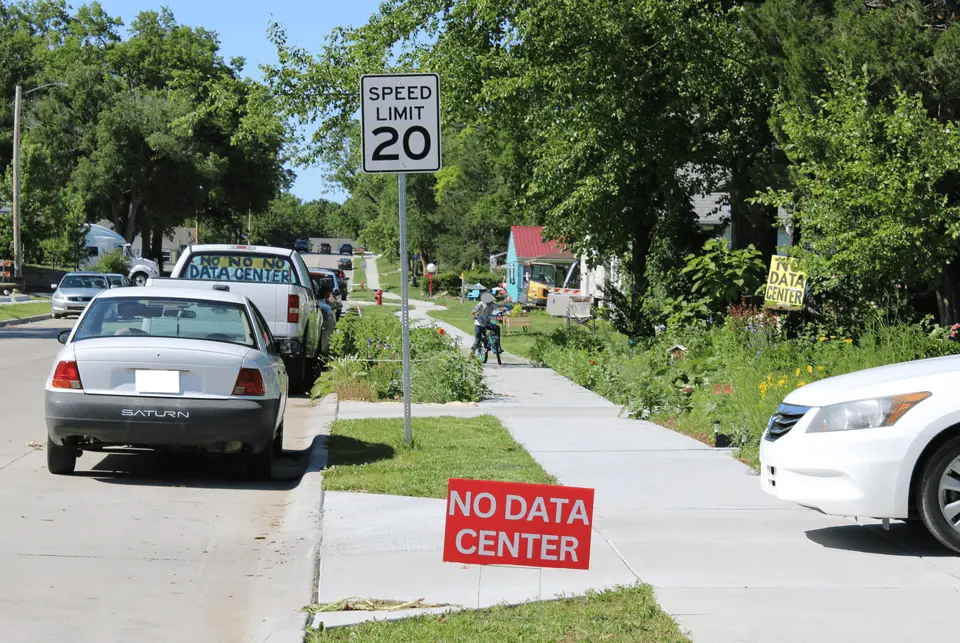
Stretching across the political spectrum, opposition stems from fears that these massive warehouse campuses will increase electricity bills, drain water wells, create air and noise pollution, and fundamentally alter community character—all while receiving lucrative tax breaks from competing states
1
. The public backlash against AI has intensified, with 52% of Americans now saying they're "more concerned than excited" about increased AI use in daily life, up from 37% in 2021, according to Pew Research Center polling published Tuesday5
. Even adults under 30 have soured on the technology, with 55% expressing more concern than excitement, primarily due to job displacement fears5
.The Ohio Senate race exemplifies how AI data center outrage is reshaping electoral dynamics
2
. Democratic candidate Sherrod Brown has made his opposition to data centers a "centerpiece" of his campaign against Republican incumbent Jon Husted, spending millions on summer ads calling Husted "the face of data centers in Ohio"3
. The NRSC memo warned that "more than any other thing in this race, data centers are the anchor hanging around Husted's neck," with a Fox News poll showing Brown leading by 8 points1
3
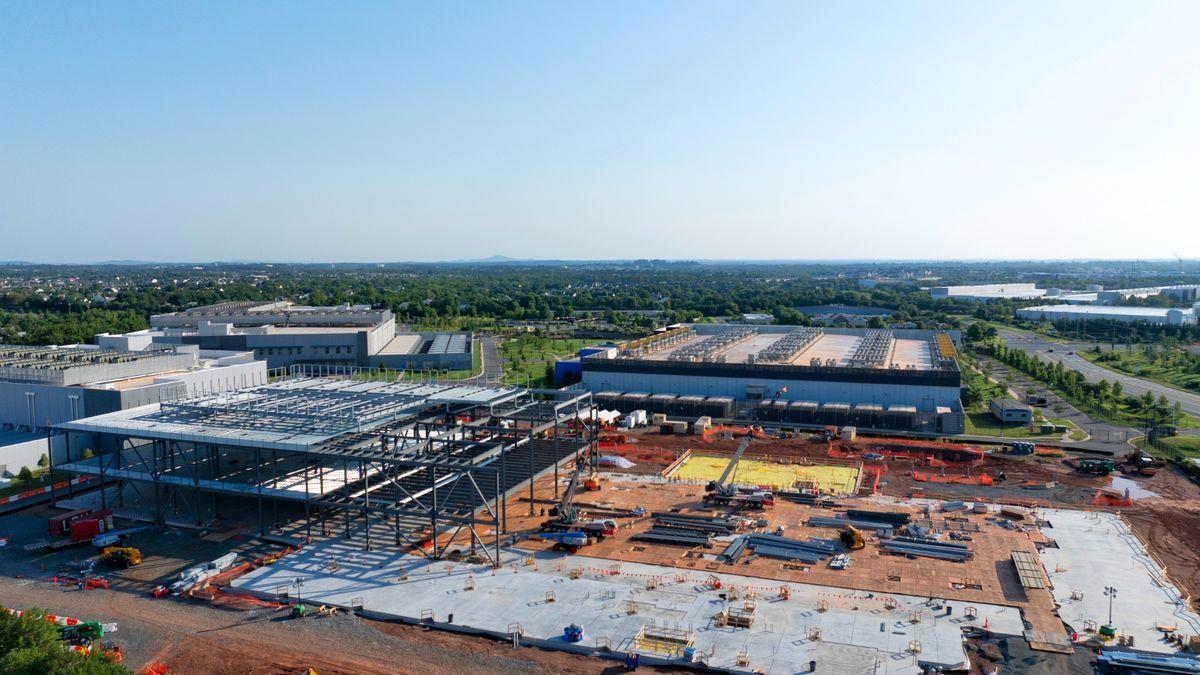
.Ohio hosts several major data center projects, including a massive 10-gigawatt campus in Pike County that could cost more than $500 billion
2
. OpenAI announced Monday it secured 8 gigawatts of that capacity, while Nvidia, Meta, Vantage and QTS also have projects in the state3
. The NRSC memo bluntly stated: "If he loses and data centers get the blame, politicians across the country will take notice—and they will not go near the next one"1
.Pennsylvania Gov. Josh Shapiro executed a dramatic reversal on Tuesday, signing an executive order imposing "strict guardrails" for data center development ahead of a possible 2028 presidential run
3
5
. Shapiro had previously welcomed data centers as economic development opportunities, boasting last year that an Amazon plan to build $20 billion in AI infrastructure represented "the largest private sector investment in the history of Pennsylvania"5
. Speaking at the state Capitol, Shapiro slammed "predatory developers" for attempting to bully local officials and ram through dozens of projects5
.In Nevada, Democrat Aaron Ford quickly tied President Trump's pro-data center comments to Republican Gov. Joe Lombardo, characterizing them as being in "lockstep on data centers" and caring only about "catering to their 'billionaire friends' while Nevadans pay the price"
1
. Ford unveiled a policy platform halting new state tax breaks for data centers—estimated at $200 million currently—while auditing existing projects and ensuring facilities pay for electricity needs without depleting Nevada's water supply1
.Related Stories
Morgan Stanley issued a stark warning this week that the political backlash has fundamentally altered data center economics: "Capital alone no longer clears a site"
4
. In an August 17 research report, the investment bank argued that community resistance to data centers has evolved from a public relations challenge into a material development risk that must be "underwritten like land, power, or labor"4
. The financial stakes are substantial—the six largest hyperscalers including Microsoft, Amazon, Alphabet, Meta, Oracle and CoreWeave are forecast to spend roughly $785 billion on capital expenditures this year and approach $1 trillion in 2027, according to Moody's Ratings4
.
Source: Axios
Morgan Stanley projects a 38-gigawatt U.S. data center power shortfall between 2026 and 2028 before new solutions are implemented, with some regions already facing grid-interconnection waits of five to seven years
4
. Goldman Sachs estimates U.S. AI investment will hit approximately $600 billion this year, equal to roughly 2% of GDP and 10% of business fixed investment5
. The societal and political implications of AI infrastructure development now pose what Republicans and AI CEOs privately describe as an existential threat to AI growth5
.Facing what they consider an existential crisis, tech giants are scrambling to assemble media campaigns to shift public opinion before it hardens nationally
3
. The NRSC memo argues it's up to AI companies to improve perceptions by explaining "who benefits, who pays, and why a community should want one," warning that "until that happens, the issue will continue to dominate this race"3
. Meta announced its Future Is for Everyone Fund last week, planning $1 billion in spending to benefit teachers, law enforcement and fire departments in communities where the company owns or plans data centers5
.OpenAI is aggressively courting state and local officials to demonstrate economic benefits. Chris Lehane, OpenAI's chief global affairs officer, stated: "You have to show up, listen, and directly respond with specifics to the concerns of locals. You have to answer the mail on issues like electricity and water, while also demonstrating a seriousness of purpose when it comes to ensuring the community gets a good deal"
5
. The opposition has spawned creative protests, including a satirical campaign by Liquid Death and Garage Beer on Tuesday proposing to "send your pee to the AI data center of your choice" to highlight water consumption concerns2
. There are now more than 4,000 data centers online across the U.S., with another 3,000-plus centers proposed or in progress3
.
Source: Axios
Summarized by
Navi
14 Mar 2026•Policy and Regulation
15 Oct 2025•Business and Economy

28 Jan 2026•Policy and Regulation

1
Technology

2
Technology

3
Technology