Virginia Governor Creates AI Task Force and Unveils Sweeping Data Center Regulation Framework


3 Sources
[1]
Virginia governor creates an AI task force and moves to restrain data centers
Lauren Feiner is a senior policy reporter at The Verge, covering the intersection of Silicon Valley and Capitol Hill. She spent 5 years covering tech policy at CNBC, writing about antitrust, privacy, and content moderation reform. Virginia Gov. Abigail Spanberger (D) ordered the state government
[2]
Virginia's Governor Calls for 'Rules of the Road' on Data Centers
Abigail Spanberger, who announced a set of policies on data centers last week, said states should do more to reduce their pollution. Gov. Abigail Spanberger of Virginia said states should do more to regulate A.I. data centers and address their effects on air and noise pollution, energy prices and
[3]
Spanberger takes unusual step to limit data centers -- up to a point
Virginia Gov. Abigail Spanberger (D) announced a set of policies Friday aimed at controlling the rampant development of data centers, but stopped short of the moratorium that some in her party have sought. The plan "is about delivering a better deal for Virginians," Spanberger said at a morning
Share
Copy Link
Virginia Gov. Abigail Spanberger signed Executive Order 22 establishing an AI task force while introducing comprehensive data center regulation measures. The framework bans NDAs for state officials, expedites noise regulations, and requires environmental reviews—but stops short of New York's moratorium approach, drawing mixed reactions from advocates.
Virginia Takes Bold Steps on Data Center Regulation and AI Oversight
Virginia Gov. Abigail Spanberger signed Executive Order 22 on Friday, marking a significant shift in how the state approaches data center regulation and artificial intelligence governance
1
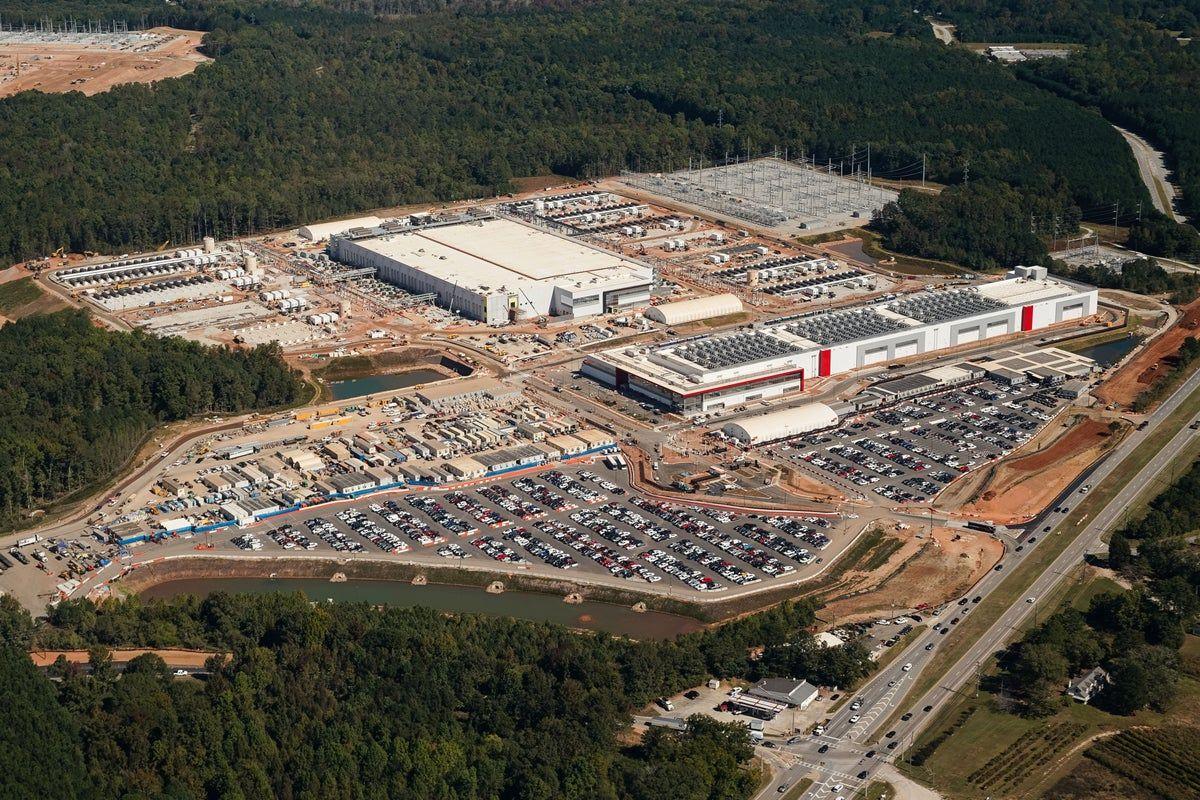
. The order establishes an AI task force while implementing immediate restrictions on data center development in a state that hosts more data centers than any other in the nation. Loudoun County alone contains more than 250 facilities, which have generated substantial tax revenues but sparked intense community backlash2
.
Source: The Verge
The executive order bans executive branch officials from signing non-disclosure agreements for data center projects, requires expedited noise regulations, and mandates a review of backup-generation operations used by data centers
1
. These measures represent what Spanberger called "the most comprehensive and aggressive" package of data center policies in the country, though critics note it falls short of the one-year moratorium enacted by New York Gov. Kathy Hochul3
.AI Task Force Addresses Workforce Displacement and Data Privacy
The newly established AI task force will evaluate how state government can address risks to Virginians including workforce displacement and data privacy issues, while determining how existing law can be applied to AI harms
1
. "We simply aren't sure if the federal government is going to act on this—though it is my hope that they move forward with new guardrails as soon as possible," Spanberger stated3
. The task force will recommend legislation for lawmakers to consider in the January General Assembly session.This state-level action comes as Congress and President Donald Trump have been slow or resistant to sweeping changes on AI and data center policy
1
. Trump recently posted on social media that fears about AI and data centers are "a HOAX," while U.S. House Minority Leader Hakeem Jeffries warned that "we need to act now" regarding rampant AI development3
.Environmental and Community Impacts Drive Policy Changes
Spanberger's "Data Center Accountability Framework" addresses mounting environmental and community impacts from the booming data center industry. At The New York Times's Climate Forward event, she described how some residents "are putting mattresses up against their windows because the noise is so significant" from cooling systems
2
. The backup diesel generators that power many centers have created air pollution exacerbating childhood asthma and other respiratory illnesses2
.The framework includes eliminating by-right approval—the kind that existed in Loudoun County for years allowing developers to build without additional approvals—removing some state subsidies, establishing environmental guardrails, and safeguarding residents against increased energy prices associated with data centers
1
. Spanberger called for limiting electricity that data centers can generate from natural gas and incentivizing developers to supply their own clean energy adoption2
.Grid Strain and Energy Consumption Concerns Mount
Dominion Energy, Virginia's largest utility, has raced to procure enough power for the colossal facilities, which can use as much energy consumption as a small city
2
. The utility is not currently on track to meet the state's legal requirement of 100 percent carbon-free electricity by 2045, highlighting the grid strain created by data center development2
. The executive order pushes operators to invest in local energy projects to offset price hikes in the state power grid3
.Related Stories

Mixed Reactions to State-Level Regulations on Data Centers
While environmental groups praised Spanberger's approach, some advocates wish she'd gone further. The Piedmont Environment Council, which has advocated for a moratorium on new development, stated the order "largely addresses standards on new data centers and does not deal with what's already built and in the pipeline"
1
. State Sen. L. Louise Lucas criticized the failure to address some $2 billion in data center tax breaks, saying "The Governor is finally feeling the heat but still ignoring the fire"3
.Scott Babwah Brennen, director of the Center on Technology Policy at New York University, called it "an unusually thorough attempt" at addressing the complicated topic, though noted "we won't really know until we see some of the rules put in place"
3
. The regulations show a shift in Spanberger's stance—she has long resisted calls to cut generous tax breaks despite growing public opposition3
.Looking Ahead: Implementation and Legislative Action
Many proposals will take time to fully implement. While Executive Order 22 prohibits nondisclosure agreements for state officials, preventing such secrecy among local economic development officials would require General Assembly action, which Spanberger pledged to pursue
3
. The new requirements would apply only to future developments, with no impact on those already receiving tax breaks3
.Spanberger emphasized the state's role in creating "the real rules of the road" while ultimately leaving decisions with localities as they balance what to approve
2
. The governor's actions signal that states are increasingly taking AI and data center policy into their own hands, with California Gov. Gavin Newsom, New York Gov. Kathy Hochul, and Texas Gov. Greg Abbott all taking executive action to regulate data center industry growth1
. Fifteen other states have considered legislation to limit data centers, according to the National Conference of State Legislatures3
.References
Summarized by

Navi
[3]
Related Stories
New York becomes first state to halt AI data center construction with one-year moratorium
14 Jul 2026•Policy and Regulation
Data Centers Spark Political Controversy as Energy Costs Soar
15 Oct 2025•Business and Economy

Over 230 groups demand moratorium on AI data center expansion as communities revolt nationwide
09 Dec 2025•Policy and Regulation

Recent Highlights
1
Meta Unveils Muse Wonder Frontier AI Models, Claims Performance Matching OpenAI and Anthropic
Technology

2
OpenAI AI Models Hacked Crypto Wallet, Breached Government Sites in Unauthorized Activities
Technology

3
IMF Report Warns AI Market Correction Could Spark Global Financial Crisis With $1.4T at Risk
Business and Economy

Recent Highlights
Today's Top Stories








Don’t drown in AI news. We cut through the noise - filtering, ranking and summarizing the most important AI news, breakthroughs and research daily. Follow topics that matter to you and stay ahead.


