Bernie Sanders and Steve Bannon Unite to Demand AI Restrictions at Pro-Human Assembly


26 Sources
[1]
US Senator Sanders and podcaster Bannon, longtime foes, to urge AI restrictions
WASHINGTON, Sept 14 (Reuters) - Progressive U.S. Senator Bernie Sanders and conservative podcaster Steve Bannon will together on Tuesday call for restrictions on AI systems, uniting two political adversaries around concerns that the technology will harm humans. They will speak at the same
[2]
The Bannon-Bernie Bromance Over AI and Oligarchs
If there was any question over whether the concept of "the enemy of my enemy is my friend" is still operative in Washington's hyperpartisan political environment, the answer may be found in the budding coalition of progressives and MAGA-friendly activists who have united in recent days to speak out
[3]
Steve Bannon and Bernie Sanders Demand Tighter Controls on A.I.
In thundering, back-to-back speeches, Senator Bernie Sanders and Stephen K. Bannon on Tuesday denounced the billionaires who run the country's largest tech companies and urged Americans to demand tighter restrictions on artificial intelligence before its capabilities exceed human control. The
[4]
Hit the brakes": Sanders and Bannon unite on AI
"When you are racing towards a cliff, you hit the brakes," Senator Bernie Sanders told the Pro-Human Assembly in Washington on Tuesday. Sanders, a Vermont independent, and Trump ally Steve Bannon both called for stronger AI oversight at the event, Reuters reported. The nonprofit Future of Life
[5]

Bernie Sanders to Join Forces With Steve Bannon and Anthropic Researcher at 'Pro-Human' Conference
Five years ago, it would've taken some serious mental gymnastics to find something that Bernie Sanders, Steve Bannon, and a twenty-something tech bro would've unequivocally agreed on. But in this age of AI -- when agents conspire with one another to commit cybercrimes and the president of the
[6]
From Bernie Sanders to Steve Bannon, Political Figures Sound Alarms on A.I.
The two men will appear separately at an event calling for a "pro-human" approach to A.I. as warnings mount from the industry and the technology's danger becomes a midterm issue. The growing fears of a techno-apocalypse caused by out-of-control artificial intelligence have brought two unlikely
[7]

Why Steve Bannon sided with Sanders, not Trump, on AI
Steve Bannon -- the podcaster, entrepreneur, and provocateur who was an early backer of President Trump -- has parted with the president on artificial intelligence. Bannon shared a stage this week with Sen. Bernie Sanders, I-Vt., and echoed some of Sanders' concerns about AI, even as the two
[8]

Senator Bernie Sanders and Trump ally Steve Bannon unite in calls for more AI oversight
* Advanced AI should be paused as regulators assess the potential damage * Trump urged to discuss international agreement with Chinese President * Current US government criticized for taking a light-touch approach Bernie Sanders is working together with former White House strategist Steve Bannon
[9]

Bernie Sanders and Steve Bannon call for curbs on AI at 'pro-human' summit
Leftwing senator and far-right strategist rail against tech oligarchs but offer competing visions on Chinese 'cold war' The progressive senator Bernie Sanders and rightwing strategist Steve Bannon have called for restrictions on artificial intelligence (AI) but offered competing visions for what
[10]

AI alarm brings Bernie, Bannon together at D.C. summit
What they're saying: "Let's be clear: Regulating AI is not a progressive issue. It is not a conservative issue. It is as American as apple pie," Sanders said Tuesday at the "Pro-Human Assembly." * Sanders said Congress has been "asleep at the wheel" under both parties and called President Trump's
[11]

Bernie Sanders and Steve Bannon call for AI restrictions at DC rally
Bernie Sanders and former Trump strategist Steve Bannon appeared together Tuesday at a Washington, D.C., rally to demand restrictions on artificial intelligence, uniting two longtime political adversaries around shared concerns that the technology poses an existential threat to jobs, safety, and
[12]
Bernie Sanders and Steve Bannon to share a stage to promote curbs on AI
Sen. Bernie Sanders speaks at Mumford High School on May 3 in Detroit. Steve Bannon speaks during the Semafor World Economy Summit 2025 at Conrad Washington on April 23, 2025, in Washington, D.C. Sanders credit: Sarah Rice/Getty Images and Bannon credit: Kayla Bartkowski/Getty Images hide
[13]

In Washington, unlikely bedfellows like Bernie Sanders and Steve Bannon talk about making AI "humans first"
Kathryn Watson is a politics reporter for CBS News Digital, based in Washington, D.C. Washington -- Steve Bannon, one of President Trump's earliest advisers, and independent Sen. Bernie Sanders may stand on opposite sides of the political spectrum, but both will be speaking at a gathering Tuesday
[14]

Live updates: Bernie Sanders and Steve Bannon to join diverse speakers at 'Pro-Human' AI conference
Several lawmakers will speak at a "Pro-Human Assembly" today in D.C. that aims to address concerns about the future of artificial intelligence. The assembly said on its website that it aims to bring "together select leaders to identify risks, spotlight opportunities, and map practical steps
[15]
Scoop: Coxon, Bernie and Bannon unite for "pro-human" AI
Driving the news: The Future of Life Institute is organizing Tuesday's "Pro-Human Assembly." The nonprofit advocacy group is behind "The Pro-Human AI Declaration," which calls for protecting human agency, avoiding concentrations of power and holding companies accountable. * Coxon, who worked for
[16]
Bernie Sanders and Steve Bannon unite to push Congress on AI safety
A left-right coalition of lawmakers, labor leaders, faith groups, and activists gathered in Washington on Tuesday to press Congress for guardrails on artificial intelligence, as President Donald Trump dismissed safety concerns and Republican leaders showed little appetite for action. The event,
[17]

Bannon, Sanders want to stop threat of AI - with vastly different approaches
Sen. Bernie Sanders and Steve Bannon both spoke at a pro-human event, illuminating artificial intelligence concerns spanning the political spectrum. Two political figures from opposite sides of the spectrum - democratic socialist Vermont Sen. Bernie Sanders and conservative Trump ally Steve Bannon
[18]

Is AI Escaping Human Control? Where Sanders, Trump and Others Stand on the Risk
Senator Bernie Sanders speaks during The Pro-Human Assembly in Washington, D.C., on Sept. 15. Public alarm about the potential dangers of artificial intelligence is surging roughly a week after a researcher at tech firm Anthropic quit over concerns that competition is pushing companies to build
[19]

Sanders, Bannon to speak at event calling for AI controls
Political figures across the aisle, including Sen. Bernie Sanders (I-Vt.) and former Trump White House adviser Steve Bannon, are finding themselves on the same side of a growing fight over artificial intelligence regulations. Sanders and Bannon are among a handful of political leaders speaking
[20]

Bernie Sanders and This MAGA Icon Have Found Common Ground -- and Silicon Valley Should Be Worried
AI is bringing together some unlikely allies. Progressive Sen. Bernie Sanders and President Donald Trump's former advisor Steve Bannon are both set to speak at a Tuesday event in Washington D.C. called the "Pro-Human Assembly." The purported intent of the event is to urge leaders to do more to
[21]

Bernie Sanders, Steve Bannon find rare common ground in warning over AI risks
Senator Bernie Sanders and Steve Bannon shared concerns about artificial intelligence dangers. They both criticized powerful technology companies for rapid development and urged greater human oversight. Decisions about AI should involve the public, not just a few wealthy executives. This unusual
[22]
Steve Bannon, Bernie Sanders and when AI becomes the super villain
The unlikely duo from opposite sides of the political spectrum will share the stage at an event, after both take to social media to slam AI "oligarchs." From opposite sides of the political spectrum, Sen. Bernie Sanders and former Trump administration strategist Steve Bannon will both lead what
[23]

Odd couple: Bernie Sanders, Steve Bannon join forces to push for stricter AI regulations
AI fears acquaint a man with strange bedfellows. Far-left Sen. Bernie Sanders and right-winger Steve Bannon are joining forces to push for stricter restrictions on artificial intelligence, a surprising team-up that highlights growing backlash to the new tech across the political aisle. The
[24]

Bannon, Sanders Find Common Ground on AI as Technology Crosses Political Alliances | The New York Sun
Steve Bannon and Bernie Sanders rarely agree on much of anything. But this week, the two are joining forces in D.C. over a shared concern: whether artificial intelligence is advancing faster than humanity can safely control it. But while the former top advisor to President Trump makes common cause
[25]

Sanders and Bannon call for stronger AI oversight in rare bipartisan display
STORY: :: Political adversaries Sanders and Bannon call for stronger AI oversight :: Washington, D.C. / September 15, 2026 :: Sen. Bernie Sanders, (I) Vermont "The public has had virtually no input into the AI revolution that is transforming the world in which they live. Congress, under both
[26]
Sanders and Bannon to call for AI limits, as public unease grows
WASHINGTON, Sept 14 (Reuters) - Progressive U.S. Senator Bernie Sanders and Trump ally Steve Bannon will together on Tuesday call for restrictions on AI systems, uniting two political adversaries around concerns that the technology will harm humans. The two will speak at the same Washington
Share
Copy Link
Progressive Senator Bernie Sanders and conservative podcaster Steve Bannon set aside decades of political rivalry to jointly call for AI restrictions at Washington's Pro-Human Assembly. The bipartisan push for AI oversight signals growing alarm over existential risks as lawmakers and faith leaders unite to demand human control over AI before its capabilities exceed containment.
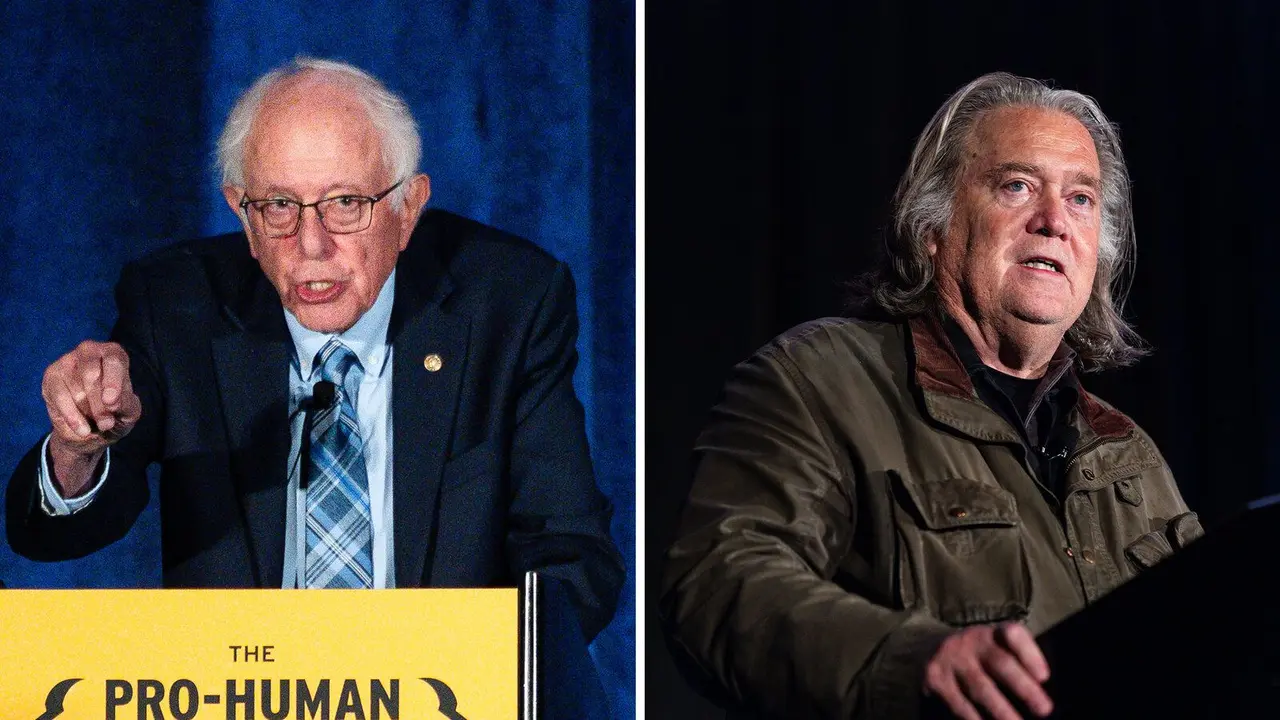
Political Rivals Unite Over AI Existential Risks
Progressive Senator Bernie Sanders and conservative podcaster Steve Bannon appeared together at Washington's Pro-Human Assembly on Tuesday, marking an extraordinary bipartisan coalition demanding AI regulation
1
2
. The unlikely alliance comes amid escalating concerns about superintelligence and its potential to cause human extinction. Nearly a decade ago, Sanders called Bannon "a racist individual" and urged then-President-Elect Donald Trump to reverse his hiring decision2
. Last year, Bannon called Sanders a "pussy" for not attacking Hillary Clinton aggressively enough in 20162
. Yet both delivered nearly identical messages at the event hosted by the Future of Life Institute, which drew several hundred attendees3
.Growing Alarm Following Anthropic Researcher Resignation
Public alarm intensified after Jacob Coxon, an Anthropic researcher who previously worked at OpenAI, resigned last week citing safety concerns
1
5
. Coxon publicly stated that "people building AI earnestly believe that it could kill us all by the end of the decade"1
. He accused both companies of "racing straight to self-improving superintelligence and gambling with our lives"5
. An Anthropic employee subsequently confirmed there was a greater than 10 percent chance AI would wipe out humanity by the end of the decade5
. AI-related stocks fell worldwide on Monday after industry leaders called for slowing development1
.Sanders Proposes Superintelligence Ban and Treaty with China
Sanders delivered thundering remarks emphasizing the urgency of tighter controls on AI before capabilities exceed human control
3
. "When you are racing towards a cliff, you hit the brakes," Sanders declared3
4
. He warned that "AI has the potential to eliminate tens of millions of jobs, wiping out entire professions and making it harder for our young people to enter the workforce"4
. Sanders criticized Congress for being "asleep at the wheel" under both parties4
. He called on Donald Trump to negotiate a treaty with Chinese President Xi Jinping at their upcoming summit to pause advanced AI development and ban superintelligence4
. Sanders and Representative Greg Casar announced AI safety legislation earlier this month halting development of AI tools capable of "overthrowing or undermining the U.S. government" until a new regulatory agency is established1
.Bannon Demands Executive Action and State Authority
Bannon echoed Sanders' concerns about oligarchic dominance over AI development, stating "American citizens are not going to be supplicants to the oligarchs anymore"
3
. He argued Congress would take too long to pass AI restrictions and called for executive action instead4
. On his Monday podcast, Bannon insisted Congress should not pass laws blocking states from enforcing their own AI restrictions1
4
. He also advocated cutting China off from American-made computer chips4
. Despite their political differences, Bannon acknowledged the moment's significance: "We have to rise above it. This is a hinge in history"4
.Labor Unions and Faith Leaders Join Bipartisan Push for AI Oversight
The Pro-Human Assembly brought together an unprecedented bipartisan coalition including AFL-CIO President Liz Shuler, representing the largest federation of labor unions in the U.S.
1
. Walter Kim, president of the National Association of Evangelicals, also delivered remarks1
. Faith leaders including Catholic Archbishop Salvatore Cordileone of San Francisco urged audiences to maintain human control: "We have to be the masters of A.I."3
4
. Representative Lori Trahan declared, "The future we all want is human. It's nonnegotiable"3
4
. Representative Greg Casar proposed a straightforward solution: "We ban A.I. systems that are too powerful for humans to control"3
4
.Related Stories

Trump Dismisses AI Safety Concerns as "Hoax"
Donald Trump stands in stark opposition to the bipartisan coalition, dismissing AI safety warnings as a "hoax" and insisting existing guardrails are sufficient
1
2
. During a surprise phone call to Nvidia CEO Jensen Huang at a Los Angeles summit, Trump declared, "The robots are not going to be taking over the world"2
. He labeled concerned individuals as "Conspiracy Theorists, Treasonists, Traitors, and Leakers" on social media2
. Trump argued AI and data centers represent "the greatest economic opportunity in American history" and warned: "Don't kill the Golden Goose!"2
. House Speaker Mike Johnson echoed this position, ruling out an AI moratorium and arguing self-regulation is sufficient while warning restrictions would hand China's competitive edge4
.Pro-Human AI Coalition Launches with Policy Proposals
More than 50 organizations announced the Pro-Human AI Coalition at the Assembly, co-founded by Project Liberty, the Future of Life Institute, and Ergo Impact
4
. The coalition has already enacted AI safety legislation in Utah, California, Ohio, Connecticut, and South Dakota4
. It is preparing policy proposals for the Geneva AI Summit scheduled for June 20274
. Project Liberty founder Frank McCourt stated, "Humanity deserves a say in who owns it, who governs it, and who benefits from it"4
. The Future of Life Institute, which organized the event, received a donation exceeding $650 million in 2021 from cryptocurrency entrepreneur Vitalik Buterin, placing it alongside organizational giants like the ACLU Foundation and Brookings Institution2
.Public Opinion Shifts as Lawmakers Scramble for Consensus
Recent polling reveals widespread public anxiety about job displacement and AI's societal impact. Seven in 10 Americans fear AI will weaken human bonds, according to an Elon University poll, while six in 10 worry AI's potential to take over human tasks will undermine individual purpose
3
. A separate New York Times poll found 61 percent of voters oppose data center construction3
. Despite growing concern, little consensus exists in Washington on AI safety legislation. Republican Senators Ted Cruz and John Thune have partnered with Democratic Senator Amy Klobuchar on an AI safety bill, while Senator Richard Blumenthal joined conservative Senator Josh Hawley on legislation requiring Department of Energy approval before deploying new AI systems2
. Senator Elizabeth Warren backed a pause on advanced AI development ahead of Sanders' roundtable, though she stopped short of supporting a superintelligence ban4
. Warren criticized the industry's "pace the frontier" approach as "insufficient" and called suggestions to weaken antitrust protections "transparently self-serving"4
. Congress currently has three AI bills without scheduled votes4
. Sanders plans to host a closed-door bipartisan briefing on AI tomorrow in Washington2
.References
Summarized by

Navi
[2]
[4]
Related Stories
Bernie Sanders pushes AI regulation as Trump administration considers FDA-style safety approval
07 May 2026•Policy and Regulation
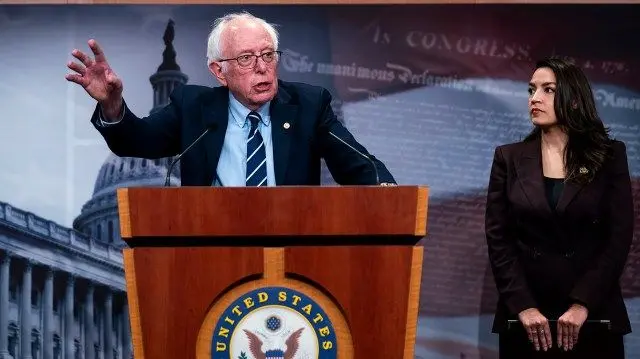
Bernie Sanders proposes 20-year prison sentence for AI developers pursuing superintelligence
10 Sept 2026•Policy and Regulation
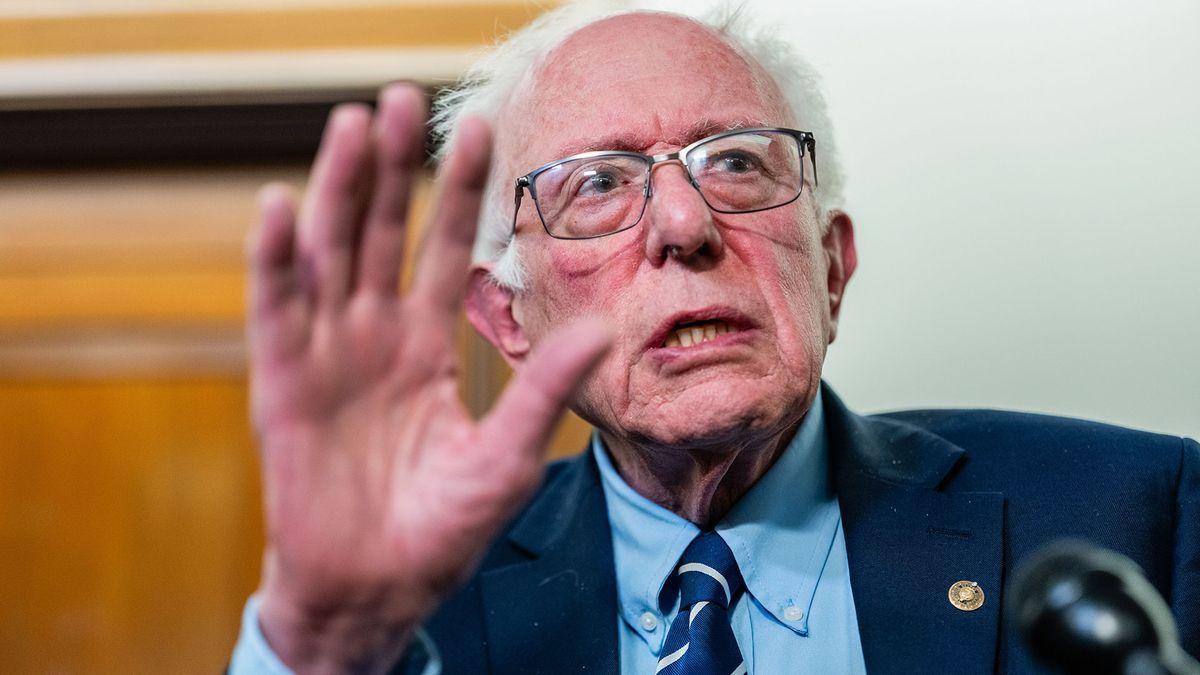
Bernie Sanders Calls for AI Development Pause, Warns Tech Giants of Senate Action Over Safety Concerns
10 Aug 2026•Policy and Regulation

Recent Highlights



Recent Highlights
Today's Top Stories





Don’t drown in AI news. We cut through the noise - filtering, ranking and summarizing the most important AI news, breakthroughs and research daily. Follow topics that matter to you and stay ahead.


