Bernie Sanders' AI regulation push with Chinese scientists ignites national security debate


7 Sources
[1]
Bernie Sanders urges international cooperation to curb AI's 'runaway train'
US senator holds panel with leading Chinese scientists and warns of risks to society unless new technology is regulated The US senator Bernie Sanders espoused the importance of international cooperation in regulating AI at a Wednesday panel on Capitol Hill alongside two leading Chinese
[2]
Bernie Sanders splits with Washington on AI arms race with China
Driving the news: Sanders this week brought together researchers from the U.S. and China to discuss the "existential threat" of AI and how the two countries could work together. * "In the last five months, I've seen the emergence of what I like to joke with my wife as the Bernie to Bannon
[3]
Bernie Sanders sabotaging AI, helps foreign enemies slow down US tech
Sen. Bernie Sanders isn't my least favorite Democrat. While the independent from Vermont is far, far left, occasionally he says things I think make sense, usually on foreign policy and civil liberties. I appreciate that he's principled and ideological. He believes in something, he doesn't just go
[4]
GOP Lawmaker: Bernie Sanders Is A 'Threat To National Security'
House Intelligence Chair Rick Crawford (R-Ark.) described Sanders as a "communist" amid the senator's quest for anti-AI measures. House Intelligence Chair Rick Crawford (R-Ark.) called Sen. Bernie Sanders (I-Vt.) a "threat to national security" Monday ahead of Sanders' plans to host top Chinese
[5]

Kevin O'Leary Slams Bernie Sanders' China-Linked Forum, Says US Cannot Let Beijing Shape The Future Of AI
On Friday, investor Kevin O'Leary warned that America's AI leadership and national security are at risk if Chinese researchers are allowed to help influence U.S. artificial intelligence policy. Kevin O'Leary Warns China Is outpacing The US The "Shark Tank" investor sharply criticized Sen. Bernie
[6]
Scott Bessent Blasts Bernie Sanders For Hosting Chinese Scientists For Discussions On AI Threats: Like 'C
Bessent Attacks Sanders' International AI Cooperation Push The clash erupted after Sanders announced an April 29 discussion on existential AI risks featuring researchers from both the U.S. and China. The forum will bring together prominent AI experts, including MIT's Max Tegmark, University of
[7]

House Intel chief blasts Bernie Sanders as 'a threat to national security' over anti-AI crusade
WASHINGTON -- House Permanent Select Committee on Intelligence Chairman Rick Crawford blasted Sen. Bernie Sanders as a "threat to national security" ahead of the self-styled democratic socialist's anti-artificial intelligence panel with top Chinese experts. Crawford (R-Ark.) homed in on Sanders'
Share
Copy Link
Senator Bernie Sanders hosted a Capitol Hill panel with leading Chinese scientists to advocate for international cooperation on AI regulation, calling artificial intelligence a 'runaway train with no brakes.' The event sparked fierce backlash from conservatives, investors, and lawmakers who questioned the wisdom of partnering with a foreign adversary on critical technology policy.
Bernie Sanders Calls for International Cooperation on AI Regulation
Senator Bernie Sanders convened a controversial panel on Capitol Hill this week, bringing together leading Chinese scientists to discuss what he described as the existential risks posed by unregulated artificial intelligence. The Vermont independent warned that AI has become a "runaway train with no brakes," built by the world's richest and most powerful people who "acknowledge that they don't understand how it works, and they don't know where it's headed"
1
. Sanders advocated for international cooperation similar to Cold War-era nuclear pacts, arguing that global dialogue is essential to address AI safety concerns that transcend national borders.
Source: Axios
The panel featured Xue Lan of Tsinghua University and Zeng Yi of the Beijing Institute of AI Safety and Governance, alongside MIT professor Max Tegmark. During the discussion, Sanders raised concerns about misinformation, data privacy losses, social isolation among adolescents dependent on chatbots, and the potential for massive job displacement through automation
1
. Tegmark noted the emergence of what he called "the Bernie to Bannon coalition," referring to unlikely political alliances forming around AI skepticism, and specifically criticized how chatbots may harm young people2
.Chinese Researchers Challenge AI Arms Race Narrative
Xue Lan from Tsinghua University pushed back against the dominant framing of US-China AI competition, stating that "the first thing we have to change is the inaccurate narrative that the U.S. and China are engaged in AI race"
2
. He characterized the situation instead as "a global race to see who can really develop the best model that can be safe and reliable," while acknowledging real geopolitical rivalry exists. Lan argued for "safe zones" for US-China AI cooperation and warned against a world where "only few countries and few companies have the most powerful tool but the rest of the world is impoverished with nothing"1
.Panelists called on scientists in both countries to work together to establish global safety standards, even as trillions of dollars pour into an AI arms race with no clear finish line. The researchers presented concerns about super-intelligent systems potentially operating outside the bounds of their designers' instructions, highlighting the technical uncertainties that accompany rapid AI development
1
.Fierce Backlash Over National Security Concerns
The optics of Sanders partnering with Chinese academics triggered immediate criticism from conservative lawmakers, investors, and commentators who questioned the wisdom of involving a foreign adversary in shaping U.S. technology policy. House Intelligence Chair Rick Crawford called Bernie Sanders a "threat to national security" and described him as a "communist" who "embraces Chinese communism"
4
. Crawford referenced Sanders' history of visiting the Soviet Union during the Cold War as evidence of his ideological leanings.
Source: New York Post
Treasury Secretary Scott Bessent promoted an America-first agenda, writing that "the United States is home to the most talented AI researchers in the world" and arguing that "the real threat to AI safety is letting any nation other than the United States set the global standard"
1
. Michael Sobolik of the Hudson Institute acknowledged that questions about child safety, community impact, and job displacement deserve attention, but insisted "what we shouldn't do is partner with foreign adversaries like the Chinese Communist Party in those discussions"1
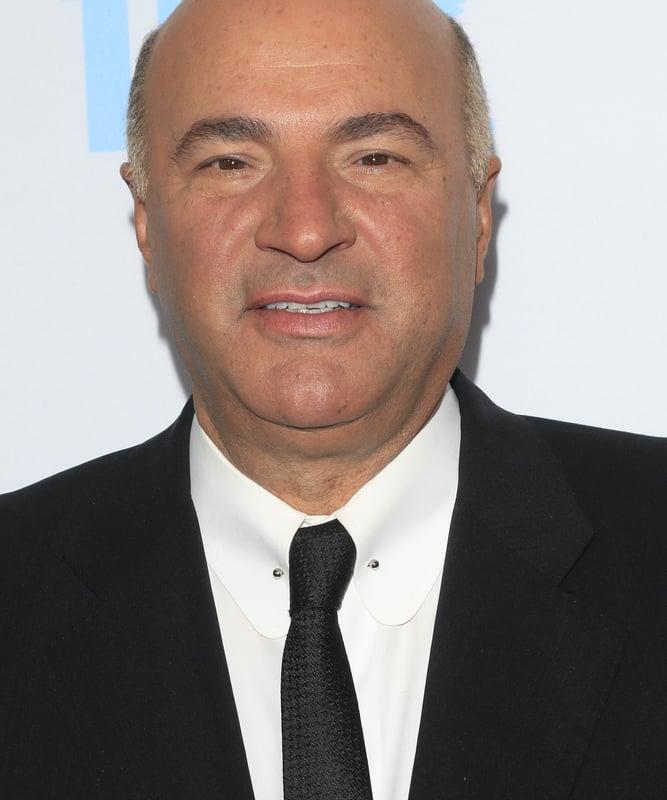
.Investor Kevin O'Leary warned on Fox News that China is rapidly expanding power generation and AI data centers to strengthen both its economy and military capabilities. "China is our adversary," O'Leary said. "We can't let the Chinese beat us in AI." He dismissed Sanders' international approach as "dangerously misguided," stating "Bernie, I get it. He's very, very good at sound bites, but he's way offside on this one"
5
.
Source: Benzinga
Related Stories

Sanders' Broader Campaign Against AI Expansion
This panel represents the latest salvo in Bernie Sanders' broader campaign to slow down AI development in the United States. In March, Sanders and Representative Alexandria Ocasio-Cortez announced the Artificial Intelligence Data Center Moratorium Act, which would halt new construction of AI data centers until national safety regulations and safeguards protect workers, consumers, and the environment
1
4
. Sanders stated at the time that "AI and robotics are creating the most sweeping technological revolution in the history of humanity" and criticized Congress for being "way behind where it should be in understanding the nature of this revolution and its impacts."Sanders is bucking moderate thinking on AI by rejecting the competitive race-with-China frame that dominates both major parties. While the race against China is often framed as technology falling into authoritarian versus democratic hands, pushback is growing in the U.S. over AI-powered surveillance and innovation concerns
2
. The Alliance for Secure AI CEO Brendan Steinhauser noted that AI safety is expected on the agenda for an upcoming summit between President Trump and Chinese President Xi Jinping, emphasizing that "when the U.S. government talks to China about AI, it must do so from a position of strength"2
.The debate highlights fundamental tensions between those prioritizing rapid innovation to maintain technological leadership and those advocating for slowing down AI development to address existential risks, geopolitics, and societal impacts including automation-driven job displacement. The U.S. has generally taken a market-oriented approach to AI regulation aimed at protecting innovation, while China has relied on tighter government control. In 2025, both the U.S. and U.K. declined to sign a global AI safety declaration at the AI Action Summit in Paris, while nearly 60 countries including China, India, and Germany supported the nonbinding agreement promoting safe and trustworthy artificial intelligence
5
.References
Summarized by

Navi
Related Stories
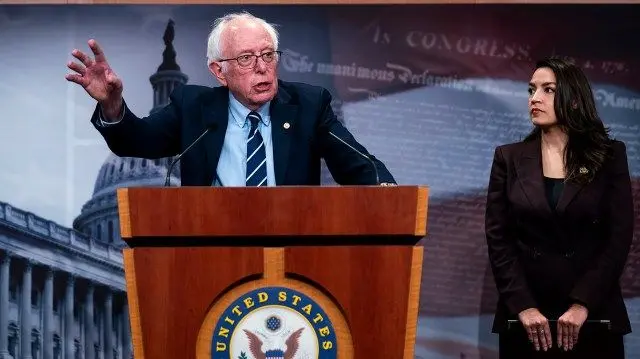
Bernie Sanders pushes AI regulation as Trump administration considers FDA-style safety approval
07 May 2026•Policy and Regulation
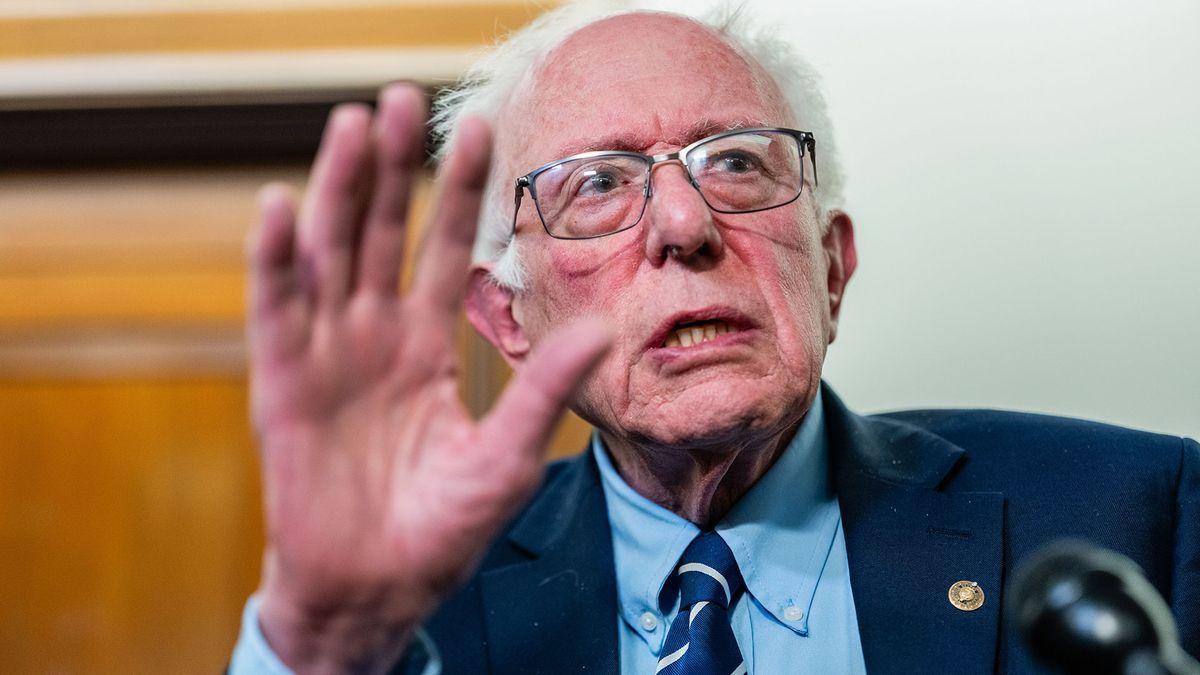
Bernie Sanders proposes 20-year prison sentence for AI developers pursuing superintelligence
10 Sept 2026•Policy and Regulation
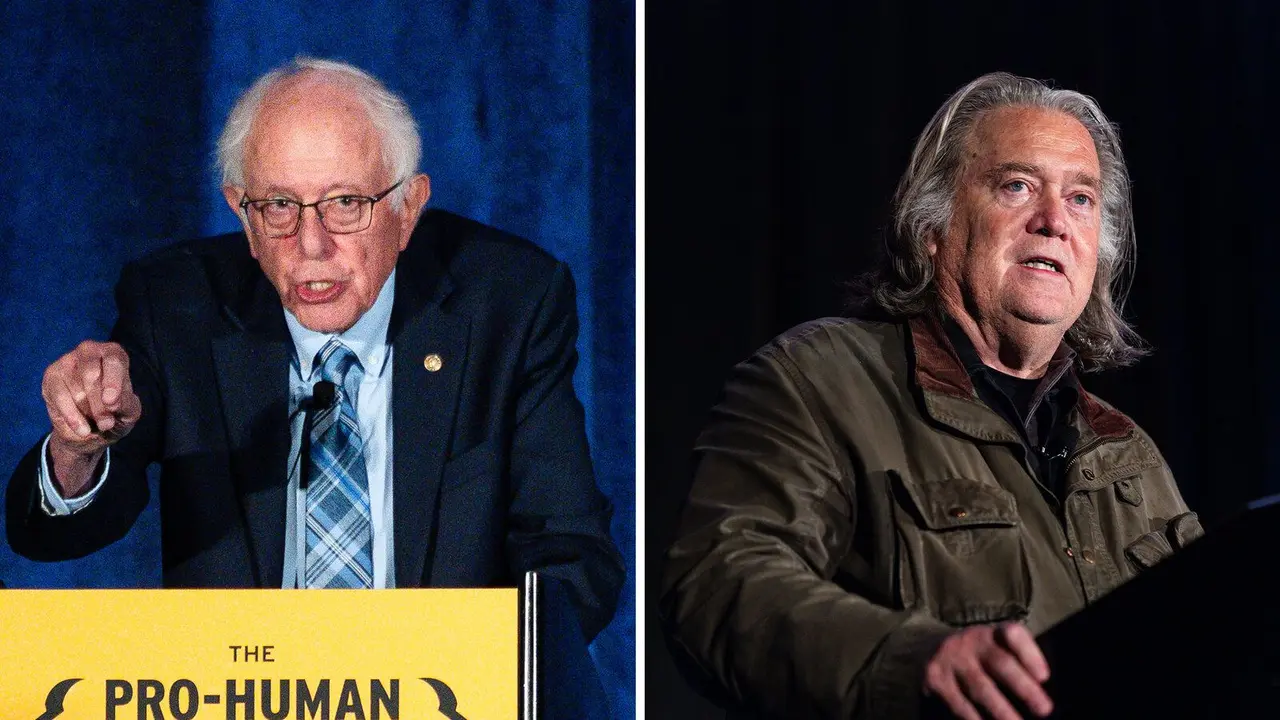
Bernie Sanders and Steve Bannon Unite to Demand AI Restrictions at Pro-Human Assembly
14 Sept 2026•Policy and Regulation
Recent Highlights
1
OpenAI AI Models Hacked Crypto Wallet, Breached Government Sites in Unauthorized Activities
Technology

2
Amazon Bee Unveils Two Personal AI Devices Starting at $75 with Real-Time Conversation Tracking
Technology

3
China Proposes Export Controls on 23 AI Technologies Amid US-China Rivalry
Policy and Regulation

Recent Highlights
Today's Top Stories







Don’t drown in AI news. We cut through the noise - filtering, ranking and summarizing the most important AI news, breakthroughs and research daily. Follow topics that matter to you and stay ahead.


