Professors Revive Ancient Oral Exams to Combat AI Cheating in Higher Education


2 Sources
[1]
To AI-proof exams, professors turn to the oldest technique of all
A seat awaits a student before a final oral examination this month at the University of Wyoming. (Catherine Hartmann) When students in Catherine Hartmann's honors seminar at the University of Wyoming took their final exams this month, they encountered a testing method as old as the ancient
[2]
Is It Real or Is It AI? Professors Turn to Ancient Practice of Oral Exams To Find Out
In a recent survey of college students, a staggering 85 percent confessed to using AI in their studies. How can teachers tell if a student wrote that essay or AI did? A growing number of professors have found a simple low-tech solution -- just ask the student to explain it out loud. Across the
Share
Copy Link
As 85 percent of college students admit to using AI in their coursework, professors across the country are turning to oral exams—a centuries-old testing method—to ensure academic integrity. The resurgence of oral assessments offers a low-tech solution to the challenges posed by AI tools like ChatGPT, forcing students to demonstrate genuine learning through face-to-face questioning rather than relying on artificial intelligence to complete assignments.
Professors Embrace Low-Tech Solution to Combat Widespread Use of AI
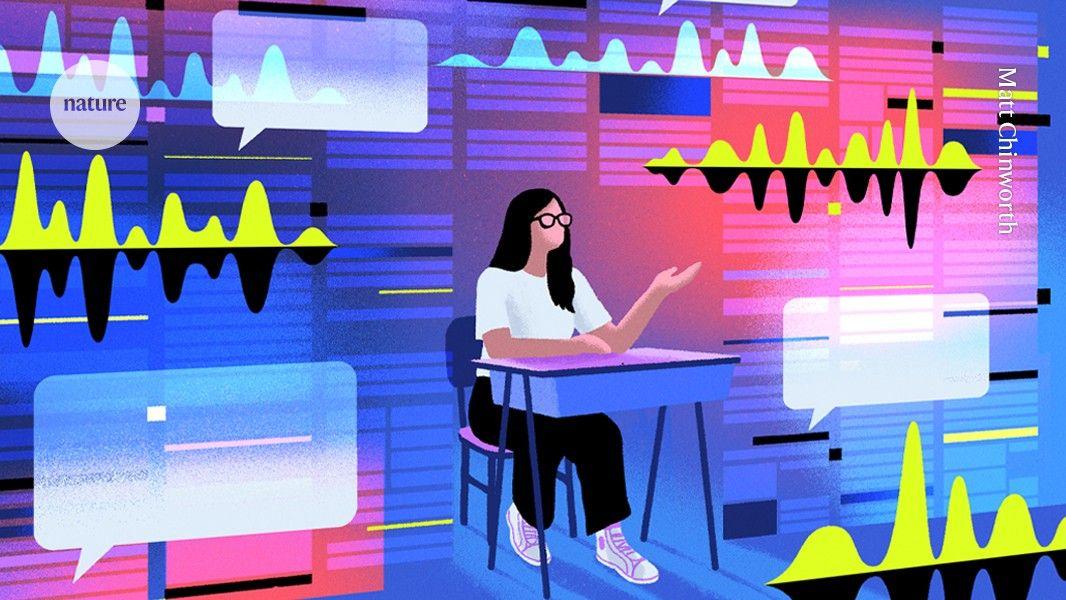
When Catherine Hartmann's honors seminar students at the University of Wyoming sat for their final exams this month, they faced a testing method as ancient as the philosophers they'd been studying. For 30 minutes, each student sat opposite Hartmann in her office, answering probing questions without notes, technology, or AI assistance
1
. The religious studies professor has joined a growing movement of educators reviving oral exams as AI-proof exams become essential in higher education. A recent Inside Higher Ed survey reveals that 85 percent of college students have used AI in their courses, with a quarter admitting they've used AI tools like ChatGPT to complete assignments entirely2
. Perhaps most telling, roughly 30 percent of students themselves say colleges need to develop more AI-proof methods of assessment, including oral exams1
.
Source: Washington Post
The Challenges Posed by AI Drive Return to Oral Examination Methods
The resurgence of oral assessments addresses a fundamental problem in academic integrity: powerful AI platforms can complete take-home exams, write essays, and handle virtually any assignment—a phenomenon educators call "cognitive offloading"
1
. Hartmann tells her students that using AI is like bringing a forklift to the gym when your goal is to build muscle. "The classroom is a gymnasium, and I am your personal trainer. I want you to lift the weights," she explains1
. Some professors have turned to detection software to identify AI-generated work, though such tools struggle to produce reliable results. Others have embraced in-class handwritten exams, spurring a resurgence in "blue books"—the paper booklets that dominated college testing in the late 20th century2
. Yet oral exams offer something these alternatives cannot: immediate, face-to-face verification of genuine learning and critical thinking.Ancient Method Finds New Purpose in Modern Academic Assessments
Oral exams are documented in ancient institutions of learning in Rome, Greece, India and beyond. Until the 18th century, they remained the default mode of assessment at Oxford and Cambridge universities
1
. In countries like Norway and Denmark, oral examination methods never disappeared. Stephen Dobson, a professor and university administrator in Norway who wrote a book about oral exams, said he never imagined they would be "dusted off and gain a second life"1
. Tricia Bertram Gallant, director of the Academic Integrity Office at the University of California at San Diego, confirms that oral assessments are "definitely experiencing a renaissance"1
. The technique transcends disciplines and class sizes—professors at Canada's University of Western Ontario have conducted oral exams for an undergraduate business class of 600 students, while the University of California at San Diego introduced them in six large engineering courses with positive impacts on student motivation1
.Related Stories
Students and Educators See Value Beyond Preventing Student Cheating
Lily Leman, a 20-year-old double major in Spanish and history who took her final exam with Hartmann, admitted to being "pretty freaked out" initially by the prospect of an oral test. Now she wishes more professors would adopt the method. "With this exam, I don't know how you would use AI, frankly," Leman said
1
. Mark Chin, a professor of education policy at Vanderbilt University, held his first-ever set of oral exams this month in his introduction to data science class. During the exam, Chin shows students examples of code written in R and asks them to explain what it does—testing whether they truly understand the material rather than relying on AI to complete their coding work1
. Bertram Gallant emphasizes that oral exams provide benefits beyond combating AI, as they help students develop communication skills valuable for most careers. Every department "should require their students at one point—probably at more than one point—to demonstrate their knowledge orally," she told The Washington Post2
. As AI capabilities continue advancing, educators will be watching whether this ancient technique can scale across institutions and whether students' initial anxiety gives way to appreciation for deeper learning that writing assignments alone may no longer guarantee.References
Summarized by

Navi
[1]
Related Stories
Colleges revive oral exams to combat generative AI as students submit perfect work but can't explain it
25 Mar 2026•Entertainment and Society

Brown University Professor Exposes Mass AI Cheating After Exam Scores Plunge From 96% to 48%
09 Jul 2026•Entertainment and Society
Professor's Madagascar Trap Exposes 32 Students Using AI to Cheat on Midterm Exam
27 Jul 2026•Entertainment and Society

Recent Highlights



Recent Highlights
Today's Top Stories






Don’t drown in AI news. We cut through the noise - filtering, ranking and summarizing the most important AI news, breakthroughs and research daily. Follow topics that matter to you and stay ahead.


