Qualcomm Humanoid Robot Collapses Face-First During Live Demo at Computex 2026


2 Sources
[1]
Qualcomm-powered humanoid robot collapses on stage like it was shot during live demo
Serving tech enthusiasts for over 25 years. TechSpot means tech analysis and advice you can trust. Facepalm: In what is yet more evidence that we shouldn't fear the prospect of a robot takeover, a humanoid machine running Qualcomm's hardware and boasting 700 TOPS of on-device AI processing
[2]
Watch: Qualcomm-powered humanoid robot collapses during live keynote
An AI-powered humanoid robot unexpectedly collapsed on stage while walking out to co-present a keynote, drawing widespread attention online. The robot, powered by Qualcomm's Dragonwing IQ10 AI platform, fell face-first moments after reaching the stage during a live demonstration at Computex 2026
Share
Copy Link
A Qualcomm-powered humanoid robot collapsed spectacularly on stage at Computex 2026 in Taiwan, falling face-first during a live demonstration. The 4NE1 Gen 3.5 robot from Neura Robotics, running on Qualcomm's Dragonwing IQ10 platform with 700 TOPS of AI processing power, had to be covered and carried away after the malfunction.
Qualcomm Humanoid Robot Falls During High-Profile Live Demo
A Qualcomm-powered humanoid robot experienced a dramatic robot collapse during a live demonstration at Computex 2026 in Taiwan, creating an awkward moment that quickly went viral across social media platforms
1
2
. The 4NE1 Gen 3.5 robot from Neura Robotics was showcasing Qualcomm's latest AI-driven robotics technology when it suddenly pitched forward and fell face-first onto the stage with a loud thud, right next to a Qualcomm executive who appeared visibly shocked by the incident1
.
Source: TechSpot
The humanoid robot had walked carefully across the stage before the robot malfunction occurred. Despite the dramatic fall, the machine briefly raised one fist in what appeared to be a signal that it remained operational, though it could not stand back up on its own
2
. Several handlers rushed onto the stage, covered the fallen robot with a cloth, and struggled to carry it away, even dropping it once before finally removing it from view1
.Qualcomm Attributes Failure to Communication Glitch
Qualcomm quickly moved to address the embarrassing incident, attributing the robot collapse to a communication glitch during the live demo
2
. The company emphasized that the robot had actually performed its safe-collapse sequence as designed, lowering itself to its knees to protect people and its surroundings1
2
. According to Qualcomm, the safety systems functioned as intended, and live technology demonstrations always carry inherent risks2
.The company positioned the failure as a learning opportunity, stating that the incident would provide valuable real-world data to improve system reliability and accelerate the development of safer, more resilient robots for future demonstrations
2
. This spin on the catastrophe mirrors similar responses from other robotics companies when their machines have failed publicly.Dragonwing IQ10 Platform Powers Advanced Humanoid Robot

Source: Interesting Engineering
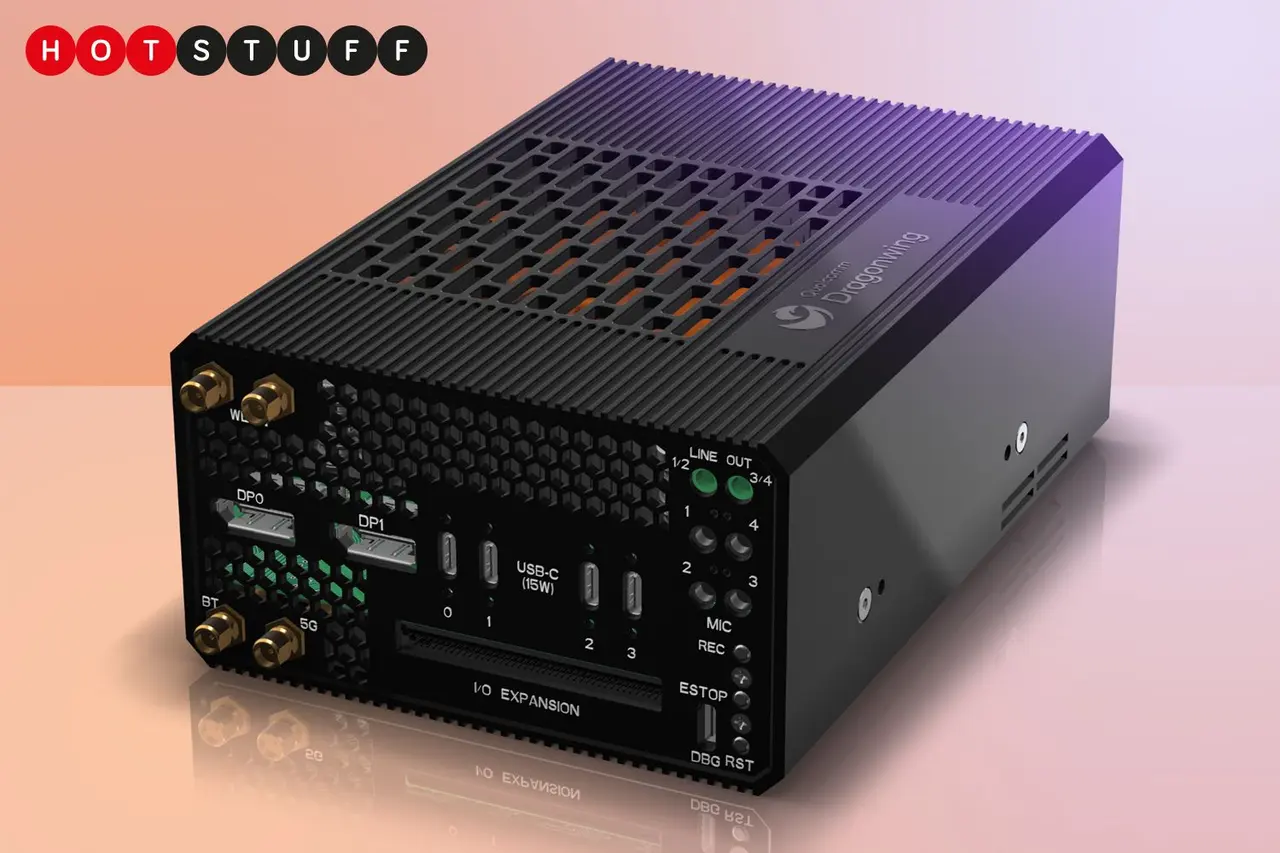
The collapsed humanoid robot was powered by Qualcomm's Dragonwing IQ10 robotics reference design, a production-ready AI platform designed to help robotics developers move quickly from prototype to commercial deployment
2
. The 4NE1 Gen 3.5 stands at 5-foot-9-inches tall and offers impressive specifications including 6 to 8 hours of runtime with hot-swappable batteries and a 100 kg (220 pounds) payload capacity1
.The Dragonwing IQ10 processor delivers up to 700 TOPS of on-device AI processing power for tasks such as recognizing objects, planning movements, and making real-time decisions
1
2
. The platform includes 18 CPU cores, dedicated AI processors, and a graphics processor, while supporting up to 12 cameras, plus LiDAR, Time-of-Flight sensors, and motion sensors2
. Built for harsh environments, it can operate in temperatures ranging from -40°C to 70°C (-40°F to 158°F) and works with both 12-volt and 24-volt power systems commonly used in industrial applications2
.Related Stories
Pattern of Public Robot Failures Raises Questions
This incident at Computex 2026 is not an isolated case in the robotics industry. Russia's first AI-powered humanoid robot, named AIdol, similarly collapsed face-first on stage during a live demonstration at a major technology forum in November
1
2
. That company's CEO later reframed the failure as a "real-time training" session and a "successful mistake"1
.These repeated public failures highlight the significant challenges facing AI-driven robotics development, particularly when it comes to system reliability and real-time performance under pressure. While Qualcomm's Dragonwing IQ10 platform is backed by ecosystem partners including Neura Robotics, Advantech, APLUX, Booster, Innodisk, MeiG, NEXCOM, Radxa, Thundercomm, and VinMotion, the Computex 2026 incident demonstrates that even advanced robotics platforms with sophisticated safe-collapse sequences can experience unexpected communication glitches during critical moments
2
. As companies push toward commercial deployment of humanoid robots for industrial applications, ensuring consistent performance in live demonstrations will be essential for building confidence in the technology's readiness for real-world use.References
Summarized by

Navi
[2]
Related Stories
Russia's First Humanoid Robot AIDOL Face-Plants During Moscow Debut
12 Nov 2025•Technology

Qualcomm unveils Dragonwing IQ10 robotics platform, betting big on humanoid robots at CES 2026
05 Jan 2026•Technology
Qualcomm unveils Dragonwing IQ10 to simplify building lifelike robots with 700 TOPS AI power
01 Jun 2026•Technology
Recent Highlights
1
Meta Unveils Muse Wonder Frontier AI Models, Claims Performance Matching OpenAI and Anthropic
Technology

2
IMF Report Warns AI Market Correction Could Spark Global Financial Crisis With $1.4T at Risk
Business and Economy

3
OpenAI Releases 722 AI-Generated Math Solutions, Triggering Existential Crisis in Mathematics
Technology

Recent Highlights
Today's Top Stories









Don’t drown in AI news. We cut through the noise - filtering, ranking and summarizing the most important AI news, breakthroughs and research daily. Follow topics that matter to you and stay ahead.


