3 Sources
[1]
How Qualcomm is making lifelike robots easier to build
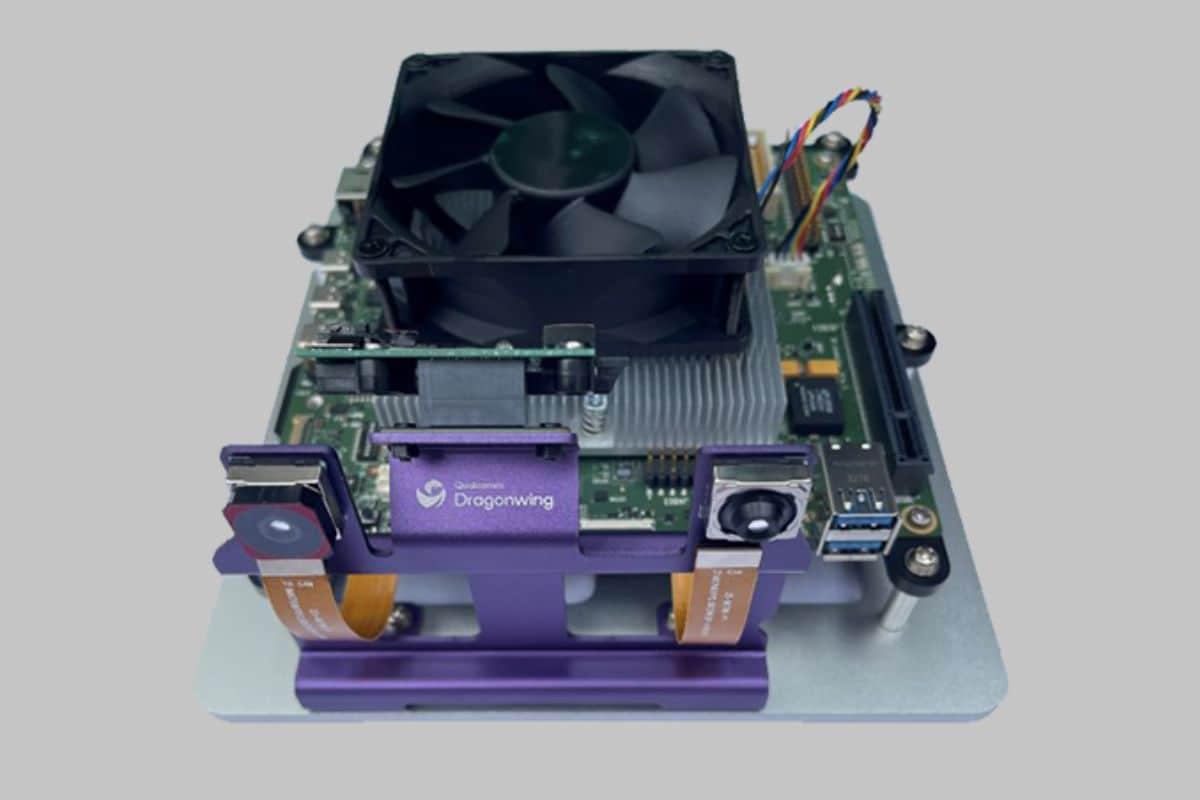
Dragonwing IQ10 reference design could make robots a reality sooner than you think Are we closer than ever to seeing lifelike robots becoming the norm, not just tech world novelties that are trotted out at trade shows? Qualcomm is banking on it: the chipmaker has just revealed a new reference design it says will help robotics firms simplify and speed up development. The Dragonwing IQ10 platform was first announced at CES back in January as a specific processor for use in robots, rather than repurposed smartphone or PC silicon. The reference design - what industry customers will actually be able to get their hands on from June onwards when the firm's early access programme kicks off - was revealed at Computex. The Taiwanese tech show is usually more consumer-focused: Qualcomm itself has unveiled a new series of chipsets aimed at affordable laptops to compete with the popular MacBook Neo. Dragonwing is essentially an off-the-shelf base with all the ports and under-the-hood performance to build a realistic robot around. That includes 18 multi-core Oryon CPUs, a dedicated GPU and a bespoke NPU capable of a massive 700 TOPs of processing for on-device AI. It can also be outfitted with as much as 256GB of LPDDR5 ECC memory, has multiple speedy PCIe lanes, and the latest USB, Wi-Fi and Bluetooth standards. There are high speed GMSL2 connections for up to 12 cameras to give each robot visual feedback, and the reference kit can be expanded with 5G mobile data. Qualcomm reckons it has the power efficiency, thermal management and uptime reliability to become a hit with the firms already developing robots - and make it easier for new ones just getting started in the field. The idea is to help newcomers catch up to the likes of Tesla's Optimus, without having to spend too much time on the baseline hardware. It also has potential for industrial robots - though those won't be nearly as glamorous to the firm's shareholders. Dragonwing IQ10 supports open development platforms based on Linux, plays nicely with on-device large language models (LLMs) and was designed to make software development much easier than if the entire hardware stack was a scratch build. What does this mean for the average Joe? Not a whole lot, admittedly. Qualcomm hasn't said which companies will be first in line for the tech once the early access programme begins, or when we can expect the first robots based around Dragonwing to be revealed. Thanks to Qualcomm for inviting me to be their guest at Computex 2026. All experiences were hosted but no additional compensation was received.
[2]
Qualcomm debuts Dragonwing IQ10 Robotics Reference Design for Industrial and Humanoid AI
Qualcomm has introduced Dragonwing IQ10 Robotics Reference Design (RRD) that is built to address production-level requirements, offering a unified foundation for sensor-AI systems that demand flexible execution, modular expansion, and predictable deployment. Moving Beyond Fragmented System Integration Historically, transitioning a robot from a prototype to a deployable production platform involved stitching together fragmented toolchains, separate bridging components, and disparate software layers. This approach frequently introduced timing inefficiencies, data synchronization challenges, and high operational burdens. The Dragonwing IQ10 RRD consolidates the key hardware and software building blocks of a production robot into a single, cohesive reference design. By utilizing dedicated, native sensor interfaces and scaling through PCIe expansion, the platform aims to reduce integration complexity, shorten development cycles, and establish clear validation boundaries for developers. Core Advantages of the Platform A Layered Software Architecture Hardware performance is maximized by a tightly integrated, end-to-end robotics software stack. Structured across distinct layers, this modular architecture allows engineering teams to work at their preferred level of the stack, from edge optimization to cloud orchestration. +-----------------------------------------------------------------+ | Cloud-Connected Lifecycle Management | | (Fleet Orchestration & Deployment via Qualcomm AI Hub) | +-----------------------------------------------------------------+ | Platform Services | | (Core Sensing, Planning, & Actuation) | +-----------------------------------------------------------------+ | ROS2 Support | | (Decoupling Hardware from Application Logic) | +-----------------------------------------------------------------+ | On-Device AI Runtimes | | (Low-Latency Perception & Decision-Making) | +=================================================================+ | Dragonwing IQ10 Hardware Architecture | +-----------------------------------------------------------------+ Out of the box, this full-stack capabilities framework supports the essential functional building blocks of modern autonomous systems: * Perception: Vision, depth mapping, and environment understanding. * Navigation: Localization and autonomous movement planning. * Manipulation: Control algorithms for robotic arms and end effectors. * Orchestration: Task planning and higher-level autonomy. * Interaction: Natural language interfaces for human-robot communication. Technical Specifications The platform's underlying specifications reflect its focus on high throughput, extensive I/O density, and production reliability: Scaling to Production As autonomous systems grow more complex, the primary engineering challenge shifts away from whether a platform can run a specific workload, and toward whether it can scale, operate safely, and support repeatable deployments at scale. The Dragonwing IQ10 RRD establishes a consistent foundation for sensor fusion and edge intelligence, ensuring developers do not need to redesign their core data pipelines as their physical platforms evolve. This architectural approach is currently being explored by a broad ecosystem of early access partners, including NEURA Robotics, Advantech, APLUX, Booster, Innodisk, MeiG, NEXCOM, Radxa, Thundercomm, and VinMotion. The Qualcomm Dragonwing IQ10 RRD will be officially unveiled at Computex 2026, with early access for customers from this June 2026, and the global availability is scheduled to begin in September 2026.
[3]
Introducing the Qualcomm Dragonwing IQ10 RRD: A Full-Stack Robotics Reference Design
The next wave of robotics will not be defined by isolated subsystem performance alone. It will be shaped by how effectively teams can integrate compute, sensing, networking, safety, control and software into a reliable platform that is ready for real-world deployment. The Qualcomm Dragonwing™ IQ10 Robotics Reference Design (RRD) is built for production level sensor-AI systems that require flexible execution, modular expansion, and predictable deployment. By using dedicated sensor interfaces and scaling through PCIe expansion, the platform aims to reduce integration complexity and improve timing efficiency, helping teams move from prototype to deployable systems with clearer validation boundaries and lower operational burden. Why it matters Robotics developers are increasingly building systems that must see, sense, reason, move, and adapt in complex environments. In practice, that means they need more than a powerful processor; they need a coherent platform that enables a wholistic robotic features and lifecycle management without adding unnecessary integration burden. The Dragonwing IQ10 RRD is designed to address this requirement. Built on the Qualcomm Dragonwing IQ10 processor, it packages heterogeneous compute, AI acceleration, camera and sensor interfaces, motion control, networking, and a layered robotics software stack into a unified reference design. The platform is further supported by MLOps and DevOps tools for AI model development, deployment, validation, and lifecycle management, and may be used to assist in building applications for perception, navigation, manipulation and autonomy. This holistic approach is designed to help reduce system integration complexity, shorten development cycles, and accelerate the transition from prototype to production across industrial, AMR, and humanoid robotics platforms. Key platform advantages Integrated full-stack architecture The Dragonwing IQ10 RRD aims to consolidate certain key building blocks of a production robot into one cohesive design. That includes compute, sensor interfaces, networking, real-time control, and software services, helping to assist in reducing integration complexity and accelerate system bring-up. High-performance embodied AI compute The platform is designed to deliver up to 700 TOPS of AI performance, paired with 18 Qualcomm Oryon CPU cores, multicore NPUs, and a GPU architecture designed to support on-device perception, planning, and reasoning without external accelerators. Built for advanced perception In real-world environments, robots depend on fast, reliable sensor data to understand and respond to their surroundings. The Dragonwing IQ10 RRD is designed to make this easy. It natively supports up to 12 GMSL2 cameras, along with LiDAR, Time-of-Flight (ToF), IMU, and other sensors, enabling rich, multi-modal perception. This allows robots to combine different types of data, vision, depth, and motion, which can be used to support more accurate planning and action. Simplified Sensor Integration A key advantage of the Dragonwing IQ10 RRD is how it brings all this together directly to the platform. Rather than relying on separate bridging components to connect sensors and compute, the Dragonwing IQ10 RRD integrates sensor ingestion natively. This aims to help: The result is the ability to support a cleaner, more efficient architecture that's easier to scale from simple camera-based systems to more complex, multi-sensor robots. Deterministic control and real-time I/O Production robotics requires predictable behavior. The design supports high-speed deterministic interfaces including PCIe, TSN, USB, and CAN, along with Ethernet, EtherCAT, and CAN-FD, to help enable precise motion control and consistent timing across the system. Built for deployment realities The enclosed system includes integrated forced-air cooling, is designed to operate from - 40 to 70 °C, and supports 12V/24V input, supporting use in deployment scenarios where thermal margins and environmental durability matter. Robotics Software Stack The Dragonwing IQ10 RRD stands out not only for its hardware, but also for its tightly integrated end-to-end robotics software stack. It is designed as a full-stack platform, to support robotics development, deployment, and fleet-scale operations. At its core is a layered architecture that is designed to manage system complexity while providing flexibility across the entire lifecycle of a robot. The Dragonwing IQ10 RRD software stack is structured across several key layers: This modular approach allows teams to work at the level that best fits their needs whether optimizing models at the edge or orchestrating fleets in the cloud. Full-Stack Robotics Capabilities Out of the box, the platform is designed to support the core functional building blocks of modern robotics systems: * Planning and control for motion execution * Manipulation for robotic arms and end effectors * Task planning and orchestration for higher-level autonomy * Natural language interaction for human-robot interfaces This breadth helps to enable developers to build everything from mobile robots to complex, multi-modal autonomous systems without stitching together fragmented toolchains. Ready to Scale with Your System Whether building a mobile robot, an industrial system, or a humanoid platform, the Dragonwing IQ10 RRD is designed to provide a consistent foundation for sensor fusion and perception without the need to redesign the data pipeline as systems grow more complex. The Dragonwing IQ10 RRD also reflects a broader shift in robotics architecture. As robots become more autonomous and sensor-rich, the key question is no longer just whether a platform can run a workload, but whether it can scale, operate safely, and support repeatable deployment with confidence. The Dragonwing IQ10 RRD is built with that need in mind. By combining heterogeneous compute, multi-domain networking, safety-oriented design, and a unified software stack, it is designed to provide OEMs and robotics developers with a strong foundation for advanced AMRs, humanoids, and industrial robots. Early access partners, including NEURA Robotics, Advantech, APLUX, Booster, Innodisk, MeiG, NEXCOM, Radxa, Thundercomm, and VinMotion, are already exploring its full capabilities. At Computex 2026, the Dragonwing IQ10 RRD will be unveiled. Get ready for the Dragonwing IQ10 RRD. Sign up to be notified when global availability begins in September 2026 and stay updated with the latest tools, resources, and release details to support your deployment.
Share
Copy Link
Qualcomm introduced the Dragonwing IQ10 Robotics Reference Design at Computex, offering developers an off-the-shelf platform with 700 TOPS of AI performance and 18 Oryon CPUs. The full-stack robotics platform aims to reduce integration complexity and accelerate the development of industrial and humanoid robots, with early access starting June 2026.
Qualcomm has unveiled the Dragonwing IQ10 Robotics Reference Design at Computex 2026, marking a significant push to simplify how companies build lifelike robots
1
. First announced as a processor concept at CES in January, the robotics reference design represents an off-the-shelf platform that consolidates compute, sensing, networking, and software into a unified foundation2
. The move addresses a persistent challenge in robotics: transitioning from prototype to production typically involves stitching together fragmented toolchains and disparate software layers, creating timing inefficiencies and high operational burdens2
. By providing a cohesive reference design, Qualcomm aims to help newcomers catch up to established players like Tesla's Optimus without spending excessive time on baseline hardware1
.
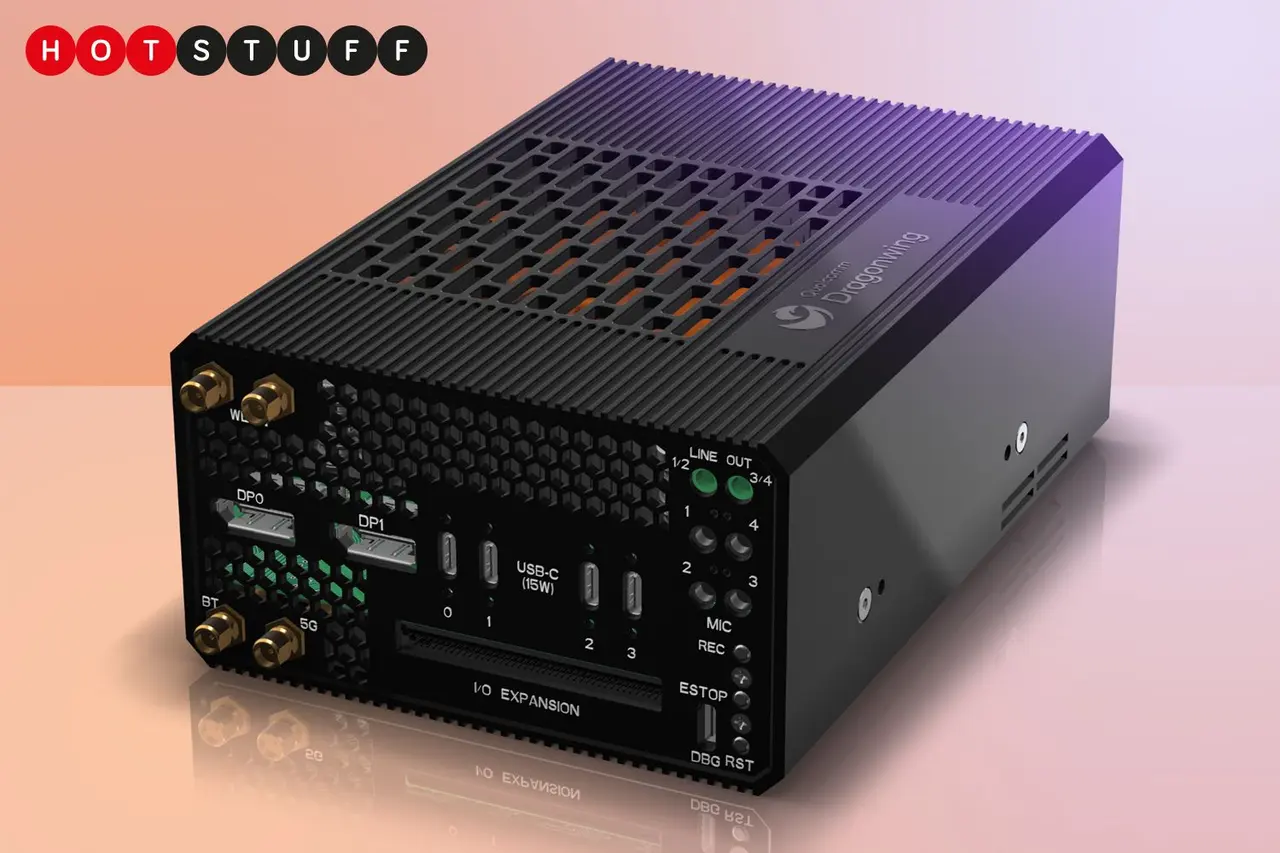
Source: Stuff
The Dragonwing IQ10 packs substantial computing muscle designed specifically for robotics rather than repurposed smartphone or PC silicon
1
. At its core sit 18 multi-core Oryon CPUs paired with a dedicated GPU and a bespoke NPU capable of delivering 700 TOPS of AI performance for on-device AI workloads1
. The platform supports up to 256GB of LPDDR5 ECC memory and features multiple high-speed PCIe lanes alongside the latest USB, Wi-Fi, and Bluetooth standards1
. For perception capabilities, the system natively supports up to 12 GMSL2 cameras through high-speed connections, along with LiDAR, Time-of-Flight sensors, and IMU integration3
. This multi-modal sensor fusion enables robots to combine vision, depth, and motion data for more accurate planning and action in complex environments3
. The platform can also be expanded with 5G mobile data connectivity, and Qualcomm emphasizes its power efficiency, thermal management, and uptime reliability as critical factors for production deployment1
.Beyond raw hardware specifications, the Dragonwing IQ10 distinguishes itself through a tightly integrated, end-to-end robotics software stack structured across distinct layers
2
. This modular architecture spans from cloud-connected lifecycle management and fleet orchestration via Qualcomm AI Hub down through platform services for sensing, planning, and actuation, with ROS2 support to decouple hardware from application logic2
. The layered approach allows engineering teams to work at their preferred level of the stack, whether optimizing models at the edge or orchestrating fleet operations in the cloud3
. Out of the box, the platform supports core functional building blocks including perception for vision and environment understanding, navigation for localization and autonomous movement, manipulation for robotic arms and end effectors, task planning and orchestration for higher-level autonomy, and natural language interfaces powered by large language models for human-robot communication2
. The design supports open development platforms based on Linux and was engineered to simplify software development compared to building an entire hardware stack from scratch1
.Related Stories
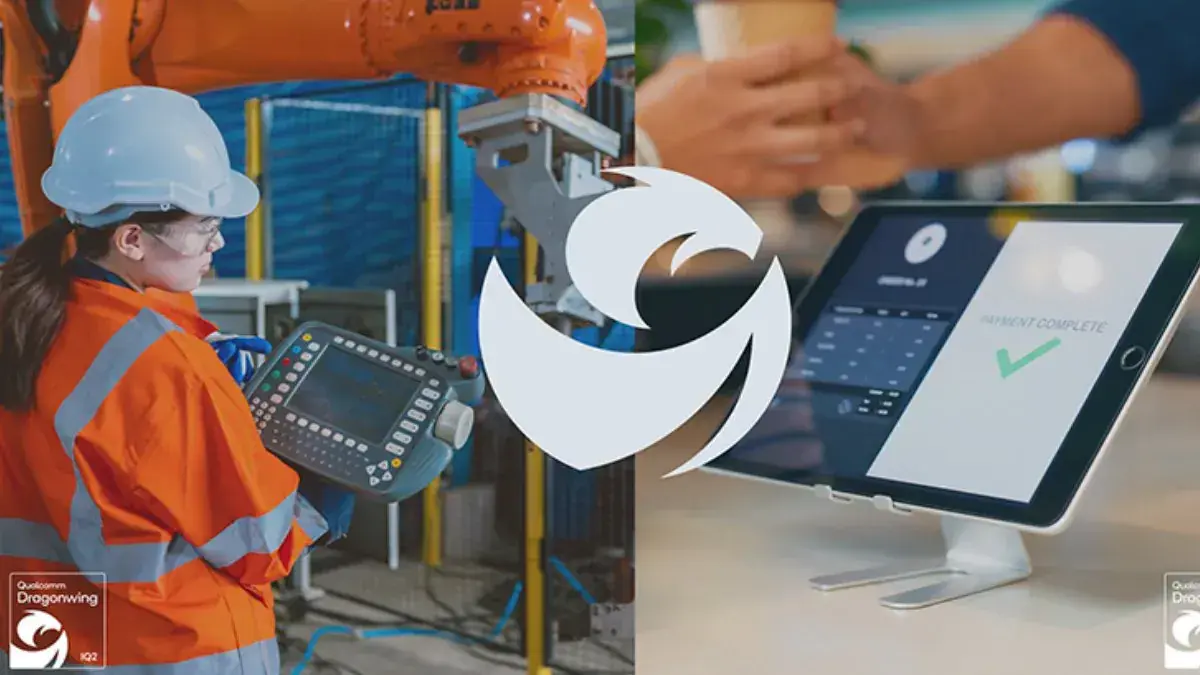
The platform targets production-level requirements for sensor-AI systems that demand flexible execution, modular expansion, and predictable deployment
2
. Production robotics requires deterministic control and real-time I/O capabilities, which the Dragonwing IQ10 addresses through high-speed deterministic interfaces including PCIe, TSN, USB, CAN, Ethernet, EtherCAT, and CAN-FD to enable precise motion control and consistent timing3
. The enclosed system includes integrated forced-air cooling and operates in temperatures ranging from -40 to 70 degrees Celsius, supporting deployment scenarios where thermal margins and environmental durability matter3
. It supports both 12V and 24V input for flexible power configurations3
. While the platform has potential for industrial robots and AMR applications, humanoid AI development represents a particularly compelling use case that generates significant interest from shareholders1
.Qualcomm is currently working with a broad ecosystem of early access partners exploring the platform's capabilities, including NEURA Robotics, Advantech, APLUX, Booster, Innodisk, MeiG, NEXCOM, Radxa, Thundercomm, and VinMotion
2
. The early access programme for customers begins in June 2026, with global availability scheduled for September 20262
. Qualcomm has not yet disclosed which companies will be first to ship robots based on the Dragonwing IQ10 or when those products might reach consumers1
. The platform establishes a consistent foundation for sensor fusion and edge intelligence, ensuring developers can scale their systems without redesigning core data pipelines as physical platforms evolve2
. For robotics developers building systems that must see, sense, reason, move, and adapt in complex environments, the question shifts from whether a platform can run specific workloads to whether it can scale, operate safely, and support repeatable deployments at production scale3
.Summarized by
Navi
[2]
05 Jan 2026•Technology

13 Nov 2025•Technology

26 Feb 2025•Technology

1
Technology

2
Policy and Regulation

3
Technology

News Categories