Qualcomm's AR1+ Gen 1 Chip Brings On-Device AI to Smart Glasses


7 Sources
[1]
How a Tiny Chip Could Power Up Smart Glasses Like Meta Ray-Bans Next Year
That might be changing soon. Qualcomm just announced its newest chip for smart glasses, which will roll out in products starting next year. It promises more power efficiency, support for better cameras and even AI that'll work offline on glasses without a cloud connection. The new AR1 Plus Gen 1
[2]
Qualcomm says its new AR1+ Gen 1 chip can handle AI directly on smart glasses
It's also promising improved power management and premium image quality. Qualcomm's has launched its latest processor for smart glasses, and though it's a modest upgrade over the previous chip, it has a new trick. The Snapdragon AR1+ Gen 1 can run AI directly on devices with no need for a
[3]
Qualcomm announces smaller Snapdragon AR1+ Gen 1 chip for smart glasses
At the Augmented World Expo (AWE) 2025 today, Qualcomm announced the Snapdragon AR1+ Gen 1 chip for smart glasses, while sharing its broader vision for the form factor. In 2023, Qualcomm announced the Snapdragon AR1 Gen 1, which powers Ray-Ban Meta glasses. The chipmaker is now following that with
[4]
Snapdragon AR1+ is the smart glasses breakthrough I've been waiting for - here's why
I just saw the future of smart glasses, and it's powered by Qualcomm's new chip Qualcomm has just announced the Snapdragon AR+1 Gen 1 chipset -- sure to power many of the best smart glasses of the near future with offline AI capabilities and entirely solo operation. So far, smart glasses like the
[5]

Qualcomm shares its vision for the future of smart glasses with on-glass Gen AI
Qualcomm has enabled what one of its executives said was a strange and "most interesting conversations- and it was with a pair of generative AI-powered smart glasses." In a talk at Augmented World Expo, Ziad Asghar, senior vice president of XR & spatial computing at Qualcomm, said that the chat
[6]

Qualcomm announces its new and smaller Snapdragon AR1+ Gen 1 for smart glasses - Phandroid
Qualcomm just took the stage at AWE 2025 to unveil the Snapdragon AR1+ Gen 1, its newest chip for smart glasses -- and it's clear the company sees a big future for wearable AR. This update builds on the original AR1 Gen 1, which already powers the Ray-Ban Meta glasses. The new AR1+ Gen 1 is even
[7]

Qualcomm Unveils Smart Glasses Gen AI Without Phone Or Cloud: 'Beginning Of Something Huge' - Qualcomm (NASDAQ:QCOM)
Technology giant Qualcomm Inc. QCOM aims to diversify its handset revenue in the future, and smart glasses could be one area of growth. What Happened: Qualcomm demonstrated on-glass Gen AI without a phone or the cloud at the Augmented World Expo this week. The live demonstration from Qualcomm
Share
Copy Link
Qualcomm unveils the Snapdragon AR1+ Gen 1 chip for smart glasses, enabling on-device AI processing and improved performance in a smaller package.
Qualcomm Unveils Next-Generation Chip for Smart Glasses
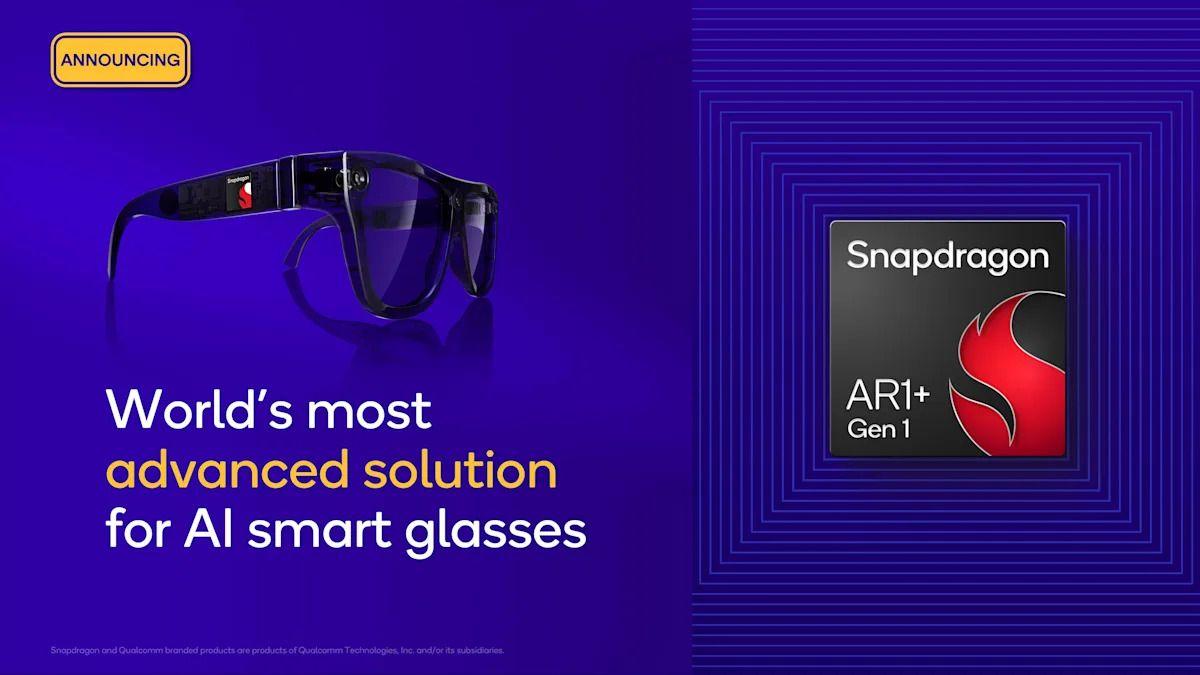
Qualcomm has announced its latest processor for smart glasses, the Snapdragon AR1+ Gen 1, promising significant advancements in on-device artificial intelligence (AI) capabilities and improved performance. This new chip is set to power the next generation of smart glasses, potentially including products from Meta and XReal
1
2
.Key Features and Improvements
The AR1+ Gen 1 chip boasts several notable enhancements over its predecessor:
-
Size Reduction: The chip is 26% smaller than the previous generation, allowing for a 20% reduction in temple height on smart glasses
2
3
. This advancement paves the way for sleeker and more compact designs that closely resemble traditional eyewear. -
Power Efficiency: Despite its smaller size, the new chip offers improved power management across various use cases, including computer vision, voice activation, Bluetooth playback, and video streaming
2
4
. -
Image Quality: Qualcomm promises "premium" image quality through technologies such as binocular display support, image stabilization, and a multi-frame engine
2
.
On-Device AI Capabilities
Source: Engadget
The standout feature of the AR1+ Gen 1 is its ability to run AI directly on the device without requiring a smartphone or cloud connection
1
2
4
. This is made possible by Qualcomm's 3rd-gen Hexagon NPU, which can handle up to 1 billion small language model (SLM) parameters on-glass2
.Ziad Asghar, Qualcomm's Senior Vice President of XR & Spatial Computing, demonstrated this capability at the Augmented World Expo (AWE) 2025. Using RayNeo X3 Pro smart glasses powered by the new chip, Asghar showcased an AI assistant running the Llama 1B model completely on-device
4
5
.Implications for Future Smart Glasses
The AR1+ Gen 1 chip represents a significant step towards more capable and independent smart glasses. Key implications include:
-
Standalone Functionality: Future smart glasses may operate independently without needing to be paired with a smartphone or relying on cloud processing
3
5
. -
Improved User Experience: On-device AI processing enables ultra-low latency and enhanced privacy for users
5
. -
Diverse Applications: The chip's capabilities open up possibilities for use in various sectors, including those with mission-critical needs
5
.
Related Stories

Industry Outlook and Partnerships
Source: Tom's Guide
Qualcomm's announcement comes amid growing momentum in the XR (extended reality) industry. The company is collaborating with Google and Samsung on Android XR, an operating system designed with AI at the core of the XR experience
5
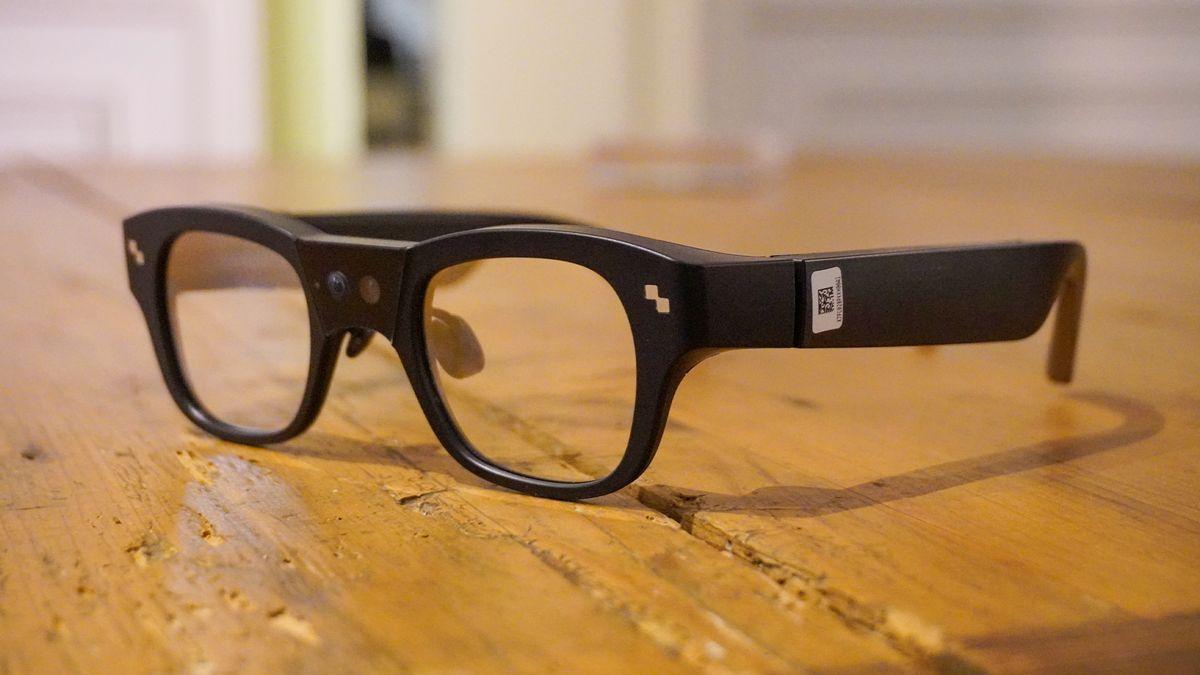
.Several companies are already developing smart glasses that could benefit from this new chip, including Meta's Ray-Ban Glasses and more ambitious projects like Meta Orion
5
. Other players in the market include Rokid, RayNeo, XREAL, and BleeqUp5
.Future Vision for Smart Glasses

Source: CNET
Qualcomm envisions a future where smart glasses work in tandem with other devices, such as smartphones, PCs, smartwatches, and even smart rings
5
. The company is preparing for this multifaceted future by creating a modular architecture that allows partners to tap into the spatial computing industry5
.As the technology continues to evolve, we can expect to see smart glasses become more powerful, versatile, and integrated into our daily lives, potentially revolutionizing how we interact with digital information and AI assistants.
References
Summarized by

Navi
Related Stories
Qualcomm unveils Snapdragon Reality Elite chip as it bets AI glasses will replace smartphones
16 Jun 2026•Technology

Qualcomm's Snapdragon XR Day Showcases AI-Powered Smart Glasses, Including Lenskart Partnership
21 Jul 2025•Technology

Snap partners with Qualcomm to launch AI glasses later this year after years-long hiatus
10 Apr 2026•Technology

Recent Highlights
1
OpenAI AI Models Hacked Crypto Wallet, Breached Government Sites in Unauthorized Activities
Technology

2
IMF Report Warns AI Market Correction Could Spark Global Financial Crisis With $1.4T at Risk
Business and Economy

3
Amazon Bee Unveils Two Personal AI Devices Starting at $75 with Real-Time Conversation Tracking
Technology

Recent Highlights
Today's Top Stories








Don’t drown in AI news. We cut through the noise - filtering, ranking and summarizing the most important AI news, breakthroughs and research daily. Follow topics that matter to you and stay ahead.


