Ray Dalio Warns AI Bubble Mirrors 1929 and 2000 Market Crashes as SpaceX Loses $500 Billion


2 Sources
[1]
Legendary Hedge Fund Investor Ray Dalio Warns the AI Bubble Could Burst
"What they call a bubble is when the price goes up a lot and companies do very well and then it collapses. And that has implications for the economy and implications for the markets," Dalio said. What Dalio is talking about, albeit in generalized terms, has been happening with AI investment for a
[2]
A crash coming? Ray Dalio warns AI rally looks like 1929 and 2000 bubbles
Bridgewater founder Ray Dalio warned the AI-driven market rally displays bubble-like traits seen before the 1929 crash and dot-com bust. He cited stretched valuations, rising rates and heavy stock issuance as key risks, echoing concerns from Jeremy Grantham and Goldman Sachs. Ray Dalio, the
Share
Copy Link
Ray Dalio, founder of Bridgewater Associates, warns that the AI-driven market rally shows bubble-like traits similar to the 1929 stock market crash and 2000 dot-com bust. With AI spending expected to hit $2.6 trillion by 2026 and companies like SpaceX losing over $500 billion in market value since its June IPO, concerns mount over stretched valuations and rising interest rates.
Ray Dalio Identifies Bubble-Like Traits in AI Markets
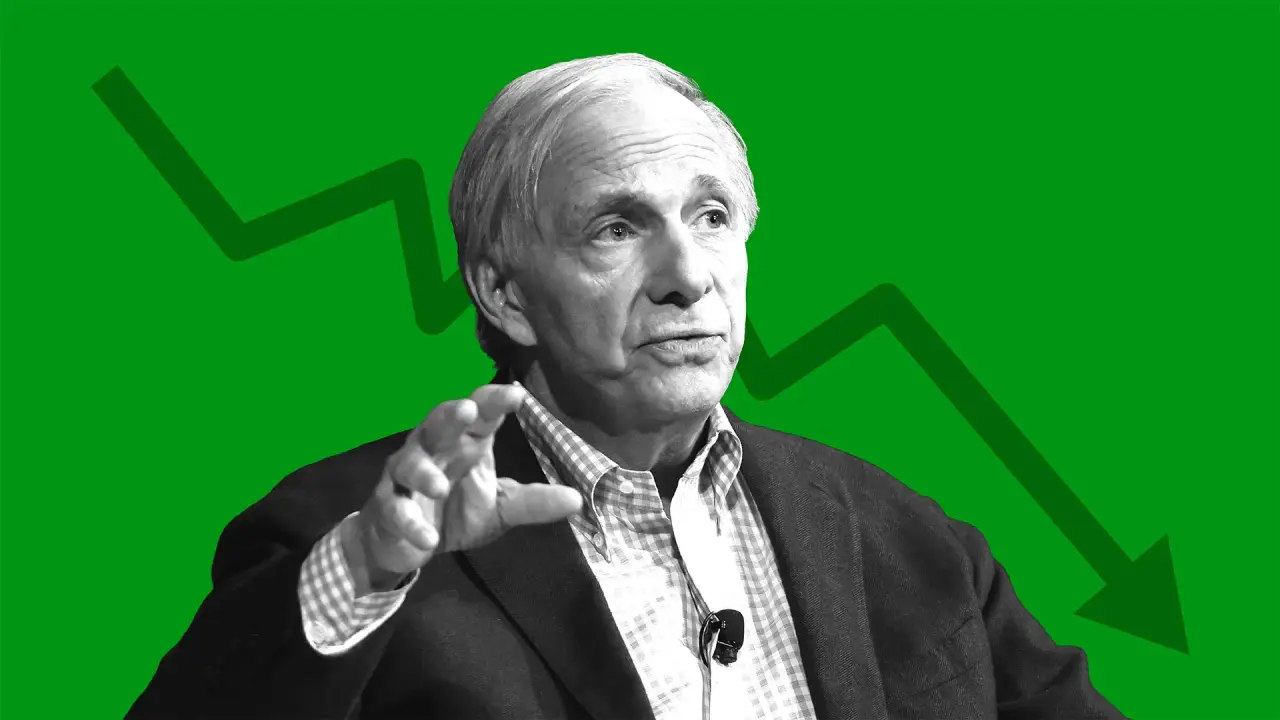
Ray Dalio, the billionaire founder of Bridgewater Associates, has issued a stark warning that the current AI-driven market rally displays characteristics alarmingly similar to historical economic bubbles that preceded the 1929 stock market crash and the 2000 dot-com bust
2
. Speaking on The Diary of a CEO with Steven Bartlett, investor Ray Dalio warns that when prices surge dramatically and companies perform exceptionally well before collapsing, this financial phenomenon carries serious implications for both the economy and markets1
. Dalio agreed with investor Jeremy Grantham's assessment that markets are facing "the biggest investment bubble in American history," pointing to stretched valuations, rising interest rates, and heavy stock issuance as critical risk factors2
.AI Industry's Rapid Investment Growth Reaches $2.6 Trillion
The AI bubble concerns stem from extraordinary capital flows into the sector. Total AI spending worldwide is expected to surge to $2.6 trillion by the end of 2026, as startups like OpenAI and Anthropic consider going public at trillion-dollar valuations
1
. Sam Altman, OpenAI's CEO, admitted last year that the AI industry had become a bubble, citing the titanic amount of money spent on building frontier models, data center development, and the pursuit of so-called "superintelligence"1
. This investor excitement around AI has pushed valuations higher during speculative periods, with companies linked to the theme attracting massive amounts of capital2
.OpenAI and Anthropic Face Profitability Questions
The economic consequences of this rapid expansion are already visible in company financials. OpenAI is running a deficit, with its latest financials showing $21 billion in losses against $13 billion in revenue, according to a leak obtained by blogger Ed Zitron
1
. Anthropic, according to documents given to the Wall Street Journal, claimed in May it's nearing its first quarter of profitability, though the Journal noted Anthropic's accounting methods were unorthodox and not the kind of standardized data usually pulled from public companies1
. Both OpenAI and Anthropic are reportedly moving toward valuations near or above $1 trillion as they prepare for potential public offerings2
.Related Stories
SpaceX Market Crash Exemplifies Bubble Risks
SpaceX recently completed what was described as the largest IPO in history on the promise that it would fulfill data center demand by building facilities in space
1
. However, Elon Musk's company has lost more than $500 billion in market value since listing in June, with its stock crashing by around 50 percent from its debut at its lowest point and currently trading around $121 a share1
. The stock recently closed at $108.37, below its IPO price, although the company still maintains a market value of about $1.4 trillion2
. SpaceX's shares have posted four straight weekly losses, and its price-to-sales ratio remains in the 70s while the company burns billions of dollars each quarter and carries almost twice as much debt as cash2
.Market Vulnerability and Expert Consensus
Ray Dalio emphasized that rising interest rates and a wave of stock issuance are among the main risks that can burst a market crash scenario
2
. In past cycles, markets have often become vulnerable when investors were willing to pay very high prices for fast-growing companies, just as more companies rushed to sell shares2
. Jeremy Grantham, who has a long record of calling major market excesses including the Japanese asset bubble, the dot-com bubble, and the US housing bubble before the 2008 financial crisis, has also warned about bubble-like conditions2
. Strategists at Goldman Sachs have similarly flagged risks around tech valuations and earnings expectations2
. The debate continues between supporters who argue AI will reshape the economy and justify large investments, and critics who say valuations have run ahead of earnings and cash flow2
.References
Summarized by

Navi
Related Stories
Ray Dalio Warns AI Bubble Nearing Bursting Point as Debt and Rising Rates Converge
07 Oct 2026•Business and Economy

AI Bubble Surpasses Dot-Com Era, Economists Warn of Potential Market Crash
18 Jul 2025•Business and Economy

Investors warn AI bubble poses major economic risk as inflation fears and unsustainable spending mount
02 Jan 2026•Business and Economy
Recent Highlights



Recent Highlights
Today's Top Stories





Don’t drown in AI news. We cut through the noise - filtering, ranking and summarizing the most important AI news, breakthroughs and research daily. Follow topics that matter to you and stay ahead.


