Revolutionary AI Algorithm TACIT Accelerates Cancer Diagnosis and Treatment Decisions


2 Sources
[1]
New AI algorithm speeds up cancer diagnosis and treatment decisions
Virginia Commonwealth UniversityJun 17 2025 Researchers at VCU Massey Comprehensive Cancer Center have developed a novel algorithm that could provide a revolutionary tool for determining the best options for patients - both in the treatment of cancer and in the prescription of medicines. As
[2]
Minutes instead of months: Algorithm rapidly identifies cell types to match patients with effective cancer therapies
Researchers at VCU Massey Comprehensive Cancer Center have developed a novel algorithm that could provide a revolutionary tool for determining the best options for patients -- both in the treatment of cancer and in the prescription of medicines. As recently published in Nature Communications,
Share
Copy Link
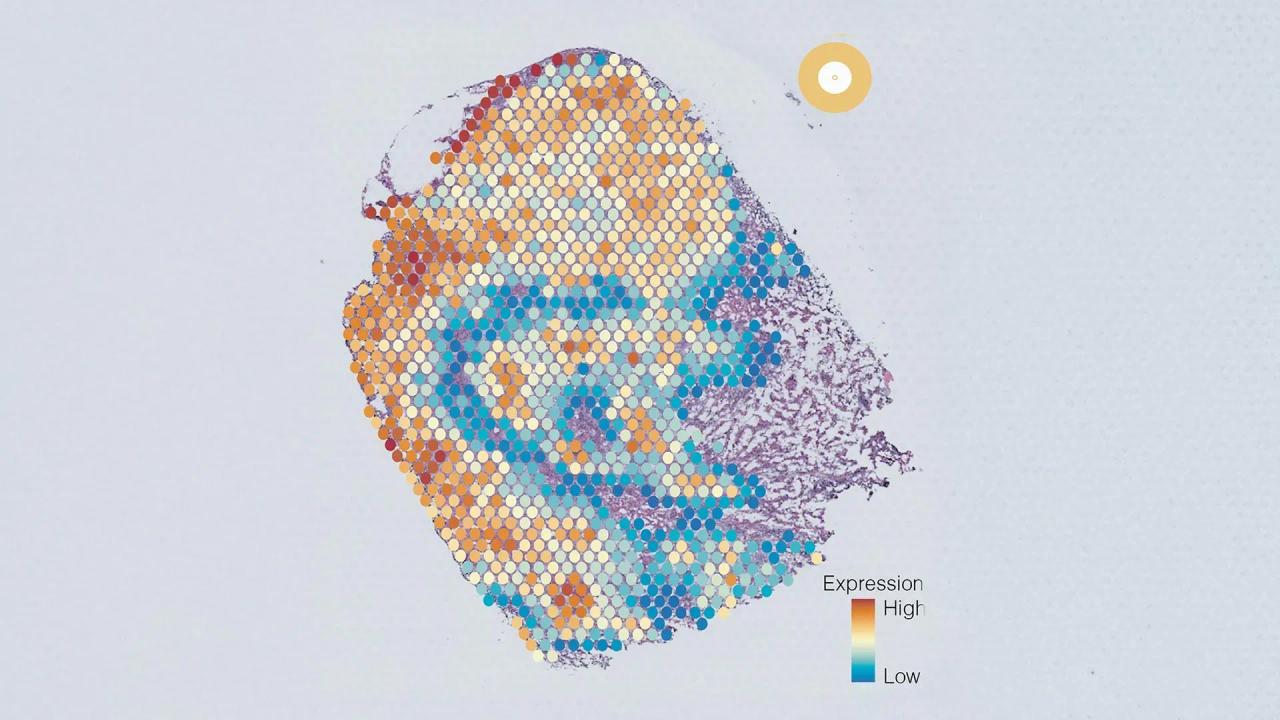
Researchers at VCU Massey Comprehensive Cancer Center have developed TACIT, an AI algorithm that rapidly identifies cell types, potentially revolutionizing cancer diagnosis and treatment selection.
Breakthrough in Cancer Research: TACIT Algorithm Developed
Researchers at Virginia Commonwealth University's (VCU) Massey Comprehensive Cancer Center have made a significant breakthrough in cancer diagnosis and treatment with the development of a novel AI algorithm. The Threshold-based Assignment of Cell Types from Multiplexed Imaging Data (TACIT) algorithm, created by Dr. Jinze Liu and Dr. Kevin Byrd, promises to revolutionize how cancer is diagnosed and treated
1
2
.TACIT: A Game-Changer in Cell Identification
TACIT's primary function is to assign cell identities based on cell-marker expression profiles. What sets it apart is its remarkable efficiency:
- It reduces cell identification time from over a month to just minutes.
- It utilizes data from more than 5 million cells across major body systems.
- It provides superior accuracy and scalability compared to existing models
1
.
Dr. Liu, a research member at Massey and a professor in the Department of Biostatistics at VCU, emphasized the algorithm's potential: "We're using artificial intelligence to increase efficiency and also the accuracy of diagnosis. And as we gain more data, TACIT's ability to increase positive patient outcomes will only multiply"
1
.Outperforming Existing Methods
In their Nature Communications publication, Liu and Byrd demonstrated TACIT's capabilities:
- It outperformed three existing unsupervised methods in accuracy and scalability.
- It integrated cell types and states to reveal new cellular associations.
- It showed strong agreement between different types of tests, such as genetic and protein data
1
2
.
Wide-Ranging Applications in Cancer Treatment
The potential applications of TACIT are extensive and promising:
-
Clinical Trials: TACIT can identify suitable spatial biomarkers for clinical trials, predicting patient responses before enrollment. This ensures that patients receive the most appropriate treatments
1
. -
Pharmacological Benefits: The algorithm can utilize RNA markers to drive care decisions. Dr. Byrd explained, "We have a large repository of [FDA] approved drugs we can map onto the tissue samples. Imagine if you could tell a patient, 'Here's an already [FDA] approved drug'"
2
. -
Multi-Omics Analysis: TACIT works across multiple spatial biology applications, allowing researchers to study multiple markers simultaneously. This is a significant advancement from the previous limitation of single-cell omics
1
2
.
The "Rosetta Stone" of Cell Biology
Dr. Byrd likened TACIT to a Rosetta Stone, stating, "You can see how all these different data types all become the same language, and for us, we can build upon that. There is a huge opportunity to use TACIT in a lot of ways, from proteins to organ systems to different disease types"
2
.Related Stories

Novel Technology in Proteomics
Liu and Byrd's work also showcases a novel technology that captures both slide proteomics and transfer proteomics. This innovation allows researchers to link different pieces of equipment, creating cell multi-omics and enabling the study of multiple markers simultaneously
1
.Future Implications

Source: News-Medical
The development of TACIT represents a significant step forward in personalized medicine and cancer treatment. By dramatically reducing the time required for cell identification and improving accuracy, it has the potential to accelerate diagnosis, optimize treatment selection, and improve patient outcomes in cancer care.

Source: Medical Xpress
References
Summarized by

Navi
Related Stories
AI Tool Uncovers Five Distinct Cancer Cell Groups, Revolutionizing Tumor Characterization and Treatment
25 Jun 2025•Health
UCLA's AI platform tracks cancer treatment responses in tumor organoids at single-cell level
23 Jun 2026•Science and Research

NicheCompass: AI Tool Revolutionizes Cancer Treatment by Visualizing Cellular 'Social Networks'
19 Mar 2025•Science and Research

Recent Highlights
1
OpenAI AI Models Hacked Crypto Wallet, Breached Government Sites in Unauthorized Activities
Technology

2
IMF Report Warns AI Market Correction Could Spark Global Financial Crisis With $1.4T at Risk
Business and Economy

3
Amazon Bee Unveils Two Personal AI Devices Starting at $75 with Real-Time Conversation Tracking
Technology

Recent Highlights
Today's Top Stories










Don’t drown in AI news. We cut through the noise - filtering, ranking and summarizing the most important AI news, breakthroughs and research daily. Follow topics that matter to you and stay ahead.


