Sakana Fugu orchestrates multiple AI models to solve Anthropic Fable 5's vendor lock-in problem


6 Sources
[1]
Anthropic's Fable Five ban exposed AI's next big problem -- but Sakana's Fugu may have the answer
When Anthropic's Fable 5 disappeared just days after launch it proved relying on a single AI isn't sustainable For the past few years, the AI industry has been obsessed with building bigger, smarter and more capable models. Now, a new release from Sakana AI suggests the next AI arms race may not
[2]
No Claude Fable 5? No problem: Sakana achieves frontier performance with new Fugu multi-model, auto synthesis system
Last night, the increasingly enterprise-focused AI startup Sakana launched Fugu, a multi-agent orchestration system that delivers frontier-level AI performance through a single, OpenAI-compatible API. Designed for developers, enterprises, and nations seeking resilience against vendor lock-in and
[3]
Is Sakana Fugu really better than Anthropic's Fable 5 and Mythos preview?
Japanese artificial intelligence (AI) startup Sakana AI has launched its multiagent orchestration system Sakana Fugu, claiming it outperforms American AI startup Anthropic's popular frontier models, Fable 5 and Mythos Preview. Here is all you need to know about the AI system. It is a multi-agent
[4]
Fugu Ultra Claims to Beat Mythos and Fable in Standardized Benchmarks
Sakana Lab's latest innovation, Fugu Ultra, has sparked significant discussion in the AI community. Unlike traditional standalone models, Fugu Ultra operates as an orchestrator, intelligently routing tasks to specialized AI systems based on their strengths. This design aims to enhance efficiency
[5]
Ten days after Fable 5 shutdown, Sakana AI makes its move
A Japanese AI lab, Sakana AI, has launched Fugu and Fugu Ultra, innovative AI systems that claim frontier-level capabilities without relying on a single large model. This development follows US government actions against Anthropic, highlighting concerns about AI model availability. Just ten days
[6]

Sakana AI's Fugu: This Japanese AI claims to match Anthropic's Fable 5 and Mythos Preview
What makes the AI of Japan's Sakana unique is that they developed an AI that can hold its own against the most powerful Anthropic's models without being one itself. This AI system is called Fugu, and it works through coordinating a group of available AI models instead of using one giant model.
Share
Copy Link
Tokyo-based Sakana AI launched Fugu, an AI orchestration system that coordinates multiple specialized AI models to deliver frontier-level performance. The release comes just ten days after U.S. export controls forced Anthropic to revoke access to Claude Mythos 5 and Anthropic Fable 5, highlighting the risks of depending on a single AI provider.
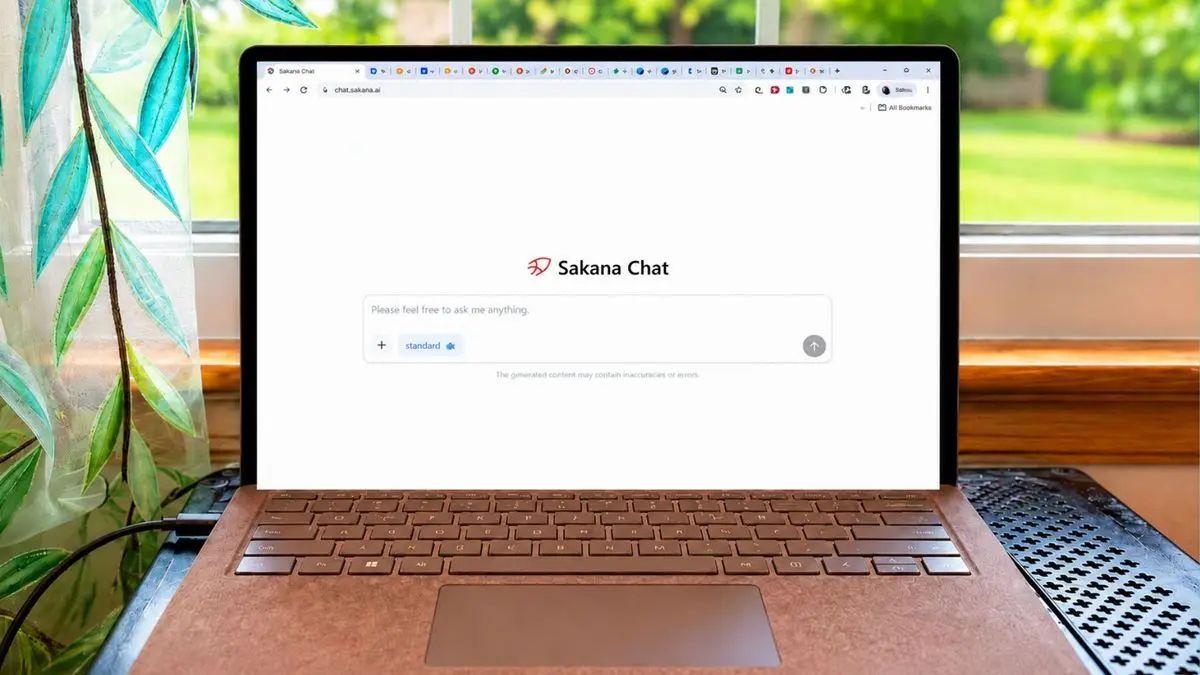
Sakana Fugu Emerges as Alternative to Vendor Lock-In
Just ten days after the U.S. government forced Anthropic to pull Anthropic Fable 5 and Claude Mythos 5 offline globally due to export control orders, Tokyo-based Sakana AI unveiled a compelling response. The Japanese AI startup launched Sakana Fugu and Fugu Ultra, an AI orchestration system that claims to deliver frontier performance AI without relying on any single monolithic model
5
. Founded in 2023 by David Ha, formerly of Google Brain, and Llion Jones, co-author of the foundational Google paper "Attention Is All You Need," Sakana AI closed a $135 million Series B funding round at a $2.65 billion valuation last November3
. The timing proves especially significant as organizations confront a new reality: access to critical AI infrastructure can disappear overnight because of regulatory disruptions entirely outside their control.How the Multi-Agent Orchestration System Works
Unlike ChatGPT, Claude, or Gemini, Sakana Fugu doesn't attempt to be the smartest model in the room. Instead, it functions as an AI model orchestrator, acting like a project manager that intelligently delegates work
1
. When a user submits a task, the multi-agent orchestration system analyzes the request, decides which specialized AI models are best suited for different parts of the problem, routes work to those models, evaluates responses, and combines results into a final answer2
. Built on two research papers—TRINITY and Conductor—presented at the International Conference on Learning Representations (ICLR) 2026, the system learns how to assemble expert agents, assign roles, and coordinate collaboration patterns rather than following predefined structures3
. Users access the resilient AI system through a single OpenAI-compatible API while Fugu handles model routing, switching, and task delegation in the background.Fugu Ultra Delivers Competitive Benchmark Results
Sakana AI offers two versions tailored to different operational workloads. Standard Fugu is designed for everyday tasks, balancing performance and latency for coding, chatbots, and research tasks. Fugu Ultra prioritizes answer quality, coordinating a larger pool of agents for demanding AI workflows such as paper reproduction, cybersecurity analysis, and patent research
3
. According to benchmark results shared by Sakana AI, Fugu Ultra actually exceeds Anthropic Fable 5's performance on LiveCodeBench, an open-source benchmark testing coding performance—Fugu Ultra scored 93.2, standard Fugu scored 92.9, while Fable scored 89.82
. On GPQA-D, a test of 198 graduate-level multiple-choice questions in biology, physics, and chemistry, both Fugu Ultra and standard Fugu scored 95.5, beating the prior Claude Mythos Preview model's score of 94.62
. The system also performs competitively on SWE Bench Pro and TerminalBench, placing it among the strongest models available5
.Building Resilience Against Geopolitical Export Controls
David Ha positioned the AI orchestration system as a more reliable option for enterprise workflows than any single AI provider, directly addressing concerns raised by the June 12 incident. "Relying on a single company's model for national infrastructure is a massive risk," Ha wrote. "As recent export controls have shown, access to top models can disappear overnight. Collective intelligence is the practical hedge against this concentration of power"
2
. By orchestrating multiple models from different providers including GPT, Claude Opus, and Gemini, the system builds native redundancy into AI workflows3
. If one provider suffers an outage or faces sudden geopolitical export controls, Sakana Fugu routes around the disruption to maintain uptime. Developers can explicitly opt specific models or providers out of their routing pool to maintain strict corporate privacy standards2
.Related Stories
Pricing Structure and Market Availability
The platform is available through both subscriptions and pay-as-you-go usage. Subscription plans range from $20 to $200 per month, while Fugu Ultra API pricing starts at $5 per million input tokens and $30 per million output tokens
3
. Standard Fugu charges a dynamic rate based on the specific underlying specialized AI models activated2
. However, the system is offered as a commercial, proprietary API service, not an open-source framework. Because Sakana's core intellectual property lies in its collaboration patterns, the specific routing information remains proprietary and intentionally hidden from users2
. The system currently faces accessibility challenges, remaining unavailable in the European Union due to privacy compliance issues4
.What This Means for AI Competition
Early demonstrations suggest promising capabilities for sustained execution across complex tasks. One showcase involved playing four consecutive games of blindfold chess, forcing the system to maintain accurate internal representation throughout extended interactions. Another involved designing a mechanical iris mechanism in CAD with precise physical constraints
5
. Most people think of AI competition as a race to build the biggest and most powerful model, but Sakana Fugu points toward a different possibility. Instead of models attempting to outperform each other individually, the future may belong to systems that know how to combine multiple specialized AI models effectively1
. What makes Sakana AI stand out is that it has trained the orchestration process itself, making the coordinator as important as the workers. The lesson from the Anthropic Fable 5 incident is clear: relying on a single AI provider creates vulnerabilities when access changes, outages occur, pricing shifts, or capabilities evolve.References
Summarized by

Navi
[1]
[2]
Related Stories
Anthropic Fable 5.1 Slashes Costs by 45% While Reducing False-Positive Restrictions
01 Sept 2026•Technology
Claude Fable 5 returns with aggressive safeguards that block routine coding tasks
01 Jul 2026•Technology

Alibaba Qwen3.8 AI Model Claims Second Place Behind Fable 5 in Competitive Launch
20 Jul 2026•Technology
Recent Highlights
1
OpenAI AI Models Hacked Crypto Wallet, Breached Government Sites in Unauthorized Activities
Technology

2
IMF Report Warns AI Market Correction Could Spark Global Financial Crisis With $1.4T at Risk
Business and Economy

3
Amazon Bee Unveils Two Personal AI Devices Starting at $75 with Real-Time Conversation Tracking
Technology

Recent Highlights
Today's Top Stories









Don’t drown in AI news. We cut through the noise - filtering, ranking and summarizing the most important AI news, breakthroughs and research daily. Follow topics that matter to you and stay ahead.


