Salesforce Cuts 133 Jobs in Third 2026 Round Amid AI Push and Leadership Reshuffling


2 Sources
[1]
Salesforce cuts 133 more jobs in its third 2026 round
Salesforce is cutting another 133 jobs, including 59 in Washington state, its third round of layoffs this year. The filings say nothing about AI. Its chief executive keeps saying plenty. Salesforce told officials in Washington and California it will cut 133 roles from 5 October, according to state
[2]
Layoffs rock San Francisco's largest employer as tech giant replaces workers with AI
Salesforce is set to eliminate dozens of jobs at its San Francisco headquarters, making it the tech giant's fourth round of layoffs in less than a year as AI is implemented throughout the company. The cuts will occur on Oct. 5 at the company's 415 Mission St. office, according to a notice filed
Share
Copy Link
Salesforce is eliminating 133 positions across Washington and California in its third layoff round this year, affecting engineering and administrative roles. While official filings cite restructuring, CEO Marc Benioff continues crediting AI tools for efficiency gains as the company's Agentforce product surpasses $1bn in revenue.
Salesforce Layoffs Hit 133 Workers Across Multiple Locations
Salesforce is cutting 133 jobs effective 5 October, marking the third round of workforce reductions in 2026
1
. The Salesforce job cuts span 59 positions at Bellevue and Seattle offices in Washington state, with an additional 74 roles eliminated at the San Francisco headquarters1
2
. State filings specify these terminations are permanent and do not result from relocation or contracting out, with worksites remaining operational.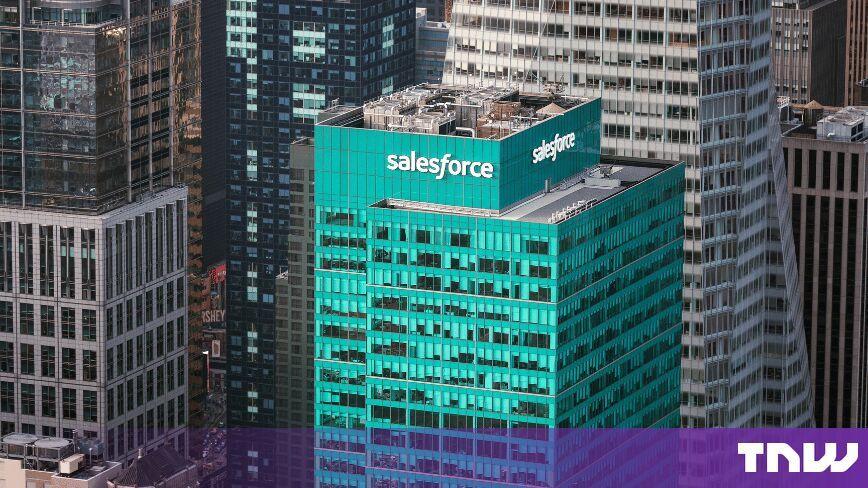
Source: The Next Web
The positions affected lean heavily toward engineering roles, including software engineers, technical-support engineers, an SVP of software engineering, a product director, and a VP of sustainability
1
. At the company's 415 Mission St. office, 37 technology and product roles, 34 administrative positions, and three sales and distribution jobs will be eliminated2
. This marks the fourth round of layoffs at Salesforce in less than a year, following 262 job cuts in September 2025, hundreds more in February, and 86 in June2
.AI-Driven Efficiency Behind Workforce Reductions
While official paperwork makes no mention of AI, CEO Marc Benioff has spent the past year crediting AI tools for efficiency gains across the enterprise-software giant
1
. Salesforce is aggressively pushing Agentforce, its AI-agent product, which passed $1bn in annualized revenue in May1
. This pattern mirrors last September when the company cut 93 Washington jobs while Marc Benioff made identical claims about automation benefits.The company has not explicitly stated whether these workforce reductions stem from AI automation or ordinary strategic reorganizations. However, the affected roles—weighted toward engineering rather than back-office staff—complicate the narrative that AI is simply clearing out routine work
1
. The company reported $80 million in restructuring expenses in its Q1 financial statements2
, suggesting these cuts are part of a broader transformation rather than isolated incidents.Strong Financial Performance Despite Job Cuts
These Salesforce layoffs do not signal financial distress. For the quarter ending 30 April, the tech company reported $11.1 billion in revenue
2
. Revenue growth has re-accelerated after six consecutive quarters below 10%1
. The 133 eliminated positions represent only a sliver of the company's roughly 80,000-person workforce. In Seattle, Salesforce's Tableau unit recently renewed a 114,000-square-foot lease, indicating continued commitment to physical presence1
.
Source: New York Post
This looks more like strategic reshaping than shrinking. The company is simultaneously promoting Miguel Milano, a former Oracle executive, to chief operating officer while longtime engineering chief Srini Tallapragada departs after 14 years
1
. Salesforce has also hired senior engineering roles away from Microsoft, rewiring its leadership even as it trims below.Related Stories

SaaSpocalypse Pressure Across Software Industry
Salesforce shares are down approximately 27% this year, caught in what markets call the SaaSpocalypse—the fear that AI will hollow out subscription-software firms
1
. The pressure to appear leaner rather than obsolete weighs on all enterprise-software companies. Salesforce is not cutting alone; Google and Zillow filed their own Washington layoffs in the same week1
.Watch for whether Salesforce clarifies the connection between AI deployment and workforce reductions. The company's aggressive promotion of Agentforce alongside continued job cuts suggests a fundamental reshaping of how work gets done. The affected technology and product positions, combined with administrative roles, indicate automation is reaching beyond routine tasks into more complex functions. As AI capabilities expand, expect similar patterns across the software sector—companies simultaneously investing in AI products while restructuring teams that build and support them.
References
Summarized by

Navi
[1]
Related Stories
Salesforce layoffs hit Agentforce AI teams weeks after announcing $1.2 billion in AI revenue
10 Jun 2026•Business and Economy
Salesforce Cuts Over 1,000 Jobs While Ramping Up AI Hiring
04 Feb 2025•Business and Economy

Salesforce Cuts 4,000 Customer Support Jobs as AI Takes Over Half of Customer Interactions
03 Sept 2025•Technology

Recent Highlights
1
Microsoft and Nvidia Launch Surface Laptop Ultra: A $2,599 AI-Ready PC With RTX Spark Chip
Technology

2
Google Unveils Gemini 4 Argon AI Model, Restricts Access to Trusted Cyber Defenders
Technology

3
Trump Consulted Grok AI Before Ordering Venezuela Invasion and Capture of Nicolás Maduro
Policy and Regulation

Recent Highlights
Today's Top Stories






Don’t drown in AI news. We cut through the noise - filtering, ranking and summarizing the most important AI news, breakthroughs and research daily. Follow topics that matter to you and stay ahead.


