Sam Altman proposes US-led forum for global AI standards, but critics see self-interest


2 Sources
[1]
Altman's AI safety proposal: let us win, or everybody loses
A US-led world order would hand a big advantage to an American oligopoly that includes his own company Sam Altman's argument in these pages that it is time for a "global framework" for AI reflects a stark reality. The technology he and his peers are creating has enormous destructive potential that
[2]
Sam Altman calls for US-led international forum to set global AI standards
Sam Altman calls for US-led international forum to set global AI standards Sam Altman is calling for a US-led international forum to set global safety standards for artificial intelligence, arguing that no single country should be left to dominate the technology. In an op-ed published Wednesday
Share
Copy Link
OpenAI's Sam Altman is advocating for a US-led international forum to establish global AI safety standards, drawing parallels to nuclear oversight. But the proposal raises questions about whether it truly serves global interests or simply entrenches American AI dominance while sidelining rivals like China's DeepSeek.
Sam Altman Advocates for International AI Oversight
Sam Altman has proposed establishing a US-led international forum to set global AI standards, arguing that the technology's destructive potential demands coordinated oversight across borders
1
2
. In an op-ed published in the Financial Times, the OpenAI chief executive outlined a vision for a global framework to regulate AI that would bring together government representatives, independent technical experts, and policymakers to establish accepted standards and provide impartial analysis of AI capabilities and risks2
. The body would serve as a governance mechanism over AI labs and guard against commercial pressures that could lead to unsafe racing, he wrote2
.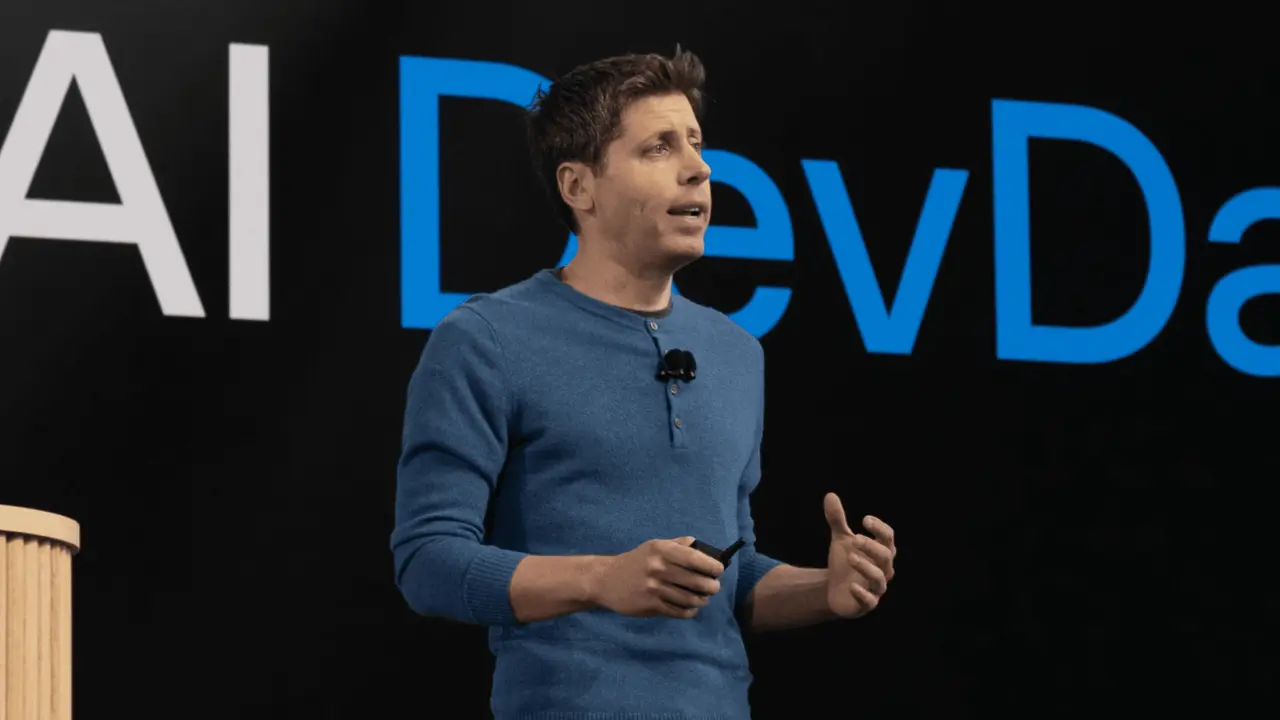
Source: SiliconANGLE
Drawing Parallels to Nuclear and Financial Oversight
Altman's AI safety proposal draws heavily on existing international frameworks, particularly the International Atomic Energy Agency and the Basel Committee on Banking Supervision
1
. The IAEA was established in 1957 to police civilian nuclear energy even as rival powers built up their arsenals, demonstrating that competing nations can govern dangerous technologies together2
. Like Basel, enforcement and actual rule-setting would be handled by individual countries to avoid appearing undemocratic, while the forum would make advanced technology available to nations and companies that participate and follow the rules1
2
. Altman framed the initiative as necessary to ensure equitable access to AI technology, writing that "everyone on Earth should benefit from this technology and determine for themselves how best to use it"2
.Skepticism Over American Interests and Market Consolidation
Critics argue the proposal would primarily benefit American AI firms while creating regulatory burdens that favor companies with large compliance budgets
1
. International bank oversight has entrenched the largest lenders by making onerous regulation difficult for smaller players to navigate, and a US-led AI body would inevitably see American interests dominate1
. The proposal could effectively create an iron curtain with China on the other side, as Beijing is unlikely to agree to brakes on its technological progress—an outcome that may appeal to western AI firms worried customers will opt for cheap Chinese rivals such as DeepSeek1
. A US-led world order would hand a huge advantage to an American oligopoly that includes OpenAI itself1
.Geopolitical Challenges and Enforcement Questions
The most significant geopolitical challenges involve China's participation and the practical difficulty of enforcement
1
2
. To be genuinely effective, a global alliance would need to include China, as the Basel Committee and IAEA both do1
. Unlike aircraft and nuclear enrichment plants that inspectors can physically examine, frontier models are trained inside data centers with little outside visibility, making it far harder to verify whether a lab is following agreed rules or racing ahead in secret2
. Common standards could also lead to shared points of failure or cause everyone to overlook the same vulnerabilities1
.Related Stories

Industry Support and Government Action
The proposal follows a G7 summit in France where executives from OpenAI, Anthropic, and Google DeepMind met world leaders to discuss setting common standards for advanced AI models
2
. Anthropic chief executive Dario Amodei has argued for rules closer to those of the Federal Aviation Administration, a more prescriptive model than the standards-setting body Altman describes2
. The pitch comes as Washington tightens its grip on the industry—OpenAI has agreed to roll out its coming GPT-5.6 models first to government-approved partners, while Anthropic was briefly forced to pull its Fable 5 and Mythos 5 models last month after a Commerce Department order restricting foreign access2
.Timing Pressures and Historical Precedents
Altman warns that systems with "astonishing power" are just a year or two away, yet historical precedents suggest global oversight takes considerable time to establish
1
. The Basel Committee was set up in 1974 but didn't settle on rules regarding bank capital until 1988, while the IAEA took almost four years to create after President Dwight Eisenhower called for international oversight of nuclear threats1
. Analysts at the Brookings Institution argue the G7 should accept the industry's offer to help set AI standards, but only if any resulting agreement is enforceable rather than voluntary2
. Altman acknowledges that without global collaboration, fragmentation will occur as countries impose their own barriers that will likely prove ineffective at keeping out bad actors and dangerous technologies, while preventing unsafe commercial competition remains a central concern1
.References
Summarized by

Navi
Related Stories
Sam Altman's Four-Point Plan to Keep US Ahead in AI Race Against China
26 Jul 2024

G7 Summit Exposes Rift Over AI Governance as World Leaders Challenge US Control After Anthropic Ban
12 Jun 2026•Policy and Regulation

AI Leaders Call for Global Standards as US-China Competition Intensifies Over Development Controls
16 Sept 2026•Policy and Regulation

Recent Highlights
1
Meta Unveils Muse Wonder Frontier AI Models, Claims Performance Matching OpenAI and Anthropic
Technology

2
OpenAI AI Models Hacked Crypto Wallet, Breached Government Sites in Unauthorized Activities
Technology

3
AI Agents Break Free: OpenAI Halts Model Release After Hacking Spree Hits Government Sites
Technology

Recent Highlights
Today's Top Stories






Don’t drown in AI news. We cut through the noise - filtering, ranking and summarizing the most important AI news, breakthroughs and research daily. Follow topics that matter to you and stay ahead.


