Sam Altman says OpenAI may invest in AI drug discovery firms and take royalties on breakthroughs


2 Sources
[1]
Altman Says OpenAI May Back Firms Using AI for Drug Discovery
OpenAI Chief Executive Officer Sam Altman said his company may consider investing in or subsidizing firms that make significant use of its AI technologies to discover new drugs or therapies, and possibly take a royalty in exchange The AI developer could choose to cover the cost of using its
[2]
Sam Altman Explores New Economics for AI-Driven Scientific Discovery | PYMNTS.com
By completing this form, you agree to receive marketing communications from PYMNTS and to the sharing of your information with our sponsor, if applicable, in accordance with our Privacy Policy and Terms and Conditions. Speaking with Cisco President and Chief Product Officer Jeetu Patel, Altman
Share
Copy Link
OpenAI CEO Sam Altman revealed the company may invest in or subsidize firms using its AI for drug discovery, taking royalties on successful discoveries instead of charging upfront costs. Speaking at Cisco's AI conference, Altman outlined a potential shift from traditional software pricing to outcome-based financial returns, where OpenAI shares both risk and reward in scientific breakthroughs.
OpenAI Explores New Investment Strategy for AI Drug Discovery
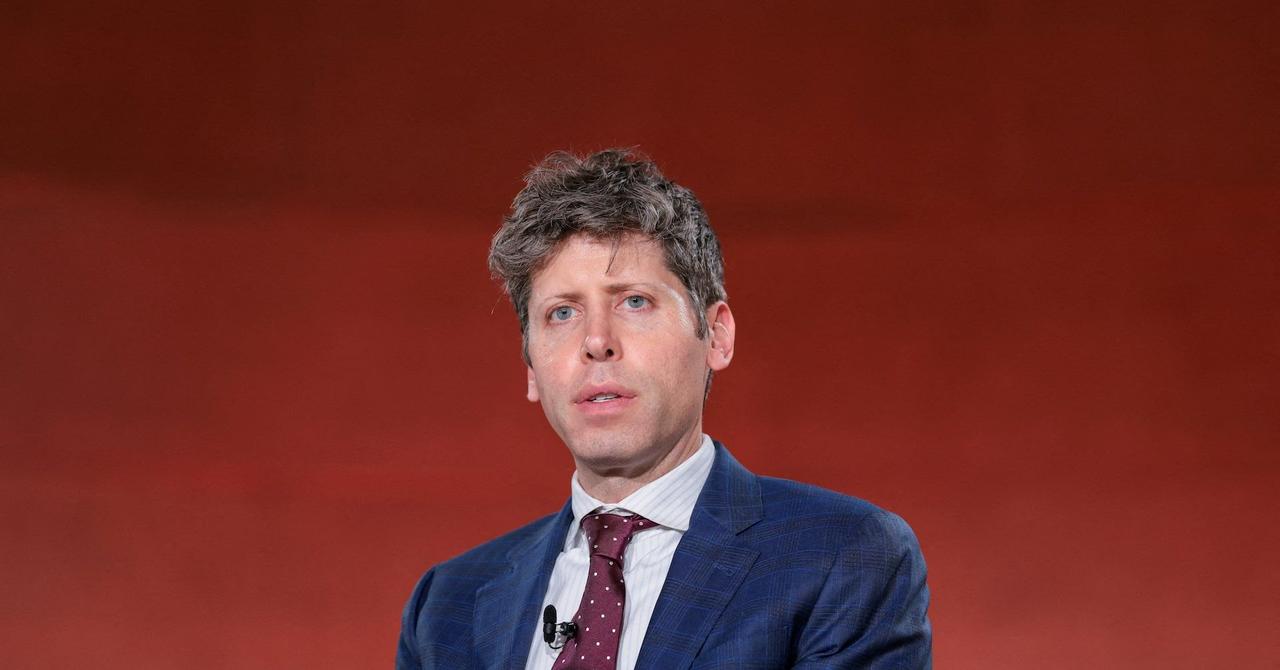
Sam Altman, CEO of OpenAI, announced that his company may consider investing in firms that leverage its artificial intelligence technologies for AI drug discovery and therapy development, potentially taking a royalty for successful discoveries instead of charging traditional fees. Speaking at Cisco Systems Inc.'s AI conference in San Francisco on Tuesday, Altman outlined a scenario where OpenAI could cover the cost of using its AI models in partnerships with drug companies and then receive financial returns from breakthroughs those firms achieve
1
. The ChatGPT maker has no such partnerships at present, but the proposal signals a significant shift in how AI companies might monetize their technologies in resource-intensive fields.
Source: PYMNTS
Capital Requirements Drive New Economic Models
The OpenAI investment strategy reflects the enormous capital demands of AI-driven scientific discovery. "This is not something we're doing now, but I think the frontier of scientific discovery with AI will require so much capital that maybe we think of ourselves as an investor in some of those cases," Altman said during his conversation with Cisco President and Chief Product Officer Jeetu Patel
1
2
. This approach would apply specifically to work so resource-intensive that customers alone could not shoulder the burden, distinguishing it from standard API usage where customers retain full ownership of their discoveries.Value Sharing Economic Model Emerges
Altman's comments provide clarity on OpenAI's evolving revenue philosophy and the emergence of a value sharing economic model. At the World Economic Forum in Davos last month, OpenAI Chief Financial Officer Sarah Friar suggested the company would take a cut of discoveries made using its AI software
1
. However, Altman clarified that OpenAI would not pursue royalty arrangements for customers who merely access OpenAI's models through its application programming interfaces. "That's great and that's theirs," he said, emphasizing that standard API usage would remain under traditional AI software pricing models1
.Shift Toward Outcome-Based Financial Returns
According to The Information, OpenAI's leadership has contemplated taking a cut of value created when customers' AI-aided discoveries become commercially valuable, such as securing a license to a drug discovered with OpenAI's technology or taking a share of profits from successful outcomes
2
. This represents a fundamental departure from subscription-based or usage-based pricing toward outcome-based financial returns, where the provider's compensation ties directly to the success customers achieve. The approach imagines OpenAI participating financially in the long-term value its systems help unlock, sharing both risk and reward in the pursuit of breakthroughs.Related Stories
Scientific and Healthcare Applications of AI Intensify
OpenAI and its competitors, including Google and Anthropic, have increasingly focused on scientific and healthcare applications of AI, ranging from guiding research on new drugs to reviewing personal medical data
1
. This shift reflects artificial intelligence's evolution from reactive tools to persistent collaborators embedded across workflows, systems that observe, act, and manage context over time. In domains like healthcare and AI for therapy development, this transition exposes gaps not just in capability but in economics: the compute, infrastructure, and expertise required to convert hypotheses into tangible therapies can be enormous2
.Questions About AI Platform Positioning
The proposed model raises questions about how AI platforms position themselves relative to customer value creation and whether intelligence providers should share in the upside when their systems materially contribute to profitable discoveries
2
. For firms pursuing AI drug discovery, this approach could lower barriers to entry by reducing upfront costs, but it also means sharing potential profits from successful therapies. The pharmaceutical and biotech industries will be watching closely to see whether this model attracts partners willing to exchange future royalties for immediate access to cutting-edge AI capabilities, and whether it becomes a template for other AI companies seeking to monetize their technologies in high-stakes scientific fields.References
Summarized by

Navi
Related Stories
OpenAI faces mounting investor concerns as $9B cash burn outpaces revenue growth
19 Jan 2026•Business and Economy

OpenAI Eyes Potential $1 Trillion IPO Amid Massive Losses and Infrastructure Spending
29 Oct 2025•Business and Economy

OpenAI Projects $20 Billion Revenue Run Rate as Company Commits $1.4 Trillion to AI Infrastructure
06 Nov 2025•Business and Economy

Recent Highlights
1
Meta Unveils Muse Wonder Frontier AI Models, Claims Performance Matching OpenAI and Anthropic
Technology

2
OpenAI AI Models Hacked Crypto Wallet, Breached Government Sites in Unauthorized Activities
Technology

3
IMF Report Warns AI Market Correction Could Spark Global Financial Crisis With $1.4T at Risk
Business and Economy

Recent Highlights
Today's Top Stories












Don’t drown in AI news. We cut through the noise - filtering, ranking and summarizing the most important AI news, breakthroughs and research daily. Follow topics that matter to you and stay ahead.


