AMD and Samsung forge strategic partnership for AI memory supply with foundry deal on the table


5 Sources
[1]
AMD and Samsung ink memory supply memorandum for EPYC and Instinct products -- unprecedented deal also includes scope for foundry partnership
AMD and Samsung this week signed a rather unprecedented memorandum of understanding (MOU) that involves the strategic supply of memory for AMD's next-generation EPYC and Instinct MI455X products, as well as discussions of a potential foundry partnership. The MOU aims to ensure that AMD gets enough
[2]
Samsung and AMD deepen AI memory pact with potential foundry deal on the table
Serving tech enthusiasts for over 25 years. TechSpot means tech analysis and advice you can trust. What we know so far: Samsung Electronics and AMD are strengthening their partnership to secure a foothold in the fast-evolving artificial intelligence hardware market. This week, the two companies
[3]
AMD Finally Secures Samsung's HBM4 Supply Following NVIDIA's Footsteps, but the Deal Comes With a Surprising Caveat
AMD's CEO, Lisa Su, and her visit to South Korea were apparently aimed at securing HBM4 supply from Samsung, and it appears she has succeeded in securing the desired capacity. The AI industry, particularly companies involved in the supply chain, has become a much more important entity for
[4]
Samsung and AMD Expand Strategic Partnership for Next Generation AI Memory
The signing ceremony was held at Samsung's most advanced chip manufacturing complex in Pyeongtaek, Korea, attended by Dr. Lisa Su, Chair and CEO of AMD, and Young Hyun Jun, Vice Chairman & CEO of Samsung Electronics. "Samsung and AMD share a commitment to advancing AI computing, and this agreement
[5]

Samsung signs MOU with AMD for next-gen AI Memory
Samsung and AMD have announced the signing of a Memorandum of Understanding (MOU) to broaden their strategic partnership concerning next-generation artificial intelligence (AI) memory and computing technologies. The agreement was formally signed at Samsung's semiconductor manufacturing complex in
Share
Copy Link
AMD CEO Lisa Su secured a memorandum of understanding with Samsung for HBM4 memory supply to power next-generation Instinct MI455X AI accelerators and DDR5 for EPYC processors. The deal includes discussions for a potential foundry partnership that could see Samsung manufacturing AMD's future chips, marking a significant shift in AMD's production strategy beyond TSMC.
AMD and Samsung Formalize Next-Generation AI Memory Deal
AMD and Samsung have signed a memorandum of understanding (MOU) that secures critical AI memory supply and opens discussions for semiconductor manufacturing collaboration
1
. The agreement was formalized at Samsung's advanced chip manufacturing complex in Pyeongtaek, South Korea, with Lisa Su, Chair and CEO of AMD, and Young Hyun Jun, Vice Chairman and CEO of Samsung Electronics, attending the ceremony4
. This strategic partnership addresses the mounting pressure on AMD to secure memory components as demand for AI computing hardware continues to outpace supply across the industry.
Source: DT
HBM4 Memory Supply for Instinct MI455X AI Accelerators
Under the MOU, Samsung will serve as the primary supplier of HBM4 memory for AMD's upcoming Instinct MI455X GPU, the company's next-generation AI accelerator
5
. The Instinct MI455X is projected to use 12 HBM4 12-Hi memory stacks for a total of 432 GB, making reliable supply essential for AMD's competitiveness against Nvidia in AI data centers1
. Samsung's HBM4 memory stacks are manufactured using its 1c (6th Generation 10nm-class) process technology and feature a base die made on a 4nm-class logic process, achieving data transfer rates of up to 13 GT/s and providing up to 3.3 TB/s of memory bandwidth per stack1
. This performance significantly exceeds JEDEC's recommended 8 GT/s for HBM4, positioning Samsung's technology among the highest-performing options available3
.DDR5 Memory for EPYC Processors and Helios Systems
The agreement extends beyond high-bandwidth memory to include DDR5 memory for EPYC processors. Samsung will supply advanced DRAM solutions optimized for AMD's 6th Generation EPYC CPUs, codenamed 'Venice,' which are designed for server chips and data center workloads
5
. These memory technologies will also support AMD's Helios rack-scale systems for AI data centers, which combine EPYC 'Venice' processors and Instinct MI455X accelerators to deliver integrated AI infrastructure1
. The move aims to ensure a steady memory supply for next-generation AI systems running AMD's CPUs and AI accelerators, strengthening AMD's competitive position against Nvidia's Rubin-powered machines1
.
Source: Wccftech
Potential Foundry Partnership Signals Production Strategy Shift
Perhaps the most significant aspect of this strategic partnership is the potential foundry partnership that could see Samsung manufacturing future AMD products. While no specific nodes or chips were disclosed, Korean media outlet Chosun Biz reports that Samsung has positioned itself to produce some of AMD's "advanced" AI chips, likely referring to Instinct accelerators rather than EPYC processors
3
. This represents a notable shift for AMD, which has relied almost exclusively on TSMC for semiconductor manufacturing since drifting away from GlobalFoundries in late 20181
. Adopting a dual-source foundry strategy with Samsung Foundry would be costly, but appears necessary to secure the HBM4 memory supply critical to AMD's AI ambitions1
.Related Stories
Samsung Gains Ground in Competitive AI Supply Chain
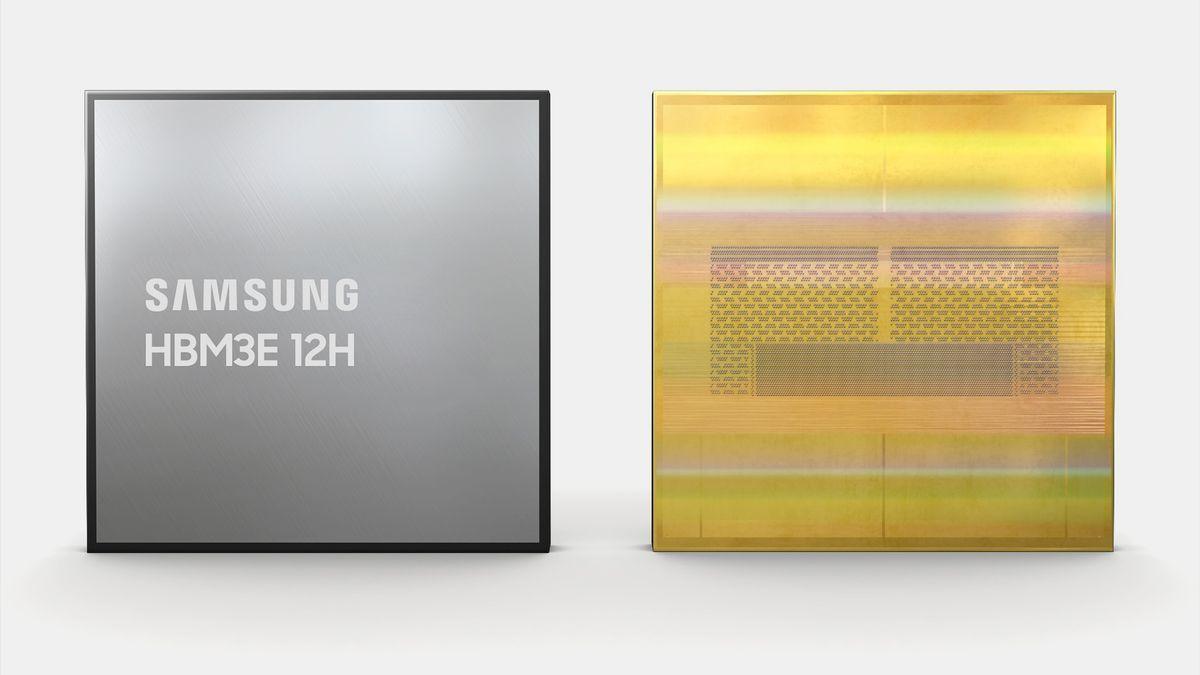
For Samsung, this collaboration strengthens its position in the AI supply chain at a time when HBM chips demand is outpacing production capacity. Samsung already provides AMD with HBM3E chips used in current MI350X and MI355X Instinct accelerators, making it a natural progression to become the key supplier for the HBM4 generation
1
. According to Counterpoint Research, SK Hynix currently holds roughly 57% of the high-bandwidth memory market, more than double Samsung's estimated 22%. The AMD deal, combined with Samsung's recent agreement with Nvidia for HBM4 supply announced during GTC, positions the company to close this gap.
Source: TechSpot
Strategic Timing Amid Major AI Contracts
The timing of this MOU aligns with AMD's recent success in securing major AI accelerator contracts. In February, AMD agreed to sell up to $60 billion in AI chips to Meta Platforms over five years, with Meta receiving the option to acquire up to a 10% stake in AMD. AMD reached a similar deal with OpenAI in late 2025. These commitments make securing memory supply increasingly critical, as more companies compete for limited HBM capacity. Young Hyun Jun emphasized Samsung's comprehensive capabilities, stating: "From industry-leading HBM4 and next-generation memory architectures to cutting-edge foundry and advanced packaging, Samsung is uniquely positioned to deliver unrivaled turnkey capabilities that support AMD's evolving AI roadmap"
1
. As alliances between chip designers and memory specialists become as much a competitive strategy as a logistical necessity, this partnership underscores how supply chain relationships are reshaping global semiconductor competition.References
Summarized by

Navi
[1]
[5]
Related Stories
Samsung and AMD formalize HBM4 supply deal, explore foundry partnership for next-gen AI chips
11 Mar 2026•Technology

Samsung Secures NVIDIA Partnership for Next-Gen HBM4 Memory, Plans 2026 Mass Production
30 Oct 2025•Business and Economy
SK Hynix Accelerates HBM4 Development to Meet Nvidia's Demand, Unveils 16-Layer HBM3E
04 Nov 2024•Technology

Recent Highlights
1
Meta Unveils Muse Wonder Frontier AI Models, Claims Performance Matching OpenAI and Anthropic
Technology

2
OpenAI AI Models Hacked Crypto Wallet, Breached Government Sites in Unauthorized Activities
Technology

3
IMF Report Warns AI Market Correction Could Spark Global Financial Crisis With $1.4T at Risk
Business and Economy

Recent Highlights
Today's Top Stories







Don’t drown in AI news. We cut through the noise - filtering, ranking and summarizing the most important AI news, breakthroughs and research daily. Follow topics that matter to you and stay ahead.


