Samsung's HBM3E Memory Breakthrough: Nvidia Certification Boosts AI Chip Competition


6 Sources
[1]
Samsung earns Nvidia certification for its HBM3 memory -- stock jumps 5% as company finally catches up to SK hynix and Micron in HBM3E production
Investor confidence reflects Samsung's efforts to regain its technology lead. Samsung's 12-layer HBM3E chips have passed Nvidia's qualification tests for use in high-end AI accelerators. The Korean giant's stock price immediately jumped over 5% following the news, as the certification means
[2]
Samsung overcomes technical challenges, ready to supply HBM3E chips to Nvidia
Serving tech enthusiasts for over 25 years. TechSpot means tech analysis and advice you can trust. Highly anticipated: Samsung Electronics is the world's largest memory manufacturer and one of the few companies with full chipmaking capabilities through its foundry facilities. But until recently,
[3]
Samsung finally passes NVIDIA's strict HBM3E 12-Hi qualification tests: 10,000 units on the way
TL;DR: Samsung Electronics has passed NVIDIA's strict HBM3E 12-Hi memory qualification, securing a contract to supply 10,000 units for NVIDIA's AI GPUs. This marks a significant shift as Samsung challenges SK hynix's exclusive supply, positioning itself strongly for the upcoming HBM4 memory
[4]
Nvidia Greenlights Samsung's AI Chip Technology, Sets Stage For HBM4 Battle: Report - Intel (NASDAQ:INTC), Micron Technology (NASDAQ:MU)
Samsung Electronics Co. SSNLF has reportedly received the green light from Nvidia Corp. NVDA for its latest high-bandwidth memory (HBM3E) product, marking a significant breakthrough in the AI hardware chip supply race. Samsung Wins Nvidia Nod For HBM3E Memory Chips Samsung's fifth-generation
[5]

Samsung Shares Surge 5% After Clearing NVIDIA's HBM3E Performance Tests
Samsung Clears NVIDIA Tests for AI Memory Chips, Boosting Supply Prospects and Stock Performance Samsung Electronics has advanced in the global semiconductor market after reports confirmed its 12-layer HBM3E memory chips . The qualification marks a crucial step for Samsung as it works to expand
[6]

Samsung passes Nvidia's qualification test for 12-layer HBM3E chip - report By Investing.com
Investing.com -- Samsung Electronics has successfully passed Nvidia's qualification test for its 12-layer HBM3E product, according to a report from Korea Economic Daily that cited people familiar with the matter. The approval comes approximately 18 months after Samsung completed the development of
Share
Copy Link
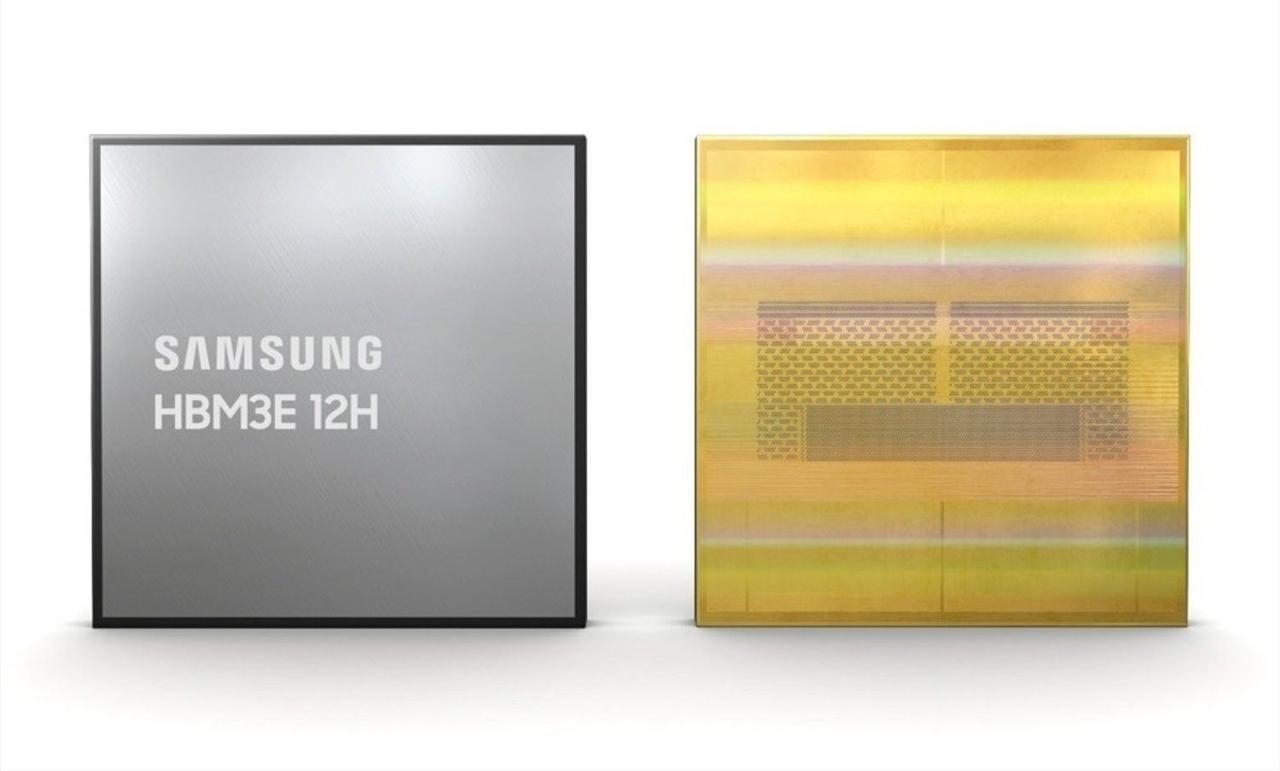
Samsung Electronics has successfully passed Nvidia's strict qualification tests for its 12-layer HBM3E memory chips, marking a significant comeback in the AI hardware race. This development has boosted investor confidence and set the stage for future competition in HBM4 technology.
Samsung's HBM3E Breakthrough
Samsung Electronics has achieved a significant milestone in the AI hardware race by successfully passing Nvidia's strict qualification tests for its 12-layer HBM3E (High Bandwidth Memory) chips
1
2
. This development comes after 18 months of efforts and multiple certification delays, marking a significant comeback for the Korean tech giant in the competitive semiconductor industry1
.
Source: TweakTown
Market Impact and Competition
The news of Samsung's certification led to an immediate 5% jump in the company's stock price, reflecting increased investor confidence
1
5
. Samsung is now poised to challenge the dominance of SK hynix and Micron, who were previously the exclusive suppliers of HBM3E chips to Nvidia3
.
Source: Analytics Insight
Supply and Implementation
Samsung has secured a contract to supply approximately 10,000 units of its qualified HBM3E 12-Hi product to Nvidia
3
. These chips are expected to be used in Nvidia's DGX B300 cards and AMD's Instinct MI350 accelerators1
2
. However, Samsung's supply to Nvidia is expected to remain limited in the near term, as it is the third company to gain clearance after SK hynix and Micron4
.Related Stories

Technical Specifications
The HBM3E chips comprise 12 layers, up from eight in standard HBM3, resulting in an impressive bandwidth of 1.2 TB/s per stack
1
. This high-performance memory is crucial for powering advanced AI models and accelerators in data centers.Future Prospects: HBM4
While the HBM3E certification is a significant achievement, the industry is already looking ahead to HBM4, the next generation of high-bandwidth memory
1
3
. HBM4 is expected to double the bus width, potentially achieving 2 TB/s of bandwidth per stack. Nvidia is pushing for speeds of 10 to 11 GBps per pin, significantly higher than the JEDEC standard of 8 Gbps1
.
Source: TechSpot
Samsung is actively preparing for the HBM4 race, with plans to deliver its first HBM4 samples to Nvidia for validation later this month
2
. The company aims to begin volume production as early as the first half of 20261
.This development not only strengthens Samsung's position in the AI hardware market but also intensifies the competition among memory manufacturers, potentially driving further innovation in high-performance computing and artificial intelligence technologies.
References
Summarized by

Navi
[1]
[3]
[5]
Related Stories
Samsung's 8-Layer HBM3E Chips Pass Nvidia's Tests, Paving Way for AI Advancements
07 Aug 2024

Samsung Secures NVIDIA Partnership for Next-Gen HBM4 Memory, Plans 2026 Mass Production
30 Oct 2025•Business and Economy
NVIDIA Accelerates Efforts to Certify Samsung's HBM3E Memory for AI GPUs
25 Nov 2024•Technology

Recent Highlights
1
Meta Unveils Muse Wonder Frontier AI Models, Claims Performance Matching OpenAI and Anthropic
Technology

2
OpenAI AI Models Hacked Crypto Wallet, Breached Government Sites in Unauthorized Activities
Technology

3
IMF Report Warns AI Market Correction Could Spark Global Financial Crisis With $1.4T at Risk
Business and Economy

Recent Highlights
Today's Top Stories







Don’t drown in AI news. We cut through the noise - filtering, ranking and summarizing the most important AI news, breakthroughs and research daily. Follow topics that matter to you and stay ahead.


