Samsung workers reject $340,000 bonus, threaten strike that could shake global AI chip supply


4 Sources
[1]
Samsung chip workers reject $340,000 one-time bonus, demand annual payouts like SK hynix's $900,000 -- workers want share of AI windfall, impending 18-day strike could cost Samsung up to $11.7 billion
Samsung semiconductor workers want a bigger slice of the AI pie. Negotiations between the National Samsung Electronics Union, which represents workers in the company's chipmaking division, and management have seemingly broken down over a single issue. According to the Financial Times, the two
[2]
Pay dispute backs Samsung into a tight corner
HONG KONG, May 13 (Reuters Breakingviews) - Samsung Electronics' (005930.KS), opens new tab will need to be more generous if it is to avoid falling behind again in the artificial intelligence race. The $1.2 trillion company, South Korea's largest employer, is under pressure to match a pledge by its
[3]
Samsung workers demand bigger slice of surging AI profits
Samsung Electronics is locked in a feud with its workers over how to share the spoils of the AI-driven semiconductor boom, with unions threatening to call a strike if the chipmaker does not increase wages and bonuses. Two Samsung unions are demanding the company pay out 15 per cent of each
[4]
Imminent Samsung Strike Could Be an Earthquake for AI
Samsung and a South Korean labor union left the table without a deal on Tuesday. With these negotiations part of a last-ditch effort to salvage relations ahead of a planned May 21 strike that would last two weeks, ripples across the AI biz globally are increasingly likely. The AI hardware world is
Share
Copy Link
Samsung semiconductor workers have rejected a $340,000 one-time bonus offer, demanding annual profit-sharing bonuses like SK Hynix's $900,000 payouts. With over 50,000 workers threatening an 18-day strike starting May 21, the labor dispute could cost Samsung up to $11.7 billion and disrupt the global AI hardware industry at a time when high-bandwidth memory chips are in critically short supply.
Samsung Strike Threatens Global AI Chip Supply
The National Samsung Electronics Union, representing over 90,000 workers or 70% of Samsung's workforce, has reached an impasse with management over annual profit-sharing bonuses
2
. The labor dispute at Samsung centers on a fundamental disagreement: while both sides have agreed on allocating 13% of divisional operating profits as bonuses—roughly $340,000 per employee—management insists this remains a one-time offer, whereas Samsung semiconductor workers demand it be guaranteed annually1
. With negotiations breaking down on May 13, union representative Choi Seung-ho expressed regret that "none of the agenda items requested by the union have been addressed"4
.The stakes extend far beyond Samsung's Giheung, Hwaseong, and Pyeongtaek facilities. These three manufacturing sites produce critical components for AI data centers, including high-bandwidth memory chips that power artificial intelligence infrastructure
4
. Samsung and SK Hynix are two of only three companies globally capable of manufacturing HBM4 chips, and current demand already exceeds their combined production capacity. An 18-day walkout starting May 21 could cost Samsung between $6.9 billion and $11.7 billion in direct losses, according to Prof. Kwon Seok-joon of Sungkyunkwan University, with even larger indirect costs1
. The union itself estimates potential losses at 30 trillion won, approximately $20 billion4
.Surging AI Profits Fuel Worker Demands
The pay dispute emerges against a backdrop of extraordinary financial performance driven by the AI infrastructure buildout. Samsung's net profit soared to 47.2 trillion won ($32.6 billion) in the first quarter, almost six times higher than the same period a year earlier, with the semiconductor division generating nearly all profits
3
. The company's stock market value surpassed $1 trillion in May after shares surged more than 14% to an all-time high3
. Samsung recently reported an almost 50-fold year-over-year rise in income from AI chips in the first quarter of 2026, establishing itself as the 11th largest company globally by market capitalization4
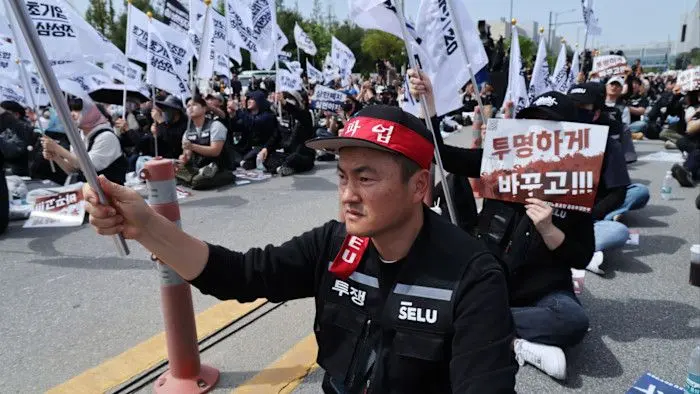
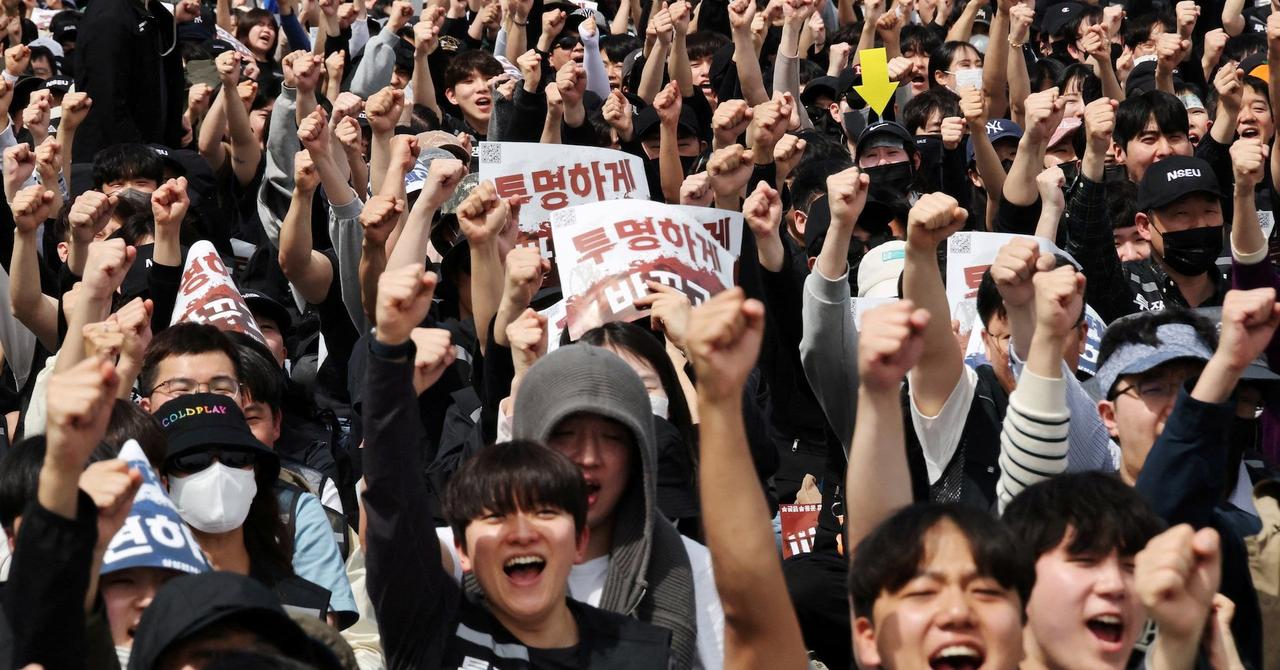
.Workers argue they deserve a larger share of these windfall gains. More than 40,000 Samsung employees rallied outside the company's Pyeongtaek factory complex in April, demanding that bonus caps be eliminated, base salaries increase by 7%, and that 15% of annual operating profit be allocated as bonus pay
3
. Management countered with a 10% allocation, a 6.2% wage increase, and benefits including preferential mortgage rates1
. The compromise of 13% remains contingent on whether these annual profit-sharing bonuses become contractually guaranteed.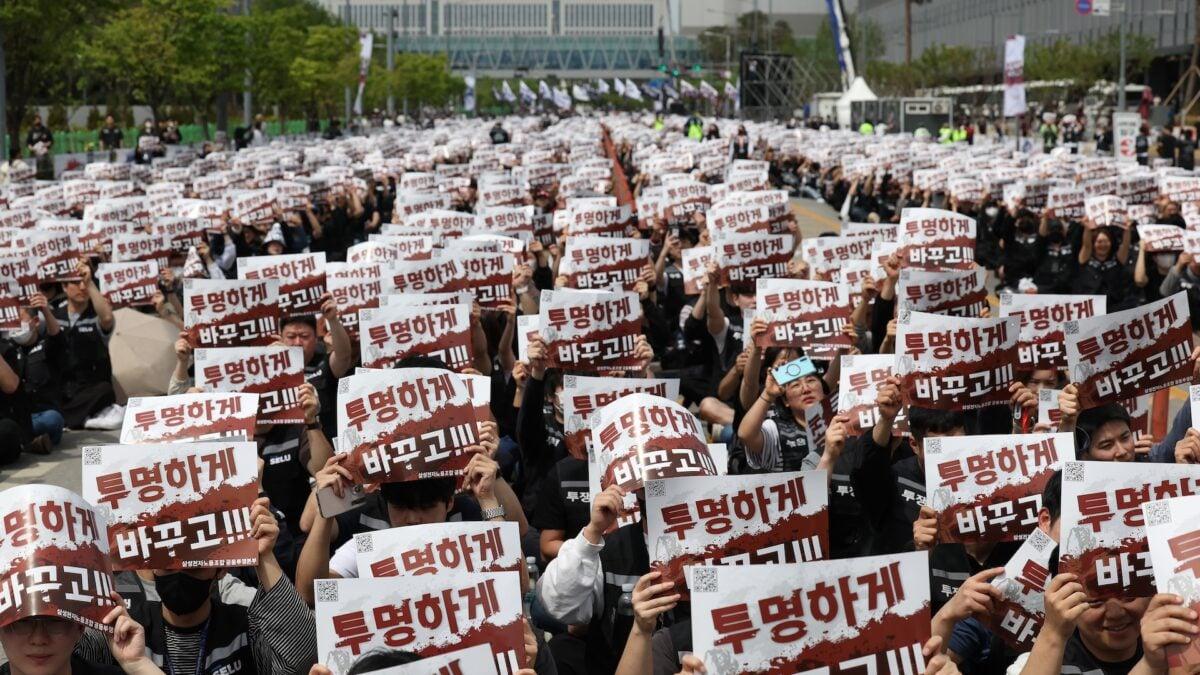
Source: Gizmodo
SK Hynix Sets Precedent for Talent Retention
The comparison with SK Hynix has intensified pressure on Samsung management. In September, SK Hynix agreed to allocate 10% of annual operating profit to a bonus pool for the next 10 years and abolished a cap that limited bonuses to 1,000% of base salary
2
. Based on Meritz Securities forecasts, SK Hynix workers could receive bonuses of approximately 700 million won ($477,000) this year, nearly doubling to $900,000 next year1
. A former Samsung semiconductor worker, Park Jun-young, noted the disparity: "A mid-level Samsung worker might make 90 million won per year and get 45 million won in bonuses but, at Hynix, you'd get a bonus of 250 million or 300 million won. It's a huge difference"3
.
Source: FT
Talent retention has become critical as SK Hynix gained competitive advantage by investing heavily in HBM technology in 2024, actually exceeding Samsung in overall profits last year
4
. Samsung recently confirmed it started mass production for the latest high-bandwidth memory for Nvidia's flagship processor, with the semiconductor division projected to account for over 90% of the group's total operating profit until 20312
.Related Stories

Supply Chain Disruption Looms for Global AI Hardware Industry
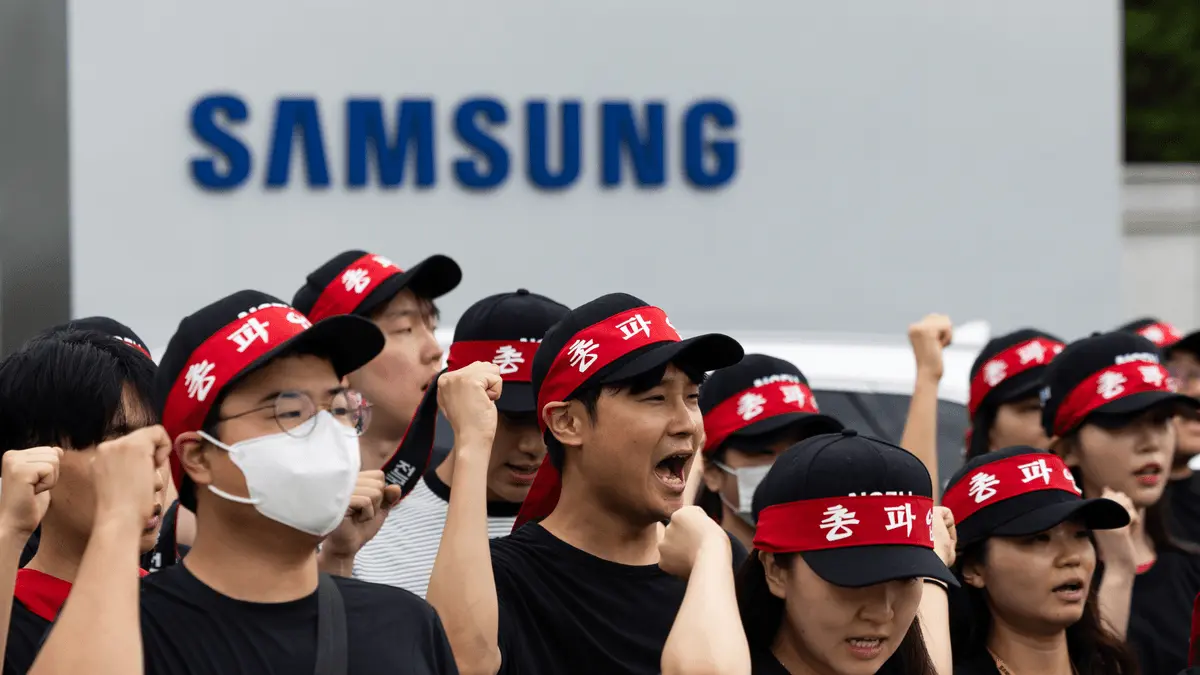
The threatened Samsung strike could trigger significant supply chain disruption at a moment when memory chip supply is already constrained. During a single-day strike in April, production at Samsung's chip foundry plunged 58.1%, while memory fabrication plants dropped 18% during the affected shift
4
. Prof. Kwon warned that beyond direct financial losses, "the bigger damage is indirect" as Samsung attempts to build its contract chipmaking business and establish itself as a trusted supplier of HBM4 chips to Nvidia3
. Ripple effects would impact approximately 1,700 smaller companies that supply Samsung, with the Bank of Korea estimating that about half of the country's first-quarter GDP growth of 1.7% was attributable to chipmaking3
.
Source: Tom's Hardware
Corporate Structure Complicates Resolution
Unlike SK Hynix, which operates as a standalone chipmaker, Samsung's semiconductor division functions within the larger Samsung Electronics company, itself part of Samsung Group. This "One Samsung" philosophy emphasizes cooperation across divisions, but creates tension when the semiconductor division generates the lion's share of profits while other units—including smartphones, TVs, and home appliances—struggle with high chip prices
3
. One smaller union whose members work primarily in these consumer electronics divisions withdrew from the planned joint strike action1
. Prof. Kwon suggested that if semiconductor workers receive 15% of operating profit, "the maths gets uncomfortable fast," potentially necessitating either a spin-off or the semiconductor division becoming a "quasi-autonomous 'company within a company'" with independent compensation structures3
. Samsung chairman Shin Je-yoon expressed concern about "losing market leadership amid fleeing customers and falling competitiveness" if the strike proceeds4
.References
Summarized by

Navi
Related Stories
Samsung averts strike with $26.6 billion in AI boom bonuses, but deep divisions remain
15 May 2026•Business and Economy
Samsung pay deal marks seismic change for South Korea, emboldening unions across industries
27 May 2026•Business and Economy
Samsung Faces AI Chip Crisis: Apologizes for Disappointing Profit and Production Delays
08 Oct 2024•Business and Economy

Recent Highlights



Recent Highlights
Today's Top Stories



Don’t drown in AI news. We cut through the noise - filtering, ranking and summarizing the most important AI news, breakthroughs and research daily. Follow topics that matter to you and stay ahead.


