3 Sources
[1]
Samsung pay deal marks seismic change for South Korea, emboldening unions
SEOUL, May 27 (Reuters) - The deal Samsung Electronics (005930.KS), opens new tab struck with its union averts a massive strike and gives its memory chip workers eye-popping bonuses. It also opens a Pandora's box for companies in South Korea - a country known for militant wage-bargaining. Unionised Samsung workers voted in favour of the government-mediated pact on Wednesday, marking the first big win for a Samsung union. More significantly, it is only the second time that a major South Korean company has agreed in writing to reward workers with a fixed percentage of operating profit. With profits skyrocketing due to the AI boom and under pressure to narrow its bonus gap with rival chipmaker SK Hynix (000660.KS), opens new tab, Samsung agreed to allocate 10.5% of its semiconductor operating profit to special bonuses for chip workers. Some memory chip workers are set to receive total bonuses of $416,000. A cap limiting special bonuses linked to a unit's performance to 50% of a worker's salary was also abolished. Moreover, the deal covers 10 years of earnings. A NEW FIRE AS ASSUMPTIONS SHATTERED Those decisions by Samsung - a bellwether for South Korea Inc - are likely to harden the stances of other domestic unions also demanding employees be rewarded from operating profit and could embolden more to follow suit. "It could start a new fire at other big companies in Korea," said Kim Keechang, a professor of law at Korea University. "It might be only the beginning." He noted that the deal goes against long-standing global norms about corporate earnings. Bonuses are normally calculated after taxes are paid and Samsung's chip workers have de facto jumped the queue in claiming their share of the company's riches. Even the country's union-friendly President Lee Jae Myung expressed concern ahead of the deal being struck. "To institutionally share a certain proportion of operating profit before taking out taxes, which can be called the public's common share -- that is something even investors cannot do," Lee told a cabinet meeting last week. "Even investors receive dividends from net income after taxes are paid, don't they?" Business groups are alarmed. "This agreement reflects Samsung Electronics' special circumstances and labour groups should not generalise it and spread excessive bonus demands across industry," the Korea Enterprises Federation said in a statement. OTHER UNIONS WANT SIMILAR DEALS Samsung may have had no choice but to cave, with its memory chip workers furious about the bonus gap with SK Hynix and, according to its union, leaving for its rival in droves. Without the deal, which was less generous than SK Hynix's, 48,000 workers would have gone on strike for 18 days. According to media reports, SK Hynix allocated 10% of operating profit to bonuses last year, changing its cap on bonuses. Under its new pay structure, chip workers are said to be getting close to 3,000% of their base salary in bonus for the past financial year. SK Hynix did not respond to a request for comment on its pay structure. The bonus dilemma, one could argue, should be limited to Samsung and SK Hynix - the primary South Korean beneficiaries of the colossal investments in AI. But other unions are making similar demands. Workers at internet giant Kakao (035720.KS), opens new tab and four of its affiliates have threatened to strike if demands including apportioning 13%-15% of operating profit to bonuses are not met. A labour commission is mediating talks. Unions for telecoms firm LG Uplus (032640.KS), opens new tab and HD Hyundai Heavy Industries (329180.KS), opens new tab, a major shipbuilder, have said they want at least 30% of operating profit to be allocated to performance compensation among other demands. Wage negotiations at LG Uplus are underway, while those for HD Hyundai Heavy are likely to start next month. At Samsung Biologics (207940.KS), opens new tab, workers walked off the job for five days this month with demands that included 20% of operating profit to be given over to performance bonuses. Management has not budged and the dispute is ongoing with employees refusing to do overtime or work on holidays. NEW LAW PROMISES MORE UNION ACTIVITY Around 13% of South Korea's workforce was unionised in 2024, according to government statistics - a figure slightly under the OECD average. Its unions, however, strike with far more frequency than, say, workers in neighbouring Japan - a factor cited by foreign companies as making South Korea unattractive to invest in. South Korean union militancy has its roots in long-held resentment by ordinary people towards powerful chaebol or conglomerates that dominate the economy and which are perceived by workers as being too authoritarian to listen to anything but aggressive action. Traditional union activity has ticked up this year with 113 filings in February showing dispute mediation has been sought compared with 105 for the same month a year ago. On top of that, the new Yellow Envelope Act - named for the envelopes that members of the public used to send funds to a union embroiled in a high-profile dispute - went into effect in March and is expected to stoke contentious labour relations. The law expands the scope of protections for subcontractors while making it more difficult for companies to retaliate financially against striking workers. Indeed, the day it took effect, some 400 subcontractor union groups with a combined 81,600 members demanded wage negotiations with management, according to the Korea Labor Institute. The rights of subcontractors to a greater share of earnings may also become a new front in pay negotiations for Samsung, which is also having to contend with unhappy employees in other divisions and upset shareholders. "Samsung Electronics' growth and production are the result of many partner companies and workers working together," the Federation of Korean Trade Unions said after the deal. It called for measures to ensure that "the fruits of performance can be fairly distributed to partner-company workers." Reporting by Joyce Lee and Brenda Goh; Editing by Edwina Gibbs Our Standards: The Thomson Reuters Trust Principles., opens new tab Brenda Goh Thomson Reuters Brenda Goh is the Korea bureau chief for Reuters where she oversees coverage of the two Koreas and a team that covers K-culture, Samsung and the KOSPI. Before moving to Seoul, she was based in China where she was the Shanghai bureau chief and chief China companies correspondent, leading coverage of industries from technology to autos. She first joined Reuters as a trainee in London in 2010 and has reported for the news agency from over a dozen countries.
[2]
Samsung workers wrap up vote on massive AI bonus deal
Seoul (AFP) - Samsung Electronics' labour union is expected to announce Wednesday whether chip workers voted to ratify a wage deal that would deliver massive AI-linked bonuses and helped avert a major strike. The tentative agreement between the South Korean memory chip giant and its largest union federation over a new bonus scheme for employees in the semiconductor division has fuelled tensions among other workers as well as subsidiaries and shareholders. An electronic vote among about 70,000 unionised employees began Friday and runs until 10:00 am (0100 GMT) on Wednesday, with results expected shortly afterwards. Local media reported on Tuesday that around 90 percent of union members had already voted. The agreement will be "automatically ratified" if approved by a majority of voters, according to the union's lawyer. The last-minute deal, reached last week to avert a planned 18-day strike, comes amid a global artificial intelligence boom that has turbocharged Samsung's high-bandwidth memory chip business, crucial for AI data centres. Under the 10-year deal, which is tied to ambitious performance targets, annual bonuses would amount to 10.5 percent of the chip division's operating profit and be paid in shares, alongside an additional 1.5 percent in cash. The agreement would allow some 78,000 employees -- out of Samsung Electronics' roughly 125,000-strong domestic workforce -- to receive an average of around 509 million won ($370,000) this year, based on a market estimate of 331 trillion won in annual operating profit. Samsung Electronics posted a roughly 750 percent jump in first-quarter operating profit from a year earlier, while its market capitalisation topped $1 trillion in early May. The prospect of a strike had sparked wider concerns in South Korea, where Samsung Electronics alone accounts for around 12.5 percent of gross domestic product and memory chips make up about 35 percent of exports. 'Golden ticket' The labour dispute has also fanned a debate over how AI profits should be distributed. A senior presidential official has floated the idea of a "national dividend", arguing that excess AI-related tax revenue could be used to support social welfare programmes. Analysts say large bonuses could help prevent engineering talent from moving abroad, as US firms such as Tesla ramp up investment in AI chips. According to Samsung's union, workers at rival chipmaker SK hynix received bonuses more than three times larger than those paid by Samsung last year. The promised windfall at both firms has sharply elevated the social status of chip engineers in South Korea. A simple jacket bearing the SK hynix logo went viral on social media this month as a symbol of wealth and success, with parody posts depicting it as a "golden ticket" to luxury boutiques or better dating prospects. Yonhap news agency said jobs at Samsung and SK hynix now guarantee "a boost in marriage market value", citing a rise in their "desirability indices" compiled by matchmaking agency Sunoo -- catching up with traditionally prestigious professions such as doctors and lawyers. Opposition The Samsung agreement is also fuelling labour demands across South Korea, with workers in sectors ranging from biotechnology and automotive to shipbuilding and information technology asking for a larger share of corporate profits through bonuses. Within Samsung Electronics, the deal has deepened divisions between employees in the highly profitable semiconductor business and other divisions such as mobile, display and consumer electronics, where profits have stagnated or declined. The tensions have already led to legal action, with a smaller union representing workers outside the semiconductor division filing an injunction on Tuesday, seeking to block the agreement they say disproportionately favours chip employees. Discontent is also spreading among employees at Samsung affiliates including Samsung Display, Samsung SDI and Samsung Electro-Mechanics, which are separately listed and offer significantly smaller bonuses. Some shareholders have also voiced opposition, arguing the agreement lacked their approval. A group of retail investors said they were prepared to pursue legal action.
[3]
Samsung pay deal marks seismic change for South Korea, emboldening unions
SEOUL, May 27 (Reuters) - The deal Samsung Electronics struck with its union averts a massive strike and gives its memory chip workers eye-popping bonuses. It also opens a Pandora's box for companies in South Korea - a country known for militant wage-bargaining. Unionised Samsung workers voted in favour of the government-mediated pact on Wednesday, marking the first big win for a Samsung union. More significantly, it is only the second time that a major South Korean company has agreed in writing to reward workers with a fixed percentage of operating profit. With profits skyrocketing due to the AI boom and under pressure to narrow its bonus gap with rival chipmaker SK Hynix, Samsung agreed to allocate 10.5% of its semiconductor operating profit to special bonuses for chip workers. Some memory chip workers are set to receive total bonuses of $416,000. A cap limiting special bonuses linked to a unit's performance to 50% of a worker's salary was also abolished. Moreover, the deal covers 10 years of earnings. A NEW FIRE AS ASSUMPTIONS SHATTERED Those decisions by Samsung - a bellwether for South Korea Inc - are likely to harden the stances of other domestic unions also demanding employees be rewarded from operating profit and could embolden more to follow suit. "It could start a new fire at other big companies in Korea," said Kim Keechang, a professor of law at Korea University. "It might be only the beginning." He noted that the deal goes against long-standing global norms about corporate earnings. Bonuses are normally calculated after taxes are paid and Samsung's chip workers have de facto jumped the queue in claiming their share of the company's riches. Even the country's union-friendly President Lee Jae Myung expressed concern ahead of the deal being struck. "To institutionally share a certain proportion of operating profit before taking out taxes, which can be called the public's common share -- that is something even investors cannot do," Lee told a cabinet meeting last week. "Even investors receive dividends from net income after taxes are paid, don't they?" Business groups are alarmed. "This agreement reflects Samsung Electronics' special circumstances and labour groups should not generalise it and spread excessive bonus demands across industry," the Korea Enterprises Federation said in a statement. OTHER UNIONS WANT SIMILAR DEALS Samsung may have had no choice but to cave, with its memory chip workers furious about the bonus gap with SK Hynix and, according to its union, leaving for its rival in droves. Without the deal, which was less generous than SK Hynix's, 48,000 workers would have gone on strike for 18 days. According to media reports, SK Hynix allocated 10% of operating profit to bonuses last year, changing its cap on bonuses. Under its new pay structure, chip workers are said to be getting close to 3,000% of their base salary in bonus for the past financial year. SK Hynix did not respond to a request for comment on its pay structure. The bonus dilemma, one could argue, should be limited to Samsung and SK Hynix - the primary South Korean beneficiaries of the colossal investments in AI. But other unions are making similar demands. Workers at internet giant Kakao and four of its affiliates have threatened to strike if demands including apportioning 13%-15% of operating profit to bonuses are not met. A labour commission is mediating talks. Unions for telecoms firm LG Uplus and HD Hyundai Heavy Industries, a major shipbuilder, have said they want at least 30% of operating profit to be allocated to performance compensation among other demands. Wage negotiations at LG Uplus are underway, while those for HD Hyundai Heavy are likely to start next month. At Samsung Biologics, workers walked off the job for five days this month with demands that included 20% of operating profit to be given over to performance bonuses. Management has not budged and the dispute is ongoing with employees refusing to do overtime or work on holidays. NEW LAW PROMISES MORE UNION ACTIVITY Around 13% of South Korea's workforce was unionised in 2024, according to government statistics - a figure slightly under the OECD average. Its unions, however, strike with far more frequency than, say, workers in neighbouring Japan - a factor cited by foreign companies as making South Korea unattractive to invest in. South Korean union militancy has its roots in long-held resentment by ordinary people towards powerful chaebol or conglomerates that dominate the economy and which are perceived by workers as being too authoritarian to listen to anything but aggressive action. Traditional union activity has ticked up this year with 113 filings in February showing dispute mediation has been sought compared with 105 for the same month a year ago. On top of that, the new Yellow Envelope Act - named for the envelopes that members of the public used to send funds to a union embroiled in a high-profile dispute - went into effect in March and is expected to stoke contentious labour relations. The law expands the scope of protections for subcontractors while making it more difficult for companies to retaliate financially against striking workers. Indeed, the day it took effect, some 400 subcontractor union groups with a combined 81,600 members demanded wage negotiations with management, according to the Korea Labor Institute. The rights of subcontractors to a greater share of earnings may also become a new front in pay negotiations for Samsung, which is also having to contend with unhappy employees in other divisions and upset shareholders. "Samsung Electronics' growth and production are the result of many partner companies and workers working together," the Federation of Korean Trade Unions said after the deal. It called for measures to ensure that "the fruits of performance can be fairly distributed to partner-company workers." (Reporting by Joyce Lee and Brenda Goh; Editing by Edwina Gibbs) By Joyce Lee and Brenda Goh
Share
Copy Link
Samsung Electronics ratified a groundbreaking wage deal allocating 10.5% of semiconductor operating profit to chip workers, with some receiving $416,000 bonuses. The agreement averts an 18-day strike but opens a Pandora's box for South Korea labor relations as unions at Kakao, LG Uplus, and other major firms demand similar profit-sharing arrangements.
Samsung Electronics has ratified a landmark wage deal that allocates 10.5% of its semiconductor operating profit to special bonuses for chip workers, marking the first major victory for a Samsung union and potentially triggering a wave of similar demands across South Korean industry
1
. Unionized Samsung workers voted in favor of the government-mediated pact on Wednesday, with around 90 percent of the union's 70,000 members participating in the electronic vote that concluded May 272
. The agreement averts what would have been an 18-day strike by 48,000 workers and delivers eye-popping compensation to memory chip workers, with some individuals set to receive total bonuses of $416,0001
.Source: Market Screener
The Samsung pay deal represents only the second time a major South Korean company has agreed in writing to reward workers with a fixed percentage of operating profit, a decision driven by the AI boom that has turbocharged demand for high-bandwidth memory chips crucial for AI data centers
2
. Under the 10-year agreement, annual bonuses amount to 10.5% of the chip division's semiconductor operating profit paid in shares, alongside an additional 1.5% in cash2
. The deal would allow approximately 78,000 employees out of Samsung Electronics' roughly 125,000-strong domestic workforce to receive an average of around $370,000 this year, based on market estimates of 331 trillion won in annual operating profit2
. Samsung Electronics posted a roughly 750 percent jump in first-quarter operating profit from a year earlier, while its market capitalization topped $1 trillion in early May2
.
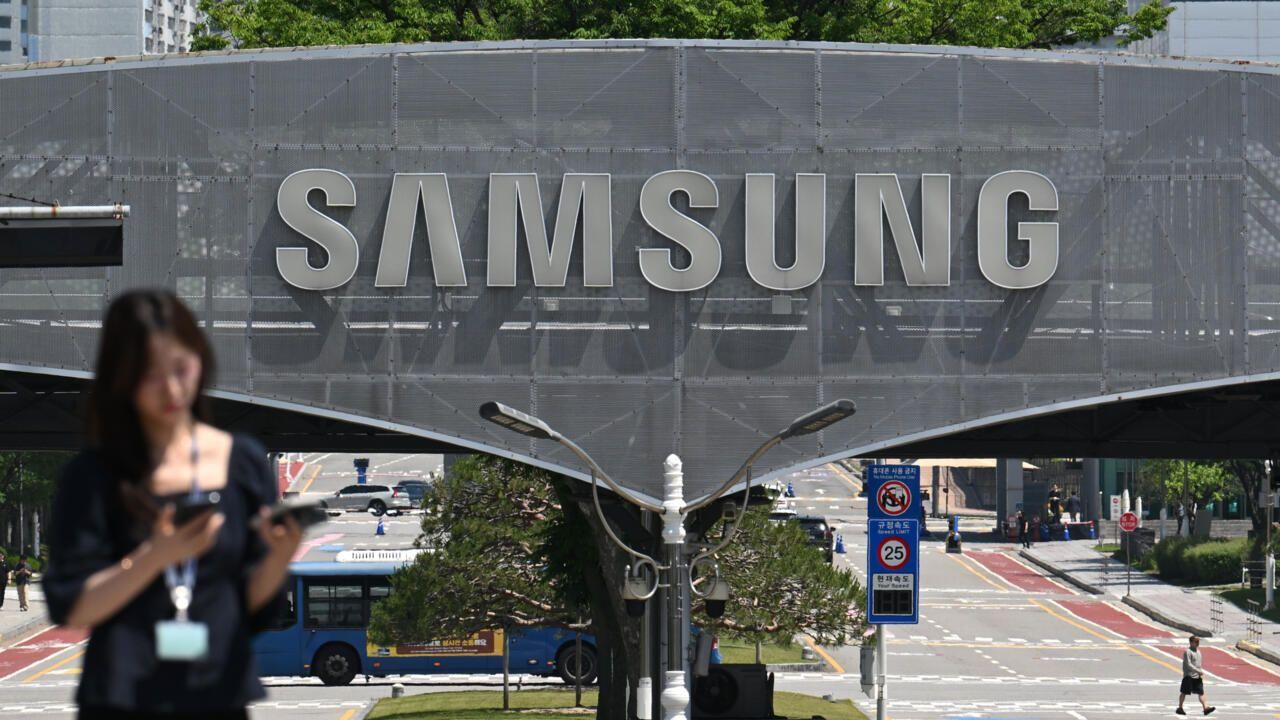
Source: France 24
Samsung may have had no choice but to accept these terms, with its memory chip workers furious about the bonus gap with rival chipmaker SK Hynix and, according to its union, leaving for its rival in droves
1
. According to media reports, SK Hynix allocated 10% of operating profit to bonuses last year, changing its cap on bonuses, with chip workers reportedly receiving close to 3,000% of their base salary in bonus for the past financial year3
. A cap limiting special bonuses linked to a unit's performance to 50% of a worker's salary was also abolished in the Samsung agreement1
. The promised windfall at both firms has sharply elevated the social status of chip engineers in South Korea, with Yonhap news agency reporting that jobs at Samsung and SK Hynix now guarantee "a boost in marriage market value"2
.The seismic change for South Korea labor relations is already evident as unions across multiple sectors demand similar AI-linked bonuses for chip workers and profit-sharing models
1
. Workers at internet giant Kakao and four of its affiliates have threatened to strike if demands including apportioning 13%-15% of operating profit to bonuses are not met, with a labor commission mediating talks3
. Unions for telecoms firm LG Uplus and HD Hyundai Heavy Industries, a major shipbuilder, have said they want at least 30% of operating profit allocated to performance compensation1
. At Samsung Biologics, workers walked off the job for five days this month with demands that included 20% of operating profit for performance bonuses, though management has not budged3
.
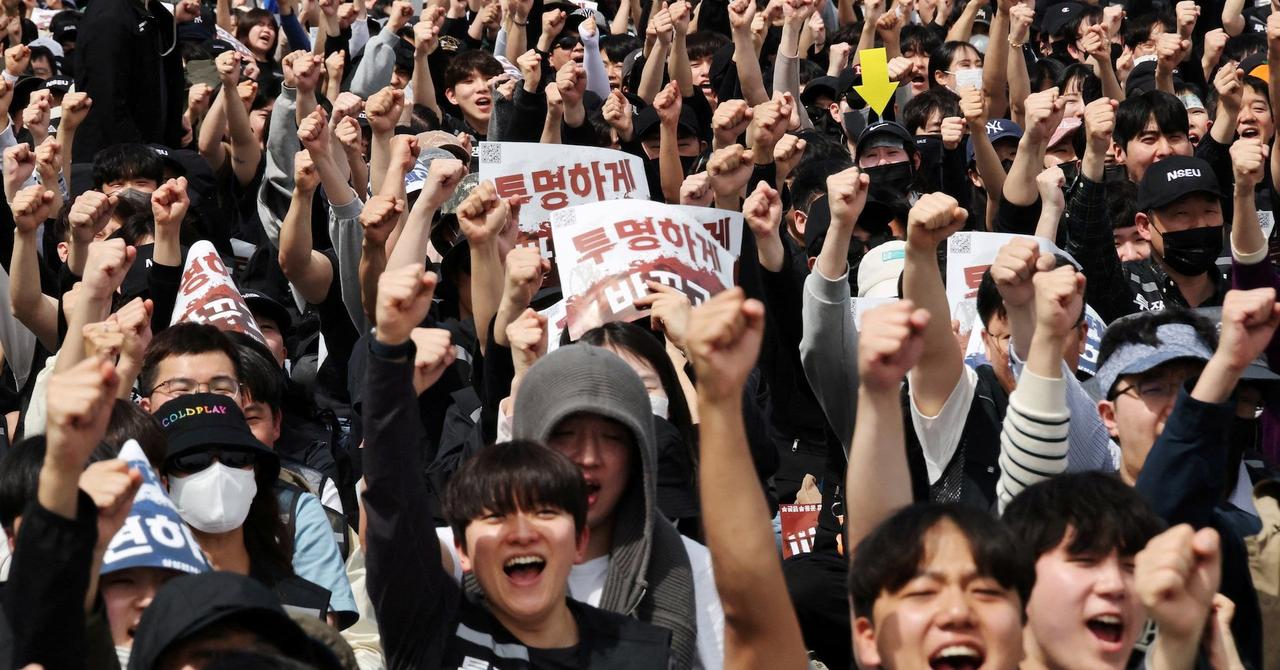
Source: Reuters
Related Stories
The deal goes against long-standing global norms about corporate earnings, as bonuses are normally calculated after taxes are paid and Samsung's chip workers have effectively jumped the queue in claiming their share of the company's riches
1
. Kim Keechang, a professor of law at Korea University, warned that "it could start a new fire at other big companies in Korea" and "might be only the beginning"1
. Even South Korea's union-friendly President Lee Jae Myung expressed concern, stating at a cabinet meeting: "To institutionally share a certain proportion of operating profit before taking out taxes, which can be called the public's common share -- that is something even investors cannot do. Even investors receive dividends from net income after taxes are paid, don't they?"1
. Shareholders have also voiced opposition, arguing the agreement lacked their approval, with a group of retail investors prepared to pursue legal action2
.Within Samsung Electronics, the agreement has deepened divisions between employees in the highly profitable semiconductor business and other divisions such as mobile, display and consumer electronics, where profits have stagnated or declined
2
. A smaller union representing workers outside the semiconductor division filed an injunction seeking to block the agreement they say disproportionately favors chip workers2
. Discontent is also spreading among employees at Samsung affiliates including Samsung Display, Samsung SDI and Samsung Electro-Mechanics, which are separately listed and offer significantly smaller bonuses2
. The Korea Enterprises Federation warned in a statement that "this agreement reflects Samsung Electronics' special circumstances and labor groups should not generalise it and spread excessive bonus demands across industry"1
.Summarized by
Navi
[3]
15 May 2026•Business and Economy

07 May 2026•Business and Economy

23 Jul 2024

1
Technology

2
Policy and Regulation

3
Science and Research