Samsung Foundry Pursues NVIDIA's Next-Gen GPU Orders with 2nm Process Node


2 Sources
[1]
Samsung Foundry could make NVIDIA's next-gen GPUs on its in-house 2nm process node
As an Amazon Associate, we earn from qualifying purchases. TweakTown may also earn commissions from other affiliate partners at no extra cost to you. Samsung Foundry is working hard on securing new customers, with reports persisting that the company is pushing to make GPUs for NVIDIA on its new
[2]
Samsung Foundry Reportedly Eyes 2nm Orders For NVIDIA's Next-Gen GPUs As It Hopes For a Massive Comeback
Samsung looks to expand its influence over the semiconductor markets with recent moves, and now, the company has started to pursue none other than NVIDIA for next-gen GPU orders. Samsung Foundry seems to be undergoing extensive restructuring. The division recently announced several moves that are
Share
Copy Link
Samsung Foundry is making a strategic push to secure orders for NVIDIA's future GPUs using its advanced 2nm process node, leveraging its success with the Nintendo Switch 2 chip and aiming to compete with TSMC in the high-end semiconductor market.
Samsung's Strategic Push for NVIDIA's GPU Orders
Samsung Foundry is making a bold move to secure orders for NVIDIA's next-generation GPUs, leveraging its advanced 2nm process node technology. This strategic initiative comes as Samsung aims to strengthen its position in the highly competitive semiconductor manufacturing market and challenge TSMC's dominance
1
2
.
Source: Wccftech
Building on Nintendo Switch 2 Success
The foundation for Samsung's pursuit of NVIDIA's business stems from its successful collaboration on the Nintendo Switch 2. Samsung Foundry is currently manufacturing the custom NVIDIA Tegra T239 processor for the upcoming gaming console using its 8nm process node
1
. This existing partnership has opened the door for Samsung to pitch its more advanced technologies to NVIDIA.The 2nm GAA Process Node Advantage
At the heart of Samsung's proposal is its 2nm Gate All Around (GAA) process node. This cutting-edge technology offers several advantages over the traditional FinFET process:
- Superior power efficiency
- Enhanced performance
- Improved transistor structure with gate contact on all four sides of the channel
1
Samsung began mass production of its 3nm GAA process in 2022 but faced challenges with yield rates. However, the company has since made significant progress, with the 2nm process node scheduled for mass production by the end of 2025
1
.Competing with TSMC
Samsung's push to secure NVIDIA's GPU orders is part of a larger strategy to compete more effectively with TSMC. The Korean giant is positioning itself as a viable alternative for high-performance chip manufacturing, especially as TSMC's production lines become increasingly crowded
2
.Currently, Samsung's 2nm GAA process has achieved a yield rate of 40% and is on track to reach levels suitable for mass production by the end of the year
2
. This improvement in yield rates is crucial for attracting major clients like NVIDIA.Integrated Solutions: A Potential Edge
Source: TweakTown
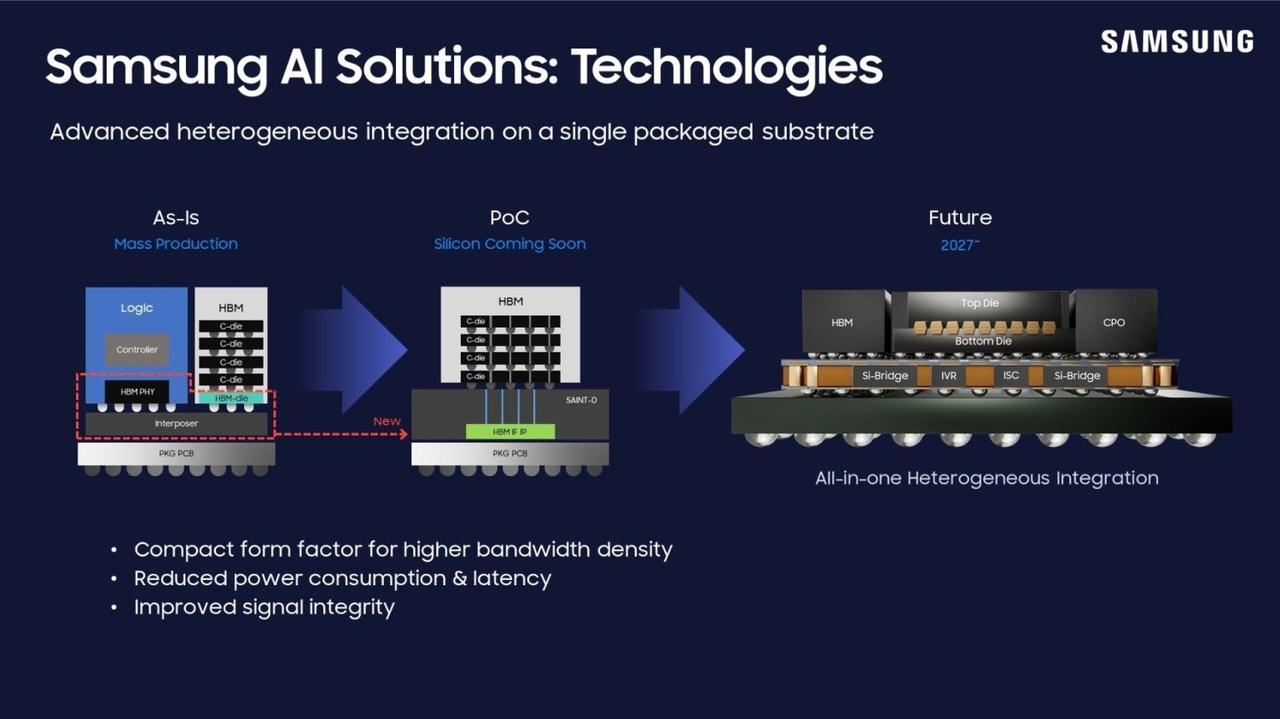
One of Samsung's unique selling points is its ability to offer both chip fabrication and in-house HBM (High Bandwidth Memory) solutions. Unlike TSMC, which relies on external suppliers for HBM, Samsung can provide HBM3, HBM3E, or HBM4 memory alongside its chip manufacturing services
1
. This integrated approach could be particularly attractive for AI GPU production, where high-performance memory is crucial.Related Stories

Diversification Strategy for NVIDIA
For NVIDIA, partnering with Samsung could represent a strategic move to diversify its supply chain. By not relying solely on TSMC for its chip production, NVIDIA could potentially mitigate risks and ensure a more stable supply of GPUs for both consumer and AI applications
1
2
.Challenges and Future Outlook
While Samsung's pursuit of NVIDIA's business is ambitious, the company still faces challenges. It needs to consistently improve its yield rates and demonstrate that its 2nm process can match or exceed TSMC's offerings in terms of performance and efficiency.
Samsung is also extending its 2nm technology, introducing a third-generation "SF2F+" node for even higher performance
2
. The success of these initiatives could significantly impact Samsung Foundry's position in the semiconductor industry and its ability to compete with TSMC for high-profile clients like NVIDIA.References
Summarized by

Navi
Related Stories
NVIDIA Accelerates Efforts to Certify Samsung's HBM3E Memory for AI GPUs
25 Nov 2024•Technology

Samsung's Taylor fab begins Tesla AI5 chip production on 2nm, proving yield breakthrough
13 Jul 2026•Technology
Nvidia considers Intel Foundry for Feynman AI chips as TSMC capacity constraints bite
28 Jan 2026•Technology
Recent Highlights



Recent Highlights
Today's Top Stories



Don’t drown in AI news. We cut through the noise - filtering, ranking and summarizing the most important AI news, breakthroughs and research daily. Follow topics that matter to you and stay ahead.


