Samsung's Taylor fab begins Tesla AI5 chip production on 2nm, proving yield breakthrough


4 Sources
[1]
Samsung's Texas fab enters production for Tesla's AI5 chip on 2nm
Samsung has completed its own version of Tesla's AI5 self-driving chip and is preparing to start production at its foundry in Taylor, Texas, on the company's latest 2-nanometer process, according to industry officials. The move confirms Samsung is building AI5 on 2nm -- a node that had been
[2]
Samsung Reportedly Lands Anthropic as Foundry Customer, Looking to Reverse its Chip Deficit With 2nm AI Orders
With the AI race in full swing, Samsung Foundry has reportedly secured a contract to manufacture Anthropic's AI chips. Anthropic has slowly shaped up to be one of the most important players in the AI industry courtesy of its advanced AI models. As the AI semiconductor sector remains highly
[3]
Samsung's 2nm Node Lands Tesla's AI5 Chip at Its Texas Taylor Fab, Silencing Yield Doubters
Tesla is all set to begin production of its AI5 chip on Samsung's 2nm process technology after a successful tapeout back in April. Samsung & TSMC To Produce Tesla's AI5 Chip With The Former Leveraging Its 2nm Capabilities Last month, Elon Musk announced the successful tape-out of its AI5 AI chip.
[4]
Samsung Taylor fab enters production phase for Tesla's AI5 chip - The Korea Times
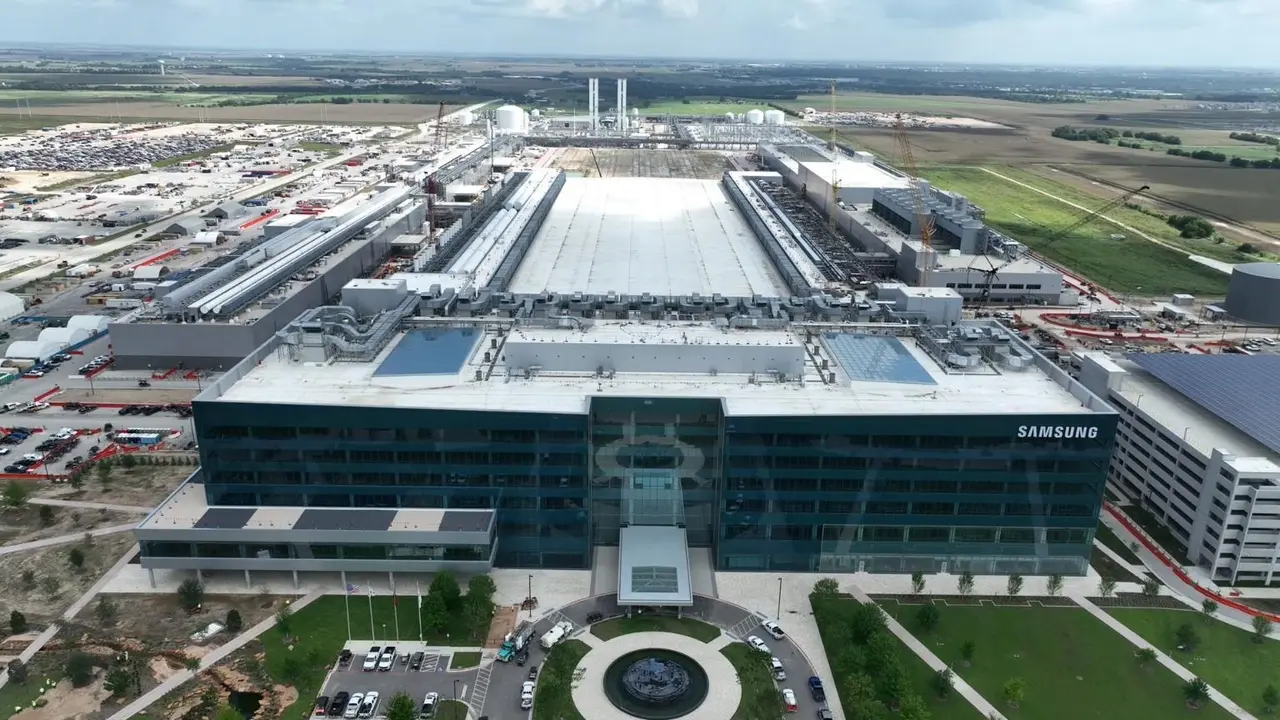
Samsung Electronics' Taylor fab in Texas / Courtesy of Samsung Electronics Samsung Electronics has completed designing its version of Tesla's AI5 chip for self-driving systems, with production set to begin soon at its foundry fab in Taylor, Texas, according to industry officials, Monday. James
Share
Copy Link
Samsung has completed its version of Tesla's AI5 self-driving chip and is preparing production at its Taylor, Texas foundry using its advanced 2nm process. The development suggests Samsung's 2nm yield has crossed the critical 60% threshold, enabling high-volume manufacturing for Tesla's next-generation Full Self-Driving solutions and potentially attracting customers like Anthropic.
Samsung Confirms Tesla AI5 Chip Production on Advanced 2nm Node
Samsung has reached a critical milestone in its foundry business, completing the Tesla AI5 chip design and preparing to manufacture it at the Samsung Taylor fab using the Samsung 2nm process, according to industry officials
1
4
. James Kim, a principal engineer at Samsung Foundry, revealed on LinkedIn that "the Tesla-Samsung AI5 chip has reached tape-out" and is "scheduled to be manufactured at the Taylor fab using our latest 2-nanometer process and will soon be integrated into Tesla's newest products"1
. Kim deleted the post after Korean news outlets picked it up, but the disclosure marks a significant shift in expectations for Tesla's AI5 self-driving chip development.The tape-out stage represents the point where a chip's design is locked and handed over for manufacturing
4
. From there, the design undergoes prevalidation, photomask production, and wafer fabrication to create engineering samples, which must pass customer qualification before entering mass production. Elon Musk confirmed in April that Tesla had taped out the Tesla AI5 chip to both Samsung and TSMC, with each foundry producing "slightly different versions" because "they translate designs to physical form differently"1
4
.Unexpected 2nm Process Selection Signals Yield Breakthrough
The most surprising detail is Samsung's choice to manufacture the Tesla AI5 chip on its Samsung's advanced 2nm process technology rather than a more mature node
1
. Industry assumptions had placed Samsung's 2nm node with Tesla's follow-on AI6 chip, while AI5 would use established processes at TSMC. This shift matters because Samsung's 2nm yield has improved beyond the critical 60% threshold where the process becomes viable for high-volume customers like Tesla1
4
. Earlier reports indicated that AI6 had slipped roughly six months due to Samsung 2nm yield issues, pushing mass production to Q4 2027 at the earliest1
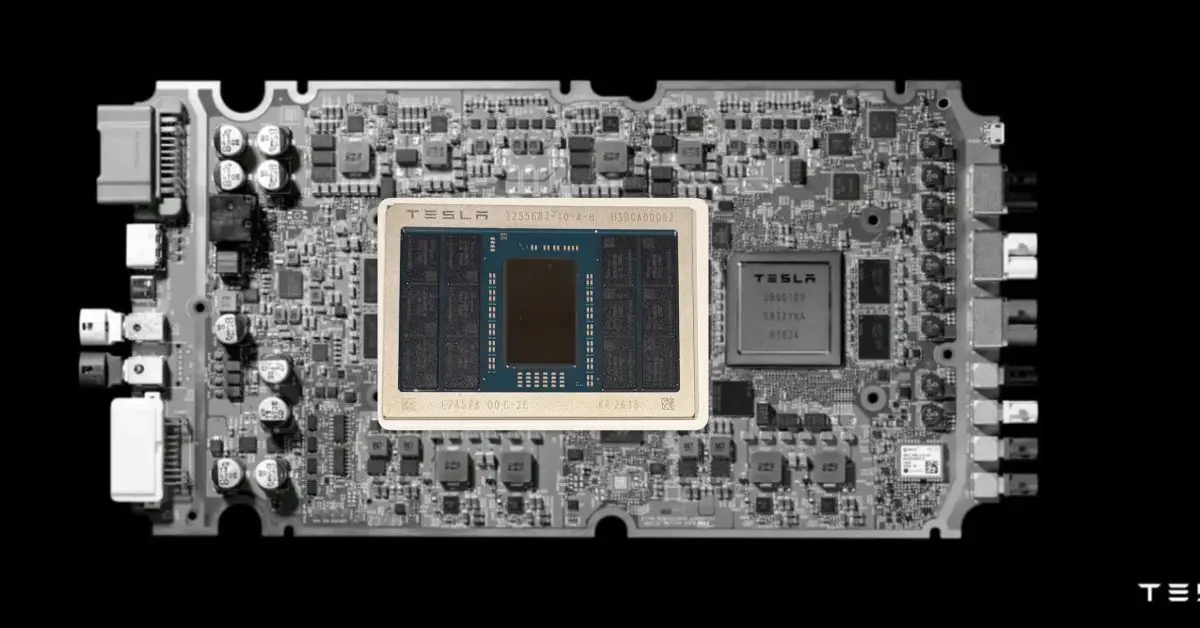
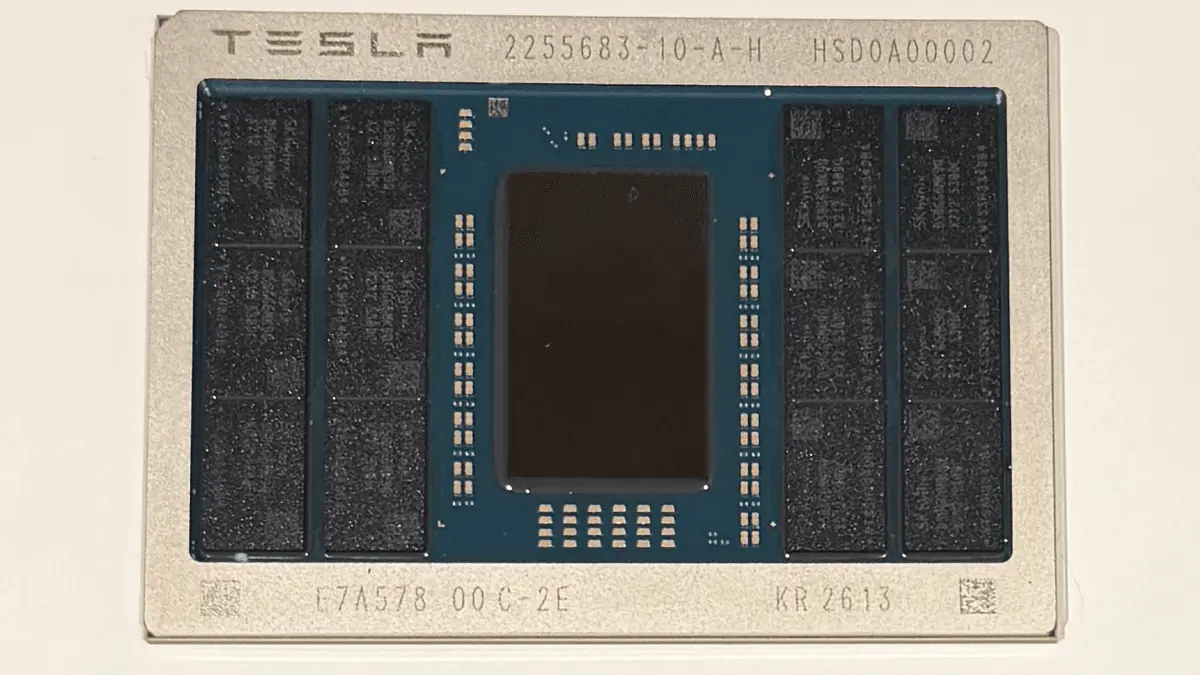
.Elon Musk has already showcased a Samsung-made prototype, posting an image of the AI5 chip on X with the marking "KR 2613," indicating it was manufactured in Korea in the 13th week of 2026
1
3
. This evidence confirms Samsung's engineering samples were already coming from its Korean production lines before production at its Taylor, Texas, foundry took over. Samsung held an equipment installation ceremony at the Taylor fab in April and expects volume production of Tesla's AI chips in the second half of 20271
.
Source: Electrek
AI5 Specifications Target NVIDIA Blackwell Performance
The Tesla AI5 chip represents a substantial upgrade for Tesla's next-generation Full Self-Driving solutions, following the HW4 chip currently in vehicles
3
. Elon Musk stated the AI5 would deliver a monumental 40x improvement over the HW4 chip, with 8x raw compute capabilities and 9x memory3
. The AI semiconductor is expected to offer close to 2500 TOPS of AI compute and 144 GB of memory per chip, designed with the latest transformer engine architecture3
.Elon Musk made ambitious claims in January, stating the AI5 would rival NVIDIA Blackwell and Hopper products while being significantly cheaper and using less power
2
. The chip will be offered in multiple configurations: a single-SOC design that rivals NVIDIA's Hopper, and a dual-SOC design that competes with Blackwell while costing much less to produce and consuming considerably less power3
. The prototype showcased by Elon Musk featured a large primary die for compute and 12 DRAM modules from SK hynix offering high capacity and bandwidth3
.Related Stories
Samsung Lands Anthropic as Foundry Customer
Samsung's improving 2nm capabilities are attracting additional customers beyond Tesla. Recent reports suggest Samsung lands Anthropic as foundry customer, with the AI company expected to manufacture its own AI chips through Samsung Foundry
1
2
4
. Anthropic listed Samsung, SK hynix, and Micron as "strategic infrastructure partners" during its Series H funding round completed in May, stating they would help "scale our compute reliably at the pace our customers need"2
.
Source: Wccftech
Since Samsung is the only company among Anthropic's infrastructure partners with a foundry business capable of manufacturing non-memory chips, industry sources expect it to win orders for the products
2
. These orders could convert Samsung's foundry business deficit into a growth phase, according to insiders2
. For Samsung, landing the Tesla AI5 chip on 2nm provides a proof point the company badly needs after trailing TSMC on advanced-node yield for years1
.Timeline Challenges and Path to Unsupervised Autonomy
Despite the tape-out milestone, significant hurdles remain before the AI5 reaches vehicles at scale. Elon Musk stated Tesla needs "several hundred thousand completed AI5 boards line side" before switching vehicle production over, with that volume not expected until mid-2027
1
. Engineering samples coming off the Texas production line in 2026 don't accelerate that timeline substantially. The AI5 is arriving nearly two years after Elon Musk first said it would be in vehicles, the Cybercab is launching on old HW4 chip hardware, and the AI4.5 stopgap computer quietly added to new Model Ys exists precisely because AI5 kept slipping1
.
Source: Korea Times
From Tesla's perspective, the company doesn't need AI5 to achieve unsupervised autonomy at scale, though similar claims were made about HW3 previously, and the company has yet to deliver on that promise
1
. Meanwhile, work is already underway on the next-generation Tesla AI6 chip and Dojo3 supercomputer3
. Tesla resumed plans for the Dojo3 project in January 2026, and with TeraFab operational and developing DRAM, packaging, and chips under one roof, this goal should be within reach3
. High-volume production from both TSMC and Samsung remains slated for late 2026 or early 20273
.References
Summarized by

Navi
[3]
Related Stories
Tesla Partners with Samsung for AI5 Chip Production as Musk Claims Korean Fab Outperforms TSMC's Arizona Facility
23 Oct 2025•Business and Economy
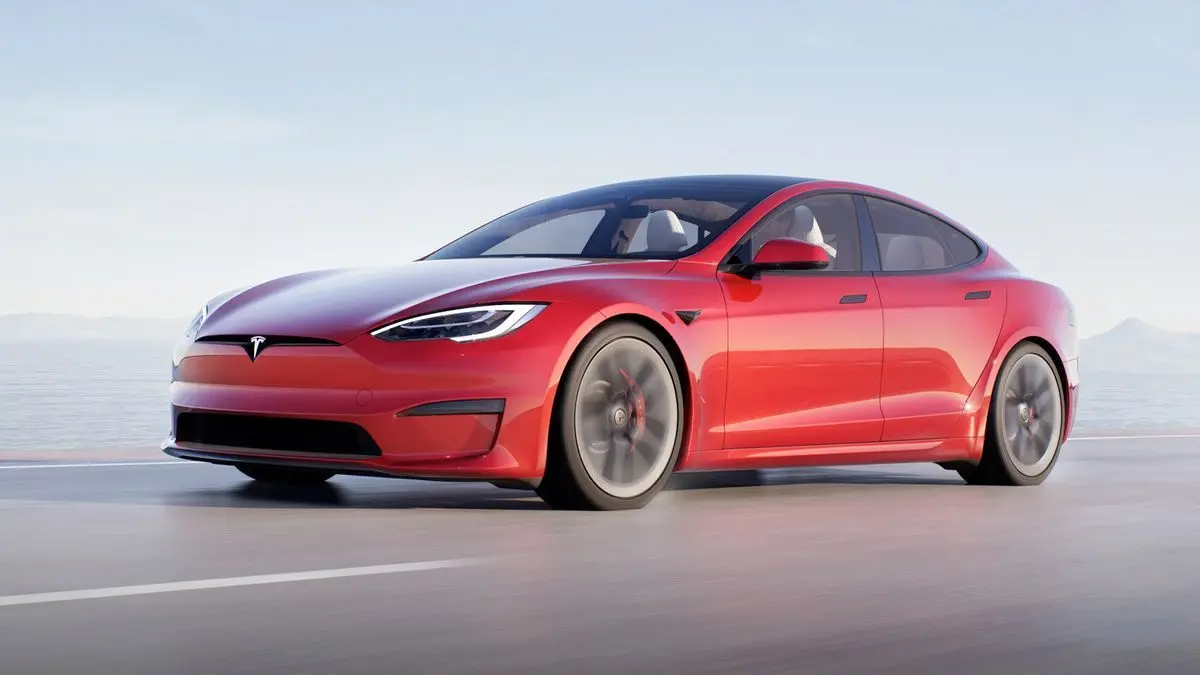
Tesla completes AI5 chip design with 40X performance leap, but deployment still years away
15 Apr 2026•Technology
Tesla Unveils AI5 Chip: A Game-Changer in Performance and Manufacturing Strategy
23 Oct 2025•Technology

Recent Highlights



Recent Highlights
Today's Top Stories



Don’t drown in AI news. We cut through the noise - filtering, ranking and summarizing the most important AI news, breakthroughs and research daily. Follow topics that matter to you and stay ahead.


