Samsung and Micron begin shipping HBM4 memory as race for AI acceleration hardware intensifies


15 Sources
[1]
Samsung and Micron start shipping HBM4
This bodes well for Nvidia getting Vera Rubin out the door next quarter as planned Samsung and Micron say they've started shipping HBM4 memory, the faster and denser RAM needed to power the next generation of AI acceleration hardware. Samsung yesterday announced it has begun mass production of
[2]
Samsung Electronics says it has shipped HBM4 chips to customers
SEOUL, Feb 12 (Reuters) - Samsung Electronics (005930.KS), opens new tab said on Thursday that it has begun shipping its latest high-bandwidth memory chips, known as HBM4, to customers as the South Korean chipmaker seeks to catch up with rivals in the race to supply the semiconductor crucial for
[3]
Samsung Ships Industry-First Commercial HBM4 With Ultimate Performance for AI Computing
Mass production commences for HBM4 with consistent transfer speed of 11.7Gbps, capable of up to 13Gbps Leading-edge DRAM with 4nm logic base die maximizes performance, reliability and energy efficiency for next-generation datacenters Secure process technology and supply capabilities strengthen
[4]
Samsung starts mass production of next-gen AI memory chip
The high-bandwidth HBM4 chips are seen as a key component needed to scale-up the vast data centres powering the explosion in artificial intelligence. US tech giant Nvidia -- the world's most valuable company -- is widely expected to be one of Samsung's main buyers. Samsung said it had "begun mass
[5]

Samsung officially ships HBM4 ready for NVIDIA's next-gen Rubin AI chips
TL;DR: Samsung has officially launched its next-generation HBM4 memory, featuring up to 13Gbps transfer speeds and 3.3TB/sec bandwidth per stack, surpassing industry standards. Built on advanced 4nm and 1c DRAM processes, Samsung's HBM4 powers NVIDIA's Rubin AI chips, enhancing performance and
[6]

Samsung starts HBM4 shipments as early as third week of February
Samsung Electronics will commence mass production and shipment of its sixth-generation HBM4 high-bandwidth memory chips later this month for Nvidia graphics processing units powering the Vera Rubin AI accelerator platform, set to launch in the second half of 2026, with shipments starting as early
[7]

Samsung starts mass production of next-gen AI memory chip - The Economic Times
Samsung Electronics has started mass production of a next-generation memory chip to power artificial intelligence, the South Korean firm announced Thursday, touting an "industry-leading" breakthrough. The high-bandwidth "HBM4" chips are a key component for AI data centres, with US tech giant
[8]

Samsung Begins HBM4 Memory Mass Production With Up To 13 Gbps Speeds & 48 GB Capacities
Samsung has officially commenced mass production and shipment of its next-gen HBM4 memory with up to 13 Gbps speeds & 48 GB capacities. Samsung Commences Mass Production & Shipment of HBM4 Memory: Up To 13 Gbps Speeds, 3.3 TB/s Bandwidth Per Stack, & 48 GB Capacities In 16-Hi Stacks Press
[9]

Samsung HBM4 memory enters mass production
Samsung has announced that it has commenced mass production of its fourth-generation High Bandwidth Memory (HBM4) and has begun shipping commercial products to customers. The move signals an aggressive push by the South Korean tech giant to secure an early foothold in the next-generation memory
[10]

Samsung Electronics begins HBM4 shipping for 1st time - The Korea Times
Samsung Electronics announced Thursday that it has begun mass production and shipping of high-bandwidth memory 4 (HBM4), marking the world's first delivery of the advanced chip for artificial intelligence (AI) accelerators to customers. For over a year, the company's chipmaking Device Solutions
[11]
Samsung shows confidence in HBM, portrays next-gen road map - The Korea Times
Samsung Electronics Chief Technology Officer Song Jai-hyuk speaks during his keynote speech for SEMICON Korea 2026 at Coex in Seoul, Wednesday. Yonhap Samsung Electronics Chief Technology Officer Song Jai-hyuk said Wednesday the company's high-bandwidth memory 4 (HBM4) chip is showing "good"
[12]

Samsung begins shipments of HMB4 chips for AI; sees sales tripling in 2026 By Investing.com
Investing.com-- Samsung Electronics said on Thursday it had commenced mass production of advanced high-bandwidth memory chips used in artificial intelligence processors, and had shipped commercial products to customers. The electronics conglomerate said it expects its HBM chip sales to more than
[13]
Imperative to stay ahead in memory chips - The Korea Times
Samsung Electronics building in Seocho District, Seoul, Jan. 28. The Korean tech giant has said it will begin shipping sixth-generation high-bandwidth memory in the third week of February to power Nvidia's Vera Rubin. Korean tech giant Samsung has finally announced that it will start
[14]

Samsung Begins Shipments of HBM4 Products
Samsung Electronics has begun shipments of the most advanced high-bandwidth memory products, known as HBM4. The South Korean technology giant said Thursday that it is the world's first to mass produce and ship the industry's highest-performance HBM4 products. The company is looking to dominate the
[15]

Samsung starts mass production of next-gen AI memory chip - VnExpress International
The high-bandwidth HBM4 chips are seen as a key component needed to scale-up the vast data centers powering the explosion in artificial intelligence. U.S. tech giant Nvidia -- the world's most valuable company -- is widely expected to be one of Samsung's main buyers. Samsung said it had "begun
Share
Copy Link
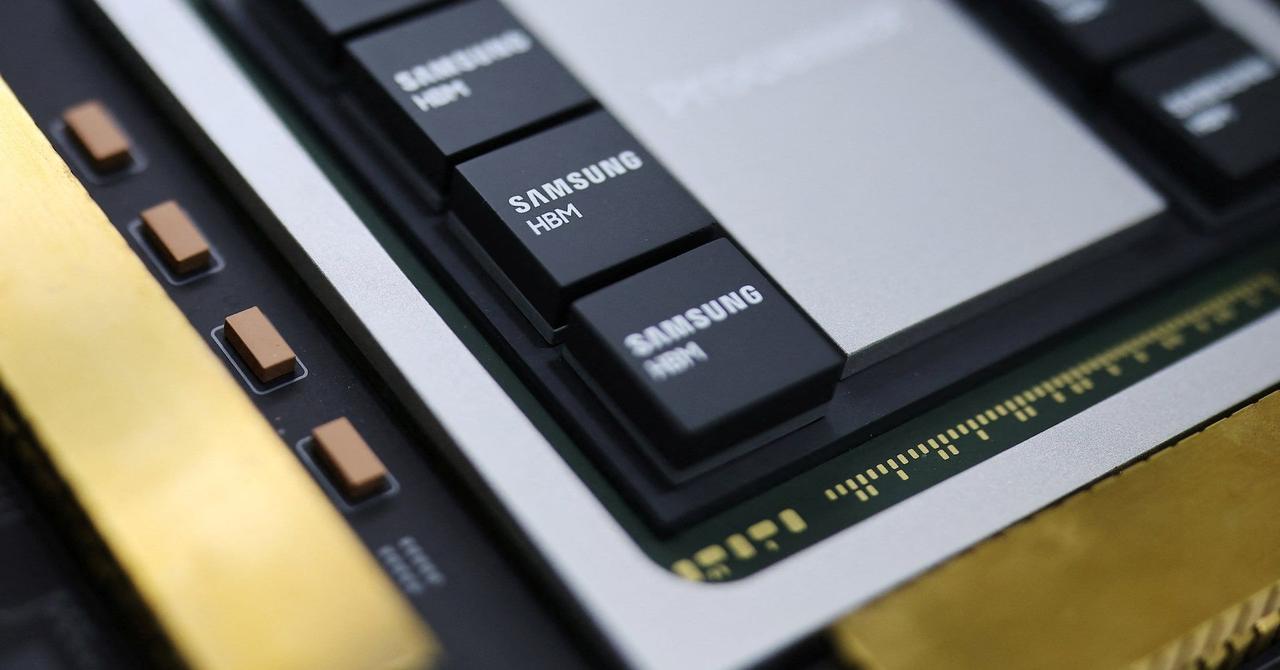
Samsung and Micron have started mass production and shipping of HBM4 memory, the next-generation high-bandwidth memory critical for AI acceleration hardware. Samsung claims industry-first status with 11.7Gbps speeds and up to 3.3TB/s bandwidth, while Micron confirms it delivered product a quarter ahead of schedule. The development signals readiness for Nvidia's upcoming Vera Rubin accelerators launching in Q2 2026.
Samsung Claims First-Mover Advantage in HBM4 Production
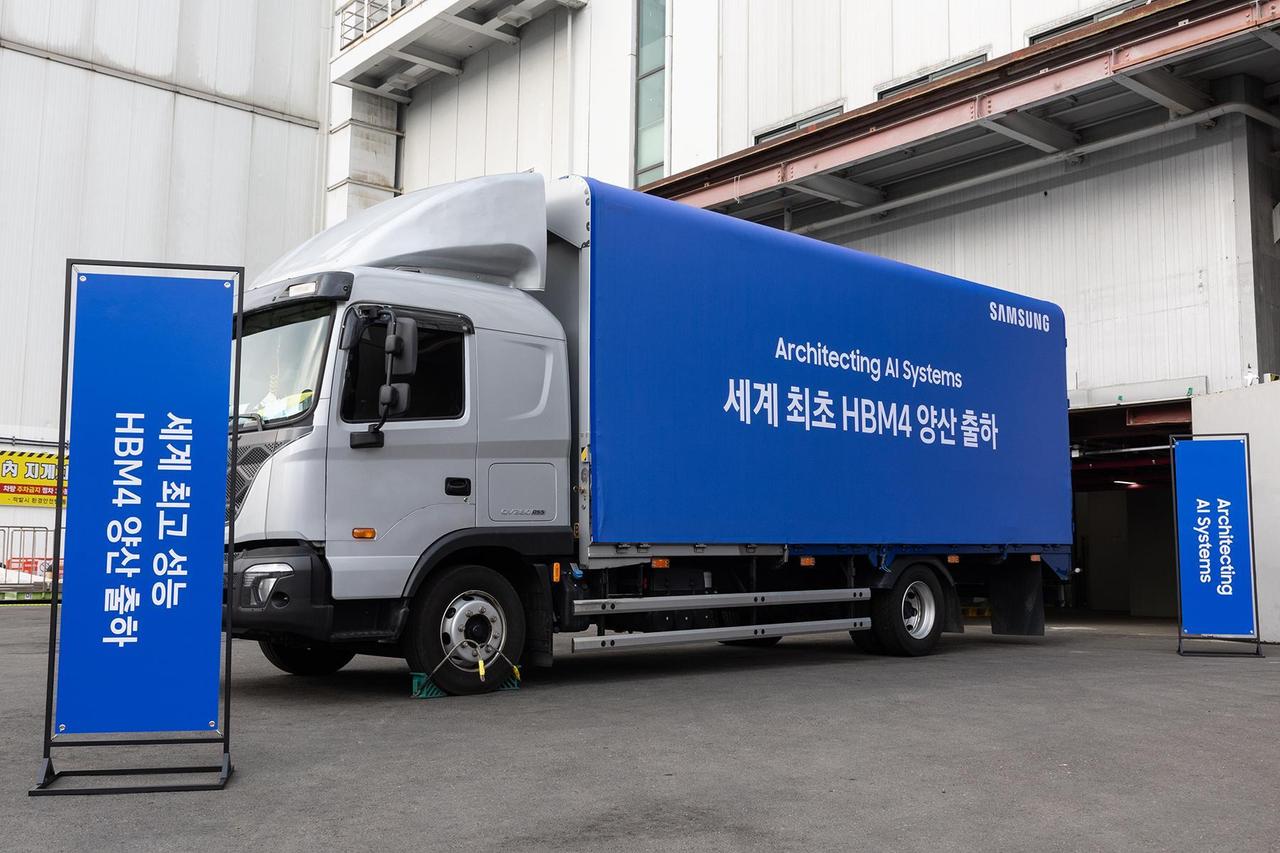
Samsung has announced it has begun mass production of HBM4 and shipped commercial products to customers, claiming industry-first status in the high-bandwidth memory market
3
. The Korean giant's new AI memory chip delivers a consistent processing speed of 11.7 gigabits-per-second, exceeding the industry standard of 8Gbps by approximately 46%3
. Under certain conditions, users can push that transfer speed to hit 13Gbps, addressing data bottlenecks as AI models continue scaling up1
. Total memory bandwidth can reach 3.3 terabytes-per-second in a single stack, representing a 2.7x increase over HBM3E3
.
Source: Korea Times
The company leveraged its most advanced 6th-generation 10 nanometer-class DRAM process (1c) and a 4nm logic process to achieve stable yields and industry-leading performance from the outset of mass production
3
. Samsung's stock rose more than six percent following the announcement, reflecting investor confidence in the company's position within the AI semiconductor market4
.Micron Counters With Early HBM4 Delivery
Just a day before Samsung's announcement, Micron revealed it has also started high-volume HBM4 production and shipped units to customers. Speaking at a Wolfe Research event, Micron CFO Mark Murphy addressed what he called "inaccurate reporting" about the company's HBM4 position, confirming that Micron delivered product a quarter earlier than previously forecast
1
. Murphy emphasized that "our HBM yield is on track. Our HBM4 yield is on track. Our HBM4 product delivers over 11 gigabits per second speeds"1
.Micron has pre-sold every single HBM4 chip it can manufacture this year, underscoring the intense demand for AI acceleration hardware
1
. Investors responded enthusiastically, with Micron's share price spiking almost ten percent on news of its early production1
. The dual announcements leave SK Hynix as the only major memory-maker yet to confirm HBM4 production has started1
.Critical Enabler for Nvidia's Vera Rubin Launch
The timing of these HBM4 shipments matters significantly for Nvidia, which plans to release its Vera Rubin accelerators in the second quarter of 2026 using memory from Samsung and SK Hynix
1
. Samsung and Nvidia are working closely together on HBM4, with the advanced memory solutions expected to help accelerate the development of future AI applications and form a critical foundation for manufacturing infrastructure driven by AI computing technologies5
. The unnamed customer Samsung has shipped to is likely Nvidia, which has confirmed its forthcoming Nvidia Rubin AI chips will use the memory1
.
Source: Wccftech
Samsung's HBM4 represents a 1.22x increase over the maximum pin speed of 9.6Gbps of HBM3E, positioning it to satisfy escalating demands for higher performance in next-generation datacenters
3
. Sang Joon Hwang, Executive Vice President and Head of Memory Development at Samsung Electronics, explained that "instead of taking the conventional path of utilizing existing proven designs, Samsung took the leap and adopted the most advanced nodes"3
.Related Stories
Energy Efficiency and Thermal Management Advances
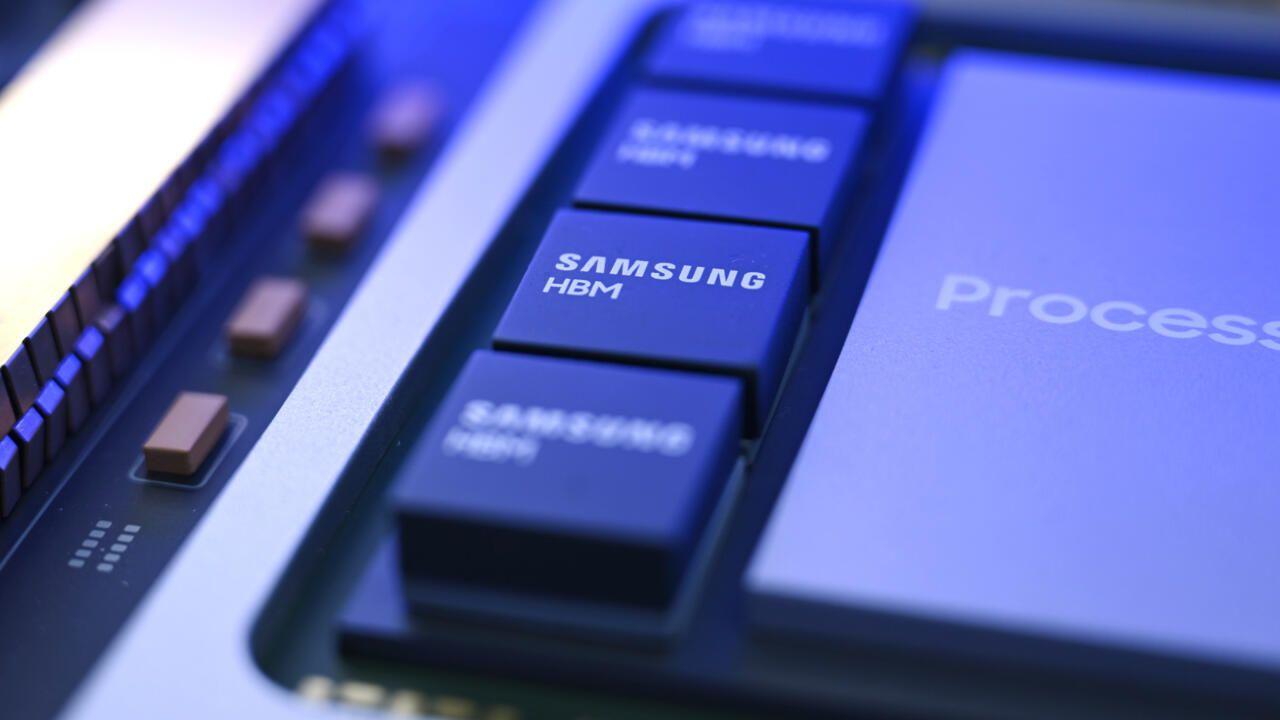
To address power consumption and thermal challenges driven by the doubling of data I/Os from 1,024 to 2,048 pins, Samsung integrated advanced low-power design solutions into the core die
3
. HBM4 achieves a 40% improvement in energy efficiency by leveraging low-voltage through silicon via (TSV) technology and power distribution network optimization, while enhancing thermal resistance by 10% and heat dissipation by 30% compared to HBM3E1
. These improvements mean the memory uses less electricity and runs cooler, suggesting users can look forward to slower growth in their energy bills1
.
Source: France 24
Production Capacity and Market Outlook
Through 12-layer stacking technology, Samsung offers HBM4 in capacities ranging from 24 gigabytes to 36GB, with plans to expand offerings to up to 48GB using 16-layer stacking
3
. Samsung anticipates that its HBM sales will more than triple in 2026 compared to 2025, and is proactively expanding its production capacity3
. The company expects to ship samples of HBM4E in the second half of 2026, while custom HBM samples will start reaching customers in 20271
.Taipei-based research firm TrendForce predicts that memory chip industry revenue will surge to a global peak of more than $840 billion in 2027
4
. However, the shift in production capacity to high-margin products for AI applications may bring price rises for consumer memory, as Samsung and others focus on serving hyperscalers and AI data centers1
. Major electronics manufacturers and industry analysts have warned that chipmakers focusing on AI sales will cause higher retail prices for consumer products across the board4
. Samsung's comprehensive manufacturing resources and tightly integrated Design Technology Co-Optimization between its Foundry and Memory Businesses allow it to secure the highest standards of quality and yield while ensuring a resilient supply chain3
.References
Summarized by

Navi
[1]
Related Stories
Samsung HBM4 nears Nvidia approval as rivalry with SK Hynix intensifies for Rubin AI platform
26 Jan 2026•Technology
Samsung gains ground in HBM4 race as Nvidia production ignites AI memory battle with SK Hynix, Micron
02 Jan 2026•Technology
SK hynix Leads the Charge in Next-Gen AI Memory with World's First 12-Layer HBM4 Samples
19 Mar 2025•Technology

Recent Highlights



Recent Highlights
Today's Top Stories



Don’t drown in AI news. We cut through the noise - filtering, ranking and summarizing the most important AI news, breakthroughs and research daily. Follow topics that matter to you and stay ahead.


