Senate Parliamentarian Requests Rewrite of Controversial AI Provision in Trump's Tax Bill


4 Sources
[1]
AI measure in Trump tax bill sparks pushback in Senate
The Senate parliamentarian has asked for a rewrite of a controversial artificial intelligence (AI) provision included in President Trump's sweeping tax package, raising concerns that the measure could violate Senate reconciliation rules, which limit what policies can be included in budget-related
[2]
Senate parliamentarian greenlights AI moratorium again
A provision that bars states from regulating artificial intelligence (AI) for a 10-year period can remain in President Trump's sweeping tax package, the Senate parliamentarian determined Friday. The decision, announced by Senate Budget Democrats, once again found the moratorium clears a procedural
[3]
Senate parliamentarian requests AI moratorium be rewritten in 'big, beautiful bill'
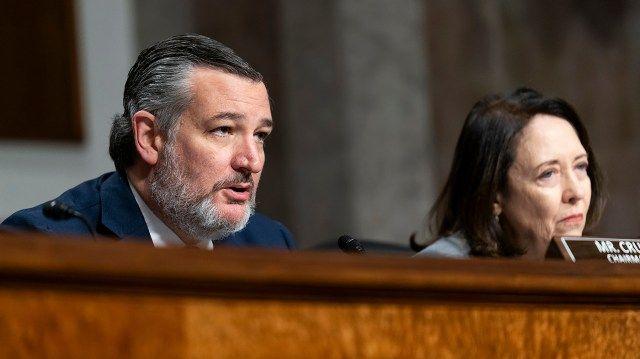
Senate Parliamentarian Elizabeth MacDonough has asked Senate Commerce Chair Ted Cruz (R-Texas) to rewrite the controversial artificial intelligence (AI) provision in President Trump's tax package, Sen. Maria Cantwell (D-Wash.) told reporters Thursday. Cruz and Cantwell (D-Wash.), the ranking
[4]
Senate Parliamentarian Raises Doubts About Provision Banning State AI Rules | PYMNTS.com
By completing this form, you agree to receive marketing communications from PYMNTS and to the sharing of your information with our sponsor, if applicable, in accordance with our Privacy Policy and Terms and Conditions. The parliamentarian advised Senate Commerce Chair Ted Cruz to rewrite the
Share
Copy Link
The Senate parliamentarian has requested a rewrite of a controversial AI provision in President Trump's tax bill, sparking bipartisan concerns and debates over state regulation of AI and federal funding.
Senate Parliamentarian Requests Rewrite of AI Provision
The Senate parliamentarian, Elizabeth MacDonough, has requested a rewrite of a controversial artificial intelligence (AI) provision included in President Trump's sweeping tax package. This development has sparked bipartisan concerns and debates over state regulation of AI and federal funding
1
.
Source: PYMNTS
The Controversial AI Provision
The provision in question would block states from regulating AI models and systems if they wish to access $500 million in federal funding for AI infrastructure and deployment. Senate Commerce Republicans argue that the latest draft clarifies that the optional funding would not override state laws in areas such as consumer protection and intellectual property
1
.Byrd Rule Concerns
Democrats maintain that the measure could impact broader funding programs, including $42 billion in broadband grants, and fails to comply with the Byrd Rule. This rule prohibits provisions that make significant policy changes unrelated to the budget
1
.Parliamentarian's Decision and Subsequent Developments
Initially, the provision was cleared by the Senate referee last weekend after Senator Ted Cruz altered the language to tie the moratorium to federal funding
2
. However, concerns were raised during a meeting between Cruz, Senator Maria Cantwell, and the parliamentarian3
.
Source: The Hill
In a surprising turn of events, the Senate parliamentarian later determined that the provision could remain in the tax package, as long as the conditions only apply to the new $500 million provided by the reconciliation bill
2
.Bipartisan Opposition
The AI provision has sparked opposition from both sides of the aisle. Some Republicans, including Senators Marsha Blackburn and Ron Johnson, have expressed their disapproval. Senator Josh Hawley has even stated his willingness to introduce an amendment to eliminate the provision
3
.In the House, a group of hard-line conservatives argued that Congress is still "actively investigating" AI and "does not fully understand the implications" of the technology
3
.Related Stories
Environmental Concerns
Environmental experts have raised alarms about the measure's potential impact on AI's growing electricity demands. Critics argue that restricting state oversight could delay the adoption of energy-efficient AI operations and slow transitions to cleaner energy sources
1
.The Path Forward
As the debate continues, Senate Majority Leader John Thune expects the 10-year ban on state AI regulations to survive in "some version" in the final bill. However, he acknowledges that it might undergo changes based on feedback from other lawmakers
4
.
Source: The Hill
The ongoing discussions and revisions highlight the complex interplay between technological advancement, federal funding, and state rights in the rapidly evolving field of artificial intelligence.
References
Summarized by

Navi
Related Stories
Senate Republicans Revise AI Regulation Ban in Controversial Tax Bill
07 Jun 2025•Policy and Regulation
Republican Push for Federal AI Regulation Moratorium Faces Opposition and Controversy
18 Jun 2025•Policy and Regulation

GOP Proposes 10-Year Ban on State AI Regulation in Budget Bill
13 May 2025•Policy and Regulation

Recent Highlights



Recent Highlights
Today's Top Stories



Don’t drown in AI news. We cut through the noise - filtering, ranking and summarizing the most important AI news, breakthroughs and research daily. Follow topics that matter to you and stay ahead.


