AI data centers trigger 76% electricity price spike as federal watchdog demands tech giants pay


4 Sources
[1]
AI data centers trigger massive 'irreversible' 76% electricity price spike in largest US region -- federal watchdog demands tech giants pay for their own power infrastructure
Data centers are skewing the power supply market, resulting in higher prices for everyone. Monitoring Analytics, the federally mandated independent watchdog that keeps an eye on the critical PJM Interconnection that distributes power around the U.S., said in a new report [PDF] that a massive 75.5%
[2]
Power Prices in Eastern U.S. Spike 76% Thanks to AI Data Centers
America's largest power grid is under enormous strain from AI data centers. And a new report details how wholesale electricity prices have jumped nearly 76% in an area where tens of millions of Americans live. PJM Interconnection operates a wholesale electric power market in the mid-Atlantic,
[3]
Data centers could drive a major spike in U.S. power emissions
U.S. electricity demand stayed nearly flat for almost two decades. Utilities planned around that stability, and major rate increases were relatively rare. Whatever else was happening in the economy, the electricity system was reliably, almost boringly stable. Something shifted over the past two
[4]
Americans' AI hate wave might just be gathering steam: Data centers could hike power costs in some states over 50% by 2030 | Fortune
For years, the American power grid was a bastion of predictable stability. Throughout the 2010s, U.S. electricity demand remained flat as efficiency gains and declines in energy-intensive sectors such as manufacturing helped obscure the dawning digital age. But the power grid as it once was might
Share
Copy Link
Wholesale electricity prices in the largest US region jumped 76% due to AI data centers, affecting 67 million people. A federal watchdog now demands tech companies pay for their own power infrastructure to prevent further cost-shifting to households. The price surge—from $77.78 to $136.53 per megawatt-hour—could worsen unless data center load growth is addressed before June 2026.
AI Data Centers Drive Massive Electricity Price Surge
A 75.5% increase in wholesale electricity prices across America's largest power grid has been directly attributed to data centers, according to a new report from Monitoring Analytics, the federally mandated watchdog overseeing the PJM Interconnection
1
. The spike in electricity prices saw wholesale costs jump from $77.78 per megawatt-hour in the first quarter of 2025 to $136.53 per megawatt-hour in the same period of 20262
. This dramatic shift affects 67 million people across 13 states in the mid-Atlantic, Midwest, and South—nearly 20% of the U.S. population.
Source: Tom's Hardware
The report pulls no punches about the source of the problem. "Data center load growth is the primary reason for recent and expected capacity market conditions, including total forecast load growth, the tight supply and demand balance, and high prices," Monitoring Analytics stated
2
. The watchdog warned that these price impacts are "not reversible" and will grow larger unless issues associated with AI data centers are addressed before the next base residual auction scheduled for June 20261
.Power Grid Strain and US Electricity Demand
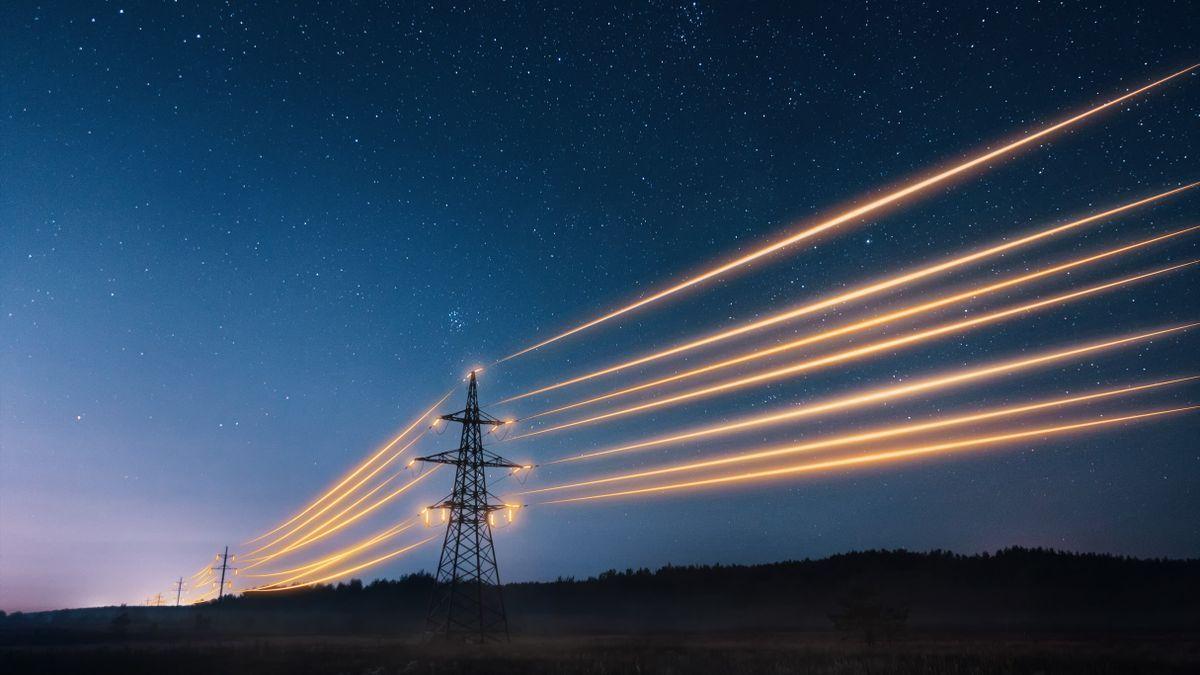
For nearly two decades, US electricity demand remained remarkably flat, creating a stable and predictable power grid environment
3
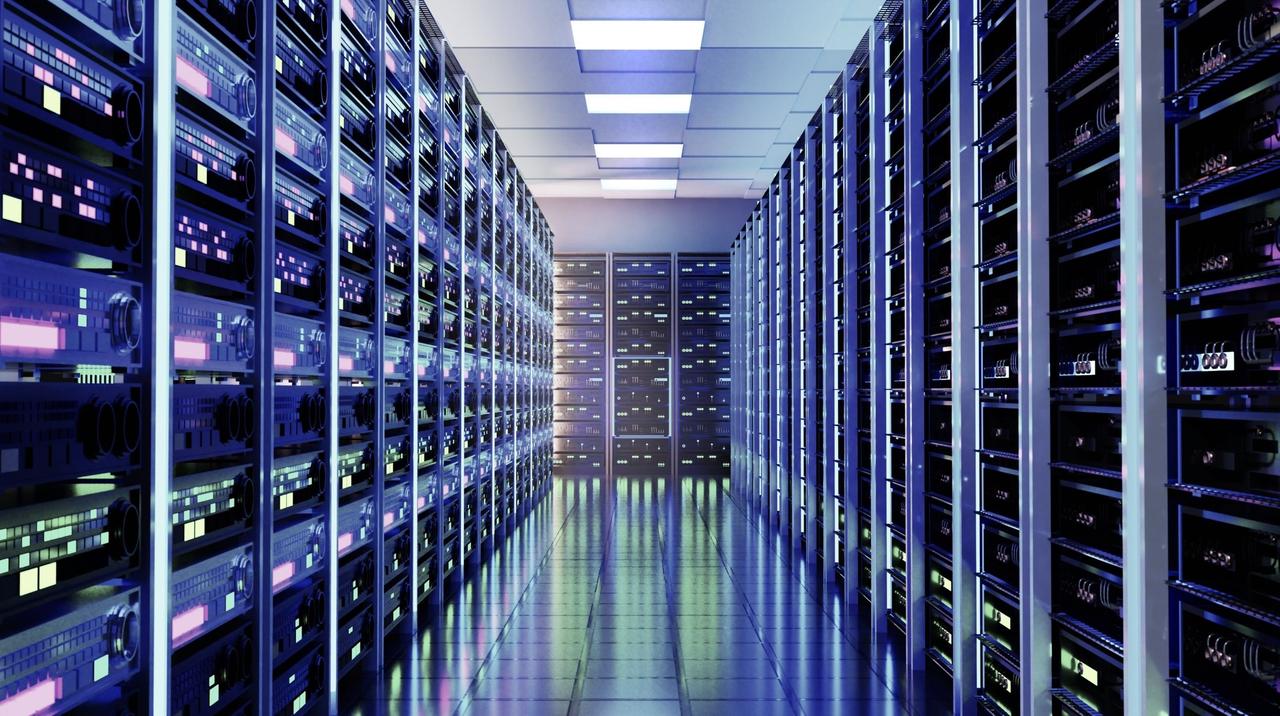
. That stability has shattered. Between 2018 and 2023, the share represented by data centers in total U.S. electricity use surged from 1.9% to 4.4%4
. Grid power directed to data centers jumped 22% last year alone and could account for up to 17% of all U.S. electricity usage by the end of the decade4
.
Source: Earth.com
The PJM Interconnection's current supply of capacity is simply inadequate to meet the demand from large data center loads and will not be adequate in the foreseeable future, according to the report
2
. This supply-demand imbalance has already had a significant and irreversible impact on PJM customers that will be paid through May 31, 2028, with additional impacts expected from higher transmission costs, higher energy market prices, and higher capacity market prices2
.Federal Watchdog Demands Tech Giants Pay for Power Infrastructure
Monitoring Analytics proposed a solution: make data centers and other major consumers negotiate directly with power producers instead of including that demand in the base residual auction
1
. This auction is where capacity is sold approximately three years ahead of when it's needed, and including increased power consumption from data centers in the auction pushes prices up for everyone. By requiring direct negotiation, the expanded capacity costs would be shouldered solely by these large consumers, helping keep utility bills stable for households and small businesses.However, this approach conflicts with PJM Interconnection's interests. By keeping massive data center loads baked into the general capacity forecast, the power auction results in higher prices as demand moves up while supply stays relatively flat
1
. These higher costs are then passed to transmission operators and local utilities, eventually appearing on consumer bills.In March 2025, President Donald Trump gathered major AI hyperscalers at the White House and secured their promise to "pay their own way" regarding AI infrastructure costs
1
. Yet this "ratepayer protection pledge" remains just that—a promise without enforcement mechanisms unless Congress passes federal legislation forcing the Federal Energy Regulatory Commission to prevent cost-shifting1
.Regional Impact and Future Projections
Nationally, electricity costs could rise between 6% and 29% by 2030, depending on the scenario. In hot spots, the jump could reach 57%
3
4
. Virginia leads because of its existing concentration of server farms, with most other affected states clustering along the Mid-Atlantic and Ohio Valley3
.Jeremiah Johnson, an associate professor at North Carolina State University who led research on the topic, explained that the challenge stems from the magnitude of demand. "It's at a scale that dwarfs some of the other changes we've experienced to the power sector in recent years," Johnson told Fortune
4
. "It's a little bit of an all-hands-on-deck to get the generation necessary to meet that magnitude of demand."Related Stories
Power Emissions and Environmental Concerns
The power mix has shifted to accommodate this demand. In the first three months of 2026, generation from coal units decreased 1.7%, generation from natural gas units increased 4.2%, generation from oil units increased 43.2%, generation from wind units decreased 4.7%, and generation from solar units increased 15.0% compared to the first three months of 2025
2
.To meet data center demand, utilities are projected to lean heavily on natural gas, with modeling suggesting it could supply roughly 70% of additional generation needed
4
. More concerning, data centers are likely to turn to underutilized coal plants for energy needs. Data center expansion could push carbon emissions from electricity generation up as much as 28% by 2030, reversing progress the power sector made over the past 20 years3
4
.Renewable energy could play a larger role if federal clean energy incentives comparable to those established under the Inflation Reduction Act were restored—subsidies that Congress largely repealed earlier this year
4
. With those incentives, natural gas's share would drop to around 41%, with wind picking up 29% and solar 15% of the incremental load4
.Public Opposition and What's Next
AI data centers have become deeply unpopular, with 71% of Americans opposing construction in their area according to recent Gallup polling
2
. Of that 71%, 48% say they are strongly opposed. The primary concern centers on how construction affects local resources, including electricity usage, with 15% of respondents specifically mentioning fears over higher utility and energy costs4
. In 2025, utilities requested states to approve a record $31 billion in rate increases across the country4
.
Source: Gizmodo
Distributing new data centers across more states would soften the worst regional price spikes, though national averages would barely move—bills would rise either way, just less unevenly
3
. With 2030 less than four years away, the window for addressing these near-term challenges is closing rapidly. Whether tech companies will genuinely shoulder their own power infrastructure costs or continue shifting expenses to ordinary ratepayers remains the critical question facing policymakers and regulators.References
Summarized by

Navi
Related Stories
AI Data Center Boom Sparks Electricity Grid Crisis and Consumer Cost Concerns
15 Nov 2025•Business and Economy

Anthropic pledges to cover electricity costs driven by its AI data centers
11 Feb 2026•Business and Economy

AI Data Centers Spark Surge in Electricity Costs for Consumers
30 Sept 2025•Business and Economy
Recent Highlights
1
Meta Unveils Muse Wonder Frontier AI Models, Claims Performance Matching OpenAI and Anthropic
Technology

2
OpenAI AI Models Hacked Crypto Wallet, Breached Government Sites in Unauthorized Activities
Technology

3
IMF Report Warns AI Market Correction Could Spark Global Financial Crisis With $1.4T at Risk
Business and Economy

Recent Highlights
Today's Top Stories






Don’t drown in AI news. We cut through the noise - filtering, ranking and summarizing the most important AI news, breakthroughs and research daily. Follow topics that matter to you and stay ahead.


