ServiceNow targets $30 billion by 2030, betting a third of revenue will come from AI products


3 Sources
[1]
ServiceNow projects $30bn by 2030, with a third of ACV from AI
ServiceNow has, in 2026, become one of the more carefully watched test cases for whether enterprise software companies can ride the AI wave or be displaced by it. On Monday, the company gave investors its strongest answer yet. Bloomberg reported that ServiceNow projected $30bn in subscription
[2]
ServiceNow just told Wall Street it's going to double again. Here's why $30 billion of revenue isn't crazy | Fortune
Bill McDermott has a habit of making promises that sound like boasts and then keeping them. When he took the helm of ServiceNow in 2019, the company was doing $3.5 billion in annual subscription revenue. This year, it will finish at nearly $16 billion. "We are printing a new ServiceNow every
[3]
ServiceNow Sets $30 Billion Subscription Revenue Target By 2030 As AI-Led Growth Strategy Accelerates - S
ServiceNow Inc. (NYSE:NOW) on Monday outlined a path to more than $30 billion in annual subscription revenue by 2030, positioning artificial intelligence as a key driver of growth and profitability. AI Growth Strategy Gains Momentum During a meeting with analysts, President and CFO Gina
Share
Copy Link
ServiceNow announced ambitious financial projections at its investor day, targeting over $30 billion in subscription revenue by 2030. The company expects AI to drive roughly 30% of that total, with Now Assist ACV already at $750 million in Q1 2026 and climbing toward a new $1.5 billion target by year-end. The pitch positions ServiceNow as the orchestration layer for enterprise AI rather than a workflow software vendor vulnerable to displacement.
ServiceNow Doubles Down on AI-Led Growth Strategy
ServiceNow has set its sights on more than $30 billion subscription revenue by 2030, marking an ambitious plan to double its current business in just four years
1
. At its Financial Analyst Day on Monday, CFO Gina Mastantuono told investors that roughly 30% of that 2030 ACV will come from Now Assist, the company's flagship AI product line1
. The projection represents a structural bet that enterprise AI deployments require an orchestration and governance layer—and that ServiceNow can own it1
.
Source: Benzinga
The company expects 2026 subscription revenue to land roughly $500 million above its prior $15 billion target, organically
1
. From there to $30 billion-plus by 2030 implies sustained growth of approximately 19-20% compound annual1
3
. Mastantuono also presented an upside scenario of $32 billion by 2030, though the company isn't yet asking investors to underwrite that figure2
.Now Assist Drives AI Annual Contract Value Acceleration
The most closely watched metric from the investor day was Now Assist's trajectory. ServiceNow crossed $600 million in AI annual contract value (ACV) in 2025—more than doubling year-over-year—and entered Q1 2026 at $750 million
1
2
. On Monday, the company raised its full-year AI ACV target from $1 billion to $1.5 billion1
3
. By 2030, AI is expected to represent more than 30% of total ACV2
.The pricing logic behind AI monetization is critical to understanding ServiceNow's confidence. Mastantuono explained that a team of 20 support analysts costs over $1 million annually, with roughly 90% in labor costs
2
. ServiceNow's autonomous agents can resolve 75% of that team's work, cutting total customer costs by 65%—while freed-up seat licenses convert into AI agent consumption at 6.5 times the value2
. Even after accounting for license reduction, total ServiceNow spend grows over 5x, according to the company2
. Now Assist customers who renewed in 2025 expanded their ACV by an average of 3x2
.Gross Margins Hold Despite Compute Costs and AI Adoption
One persistent concern among analysts has been whether AI—specifically inference and compute costs—would erode ServiceNow's famously high gross margins
3
. Mastantuono pushed back directly, stating that AI reasoning accounts for less than 10% of the company's cost to serve2
3
. "Customers aren't paying us for tokens—they're paying for a resolved outcome," she said2
. Now Assist gross margins remain above 80% as AI adoption scales2
3
.ServiceNow forecast operating margin and free cash flow margin expansion of 100 basis points in 2027 and reiterated its goal of achieving a "Rule of 60+" by 2030, combining revenue growth and free cash flow margins
3
. The company also cited internal AI deployment as proof: ServiceNow generated $500 million in annualized AI-driven value in 2025, including $100 million in OpEx savings, and expects $200 million in incremental OpEx savings in 20262
.Related Stories

Enterprise Software Faces Competitive Pressure from AI-Native Firms
ServiceNow's investor-day pitch arrives amid broader skepticism about whether traditional enterprise software companies can survive the AI wave or be displaced by it
1
. The emergence of AI-native deployment vehicles—including Anthropic's enterprise services firm and OpenAI's Deployment Company—has intensified competitive pressure on workflow software incumbents like ServiceNow1
. Both are now structurally aimed at the customer base ServiceNow has spent two decades building1
.
Source: Fortune
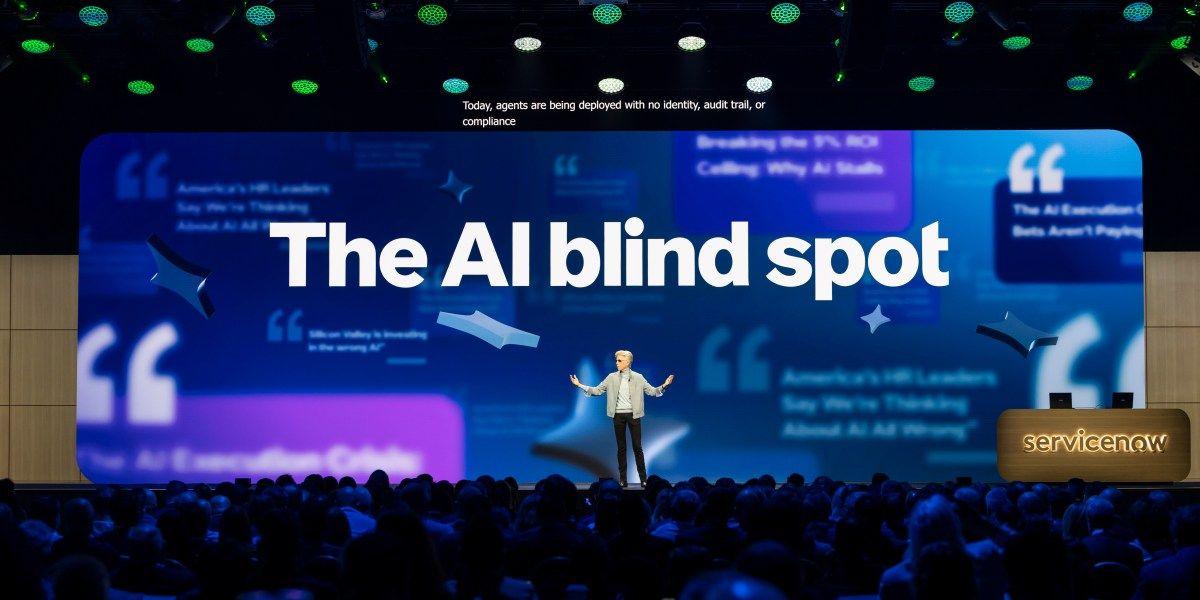
ServiceNow's response is to position itself as the orchestration layer where enterprise AI gets coordinated, governed, and put into production
1
. CEO Bill McDermott framed it bluntly on CNBC: "AI thinks—but it doesn't act." The company's platform, he argued, is where the acting happens2
. Whether enterprise customers choose to have their AI deployments orchestrated by ServiceNow or by AI-native competitors will determine the viability of the $30 billion-by-2030 financial projections1
.Morgan Stanley analyst Keith Weiss argued in a recent webinar with AlphaSense that AI is not replacing enterprise software but enhancing it, calling fears of displacement a "definitional error"
3
. He estimated AI could add $400 billion to enterprise software by 20283
. However, investor Eric Jackson warned of continued pressure on software stocks, arguing that executive optimism around AI may be masking deeper business weaknesses3
. ServiceNow's ability to sustain profitability while scaling AI will be critical as the market watches whether the $30 billion pitch matures into reality1
.References
Summarized by

Navi
[1]
Related Stories
ServiceNow AI contract value crosses $1 billion as strong Q2 earnings beat revives investor confidence
23 Jul 2026•Business and Economy

ServiceNow beats Q4 estimates with AI-driven revenue growth and strategic acquisitions
29 Jan 2026•Business and Economy

ServiceNow's Stock Soars to All-Time High Amid AI-Driven Growth and Strong Q3 Results
24 Oct 2024•Business and Economy

Recent Highlights



Recent Highlights
Today's Top Stories









Don’t drown in AI news. We cut through the noise - filtering, ranking and summarizing the most important AI news, breakthroughs and research daily. Follow topics that matter to you and stay ahead.


